Skip to Main Content

STEM Activities for Toddlers: Easy Science at Home, Safe Materials and Hands-On Discovery on the Upper West Side

KIDVILLE UPPER WEST SIDE

STEM Activities for Toddlers: Easy Science at Home, Safe Materials and Hands-On Discovery on the Upper West Side

What STEM means for a 2 or 3-year-old, 12 kitchen-table experiments, what the AAP says to keep out of the house, and how Kidville University builds science into every school morning.

See Kidville University

205 W 88th St · 212-362-7792

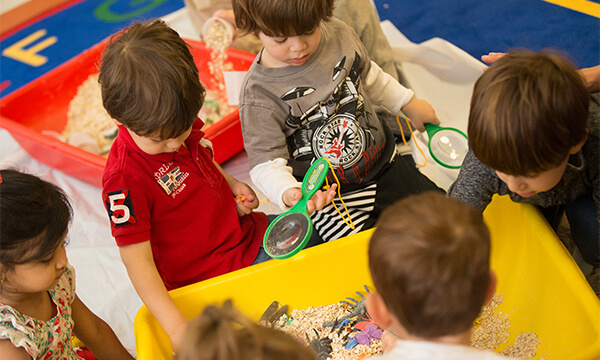
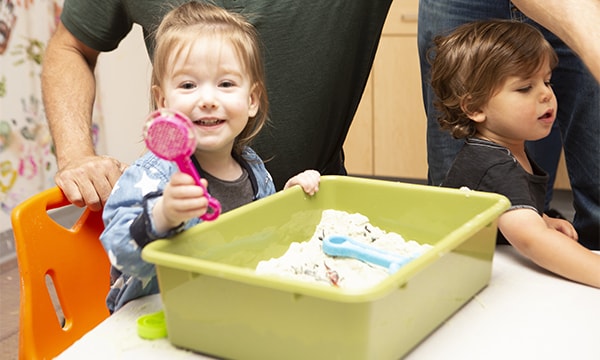
Smiling toddler holding a magnifying tool over a sensory digging bin in class at Kidville Upper West Side
KVU 2s ART AND STEM • KVU GRAD SCIENCE EXPERIMENTS • CAUSE AND EFFECT • REQUEST A TOUR

By the Kidville Upper West Side Team · Updated October 2026

SHORT ANSWER

STEM activities for toddlers are simple hands-on experiments: sink or float, color mixing, ramps and rolling balls, block towers, magnifying-glass hunts and ice melting. They build the cause and effect thinking the AAP says grows at age 2. Skip water beads and loose magnets. Kidville University puts art and STEM in every 2s morning.

A toddler who flips the light switch twenty times, pours water from cup to cup, or drops a spoon off the high chair just to watch it fall is already doing science. STEM, short for science, technology, engineering and math, sounds like a school subject, but for a 2 or 3-year-old it is simply curiosity with a plan: try something, see what happens, try it again. This guide explains what STEM looks like at this age, gives 12 easy experiments for an Upper West Side kitchen, walks through one activity step by step, covers the materials the American Academy of Pediatrics (AAP) warns parents to keep out of the house, and shows how Kidville University builds science into its 2s and 3s mornings. Every Kidville detail was checked on Kidville’s own pages on October 30, 2026.

What is STEM for toddlers?

STEM for toddlers is hands-on play that asks “what happens if?” and lets your child find out. There are no worksheets and no screens required. The AAP’s Cognitive Development: Two-Year-Old page describes exactly the thinking STEM play builds: a 2-year-old can “solve some problems in his head,” will “match similar shapes” in shape sorters and simple puzzles, begins to “recognize the purpose of numbers in counting objects, especially the number two,” and, “as his understanding of cause and effect develops,” becomes “much more interested in winding up toys and turning lights and appliances on and off.”

Letter What it means for a toddler Everyday example
S: Science Noticing, predicting and testing what happens Does the toy boat sink or float? Does ice melt faster in the sun?
T: Technology Simple tools that help us do or see more A magnifying glass, a funnel, a turkey baster, a flashlight
E: Engineering Building, testing and rebuilding A block tower that falls, then a wider base that holds
M: Math Comparing, sorting, counting, patterns Big and small, two of everything, sorting by color or shape

Built on HealthyChildren.org, “Cognitive Development: Two-Year-Old” and “Developmental Milestones: 2 Year Olds” (American Academy of Pediatrics), verified October 30, 2026

The AAP’s The Power of Play backs the same simple approach for 1 to 3-year-olds: blocks, empty containers, wooden spoons, shape sorters and puzzles are “some of the best ways to support a child’s creativity and grasp of how the world works,” and “it is parents and caregivers’ presence and attention that enriches children, not fancy electronic gadgets.” This guide is general information, not medical advice.

What are some STEM activities for toddlers?

Twelve experiments that use what is already in the kitchen or toy bin, most of them 10 minutes or less. Every one of them works on the same loop: make a guess, try it, talk about what happened. Keep the water ones in a shallow tray, stay within arm’s reach, and empty the water when you are done.

Activity Best age STEM skill How to set it up
Sink or float 2 years+ Science: predicting and testing A shallow tray of water, a spoon, a cork, a leaf, a plastic block; guess first, then drop
Color mixing 2 years+ Science: cause and effect Two colors of washable paint in a zip bag, taped to the table; squish and watch a new color appear
Ice melt rescue 2 years+ Science: change of state Freeze a large toy in a cup of water; give warm water and a spoon to free it
Ramps and rolling 18 months+ Engineering: slope and speed A board or a sofa cushion leaned on a step; roll balls and cars, then make it steeper
Tower test 18 months+ Engineering: balance Blocks; build tall and thin, then wide at the bottom; which one falls first?
Shadow play 2 years+ Science: light A flashlight in a dim room; make big and small shadows by moving a toy closer and farther
Magnifying hunt 2 years+ Technology: tools A child-safe magnifying glass on a walk in Riverside Park or on the windowsill plants
Sort and match 2 years+ Math: sorting Laundry by color, blocks by size, spoons and forks in two piles
Funnel and pour 2 years+ Technology and math: volume Two cups and a funnel with dry rice at the table, or water in the bath; which cup holds more?
Sound shakers 18 months+ Science: sound Taped, sealed containers with rice, pasta or bells inside; which is loudest?
Seed in a cup 3 years+ Science: living things A bean on a damp paper towel in a clear cup; check the roots every day
Same or different 3 years+ Math: comparing Two piles of objects; the AAP lists understanding “same” and “different” between 3 and 4

Activities built on the cognitive milestones at HealthyChildren.org (American Academy of Pediatrics), verified October 30, 2026; ages are starting points, not deadlines

Many of these double as sensory play and hand practice. Our sensory play for toddlers guide has bin ideas by age, and our fine motor activities guide covers the pouring, scooping and squeezing that make the experiments work. On a wet afternoon, our rainy day activities guide pairs nicely with the kitchen-table experiments above.

What is an example of a STEM activity?

Sink or float is the classic first experiment, because it covers all four letters in about ten minutes. Your toddler predicts (science), uses a scoop or a spoon (technology), builds a “boat” that holds a toy (engineering), and sorts the results into two piles (math). The steps below work at a kitchen table or in the bath, with you sitting right there the whole time.

Child holding a wooden Science Viewer color paddle up to her face in a Kidville classroom on the Upper West Side

Step What you do What you say
1. Gather Six objects: a cork, a spoon, a crayon, a leaf, a large plastic block, a plastic lid “Which ones will sink? Which ones will float?”
2. Guess Let your toddler hold each one and point to a “sink” bowl or a “float” bowl “You think the spoon will sink. Let’s see!”
3. Test Drop each object into a shallow tray of water, one at a time “Splash! It went down. It sank.”
4. Sort Move each object to a “sank” or “floated” pile “Three sank, three floated. Same number!”
5. Build Can the plastic lid hold a small toy and still float? “Your boat is carrying the bear!”
6. Clean up Empty the tray right away and put the small objects back on a high shelf “Scientists clean up their lab.”

Activity built on the cognitive milestones (cause and effect, sorting, counting two) and water safety guidance at HealthyChildren.org (American Academy of Pediatrics), verified October 30, 2026

What activities can 2-3 year olds do?

At 2, cause and effect, sorting and simple building; by 3, comparing, counting and longer experiments with a few steps. The AAP’s Developmental Milestones: 2 Year Olds lists finding objects hidden under two or three covers, beginning to sort by shapes and colors, and beginning make-believe play. Its Developmental Milestones: 3 to 4 Year Olds adds understanding “same” and “different,” correctly naming some colors, understanding the concept of counting, beginning to have a clearer sense of time, and following three-part commands.

Age What the AAP lists STEM play that fits
2 years Sorts by shapes and colors, finds hidden objects, cause and effect with wind-up toys and switches, matches shapes in simple puzzles, counting objects (especially two) Color mixing bags, sink or float, ramps, tower tests, hide the toy under cups
3 years Understands same and different, names some colors, understands counting, clearer sense of time, follows three-part commands Seed in a cup (watching change over days), same-or-different sorting, three-step experiments

Source: HealthyChildren.org, “Developmental Milestones: 2 Year Olds”, “Cognitive Development: Two-Year-Old” and “Developmental Milestones: 3 to 4 Year Olds” (American Academy of Pediatrics), verified October 30, 2026

If you want the bigger picture of what a 2-year-old should be working on beyond STEM, from words to movement, our guide on what a 2-year-old should be learning lays out every AAP milestone for the year.

Which STEM materials are safe for toddlers?

Big pieces, shallow water and an adult within reach, plus a few popular “science” materials the AAP warns about. STEM kits and sensory videos often feature water beads, magnet sets and water play. The AAP’s guidance on each is clear.

Material What the AAP says Safer swap
Water beads (gel beads, sensory beads) They “look like candy,” can grow inside the body and cause blockages, are a choking hazard “especially in children younger than 3 years,” and “it is safest to not have water beads in your home” Cooked pasta, oats or dry rice in a supervised bin
High-powered magnet sets Swallowing “more than one of these high-powered magnets can be life-threatening,” because they can pull together inside the digestive system Large magnetic building tiles in good condition; keep loose magnets and small magnet sets out of reach
Water play Young children “can drown in as little as an inch or two of water,” quickly and silently; empty water containers immediately after use A shallow tray, an adult within reach the whole time, empty it right away
Small parts Toys with small parts and small balls are choking hazards for young children (see our fine motor guide) Objects too big to fit in the mouth

Source: HealthyChildren.org, “Water Beads: Harmful if Swallowed, Put in Ears”, “How High-Powered Magnetic Toys Can Harm Children” and “Drowning Prevention for Curious Toddlers” (American Academy of Pediatrics), verified October 30, 2026

If you think your child may have swallowed water beads or put them in an ear, the AAP says to seek treatment right away; you can also call Poison Help at 1-800-222-1222. A swallowed high-powered magnet is just as urgent, since the AAP notes that more than one can be life-threatening.

How does Kidville teach STEM on the Upper West Side?

Inside the Kidville University school mornings, where science and art are part of the daily schedule. The KVU 2s morning (120 minutes, 2 or 3 days a week) includes an Art and STEM block where “creativity abounds during open-ended art and exploration as kids investigate and manipulate a myriad of tactile materials.” The KVU Grad program for 3s (180 minutes, 2 or 3 days a week, drop-off) has a daily Science and language time: “Eureka! Discovery is made through hands-on science experiments,” with Spanish words and phrases once a week.
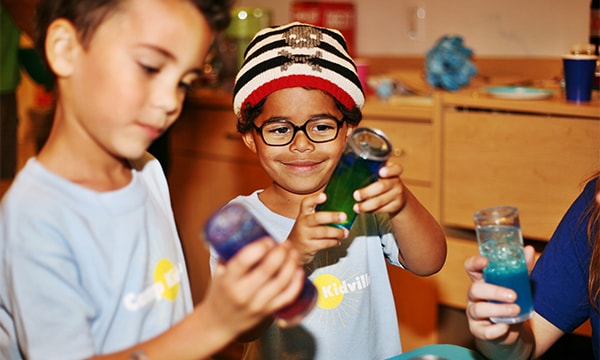
Children holding up colorful discovery tubes during a science exploration at Kidville Upper West Side

Kidville’s STEM approach From the Kidville page What your child practices
Cause and effect “From color mixing to water crystals!” Weekly experiments with live results Learning that actions lead to a response
Engineering skills “From magnatiles to custom creations!” Explore, craft and design Building, testing and rebuilding
Sensory explorations “From digging bins to tactile play!” All five senses and imagination Observing and describing
Problem solving “From theories to conclusions!” Questions, experiments, results Guessing, testing and drawing a conclusion
Lab partners Class-led group discussions to practice “listening, deductive reasoning, and team work” Working alongside other children

Source: Kidville Upper West Side STEM Classes, KVU 2s and KVU Grad pages, verified October 30, 2026

For families not ready for a school program, My Big Messy Art Class (18 to 36 months and 2 to 4 years) sits in the Art and Science category on the current class schedule, with sensory play bins, paints, doughs and giant paper painting, and a free trial class to start. Our preschool alternative guide has the KVU schedules, prices and enrollment details.

Possible downside: the Upper West Side STEM Classes page describes Kidville’s STEM series, but the current class schedule (fall and winter 2026) does not list a standalone STEM class, so the science time for 2s and 3s happens inside Kidville University rather than as a separate weekly class. If you are looking only for a drop-in STEM class, contact Kidville to ask whether one is planned.

STEM activities for toddlers: FAQ

What are some STEM activities for toddlers?

Easy toddler STEM activities include sink or float, color mixing in a sealed bag, freeing a toy from ice, rolling balls down a ramp, building and knocking over block towers, shadow play with a flashlight, a magnifying-glass hunt, sorting laundry by color, pouring with a funnel and making sound shakers. Each one follows the same loop: guess, try it, talk about what happened.

What is an example of a STEM activity?

Sink or float is a good first example. Your toddler guesses whether a cork, a spoon or a leaf will sink, drops each one into a shallow tray of water, sorts them into “sank” and “floated” piles and counts each pile, then tries to build a lid “boat” that carries a small toy. That covers science, a simple tool, engineering and math in about ten minutes, with you within reach.

What is STEM for toddlers?

STEM for toddlers is hands-on play built around “what happens if?” It means noticing and testing (science), using simple tools like a magnifying glass or funnel (technology), building and rebuilding (engineering), and sorting, comparing and counting (math). The AAP describes the same thinking at age 2: solving simple problems, matching shapes, counting objects, and a growing interest in cause and effect.

What activities can 2-3 year olds do?

At 2, the AAP lists sorting by shapes and colors, finding hidden objects, matching shapes in simple puzzles and cause and effect play, so color mixing, ramps, tower tests and sink or float fit well. Between 3 and 4, the AAP adds understanding same and different, naming colors, the concept of counting and following three-part commands, so longer experiments like growing a bean in a cup work well.

Are water beads safe for toddlers?

No. The AAP says water beads look like candy, can keep growing inside the body after being swallowed, may not show on X-rays, and are a choking hazard especially for children under 3. It supports a ban on water beads marketed for children and says it is safest not to have them in a home with young children. Use cooked pasta, oats or dry rice in a supervised bin instead.

Does Kidville Upper West Side have STEM classes?

Science is built into Kidville University: the KVU 2s morning includes an Art and STEM block, and KVU Grad for 3s has daily hands-on science experiments. Kidville’s STEM Classes page describes its approach (color mixing, water crystals, magnatiles, digging bins), but the current fall and winter class schedule does not list a standalone STEM class, so contact Kidville to ask about one.

The bottom line

STEM activities for toddlers are simple, hands-on experiments that turn everyday curiosity into “guess, try, see what happens.” Sink or float, color mixing, ramps and block towers cover all four letters, the AAP’s milestones tell you what fits at 2 and at 3, and the safety rules are short: no water beads, no loose high-powered magnets, shallow water with an adult in reach. On the Upper West Side, Kidville University builds art and STEM into every 2s morning and hands-on science into every KVU Grad day.

Ready to see little scientists at work? See Kidville University at Kidville Upper West Side, 205 West 88th Street, New York, NY 10024, and request a tour. Call 212-362-7792 with questions.

ABOUT THE AUTHOR

The Kidville Upper West Side Team runs the Kidville location at 205 West 88th Street, New York, NY 10024, home to music, gym, art, dance and STEM classes, Kidville University, Camp Kidville, an indoor playspace, birthday parties and a kids salon for children from birth to age 6. Every age, price and schedule detail in our guides is checked against Kidville’s own published pages.

Sources

Every Kidville program detail in this guide comes from Kidville Upper West Side’s own pages, checked on October 30, 2026. Developmental milestones and safety guidance come from HealthyChildren.org, the American Academy of Pediatrics’ parenting site.

Kidville Upper West Side: Kidville University (Preschool Alternative)

Kidville Upper West Side: KVU 2s Program

Kidville Upper West Side: KVU Grad (3s Program)

Kidville Upper West Side: STEM Classes

Kidville Upper West Side: Current Class Schedule

Kidville Upper West Side: Art Classes (My Big Messy Art Class)

HealthyChildren.org (American Academy of Pediatrics): Cognitive Development: Two-Year-Old

HealthyChildren.org (American Academy of Pediatrics): Developmental Milestones: 2 Year Olds

HealthyChildren.org (American Academy of Pediatrics): Developmental Milestones: 3 to 4 Year Olds

HealthyChildren.org (American Academy of Pediatrics): The Power of Play: How Fun and Games Help Children Thrive

HealthyChildren.org (American Academy of Pediatrics): Water Beads: Harmful if Swallowed, Put in Ears

HealthyChildren.org (American Academy of Pediatrics): How High-Powered Magnetic Toys Can Harm Children

HealthyChildren.org (American Academy of Pediatrics): Drowning Prevention for Curious Toddlers

What Should a 2-Year-Old Be Learning? AAP Milestones, What to Practice at Home and the Kidville 2s Program on the Upper West Side

KIDVILLE UPPER WEST SIDE

What Should a 2-Year-Old Be Learning? AAP Milestones, What to Practice at Home and the Kidville 2s Program on the Upper West Side

The skills the AAP lists for age 2 (words, movement, hands, thinking and play), what counts as ahead or behind, 10 things to practice at home, and how a 2s classroom teaches them.

See the KVU 2s Program

205 W 88th St · 212-362-7792

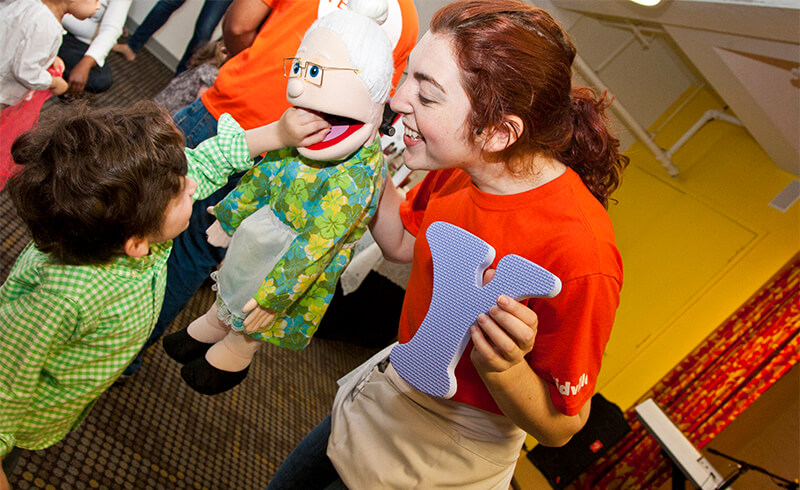
Kidville teacher holding a puppet and a letter cutout while a toddler reaches for it in class at Kidville Upper West Side
KVU 2s • 120 MINUTES A DAY • 1:4 TEACHER RATIO • GRADUAL SEPARATION • REQUEST A TOUR

By the Kidville Upper West Side Team · Updated October 2026

SHORT ANSWER

A 2-year-old should be learning to talk in two- to four-word sentences, follow simple instructions, run and kick a ball, scribble and stack blocks, sort by shape and color, and begin make-believe play, according to the AAP. Counting to 10 is not on the list. The Kidville University 2s program on the Upper West Side builds these skills through play.

Two is the age when parents start comparing notes at the playground. One child is counting, another is speaking in paragraphs, a third is still mostly pointing, and every parent quietly wonders which one is “on track.” This guide answers that with the American Academy of Pediatrics (AAP) milestone lists for age 2, explains what the AAP says about language, thinking and social skills at this age, flags the signs that are worth a call to your pediatrician, gives 10 things to practice at home, and shows how the Kidville University 2s program on the Upper West Side turns those milestones into a two-hour school morning. Every Kidville detail was checked on Kidville’s own pages on October 29, 2026.

What should a 2-year-old be learning?

Words, movement, hand skills, early thinking and the first steps of playing with others, all through play rather than lessons. The AAP’s Developmental Milestones: 2 Year Olds lists what most children do between their second and third birthdays across five areas, and it opens with a reminder that “each child develops at his own particular pace,” so the list is “a general idea of the changes you can expect,” not a test to pass.

Area What the AAP lists for a 2-year-old What it looks like at home
Language Points to an object or picture when it is named, recognizes names of familiar people, objects and body parts, uses simple phrases by 18 to 24 months, uses two- to four-word sentences, follows simple instructions, repeats words overheard in conversation “More juice,” “Daddy go work,” bringing you the book you asked for
Movement Walks alone, pulls toys behind while walking, carries a large toy or several toys, begins to run, stands on tiptoe, kicks a ball, climbs onto and down from furniture, walks up and down stairs holding on Hallway runs, couch climbing, kicking a ball back to you
Hand and finger skills Scribbles spontaneously, turns over a container to pour out contents, builds a tower of four blocks or more, might use one hand more than the other Crayon on paper, dumping the toy bin, block towers
Cognitive Finds objects hidden under two or three covers, begins to sort by shapes and colors, begins make-believe play Shape sorters, “where did the ball go?”, feeding a doll
Social and emotional Imitates adults and older children, increasingly aware of self as separate from others, increasingly enthusiastic about the company of other children, demonstrates increasing independence, begins to show defiant behavior Copying you sweep, “me do it,” a first “no”

Source: HealthyChildren.org, “Developmental Milestones: 2 Year Olds” (American Academy of Pediatrics), verified October 29, 2026

This guide is general information, not medical advice. If you have questions about your own child’s development, your pediatrician is the right person to ask.

What words should a 2-year-old be saying?

Around fifty words or more at the start of the year, growing into sentences of four to six words by the end of it. The AAP’s Language Development: 2 Year Olds says a 2-year-old “not only understands most of what you say” but “speaks with a rapidly growing vocabulary of fifty or more words,” and over the year moves from two- or three-word sentences to ones “with four, five, or even six words,” begins using pronouns like I, you, me and we, and “understands the concept of mine.”

The same page is clear about comparisons: “there’s more variation in language development than in any other area.” Some children build words steadily, others “in an uneven manner,” and some are simply more talkative. The AAP adds that the more verbal child is not “necessarily smarter or more advanced,” because “the quiet child may know just as many words but be choosier about speaking them,” and that boys as a group start talking later than girls, a gap that evens out by school age. Its one practical instruction is to make reading part of the everyday routine, since a 2-year-old “can follow a story line and will understand and remember many ideas” from books.

Smiling girl checking small seedling pots on a classroom windowsill at Kidville Upper West Side

Should a 2-year-old count to 10 or know colors and letters?

Not yet. The AAP’s 2-year-old milestones are about sorting, matching and the idea of “two,” not reciting numbers or letters. The milestone list says a 2-year-old “begins to sort by shapes and colors,” and the AAP’s Cognitive Development: Two-Year-Old page explains that learning becomes “more thoughtful” at this age: a child can “match similar shapes” in shape sorters and simple jigsaw puzzles, starts to “recognize the purpose of numbers in counting objects, especially the number two,” understands simple time concepts like “you can play after you finish eating,” and becomes interested in cause and effect, from wind-up toys to light switches.

Parents often ask What the AAP lists for age 2 How to support it
Should my 2-year-old count to 10? Recognizing the purpose of numbers in counting objects, especially the number two Count real things: two shoes, two cups, two blocks
Should they know colors? Begins to sort by shapes and colors Sort laundry by color, name colors as you hand things over
Should they know letters? Not on the 2-year-old list; letters appear in the 3 to 4 milestones as copying some capital letters Read daily and let letters be shapes on a page for now
Should they do puzzles? Matching similar shapes in shape sorters and simple jigsaw puzzles Two- to four-piece puzzles with knobs
Should they pretend? Begins make-believe play, then strings activities into a logical sequence, such as putting a doll to bed and covering it up A doll, a cup and a blanket are enough

Built on HealthyChildren.org, “Developmental Milestones: 2 Year Olds”, “Cognitive Development: Two-Year-Old” and “Developmental Milestones: 3 to 4 Year Olds” (American Academy of Pediatrics), verified October 29, 2026

On the question of what counts as “advanced,” the AAP’s own language is a useful check: the list is a general idea of what to expect, and in the area where parents compare most, language, the variation is wider than anywhere else. A child who counts early is not ahead on the AAP’s list, and a child who does not is not behind on it.

What should I be teaching my 2-year-old at home?

Play, with you in the room and a few simple objects, is the teaching. The AAP’s The Power of Play says that for 1- to 3-year-olds, “playful learning, where children take the lead and follow their own curiosity, should be the main focus,” and that blocks, empty containers, wooden spoons, shape sorters and puzzles are “some of the best ways to support a child’s creativity and grasp of how the world works.” It adds that “it is parents and caregivers’ presence and attention that enriches children, not fancy electronic gadgets,” suggests a parent-supervised playdate at this age, and encourages make-believe play and whole-body movement like walking, jumping and standing on one leg.

Practice at home Milestone it builds (AAP) How to do it in an apartment
Read the same book every night Follows a story line, remembers ideas from books, grows vocabulary Let your toddler turn the pages and finish the familiar lines
Narrate and expand Two- to four-word sentences, pronouns They say “car go,” you say “yes, the red car is going fast”
Count two of everything Purpose of numbers, especially the number two Two socks, two crackers, two steps
Sort the laundry Begins to sort by shapes and colors Dark pile, light pile; socks in one basket
Fill, dump and stack Tower of four blocks or more, pours out contents Empty containers and blocks on the kitchen floor
Simple two-step errands Follows simple instructions “Get your shoes and bring them to me”
Pretend together Begins make-believe play, then sequences Feed the doll, then put her to bed
Big-body play Begins to run, kicks a ball, stands on tiptoe Hallway kick-backs and tiptoe walks; see our gross motor activities guide
Crayons and dough Scribbles spontaneously, hand and finger skills A fat crayon and taped-down paper; see our fine motor activities guide
Name feelings out loud Developing empathy “Emma is sad because you took her car” is the AAP’s own example

Built on HealthyChildren.org, “Developmental Milestones: 2 Year Olds”, “Language Development: 2 Year Olds”, “Cognitive Development: Two-Year-Old”, “Social Development: 2 Year Olds” and “The Power of Play” (American Academy of Pediatrics), verified October 29, 2026

On the social side, the AAP’s Social Development: 2 Year Olds page sets realistic expectations: children this age “may refuse to share things that interest them” and often play side by side rather than together, and “all other children their age probably are acting the same way.” It says 2-year-olds are also “developing the ability to express true empathy,” which parents can help along by talking about how other people feel. For low-pressure ways to put that into practice, our guide on where a toddler can socialize with other kids covers playdates, classes and the playspace.

How does the Kidville University 2s program teach these skills?

With a two-hour school morning built around the exact things the AAP lists: language, hands, movement, thinking and playing alongside other children, plus a gradual separation from you. The KVU 2s page describes the program as a “social pre-school alternative program offering children a positive first school experience,” 120 minutes a day, 2 or 3 days a week, where “teachers serve as guides for parents and children during a gradual and individualized separation process.” The main Kidville University page adds a 1:4 teacher-to-child ratio, an emergent curriculum that “caters to the classroom’s interests in real time,” and a consistent daily routine.

Part of the KVU 2s morning What happens (from the Kidville page) AAP milestones it works
Welcome time An inviting environment, “think: digging bins,” welcomes kids as they say “see ya later” to grown-ups once separated Independence, separation, hand skills
Circle time An interactive hello song, story time, music movement and dramatic play introduce the weekly theme Follows a story line, repeats words, imitates others, make-believe
Art and STEM Open-ended art and exploration with “a myriad of tactile materials” Scribbles, sorting by shape and color, cause and effect
Class centers Children move freely between dramatic play, reading, puzzles and other manipulatives Make-believe play, matching shapes in simple puzzles, choosing for themselves
Snack time A light snack during community time for “socializing, practicing manners, and a little time to decompress” Company of other children, simple instructions, independence
Gym Time to “shake out their sillies” and burn off energy Runs, climbs, kicks a ball

Source: Kidville Upper West Side KVU 2s and Kidville University pages, verified October 29, 2026

Families who are not ready for a separation program have the same skills on offer in parent-and-child classes. The Kidville Upper West Side classes page lists gym from 6 months up (obstacle courses, giant blocks, Tumbl Trak, indoor swings), art from 18 months up (giant paper painting and hands-on projects), music from newborn up (original songs and familiar favorites with a live band), and STEM from 2 years up (weekly units built around scientific themes), with 45-minute classes through a membership (Single $219 a month for 4 classes, Double $399 a month for 8 classes) and a free trial class to start. Our kids classes by age guide walks through which ones fit a 2-year-old, and our preschool alternative guide has the KVU schedules, prices and enrollment details.

Smiling toddler in a striped shirt holding a balloon string in front of an orange wall at Kidville Upper West Side

Possible downside: KVU 2s is a set-schedule program, two or three set mornings a week, with tuition paid in full at enrollment, so it suits families who want a consistent routine more than a drop-in. The gradual separation also asks for a parent or caregiver on hand in the early weeks. If you are still deciding whether a classroom is the right next step, our guide on how to prepare a toddler for preschool covers the readiness signs, and you can request a tour and watch a morning in progress.

What are red flags for a 2-year-old?

The AAP lists eight specific signs for this age range and says to alert your pediatrician if you see any of them. Its developmental health watch for 2-year-olds names: cannot walk by eighteen months; fails to develop a mature heel-toe walking pattern after several months of walking, or walks exclusively on the toes; does not speak at least fifteen words by eighteen months; does not use two-word sentences by age two; does not seem to know the function of common household objects (brush, telephone, bell, fork, spoon) by fifteen months; does not imitate actions or words by the end of this period; does not follow simple instructions by age two; cannot push a wheeled toy by age two.

Usually normal at 2 Worth a call to your pediatrician (AAP)
A quiet child who understands you but says less than a chatty peer No two-word sentences by age two, or fewer than fifteen words at eighteen months
Playing beside other children rather than with them Not imitating actions or words by the end of this period
Saying “no” and wanting to do things alone Not following simple instructions by age two
Preferring one hand, or no preference yet Not walking by eighteen months, or walking only on the toes
Not counting, not knowing letters Not seeming to know what a brush, spoon or telephone is for by fifteen months

Source: HealthyChildren.org, “Developmental Milestones: 2 Year Olds” developmental health watch (American Academy of Pediatrics), verified October 29, 2026

What should a 2-year-old be learning: FAQ

What should a 2 year old be taught?

Nothing that needs a worksheet. The AAP says the main focus for 1- to 3-year-olds should be playful learning where the child leads, with simple objects like blocks, containers, shape sorters and puzzles, daily reading, make-believe play, movement and a supervised playdate. The milestones that come from that play are two- to four-word sentences, following simple instructions, sorting by shape and color, scribbling, stacking, running and kicking a ball.

What skills should a 2 year old learn?

The AAP’s 2-year-old milestones fall into five groups: language (fifty or more words growing into four- to six-word sentences, simple instructions), movement (running, kicking a ball, climbing, stairs with support), hand skills (scribbling, towers of four blocks, pouring out a container), thinking (sorting by shape and color, hidden objects, make-believe) and social skills (imitating adults, enjoying other children, growing independence and the first defiance).

What is considered advanced for a 2 year old?

The AAP does not define “advanced” for this age, and it cautions against the comparison most parents make. Its language page says there is more variation in language development at 2 than in any other area, that a more verbal child is not necessarily smarter or more advanced, and that a quiet child may know just as many words. Early counting or letters are not milestones the AAP lists for age 2, so they are a bonus, not a benchmark.

Should a 2.5 year old count to 10?

Not according to the AAP milestones. For age 2 the AAP lists recognizing “the purpose of numbers in counting objects, especially the number two,” plus sorting by shapes and colors and matching shapes in simple puzzles. Reciting numbers to 10 is not a milestone the AAP lists at this age. Counting two real things, two shoes or two crackers, is the skill the AAP describes, and it is the one worth practicing.

What are red flags for a 2-year-old?

The AAP’s developmental health watch for this age lists: not walking by eighteen months, walking only on the toes, fewer than fifteen words at eighteen months, no two-word sentences by age two, not knowing what a spoon or brush is for by fifteen months, not imitating actions or words, not following simple instructions by age two, and not pushing a wheeled toy by age two. Any of these is a reason to alert your pediatrician.

What do 2 year olds learn in preschool?

In a 2s program like Kidville University on the Upper West Side, the morning is built from the same skills the AAP lists: circle time with a hello song, a story, music and movement and dramatic play around a weekly theme; open-ended art and STEM exploration; class centers for dramatic play, reading, puzzles and manipulatives; snack time for socializing and manners; and gym. Underneath all of it is a gradual, teacher-guided separation from the parent, with a 1:4 teacher ratio.

The bottom line

A 2-year-old should be learning to talk in short sentences, follow simple instructions, run and climb, scribble and stack, sort by shape and color, pretend, and start enjoying other children, all through play with you nearby. Counting to 10 and letters can wait, and the AAP’s red-flag list is short and specific. On the Upper West Side, the Kidville University 2s program turns those milestones into a two-hour school morning with a gradual separation, a 1:4 ratio and a routine your toddler can count on.

Curious what a 2s morning looks like? See the KVU 2s program at Kidville Upper West Side, 205 West 88th Street, New York, NY 10024, and request a tour. Call 212-362-7792 with questions.

ABOUT THE AUTHOR

The Kidville Upper West Side Team runs the Kidville location at 205 West 88th Street, New York, NY 10024, home to music, gym, art, dance and STEM classes, Kidville University, Camp Kidville, an indoor playspace, birthday parties and a kids salon for children from birth to age 6. Every age, price and schedule detail in our guides is checked against Kidville’s own published pages.

Sources

Every Kidville program detail in this guide comes from Kidville Upper West Side’s own pages, checked on October 29, 2026. Developmental milestones and guidance come from HealthyChildren.org, the American Academy of Pediatrics’ parenting site.

Kidville Upper West Side: KVU 2s Program (Enrollment and Daily Schedule)

Kidville Upper West Side: Kidville University (Preschool Alternative)

Kidville Upper West Side: Classes and Programs

Kidville Upper West Side: Membership

Kidville Upper West Side: Contact

HealthyChildren.org (American Academy of Pediatrics): Developmental Milestones: 2 Year Olds

HealthyChildren.org (American Academy of Pediatrics): Language Development: 2 Year Olds

HealthyChildren.org (American Academy of Pediatrics): Cognitive Development: Two-Year-Old

HealthyChildren.org (American Academy of Pediatrics): Social Development: 2 Year Olds

HealthyChildren.org (American Academy of Pediatrics): The Power of Play: How Fun and Games Help Children Thrive

Fine Motor Activities for Toddlers: Skills by Age, Easy Ideas at Home and Messy Art on the Upper West Side

KIDVILLE UPPER WEST SIDE

Fine Motor Activities for Toddlers: Skills by Age, Easy Ideas at Home and Messy Art on the Upper West Side

What fine motor skills are, what the AAP says a 1, 2 and 3-year-old can do with their hands, 12 easy activities for an apartment, and how My Big Messy Art Class works those little fingers every week.

See Art Classes

205 W 88th St · 212-362-7792

Smiling toddler holding up two paint-covered hands at an art table at Kidville Upper West Side
18 MONTHS TO 4 YEARS • TODDLER-SIZED TOOLS • NEW ART INSTRUMENT EVERY WEEK • FREE TRIAL CLASS

By the Kidville Upper West Side Team · Updated October 2026

SHORT ANSWER

Fine motor activities for toddlers are small-hand tasks like stacking blocks, scribbling, pouring, peeling stickers and squeezing dough. The AAP lists towers of four blocks and scribbling by age 2, and child-safe scissors and drawing circles by 3 to 4. My Big Messy Art Class on the Upper West Side adds a new art instrument every week.

Gross motor skills get the attention because they are easy to see: a toddler who runs and climbs looks busy. The quieter work is happening in the hands. Picking up a pea, turning a page, holding a crayon and unzipping a jacket all depend on fine motor skills, the small movements of the wrist, hand and fingers, and those skills are built through play, not practice sheets. This guide explains what fine motor skills are, what the American Academy of Pediatrics (AAP) says a 1, 2 and 3-year-old can do, 12 easy activities you can run in an apartment, how to fit them into a week, and how My Big Messy Art Class at Kidville Upper West Side is built to work those little fingers. Every Kidville detail was checked on Kidville’s own pages on October 28, 2026.

What are fine motor skills?

Fine motor skills are the small, precise movements of the hands and fingers, usually working together with the eyes. The AAP’s guide Hand and Finger Skills: 1 Year Olds describes them as the “more subtle changes” in a child’s “ability to use her hands, both alone and in coordination with her eyes,” which give “much more control and precision” and “greatly expand her ability to explore and learn about the world.” Gross motor skills, by contrast, use the big muscles for walking, running and climbing; our gross motor activities for toddlers guide covers those.

Fine motor skill What it looks like in a toddler Where the AAP places it
Pincer grasp Picking up a small piece of food between thumb and index finger Uses pincer grasp by 12 months
Releasing on purpose Dropping blocks into a bucket, then dumping them out Puts objects into a container and lets objects go voluntarily by 12 months
Stacking and building Towers of blocks that get taller each month Tower of four blocks or more by age 2; six blocks high at age 2 (hand and finger guide)
Scribbling and drawing Sweeping lines, then circles, then a person Scribbles spontaneously by age 2; draws circles and squares by 3 to 4
Everyday hand tasks Turning pages, pulling off shoes, unzipping a large zipper, unscrewing a jar lid Described for 2-year-olds in the AAP hand and finger guide

Built on HealthyChildren.org, “Developmental Milestones: 12 Months”, “Developmental Milestones: 2 Year Olds”, “Developmental Milestones: 3 to 4 Year Olds” and “Hand and Finger Skills: 2 Year Olds” (American Academy of Pediatrics), verified October 28, 2026

This guide is general information, not medical advice. If you are worried about how your child uses their hands, your pediatrician is the right person to ask.

What fine motor skills should a 1, 2 and 3-year-old have?

Each year adds precision: grasping at 1, stacking and scribbling at 2, cutting and copying shapes at 3 to 4. The AAP’s milestone lists give parents a realistic picture of what hands can do at each age, and its Hand and Finger Skills: 1 Year Olds guide notes that picking up very small objects between thumb and forefinger is “still a challenge” at twelve months but “will be simple” by the middle of the second year. The same guide says many children do not show a clear hand preference for several years and there is “no reason to pressure your toddler to use one hand over the other.”

Toddlers scooping and sifting with their hands in a yellow sensory bin at Kidville Upper West Side

Age Hand and finger skills the AAP lists What that means for play
12 months Uses pincer grasp, bangs two cubes together, puts objects into and takes them out of a container, lets objects go voluntarily, pokes with index finger, tries to imitate scribbling Fill-and-dump games, big chunky blocks, a fat crayon to copy your scribble
1 to 2 years Building towers of up to four blocks, covering and uncovering containers, turning knobs and pages, putting round pegs into holes, scribbling and painting; nearing 2, stacking five or six blocks, folding paper if shown, making shapes from clay Board books, shape sorters with round pegs first, dough and finger paint
Age 2 Scribbles spontaneously, turns over a container to pour out contents, builds a tower of four blocks or more; the hand and finger guide adds turning pages, pulling off shoes, unzipping a large zipper, unscrewing a jar lid, using a cup with one hand Pouring at the sink or bath, dressing practice, crayons and fingerpaints, interlocking construction sets
3 to 4 years Copies square shapes, draws a person with head and one other body part, uses child-safe scissors, draws circles and squares, begins to copy some capital letters Cutting practice with child-safe scissors, tracing shapes, first letters of their name

Source: HealthyChildren.org, “Developmental Milestones: 12 Months”, “Hand and Finger Skills: 1 Year Olds”, “Developmental Milestones: 2 Year Olds”, “Hand and Finger Skills: 2 Year Olds” and “Developmental Milestones: 3 to 4 Year Olds” (American Academy of Pediatrics), verified October 28, 2026

The AAP’s 2-year-old hand and finger guide describes the first crayon grip in detail: thumb on one side, fingers on the other, “clumsy as this grip may seem,” it gives “enough control to create his first artistic masterpieces, using sweeping vertical and circular strokes.” In other words, scribbles are a milestone, not a mess.

What are some easy fine motor activities for toddlers at home?

Twelve activities that need nothing more than what is already in an Upper West Side kitchen, most of them 5 to 10 minutes long. Several come straight from the games the AAP says 1-year-olds love: building and knocking down towers, covering and uncovering containers, turning knobs and pages, putting pegs into holes, and scribbling and painting. The AAP adds that these games also teach spatial concepts “such as in, on, under, and around.”

Activity Best age Skill it works How to set it up
Fill and dump 12 months+ Grasp and release A bowl and six large blocks or wooden spoons; in, out, repeat
Tower and crash 12 months+ Stacking, hand-eye coordination Soft or wooden blocks; your toddler stacks, you count, they knock it down
Page turning 12 months+ Finger isolation Board books; let your toddler turn every page, even out of order
Fat crayon scribbles 12 months+ Grip, wrist movement Tape a big sheet of paper to the floor so the paper stays put
Peg and hole 15 months+ Precision, matching Shape sorter with round pegs first; square pegs are harder, the AAP notes, because they involve matching angles
Sticker peel 18 months+ Pincer grasp Large stickers half-lifted for them; move to full peel when ready
Dough squeeze and shape 18 months+ Hand strength Play dough or homemade dough; squeeze, roll, poke, make shapes
Pour and scoop 2 years+ Wrist control, bilateral use Two cups and dry rice or water in the bath; pouring and dumping both count
Zip, unzip, shoes off 2 years+ Everyday hand tasks A jacket with a large zipper and slip-on shoes at the door; let it take a minute
Jar lids 2 years+ Wrist rotation Clean, empty jars with wide lids; unscrew, screw, hide a toy inside
Tear and glue collage 2 years+ Bilateral coordination Old magazines torn into strips, a glue stick and one sheet of paper
Child-safe scissors 3 years+ Cutting, hand strength Snip fringe along the edge of a strip of paper before trying to cut across it

Activities built on the hand and finger milestones at HealthyChildren.org (American Academy of Pediatrics), verified October 28, 2026; age guides are starting points, not deadlines

Many of these overlap with sensory play, and the messier versions work even better for busy fingers: our sensory play for toddlers guide has bin ideas by age, and our guide on what to do with a toddler during the week shows where a 10-minute hand activity fits in a weekday routine.

How do I improve my toddler’s fine motor skills?

Short, daily, playful practice beats long sessions, and the best activities are the ones your toddler would choose anyway. The AAP’s guidance on hands is built around play: towers to knock down, boxes to open, pages to turn, crayons and fingerpaints to “let him loose” with. There is no drill to run. What helps is opportunity, variety and patience, plus a few habits that keep the practice from becoming a battle.

Habit Why it works What the AAP says
Let slow things be slow Zipping a jacket or pulling off shoes is fine motor practice, so build in the extra minute The AAP lists pulling off shoes and unzipping a large zipper among 2-year-old hand skills
Change the tool, keep the task A crayon, a chalk stick, a paint roller and a sponge each ask the hand to grip differently The AAP describes the first crayon grip as clumsy but good enough for real strokes
Offer both hands Hand preference can take years; do not push one hand No reason to pressure your toddler to use one hand over the other
Pair hands with words Name what the hand is doing: in, on, under, around Hand games teach spatial concepts such as in, on, under and around
Stop before frustration Five good minutes beats twenty tearful ones Attention span is longer at 2 than at 18 months, so sessions can grow with age

Built on HealthyChildren.org, “Hand and Finger Skills: 1 Year Olds” and “Hand and Finger Skills: 2 Year Olds” (American Academy of Pediatrics), verified October 28, 2026

How does My Big Messy Art Class build fine motor skills?

By handing toddlers a new art instrument every week, from jumbo crayons to paint rollers, in a studio built for small hands and big messes. The Kidville Upper West Side Art Classes page lists fine motor skills as one of the series’ developmental benefits: “From jumbo crayons to paint rollers! Your little one’s wrist, hand and fingers will be engaged through our introduction of new art instruments each week.” The studio is “designed for hands-on fun with toddler-sized tools, smocks, and a wall outfitted for painting,” the approach is “process over product,” and Kidville handles the clean up.

Children squeezing and stretching slime with their hands around a green table at Kidville Upper West Side

What happens in class Fine motor skill it works From the Kidville page
A new art instrument each week Different grips: crayon, roller, brush, sponge, chalk “Jumbo crayons to paint rollers”; wrist, hand and fingers engaged
Sensory play bins Scooping, pinching, pouring “Sensory play bins, writing tables, and giant paper painting”
Paints, doughs, crayons, chalk and collage Squeezing, squishing, tearing, sticking A “variety of materials” after storybook sharing
Giant paper and a painting wall Big arm strokes that lead to controlled hand strokes A wall “outfitted for painting”; fun “too big to try at home”
Process over product Freedom to repeat the movement that is being mastered “No expectations other than discovery”; “we never touch the art”

Source: Kidville Upper West Side Art Classes page, verified October 28, 2026

My Big Messy Art Class runs for 18 to 36 months and 2 to 4 years, so a toddler who is just starting to scribble and a 3-year-old practicing scissors can each find a group. Classes are 45 minutes and come through a membership (Single $219 a month for 4 classes plus 3 playspace passes, Double $399 a month for 8 classes plus unlimited playspace), and a free trial class lets you watch your toddler with the tools before you commit. For a full walk-through of the class, see our art classes for toddlers guide, and the Art Classes page adds that the same sessions build language (color, shape and texture words), problem solving (which color first, where to place the brush) and confidence.

Possible downside: the art studio is a once-a-week, 45-minute dose. Fine motor skills grow from daily use, so the class works best as the messy anchor of a week that also includes the small at-home tasks above. A class that stays full shows a grayed-out enroll button on the schedule, so call or contact Kidville about the waitlist if your preferred time is taken.

Which fine motor activities are safe for toddlers?

The small objects that build the pincer grasp are also the ones the AAP lists as choking hazards, so match the object to the age and supervise closely. The AAP’s choking prevention guide names toys with small parts, toys that can be squeezed to fit entirely into a child’s mouth, small balls, pen or marker caps, and small button-type or lithium coin batteries among dangerous household items. For toddlers under 3, that means large blocks over small beads, big stickers over tiny ones, and dough play with you sitting right there.

Safer choice Save for later Why
Large wooden blocks, chunky pegs Small beads, buttons, loose marbles The AAP lists small balls and small toy parts as choking hazards
Jumbo crayons, markers with caps kept by you Loose pen or marker caps Pen or marker caps are on the AAP list
Play dough in a supervised session Dough or clay left out with a child alone Dough can be bitten off; stay within reach
Board books, large sticker sheets Small sticker sheets, paper clips Small items that can be squeezed into the mouth are the risk
A gym playspace for climbing and ball play Toy bins with mixed small parts Kidville’s playspace is a 1-hour, $31 session in a converted gym; grownups wear socks and stay within hug’s reach

Built on HealthyChildren.org, “Choking Prevention for Babies and Children” (American Academy of Pediatrics) and the Kidville Upper West Side Playspace page, verified October 28, 2026

When the hands are ready for a bigger room, the Kidville playspace is a converted gym where kids can run, climb and make new friends, which pairs well with a week of small-hand practice at home.

Fine motor activities for toddlers: FAQ

What are 5 examples of fine motor skills?

Five examples from the AAP’s milestone lists are the pincer grasp (picking up small food between thumb and index finger by 12 months), putting objects into and out of a container, building a tower of four blocks or more by age 2, scribbling spontaneously by age 2, and using child-safe scissors between 3 and 4. Everyday versions include turning a page, pulling off shoes and unzipping a large zipper, all of which the AAP lists for 2-year-olds.

What fine motor skills can a 2 year old do?

The AAP’s 2-year-old milestones include scribbling spontaneously, turning over a container to pour out the contents, building a tower of four blocks or more, and perhaps using one hand more than the other. Its hand and finger guide for this age adds turning pages, building a tower six blocks high, pulling off shoes, unzipping a large zipper, turning a doorknob, unscrewing a jar lid and using a cup with one hand.

What fine motor skills can a 3 year old do?

Between 3 and 4, the AAP’s milestone list includes copying square shapes, drawing a person with a head and one other body part, using child-safe scissors, drawing circles and squares, and beginning to copy some capital letters. Good activities at this age are snipping fringe along a strip of paper, tracing big shapes with a crayon, and the first letters of your child’s name on giant paper.

What are fine motor activities?

Fine motor activities are any play that asks the hands and fingers to do precise work, usually with the eyes guiding them. The AAP names the games 1-year-olds love: building towers and knocking them down, covering and uncovering containers, turning knobs and pages, putting pegs into holes, and scribbling and painting. At home that is fill-and-dump, dough, stickers, pouring and crayons; in a class it is a new art tool every week.

How do I improve my toddler’s fine motor skills?

Offer short, playful hand tasks every day and vary the tool rather than the task: crayon one day, chalk the next, a paint roller after that. Let slow things be slow, since zipping a jacket and pulling off shoes are practice too, and the AAP says there is no reason to pressure a toddler to use one hand over the other. Name what the hands are doing, and stop before frustration sets in.

What are the benefits of fine motor skills for toddlers?

Fine motor skills let a toddler feed themselves, dress themselves, hold a crayon and later a pencil, and explore objects in detail. The AAP says these hand developments give a child “much more control and precision” and “greatly expand her ability to explore and learn about the world around her.” Hand games also teach spatial concepts such as in, on, under and around, and the Kidville Art Classes page links the same play to language, problem solving and confidence.

The bottom line

Fine motor activities for toddlers are everyday hand tasks turned into play: stacking, scribbling, pouring, peeling, squeezing and, by 3, cutting. The AAP’s milestones tell you what to expect at 1, 2 and 3 to 4, the 12 activities above fit in any apartment, and the safe choices come down to big pieces and close supervision. On the Upper West Side, My Big Messy Art Class puts a new tool in those hands every week, in a studio built for the mess.

Ready to get those hands busy? See My Big Messy Art Class at Kidville Upper West Side, 205 West 88th Street, New York, NY 10024, or claim a free trial class. Call 212-362-7792 with questions.

ABOUT THE AUTHOR

The Kidville Upper West Side Team runs the Kidville location at 205 West 88th Street, New York, NY 10024, home to music, gym, art, dance and STEM classes, Kidville University, Camp Kidville, an indoor playspace, birthday parties and a kids salon for children from birth to age 6. Every age, price and schedule detail in our guides is checked against Kidville’s own published pages.

Sources

Every Kidville program detail in this guide comes from Kidville Upper West Side’s own pages, checked on October 28, 2026. Fine motor milestones and safety guidance come from HealthyChildren.org, the American Academy of Pediatrics’ parenting site.

Kidville Upper West Side: Art Classes (My Big Messy Art Class)

Kidville Upper West Side: Membership

Kidville Upper West Side: Free Trial Class

Kidville Upper West Side: Playspace and Holiday Schedule

Kidville Upper West Side: Contact

HealthyChildren.org (American Academy of Pediatrics): Developmental Milestones: 12 Months

HealthyChildren.org (American Academy of Pediatrics): Hand and Finger Skills: 1 Year Olds

HealthyChildren.org (American Academy of Pediatrics): Developmental Milestones: 2 Year Olds

HealthyChildren.org (American Academy of Pediatrics): Hand and Finger Skills: 2 Year Olds

HealthyChildren.org (American Academy of Pediatrics): Developmental Milestones: 3 to 4 Year Olds

HealthyChildren.org (American Academy of Pediatrics): Choking Prevention for Babies and Children

Toddler Separation Anxiety at Daycare: Why It Happens, How Long It Lasts and What Helps on the Upper West Side

KIDVILLE UPPER WEST SIDE

Toddler Separation Anxiety at Daycare: Why It Happens, How Long It Lasts and What Helps on the Upper West Side

Why toddlers cry at drop-off, the ages the AAP says it peaks and fades, a drop-off routine that works, and how a gradual separation program eases the first goodbyes.

See Kidville University

205 W 88th St · 212-362-7792

Smiling mother hugging her toddler close at Kidville Upper West Side
GRADUAL SEPARATION • 1:4 TEACHER RATIO • CONSISTENT ROUTINE • REQUEST A TOUR

By the Kidville Upper West Side Team · Updated October 2026

SHORT ANSWER

Toddler separation anxiety at daycare is normal: the AAP says it peaks between 12 and 24 months and rarely persists daily after the preschool years. What helps is a quick, consistent goodbye ritual, keeping your promise to return, and practicing short separations. On the Upper West Side, Kidville University eases the first goodbyes with a gradual, tailored separation process.

The crying at drop-off is hard to walk away from, and most parents wonder whether they are doing something wrong. You are not. Separation anxiety is one of the most predictable stages of early childhood, and it has a beginning, a peak and an end. This guide explains why it happens, when the American Academy of Pediatrics (AAP) says it peaks and fades, a drop-off routine built on AAP advice, how to tell normal tears from something worth a call to your pediatrician, and how the Kidville University gradual separation program on the Upper West Side is designed around this exact stage. Every Kidville detail was checked on Kidville’s own pages on October 27, 2026.

Why does my toddler have separation anxiety at daycare?

Because your toddler is attached to you and does not yet fully trust that you will come back. The AAP’s guide How to Ease Your Child’s Separation Anxiety calls it “an entirely normal behavior and a beautiful sign of a meaningful attachment,” and notes that many toddlers begin showing challenges at 15 or 18 months, after an earlier wave around 9 months. The AAP’s child care drop-off guide adds that between 12 and 24 months a child “may not believe that you will return” and may weep and cling as you try to leave.

What your toddler is feeling What it looks like at drop-off What the AAP says
“I do not know if you are coming back” Clinging, crying, reaching for you Reassure your child that you will return
“This place and these people are new” Freezing, hiding behind your legs, refusing to join in Practice being apart before child care starts
“If I cry harder, maybe you will stay” Louder tears when you pause or come back If you linger, the transition time does too, and so does the anxiety
“I am tired or hungry” Meltdowns on early mornings or after short nights Be consistent: the same ritual at the same time each day

Built on HealthyChildren.org, “How to Ease Your Child’s Separation Anxiety” and “Making Baby Drop Off at Child Care Easier” (American Academy of Pediatrics), verified October 27, 2026

This guide is general information, not medical advice. If your child’s anxiety does not ease or gets worse, your pediatrician is the right person to ask.

How long does daycare separation anxiety last?

Usually weeks, not months, once drop-off is consistent, and the stage itself fades over the toddler years. The AAP’s child care guide says separation anxiety peaks between 12 and 24 months, its sleep guide says it “usually fades away somewhere around the second birthday,” and its toddler guide says it is “rare that separation anxiety persists on a daily basis after the preschool years.” Every child is different, and a new classroom, a new caregiver or a change at home can bring a wave back for a while.

Mother holding her smiling toddler in a hallway at Kidville Upper West Side

Age What the AAP says about separation anxiety What that means for daycare
Around 9 months Most babies develop more robust separation anxiety at around 9 months An early wave; ease into care slowly if you can
12 to 24 months This is when separation anxiety peaks and your child has the most difficulty with your leaving Expect the hardest drop-offs here; stay firm, warm and consistent
Around 2 Usually fades away somewhere around the second birthday (sleep guide) Drop-offs often get easier, with occasional setbacks
3 and up Rare that it persists on a daily basis after the preschool years A child who still struggles daily is worth a conversation with your pediatrician

Source: HealthyChildren.org, “How to Ease Your Child’s Separation Anxiety”, “Making Baby Drop Off at Child Care Easier” and “Separation Anxiety and Sleeping Trouble in Young Children” (American Academy of Pediatrics), verified October 27, 2026

If you are deciding whether your toddler is ready for a classroom in the first place, our guide on how to prepare a toddler for preschool covers readiness signs and the skills to practice at home.

How do I deal with toddler separation anxiety at daycare drop-off?

Make the goodbye quick, warm and the same every day, then leave and do not come back until pickup. The AAP’s toddler guide lists six habits: create quick goodbye rituals, be consistent, give your full attention and then say goodbye quickly despite the tears, keep your promise to return, describe your return in child-sized terms like “after nap time,” and practice being apart. Its child care guide adds the hardest one: once you have left, do not reappear unless you are prepared to stay.

Step What to do Why it works (AAP)
Before you start Let a relative or friend watch your child for an hour on a weekend, and rehearse the drop-off and goodbye ritual Practice being apart builds trust that you come back
The night before Pack a comfort item, and talk about tomorrow in simple words: “We go to school, you play, I come back after snack” Be specific, child style
At the door Same hug, same words, same handoff to the same teacher, then go Quick rituals and consistency; if you linger, so does the anxiety
When the tears start Stay calm, repeat the goodbye line once, and leave Say goodbye quickly despite the antics or cries
After you leave Do not pop back in to check; ask the teacher for an update instead Reappearing can prolong the anxiety
At pickup Arrive when you said you would, and name it: “I came back after snack, just like I said” Keep your promise

Built on HealthyChildren.org, “How to Ease Your Child’s Separation Anxiety” and “Making Baby Drop Off at Child Care Easier” (American Academy of Pediatrics), verified October 27, 2026

Short, playful separations at home help too. The same small-steps approach works for other big feelings; our guide for a child who hates haircuts uses it for the salon chair, and our guide on where toddlers can socialize covers low-pressure ways to get comfortable around new faces before daycare begins.

How does Kidville University help with separation anxiety?

By making separation gradual, individualized and built on trusting relationships with teachers. The Kidville University page describes KVU as “our gradual separation program that gives you and your little one a positive first school experience,” with a separation process “thoughtfully tailored to the unique needs of each and every family.” It promises “ongoing communication, hand holding, and lots of hugs for you and your little one along the way,” a 1:4 teacher-to-child ratio for individualized attention during the separation process, a predictable routine so children know what to expect, and trusting relationships “carefully built during their first transitions to an independent classroom.”

Smiling young boy in a plaid shirt in the Kidville classroom

KVU program How separation works Good for
KVU Prep (pre-2s) A pre-separation program: parents or caregivers stay in the classroom and independence is gained gradually A toddler who is not ready to be apart yet
KVU 2s Teachers serve as guides for parents and children during a gradual and individualized separation process A 2-year-old taking the first real goodbyes
KVU Grad (3s) A developmental progression for children ready for a full independent classroom A 3-year-old building on a first school year

Source: Kidville Upper West Side Kidville University page, verified October 27, 2026

Every KVU family also gets ongoing communication through newsletters, progress reports and a private photo-sharing app, which takes the edge off the “what is happening in there?” worry. For schedules, prices and how to enroll, see our preschool alternative guide, or request a tour and watch a separation in progress.

Possible downside: a gradual separation takes time and a parent or caregiver in the room for the early weeks, which is harder for families without flexible mornings. KVU is also a preschool alternative with set program days, not a drop-in daycare, so it will not suit every schedule.

When should I worry about my toddler’s separation anxiety?

When it does not ease over several weeks of consistent drop-offs, gets worse, or is still a daily struggle past the preschool years. The AAP’s guide on helping a child manage anxiety says to get back in touch with the doctor if a child’s anxiety does not go away or gets worse, and its toddler guide notes that daily separation anxiety after the preschool years is rare. Also talk with your pediatrician if the tears come with changes in sleep, eating or play at home, or if a sudden new wave follows a big change such as a move or a new sibling.

Usually normal Worth a call to your pediatrician
Tears that stop within minutes of your leaving Crying that continues most of the morning, week after week
A wave that returns after a holiday or illness Anxiety that gets worse instead of easing over several weeks
Clinging at 12 to 24 months Daily, intense separation anxiety after the preschool years
A happy pickup after a hard drop-off New trouble with sleep, eating or play at home

Built on HealthyChildren.org, “Help Your Child Manage Anxiety” and “How to Ease Your Child’s Separation Anxiety” (American Academy of Pediatrics), verified October 27, 2026

Toddler separation anxiety at daycare: FAQ

How to deal with toddler separation anxiety at daycare?

Keep the goodbye quick, warm and identical every day, then leave and do not come back until pickup. The AAP advises quick goodbye rituals, consistency, keeping your promise to return, child-sized time words like “after nap time,” and practicing short separations before care starts. If you linger, the AAP says, the transition and the anxiety last longer. A gradual separation program like Kidville University adds a tailored pace and a 1:4 teacher ratio.

Can daycare cause separation anxiety?

Daycare does not cause it, but it is often where parents first see it, because drop-off is the first regular goodbye. The AAP calls separation anxiety an entirely normal behavior and a sign of meaningful attachment, with a common wave around 9 months and challenges often starting at 15 or 18 months. Starting care during the 12 to 24 month peak can make the first weeks harder, which is why the AAP suggests easing in and practicing separations first.

How long does daycare separation anxiety last?

With a consistent routine, the hardest drop-offs usually ease within weeks, though every child is different. The stage itself peaks between 12 and 24 months, according to the AAP, usually fades around the second birthday, and rarely persists on a daily basis after the preschool years. Expect waves to come back after a holiday, an illness, a new classroom or a change at home, and then settle again.

Is it normal for a 5-year-old to experience sudden separation anxiety?

A short wave after a big change, such as a new school, a move or a new sibling, can happen at any age. The AAP notes that daily separation anxiety is rare after the preschool years, so sudden, intense or lasting anxiety in a 5-year-old is worth a conversation with your pediatrician, especially with sleep or appetite changes. The AAP says to get back in touch with the doctor if anxiety does not go away or gets worse.

Should I sneak out of daycare to avoid tears?

No. The AAP’s advice is the opposite: give your full attention, say a quick goodbye despite the tears, and keep your promise to return. The AAP also says not to reappear after leaving unless you are prepared to stay, since that can prolong the anxiety. A short, predictable ritual, the same words and the same handoff every day, builds the trust that lets your child relax after you leave.

What is a gradual separation program?

A program that lets a child get used to a classroom and teachers before separating fully, at a pace set for each family. At Kidville University on the Upper West Side, KVU Prep keeps parents or caregivers in the classroom while independence grows gradually, and the KVU 2s program has teachers guide parents and children through an individualized separation process, with a 1:4 teacher ratio and a consistent daily routine.

The bottom line

Toddler separation anxiety at daycare is normal, it peaks between 12 and 24 months, and it eases with a quick, consistent goodbye and a promise you keep. The AAP’s playbook is simple: practice short separations, keep the ritual the same, leave without lingering and come back when you said you would. On the Upper West Side, Kidville University is built for this stage, with a gradual, tailored separation process, a 1:4 teacher ratio and lots of hugs along the way.

Ready for a gentler first goodbye? See Kidville University at Kidville Upper West Side, 205 West 88th Street, New York, NY 10024, and request a tour. Call 212-362-7792 with questions.

ABOUT THE AUTHOR

The Kidville Upper West Side Team runs the Kidville location at 205 West 88th Street, New York, NY 10024, home to music, gym, art, dance and STEM classes, Kidville University, Camp Kidville, an indoor playspace, birthday parties and a kids salon for children from birth to age 6. Every age, price and schedule detail in our guides is checked against Kidville’s own published pages.

Sources

Every Kidville program detail in this guide comes from Kidville Upper West Side’s own pages, checked on October 27, 2026. Separation anxiety guidance comes from HealthyChildren.org, the American Academy of Pediatrics’ parenting site.

Kidville Upper West Side: Kidville University (Preschool Alternative)

Kidville Upper West Side: Contact

HealthyChildren.org (American Academy of Pediatrics): How to Ease Your Child’s Separation Anxiety

HealthyChildren.org (American Academy of Pediatrics): Making Baby Drop Off at Child Care Easier

HealthyChildren.org (American Academy of Pediatrics): Separation Anxiety and Sleeping Trouble in Young Children

HealthyChildren.org (American Academy of Pediatrics): Help Your Child Manage Anxiety: Tips for Home & School

Music and Movement Activities for Toddlers: Easy Ideas at Home and a Live Music Class on the Upper West Side

KIDVILLE UPPER WEST SIDE

Music and Movement Activities for Toddlers: Easy Ideas at Home and a Live Music Class on the Upper West Side

What music and movement activities are, what the AAP says toddlers get from singing and moving to the beat, 10 songs and games for a living room, and Kidville’s live Rockin’ Railroad class.

See the Music Classes

205 W 88th St · 212-362-7792

Close-up of a toddler's hands tapping a colorful drum in a Kidville music class
ALWAYS LIVE MUSIC • 5 MONTHS TO 5 YEARS • TODDLER-SIZED INSTRUMENTS • FIRST CLASS FREE

By the Kidville Upper West Side Team · Updated October 2026

SHORT ANSWER

Music and movement activities for toddlers are songs and games that pair singing with moving: dance parties, action songs, marching, freeze dance and rhythm play. The AAP suggests parents of 1 to 3 year olds sing songs, play rhythms and encourage moving to the beat. On the Upper West Side, Kidville’s Rockin’ Railroad class does it all with live music.

Put on a song and most toddlers start to bounce before you have asked them to. That instinct is worth using. Music and movement activities need no equipment, fit in a small apartment and work on language, coordination and mood at the same time. This guide explains what counts as music and movement play, what the American Academy of Pediatrics says toddlers get from it, ten easy activities for home, and how Kidville Upper West Side’s music classes turn the same ideas into a weekly live show. Every Kidville detail was checked on Kidville’s own pages on October 27, 2026.

What are music and movement activities?

Music and movement activities are any play that pairs sound with motion: singing while doing the actions, dancing to a song, marching to a beat or tapping along on a drum. The sound can be your own voice, a playlist or a real instrument, and the movement can be as small as clapping or as big as a living-room dance party. The AAP’s guide The Power of Play puts it simply for 1 to 3 year olds: “Sing songs and play rhythms so that your child can learn and join in the fun,” and “Encourage moving to the beat.”

Type of activity What it looks like Example
Action songs Singing with hand or body motions that match the words The Wheels on the Bus, Itsy Bitsy Spider
Dance play Free movement to music, copying each other A family dance party, freeze dance
Rhythm play Keeping a beat with hands, feet or a simple instrument Clapping, marching, tapping a pot with a spoon
Lap songs and bounces A grown-up bounces or rocks the child in time with a song Bouncing on a knee to a nursery rhyme
Sung stories Singing a picture book instead of reading it Singing through a favorite bedtime book

Built on HealthyChildren.org, “The Power of Play: How Fun and Games Help Children Thrive” (American Academy of Pediatrics), verified October 27, 2026

This guide is general information, not medical advice. If you have questions about your child’s hearing, speech or movement, your pediatrician is the right person to ask.

What do toddlers learn from music and movement?

Language, rhythm, coordination and a lift in mood, all from the same song. The AAP’s Power of Play guide lists singing songs and moving to the beat among its play ideas for 1 to 3 year olds, and says research shows play can improve children’s abilities to plan, organize, get along with others and regulate emotions. Its article on language development in 2 year olds notes that toddlers learn from books and activities that invite them to repeat certain phrases and play with language by repeating funny sounds, which is exactly what a song does. And the AAP’s Music and Mood article notes that babies love lullabies, that a parent’s singing is soothing regardless of musical talent, and that pairing music with rhythm and pitch enhances learning and recall.

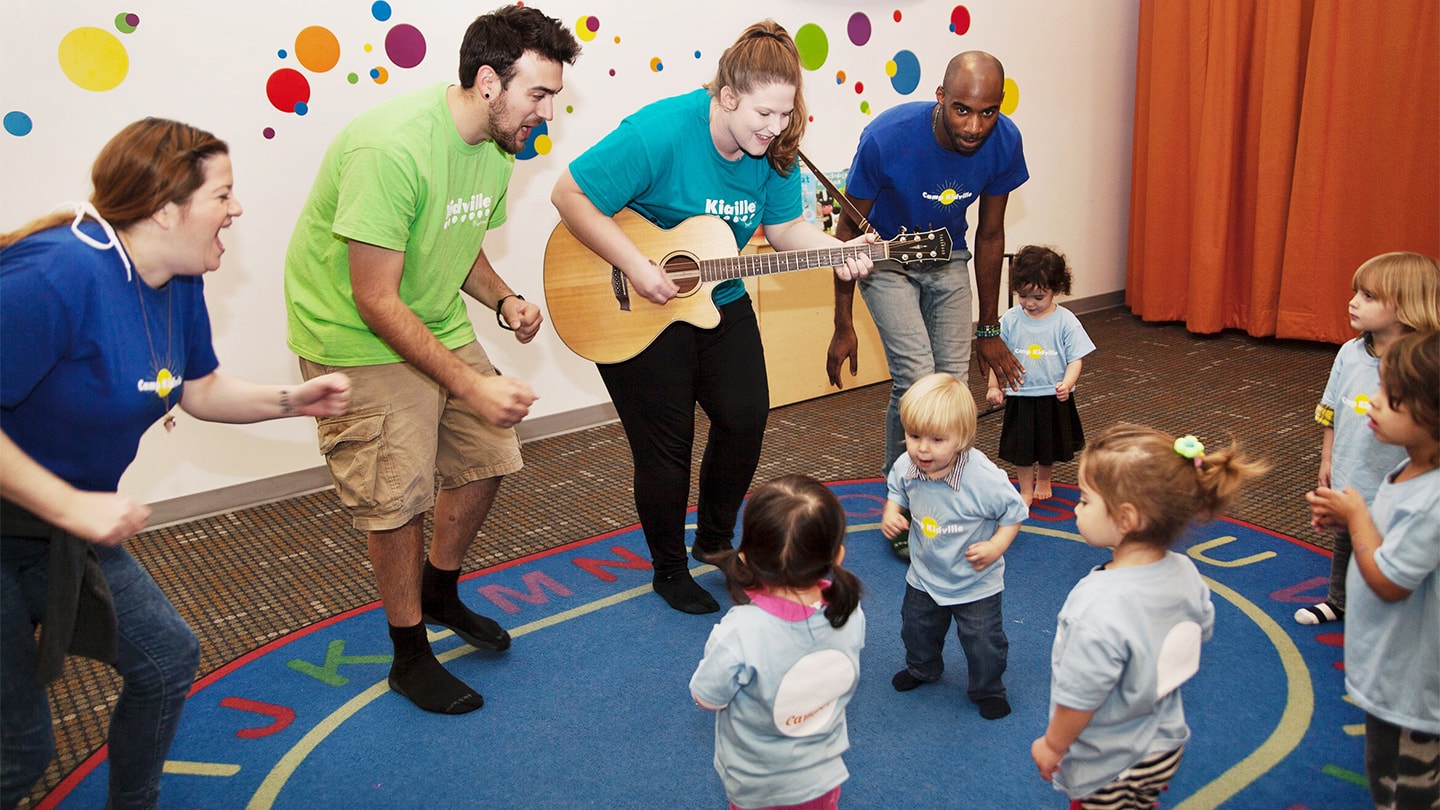
Young children dancing with their arms up beside their teachers in a Kidville class

Skill How a song builds it AAP source
Language and vocabulary Repeated phrases and funny sounds that toddlers love to echo Language Development: 2 Year Olds
Memory and recall Rhythm and pitch make words easier to remember Music and Mood
Coordination and balance Moving to the beat, dancing, marching and copying movements The Power of Play; How Active Is Your Toddler?
Self-regulation Play helps children plan, take turns and manage big feelings The Power of Play
Mood and connection Music lifts mood; a parent’s singing is soothing Music and Mood

Source: HealthyChildren.org, “The Power of Play”, “Language Development: 2 Year Olds”, “Music and Mood” and “How Active Is Your Toddler?” (American Academy of Pediatrics), verified October 27, 2026

The Kidville music classes page lists similar benefits for its own classes: language development through letter of the day and clean-up chants, literacy and numeracy through singing books and weekly lap songs and rhymes, a mood boost from family dance parties and bubble time, and sensory enhancement from live instruments that make the noisy world “less scary and more enjoyable.”

What are some good music and movement activities for toddlers at home?

Start with your voice and your living room floor; a playlist and a pot with a wooden spoon are all the equipment you need. The AAP’s How Active Is Your Toddler? suggests finding toddler-friendly music and dancing together, copying each other’s movements and getting the wiggles out, and notes that just 15 minutes a day of quality one-on-one time helps physical development. Here are ten ideas by age.

Activity How to play Good from
Lap bounce Bounce your child gently on your knee in time with a nursery rhyme, with a big “whee” at the end Babies who sit with support
Lullaby wind-down Sing the same quiet song every night before sleep Any age
Clap along Clap the beat of a favorite song; let your child copy you 9 to 12 months
Family dance party Put on toddler-friendly music and dance together, copying each other’s moves Walking toddlers
Pot-and-spoon drum Hand over a pot and a wooden spoon and tap a slow beat, then a fast one 1 year
Action songs The Wheels on the Bus, Itsy Bitsy Spider, Head, Shoulders, Knees and Toes with the motions 1 year
Marching band March around the room to a steady beat, knees high, then tiptoe for a quiet verse 18 months
Sing the book Sing a short picture book instead of reading it, and let your child fill in the last word 18 months
Freeze dance Dance while the music plays and freeze when it stops 2 years
Scarf dance Wave a scarf or dish towel high for high notes and low for low notes 2 years

Ideas built on HealthyChildren.org, “How Active Is Your Toddler?”, “The Power of Play” and “Music and Mood” (American Academy of Pediatrics), verified October 27, 2026; ages are starting points, and your own child sets the pace

Keep sessions short and stop while it is still fun. For more big-body ideas, our gross motor activities for toddlers guide covers climbing, jumping and running games, and our sensory play for toddlers guide has ideas for hands-on play with textures and sounds.

Where can toddlers do music and movement on the Upper West Side?

At Kidville’s Rockin’ Railroad: Unplugged class, a live music class for ages 5 months to 5 years at 205 West 88th Street. The Kidville music classes page describes the class as a journey where you and your child become passengers on the Rockin’ Railroad, with movement songs, lap activities, shared musical story time, group drumming exploration and “bubbles galore.” The class explores a different instrument and musical genre each week, meets puppet friends along the way, and makes stops at destinations like Instrumentville and Grandma’s House before heading back to Kidville Station.

Two smiling children playing in bubbles at Kidville Upper West Side

What Kidville says What it means for your toddler
Always live: no prerecorded track or lip-syncing Real voice, guitar, drums and keys every week
Hands-on, with toddler-sized instruments Your child taps, shakes and strums, not just listens
Original songs written by a team of musical experts New melodies plus kids’ classics
Movement songs, lap activities, group drumming, bubbles The same activities as this guide, with a live band and a room of friends
Ages 5 months to 5 years One class covers babies through preschoolers
Membership $219 a month for 4 classes or $399 for 8; first class free Try one before you commit

Source: Kidville Upper West Side music classes, membership and trial class pages, verified October 27, 2026

For what to expect at your first class, see our baby music classes guide, and for how to compare toddler music classes around the city, our best toddler music classes guide. Big-muscle movers may also like the Kidville gym classes, where coaches add obstacle courses, swings and the Tumbl Trak.

Possible downside: a live class is loud and busy, and some toddlers take a few weeks to join in rather than watch from a lap. Class spots are limited and your child is enrolled in the same class each week, so check the current schedule and call 212-362-7792 for a waitlist if a class shows a grayed-out enrollment button.

How do I keep music and movement time safe and fun?

Keep the volume comfortable, clear the floor and follow your toddler’s lead. The AAP’s active toddler guide recommends putting your phone away and setting a timer, letting your child lead, and staying close so you can step in if they head for something they should not. Keep music at a level where you can talk over it without raising your voice, move anything with sharp corners before a dance party, and treat small instruments like any small object: nothing that fits in the mouth for children who still put things there.

Do Why
Let your toddler pick the song or the move Child-led play keeps them interested longer
Repeat the same songs often Repetition is how toddlers learn the words and the actions
Keep the volume at talking level Protects small ears and keeps the mood calm
Clear the floor and dance in socks or bare feet Fewer bumps when the wiggles get big
Stop while it is still fun Short, happy sessions make them ask for more

Built on HealthyChildren.org, “How Active Is Your Toddler?” and “The Power of Play” (American Academy of Pediatrics), verified October 27, 2026

Music and movement activities for toddlers: FAQ

What are music and movement activities?

They are songs and games that pair sound with motion: action songs with hand movements, dance parties, marching to a beat, lap bounces and tapping a drum or a pot. The AAP’s Power of Play guide suggests that parents of 1 to 3 year olds sing songs, play rhythms and encourage moving to the beat. At Kidville, the Rockin’ Railroad class mixes movement songs, lap activities, group drumming and bubbles with live music.

What do toddlers learn from music and movement?

Language, memory, coordination and mood, according to the AAP. Songs give toddlers phrases and funny sounds to repeat, which the AAP says helps language at age 2; pairing words with rhythm and pitch enhances learning and recall; moving to the beat builds coordination; and play in general helps children plan, take turns and regulate emotions. A parent’s singing is also soothing, whatever your voice sounds like.

What are some good movement activities for a 2-year-old?

Freeze dance, a family dance party, a marching band around the living room, a scarf dance and action songs like Head, Shoulders, Knees and Toes all work well at 2. The AAP suggests dancing together and copying each other’s movements to get the wiggles out. Keep it to short bursts, let your child pick the song, and clear the floor first. Kidville’s Rockin’ Railroad class adds a live band and a room of friends.

What are some good music and movement songs for toddlers?

Songs with built-in actions work best: The Wheels on the Bus, Itsy Bitsy Spider, Head, Shoulders, Knees and Toes, If You’re Happy and You Know It, and Ring Around the Rosie. Add a slow lullaby for wind-down time, and any upbeat song for a dance party. Kidville’s music classes mix kids’ classics with original songs written by its own team, and explore a new instrument and genre each week.

How much music and movement does a toddler need each day?

There is no set number, but the AAP notes that just 15 minutes a day of quality one-on-one active play helps physical development, and a few songs spread through the day add up fast. A lap song after breakfast, a dance party before dinner and a lullaby at bedtime cover it. A weekly class like Kidville’s Rockin’ Railroad adds live instruments and group play on top.

What age can a toddler start a music class?

Kidville’s Rockin’ Railroad: Unplugged class takes children from 5 months to 5 years, so one class covers babies through preschoolers. Younger babies take part through lap songs and bounces, while toddlers march, drum and dance. Your first class is free, and classes run on a monthly membership of $219 for 4 classes or $399 for 8.

The bottom line

Music and movement activities for toddlers are the easiest kind of play: a song, a beat and room to wiggle. The AAP’s advice for 1 to 3 year olds is to sing songs, play rhythms and encourage moving to the beat, and a dance party, a pot-and-spoon drum and an action song cover all three. On the Upper West Side, Kidville’s Rockin’ Railroad class brings the same ideas to life with a live band, toddler-sized instruments and bubbles galore, and the first class is free.

Ready to make some noise? See the Kidville music classes at Kidville Upper West Side, 205 West 88th Street, New York, NY 10024, or claim a free trial class. Call 212-362-7792 with questions.

ABOUT THE AUTHOR

The Kidville Upper West Side Team runs the Kidville location at 205 West 88th Street, New York, NY 10024, home to music, gym, art, dance and STEM classes, Kidville University, Camp Kidville, an indoor playspace, birthday parties and a kids salon for children from birth to age 6. Every age, price and schedule detail in our guides is checked against Kidville’s own published pages.

Sources

Every Kidville class, age and price detail in this guide comes from Kidville Upper West Side’s own pages, checked on October 27, 2026. Play, language and music guidance comes from HealthyChildren.org, the American Academy of Pediatrics’ parenting site.

Kidville Upper West Side: Music Classes

Kidville Upper West Side: Free Trial Class

Kidville Upper West Side: Enrollment Options and Membership

Kidville Upper West Side: Contact

HealthyChildren.org (American Academy of Pediatrics): The Power of Play: How Fun and Games Help Children Thrive

HealthyChildren.org (American Academy of Pediatrics): How Active Is Your Toddler?

HealthyChildren.org (American Academy of Pediatrics): Language Development: 2 Year Olds

HealthyChildren.org (American Academy of Pediatrics): Music and Mood

Kids Haircut for a Child Who Hates Haircuts in NYC: Why It Happens and What Helps

KIDVILLE UPPER WEST SIDE

Kids Haircut for a Child Who Hates Haircuts in NYC: Why It Happens and What Helps

Why so many kids fight the chair, how to prepare a nervous child step by step, what helps during the cut, and a kids salon on the Upper West Side set up to make it easier.

See the Kidville Salon

205 W 88th St · 212-362-7792

Smiling girl sitting in a toy car chair at the Kidville Upper West Side salon
KIDS SALON OPEN 7 DAYS • THEMED CHAIRS • SHOWS, GAMES AND TOYS • NO HAIR WASHING

By the Kidville Upper West Side Team · Updated October 2026

SHORT ANSWER

A kids haircut for a child who hates haircuts goes best with preparation, small steps and a salon set up for kids. The AAP advises facing fears gradually, praising brave behavior and never belittling a fear. On the Upper West Side, the Kidville salon offers themed chairs, shows, games and toys, and no hair washing.

If haircut day means tears, a stiff little body and a stylist dodging a moving head, you are not alone. For a young child, a haircut packs a lot into a few minutes: the buzz of clippers, a cape around the neck, itchy bits of hair, a stranger close to their face and a request to sit still. This guide explains why some kids hate haircuts, how to prepare step by step using advice from the American Academy of Pediatrics (AAP), what helps in the chair, and how the Kidville Upper West Side salon is set up for kids who would rather be anywhere else. Every Kidville detail was checked on Kidville’s own pages on October 24, 2026.

Why do some kids hate haircuts?

Most kids who fight haircuts are reacting to the experience, not the haircut itself: new sounds, new sensations and a loss of control, all at once. Some children are also more sensitive than others. The AAP’s article on sensory integration therapy explains that some children with autism spectrum disorder may be hypersensitive to things in their surroundings, and that loud music, for instance, may cause intense discomfort. For many other kids it is plain fear of the unknown, and the AAP’s guide to childhood fears notes that it takes time for children to confront and gradually move beyond their fears.

What bothers them Why it can feel big What may help
Buzzing clippers A loud sound right next to the ears Let your child see and hear them first, or ask the stylist about using scissors
The cape Something snug around the neck Practice wearing a towel cape during play at home
Hair on the skin Itchy, prickly bits on the neck and face Bring a spare shirt and ask for a quick brush-off during the cut
Hair washing Water running over the head and face The Kidville salon does not wash hair, so there is no sink step
Sitting still Hard for almost any young child A show, game or toy to focus on, and a short trim instead of a full cut
A stranger close to their face A new person, very near Book the same stylist each time; Kidville lets you choose your stylist

Built on HealthyChildren.org, “Sensory Integration Therapy” and “Fears & Phobias in Children” (American Academy of Pediatrics), and the Kidville Upper West Side salon page, verified October 24, 2026

This guide is general information, not medical advice. If haircut struggles come with other worries about how your child reacts to sounds, touch or change, your pediatrician is the right person to ask.

How do you prepare a child who hates haircuts before the appointment?

Start a few days ahead, take small steps, and make the plan predictable. The AAP’s tips for helping a child manage anxiety include gradually facing feared activities, praising and rewarding brave behavior, and keeping regular routines, because knowing what to expect can help children feel safe and secure. The same guide says the goal is to cope, not avoid. The AAP’s guide to childhood fears adds two things not to do: do not belittle or ridicule a child’s fears, and do not pressure them into being brave.

When Step Why it helps
A few days before Play salon at home: comb hair, mist it with a little water, wear a towel cape, give a doll a pretend trim Small, playful steps toward each part of the haircut
The day before Explain in simple words what will happen, one step at a time, and look at photos of the salon chairs together Knowing what to expect can help children feel safe
When you book Choose a time of day when your child is usually rested and fed, and ask for the same stylist as last time A predictable routine with a familiar face
On the way Name the feeling: “You seem worried about the haircut. That makes sense.” The AAP’s emotion coaching: notice, name and acknowledge feelings
Afterward Praise the brave part, even if the cut was short Praising brave behavior helps a child cope instead of avoid

Built on HealthyChildren.org, “Help Your Child Manage Anxiety”, “Fears & Phobias in Children” and “Helping Little People Manage Big Feelings” (American Academy of Pediatrics), and the Kidville Upper West Side salon page, verified October 24, 2026

Smiling girl in a salon cape while a Kidville stylist combs her hair

For kids old enough to follow along, the AAP also suggests practicing deep breathing and muscle relaxation; a few slow breaths together in the waiting area are an easy way to try it. It is the same practice-at-home, step-by-step approach we describe in our guide on how to prepare a toddler for preschool. If your child is bothered by textures in general, low-pressure play with different materials at home is another gentle way in; our sensory play for toddlers guide has ideas.

What helps during the haircut itself?

Give your child something to focus on, stay close and calm, and keep the cut as simple as it can be. Haircut day is not the time for a dramatic new style. Ask for the simplest cut that works, let the stylist go at your child’s pace, and stay where your child can see you. If your child gets upset, the AAP’s emotion coaching approach helps: notice the feeling, name it, acknowledge it, and then meet the need, whether that is a short break, a favorite toy or a hand to hold.

If your child… Try this
Cries at the sight of the clippers Ask whether the stylist can start with scissors, and let your child see and hear the clippers before they come close
Will not sit still Use a show, game or toy as the focus; at Kidville, kids select their own entertainment
Hates hair on their neck Bring a spare shirt and ask for quick brush-offs along the way
Melts down halfway Pause, name the feeling, and finish what you can; a partial cut still counts as progress
Wants some control Offer small choices: which chair, which show, which toy to hold

Built on HealthyChildren.org, “Helping Little People Manage Big Feelings” and “Help Your Child Manage Anxiety” (American Academy of Pediatrics), and the Kidville Upper West Side salon page, verified October 24, 2026

Between full cuts, a quick bang trim keeps hair out of the eyes with much less time in the chair, and short, easy visits are a gentle way to build up to a full haircut.

Where can a child who hates haircuts get a kids haircut on the Upper West Side?

At the Kidville salon at 205 West 88th Street, which specializes in making time in the styling chair fun and easy for kids. The Kidville Upper West Side salon page says kids can sit back and relax with an Amazon or Netflix show, games or toys, select their own entertainment and pick a fun themed chair, and that its stylists “have been known to make even the most difficult of cuts a breeze.” The salon does not wash hair, it is open seven days a week, and you do not need a class membership to book.

Toddler in a fire truck chair getting a haircut from a Kidville stylist

Kidville salon detail What the salon page says Why it helps a child who hates haircuts
Entertainment An Amazon or Netflix show, games or toys, chosen by your child Something to watch besides the scissors
Themed chairs Kids pick a fun themed chair A real choice gives your child a little control
No hair washing The salon does not wash hair No sink and no water over the face
Choose your stylist You pick the date, time and stylist when you book The same familiar face, visit after visit
Open 7 days Open seven days a week; hours are subject to change Book when your child is at their best
Prices Child’s haircut $41, bang trim $16.50, 5-pack of haircuts $200 A bang trim is a shorter, easier visit between full cuts

Source: Kidville Upper West Side salon page, verified October 24, 2026

To book, stop by the front desk, call 212-362-7792 or book online; new clients sign a waiver and create an account. If this is your child’s very first haircut, our baby’s first haircut guide covers timing and the first-haircut certificate, clippings and treat.

Possible downside: even a kid-friendly salon is a busy, new place, and some children need several visits before a haircut feels easy. Salon hours are subject to change, so confirm your time when you book, and because the salon does not wash hair, plan a bath at home if you want one.

When should you talk to your pediatrician about haircut struggles?

When the fear does not ease with time, gets worse, or comes with strong reactions to other sounds, textures or small changes in routine. Plenty of children dislike haircuts, so look at the bigger picture. The AAP’s anxiety guide says to get back in touch with the doctor if a child’s anxiety does not go away or gets worse. The CDC lists unusual reactions to the way things sound, smell, taste, look or feel among the possible signs of autism spectrum disorder, and says to contact your child’s doctor if you have any concerns about your child’s development. The AAP also suggests talking with your pediatrician if you suspect your child has difficulties with sensory processing.

Kids haircut for a child who hates haircuts: FAQ

What to do when your kid hates their haircut?

Slow down and make it predictable. Play salon at home, tell your child what will happen step by step, and praise every brave moment. The AAP advises facing fears gradually and never belittling or ridiculing them. In the chair, give your child something to focus on, like a show, game or toy, and ask for the simplest cut. At the Kidville salon, kids pick their own entertainment and a themed chair.

What can I do if my child refuses to get a haircut?

Take the pressure off and break it into smaller steps. The AAP says not to pressure a child into being brave, and to gradually face feared activities with praise for brave behavior. Try one small step per visit, like sitting in the chair or a quick bang trim, which is $16.50 at the Kidville salon. If the refusal comes with worries that do not ease or get worse, talk to your pediatrician.

Why is my child afraid of haircuts?

Usually because a haircut puts several new things together: buzzing clippers, a cape, itchy hair, a stranger close to their face and having to sit still. Some children are also more sensitive to sound and touch, and the AAP notes that some children with autism spectrum disorder may be hypersensitive to their surroundings. Fear of the unknown plays a big part too, which is why playing salon at home helps.

Is it normal for kids to not like haircuts?

Yes, plenty of young children dislike haircuts, and the AAP notes that it takes time for children to confront and gradually move beyond their fears. Practice at home, a predictable routine and praise for brave moments all help. If the fear does not ease, gets worse, or comes with strong reactions to other sounds or textures, mention it to your pediatrician, who can tell you whether anything else is worth checking.

Do kids with autism like haircuts?

Every child with autism is different, but haircuts can be especially hard. The CDC lists unusual reactions to the way things sound, smell, taste, look or feel among possible signs of autism, and the AAP notes that some children with autism may be hypersensitive to stimuli. Buzzing clippers, a cape and hair on the skin can be a lot. Small steps and a predictable routine help, and your pediatrician can point you to community resources.

How to convince a toddler to get a haircut?

Make it a game, not a battle. Play salon with a doll or stuffed animal, let your toddler watch a parent or sibling get a trim, and offer real choices along the way. At the Kidville salon, kids pick a fun themed chair and their own show, game or toy. Use simple words about what will happen, keep the first visit short, and praise the brave part afterward, however small.

The bottom line

A kids haircut for a child who hates haircuts gets easier with preparation, patience and the right salon. The AAP’s advice is to face fears in small steps, praise brave behavior and never belittle the fear, and to check in with your pediatrician if it does not ease. On the Upper West Side, the Kidville salon helps with themed chairs, shows, games and toys, no hair washing and seasoned stylists, seven days a week.

Ready to try again? Book a kids haircut at the Kidville salon at Kidville Upper West Side, 205 West 88th Street, New York, NY 10024, or call 212-362-7792. A quick bang trim is an easy first step.

ABOUT THE AUTHOR

The Kidville Upper West Side Team runs the Kidville location at 205 West 88th Street, New York, NY 10024, home to music, gym, art, dance and STEM classes, Kidville University, Camp Kidville, an indoor playspace, birthday parties and a kids salon for children from birth to age 6. Every age, price and schedule detail in our guides is checked against Kidville’s own published pages.

Sources

Every Kidville salon detail and price in this guide comes from Kidville Upper West Side’s own pages, checked on October 24, 2026. Guidance on fears, feelings and sensory sensitivity comes from HealthyChildren.org, the American Academy of Pediatrics’ parenting site, and from the Centers for Disease Control and Prevention.

Kidville Upper West Side: Salon

Kidville Upper West Side: Contact

HealthyChildren.org (American Academy of Pediatrics): Help Your Child Manage Anxiety: Tips for Home & School

HealthyChildren.org (American Academy of Pediatrics): Fears & Phobias in Children: How Parents Can Help

HealthyChildren.org (American Academy of Pediatrics): Helping Little People Manage Big Feelings

HealthyChildren.org (American Academy of Pediatrics): Sensory Integration Therapy

Centers for Disease Control and Prevention: Signs and Symptoms of Autism Spectrum Disorder

Gross Motor Activities for Toddlers: Ideas by Age and Where to Practice on the Upper West Side

KIDVILLE UPPER WEST SIDE

Gross Motor Activities for Toddlers: Ideas by Age and Where to Practice on the Upper West Side

What gross motor skills are, the milestones pediatricians list at 1, 2 and 3, easy indoor activities for an apartment, and the Kidville gym classes built around big muscles.

See the Gym Classes

205 W 88th St · 212-362-7792

Toddlers copying a coach's push-up pose on the mat during a Kidville gym class
GYM CLASSES FROM 8 MONTHS • TUMBL TRAK • INDOOR SWINGS • FIRST CLASS FREE

By the Kidville Upper West Side Team · Updated October 2026

SHORT ANSWER

Gross motor activities for toddlers are games that work the big muscles: crawling through tunnels, climbing, running, jumping, kicking and throwing. The AAP lists walking alone, starting to run, kicking a ball and climbing onto furniture as 2-year-old milestones. On the Upper West Side, Kidville’s gym classes and indoor playspace are built around these skills.
Toddlers do not need to be taught to move. They need room, a safe place to fall and something worth climbing. Gross motor play is how they get stronger, steadier and braver, and in a New York apartment it takes a little planning. This guide explains what gross motor skills are, the movement milestones the American Academy of Pediatrics lists at 1, 2 and 3, indoor activities that fit a living room, and how the Kidville Upper West Side gym classes turn the same skills into a weekly routine. Every Kidville detail was checked on Kidville’s own pages on October 22, 2026.
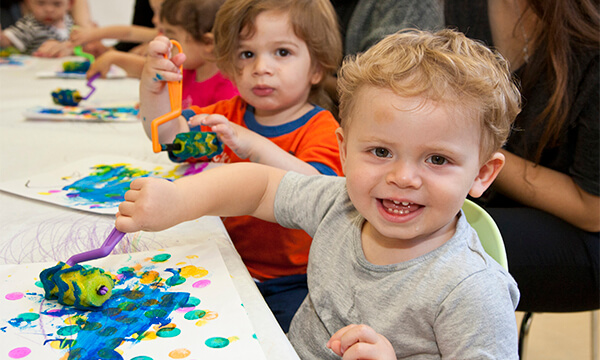
What are gross motor skills, and why do they matter for toddlers?

Gross motor skills use the large muscles of the arms, legs and trunk: crawling, walking, running, jumping, climbing, kicking and throwing. Fine motor skills are the small hand movements, like picking up a crumb or holding a crayon; our fine motor activities for toddlers guide covers those. The AAP’s guide How Active Is Your Toddler? describes the goal of toddler play as practicing physical skills like walking, running, squatting and climbing, and notes that just 15 minutes a day of quality one-on-one time helps with physical development. Its article on movement milestones in preschoolers adds that movement also helps children understand new words and ideas.
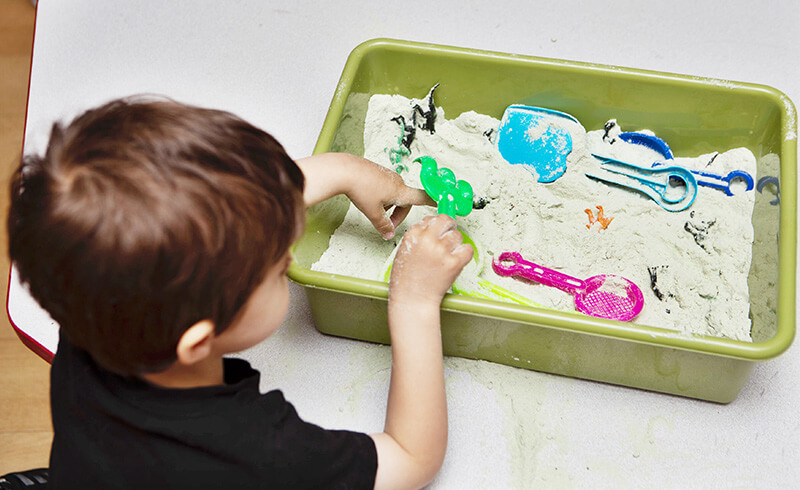
Gross motor skill What it builds Everyday example
Crawling Arm and shoulder strength, coordination of both sides of the body Crawling through a tunnel or under a table
Walking and running Balance, leg strength, speed control Chasing bubbles across the room
Climbing Strength, planning, courage Climbing onto the couch and back down
Jumping Leg power, landing safely Jumping off the bottom step onto a cushion
Kicking and throwing Aim, timing, balance on one leg Kicking a soft ball to a parent

Built on HealthyChildren.org, “How Active Is Your Toddler?” and “Movement Milestones in Preschoolers” (American Academy of Pediatrics), verified October 22, 2026

This guide is general information, not medical advice. If you have questions about how your child moves, walks or balances, your pediatrician is the right person to ask.

What gross motor skills should a toddler have at 1, 2 and 3?

Around 1, toddlers pull up and cruise; around 2, they walk alone, start to run and climb furniture; around 3, they ride a tricycle and throw overhand. These come from the AAP’s milestone pages for 12 months, 2 year olds and 3 to 4 year olds. Every child moves at their own pace, so use the table as a guide to what to practice, not as a test.

Toddler girl crawling through a green and yellow tunnel on the Kidville gym mats

Age Movement milestones the AAP lists Activities that practice them
Around 12 months Pulls self up to stand; walks holding on to furniture; stands momentarily without support; may walk two or three steps Cruising along the couch to reach a toy, pushing a sturdy box, crawling through a tunnel
2 years Walks alone; pulls toys while walking; begins to run; stands on tiptoe; kicks a ball; climbs onto and down from furniture; walks up and down stairs holding on Pull toys, chasing games, kicking a soft ball, a cushion climb, stairs with a hand to hold
3 to 4 years Hops and stands on one foot up to 5 seconds; kicks a ball forward; throws a ball overhand; pedals a tricycle; climbs on and off a couch or chair Hopscotch with tape on the floor, catch with a big ball, tricycle in the park, freeze dance

Source: HealthyChildren.org, “Developmental Milestones: 12 Months”, “Developmental Milestones: 2 Year Olds” and “Developmental Milestones: 3 to 4 Year Olds” (American Academy of Pediatrics), verified October 22, 2026

The AAP’s preschool movement article also notes that at 3, a child may still need to make a conscious effort to stand on tiptoes or one foot, get up from a squat or catch a ball, which is exactly why repetition in play matters. For the baby stage, our baby gym classes guide covers 8 to 15 months in detail.

What are some fun gross motor activities for toddlers indoors?

The best indoor gross motor activities need a cleared floor, a few cushions and a grown-up who plays too. The AAP suggests child-led walks, dance parties and bubble play for toddlers, and for older toddlers crab-walk races, Floor is Lava and Red Light, Green Light. All of them fit in a living room and none need special equipment.

Indoor activity What you need Skills it works Good from
Bubble chase A bubble wand Walking, running, reaching, stopping Walking toddlers
Dance party A playlist Balance, rhythm, jumping 1 year
Cushion mountain Couch cushions on the floor Climbing up and safely down 1 year, with a grown-up close
Tunnel crawl A play tunnel or a blanket over two chairs Crawling, shoulder strength 1 year
Floor is Lava Pillows or tape spots on the floor Jumping, balance, planning a path 2 years
Crab-walk races Open floor Arm and core strength 2 to 3 years
Red Light, Green Light A hallway Running, stopping, listening 2 to 3 years

Ideas from HealthyChildren.org, “How Active Is Your Toddler?” (American Academy of Pediatrics), verified October 22, 2026; ages are starting points, and your own child and your supervision set the pace

The AAP also recommends putting your phone away and setting a timer for play, and staying close so you can step in if a toddler heads for something they should not. Many of these games double as sensory play; our sensory play for toddlers guide has more ideas that mix the two.

Where can toddlers practice gross motor skills on the Upper West Side?

In a Kidville gym class, where coaches rotate equipment every week, or in the indoor playspace on days without class. The Kidville gym classes page describes a familiar routine that moves from warm-ups to exploration, skill sharing and cool down, anchored by a theme, in a gym space with a weekly rotation of equipment, obstacle courses and props. Kidville lists the developmental benefits as strength and flexibility, from forward rolls to toe touches; courage and confidence through safe risk-taking with a supportive coach; active play, from the Tumbl Trak to the swings; and social skills such as teamwork and turn-taking.

Smiling boy hanging from the monkey bars in the Kidville gym

Kidville option Ages What toddlers do Cost
Big Muscles for Little Babies 8 to 15 months Inclines, balls, tunnels and the Tumbl Trak while moving from sitting to standing and crawling to cruising; indoor swings and bubble dances Membership: $219 a month for 4 classes or $399 for 8
Big Muscle Builders 12 to 24 and 18 to 36 months Climbing courses, jumping on the Tumbl Trak, indoor swings, and lifting, carrying and stacking giant blocks Membership: $219 a month for 4 classes or $399 for 8
Indoor playspace Toddlers with a grown-up Open play in the Kidville gym $31 per 1-hour session; packs of 5 for $150 or 10 for $290; register in advance
Free trial class Any class on the schedule One gym class to see if it fits Free; playspace does not count as the trial

Source: Kidville Upper West Side gym classes, playspace, membership and trial class pages, verified October 22, 2026

Kidville describes Big Muscle Builders as preparing children for gymnastics and sports. For what a class looks like week to week, see our toddler gym classes guide, and for choosing between a class and open play on a cold or wet day, our indoor gym classes guide and rainy day activities guide.

Possible downside: class spots are limited and your child is enrolled in the same class each week, so a gym class takes a weekly commitment. Grayed-out enrollment buttons mean a class is full or outside its enrollment window, and the front desk can add you to a waitlist at 212-362-7792. Playspace sessions must be booked in advance, and weekend hours depend on the birthday party schedule.

How can parents help a toddler build gross motor skills safely?

Give them space, let them lead, and stay close without hovering. The AAP’s preschool movement article says a few bumps and bruises are a normal part of learning to move and that you do not need to hover over solo play at home, but that your attention matters most around other children, hazardous equipment and traffic, and that the same close watching matters any time your child is near water.

Do Why AAP source
Let your toddler lead the walk or the game Child-led play keeps them interested longer How Active Is Your Toddler?
Put the phone away and set a timer 15 minutes of focused one-on-one time helps physical development How Active Is Your Toddler?
Stay close around equipment and other kids Self-control and coordination are still developing Movement Milestones in Preschoolers
Watch closely any time they are near water Never leave a child alone in a pool or at the beach, even if they can swim Movement Milestones in Preschoolers
Repeat favorite games Skills like standing on one foot and catching still take effort at 3 Movement Milestones in Preschoolers

Source: HealthyChildren.org, “How Active Is Your Toddler?” and “Movement Milestones in Preschoolers” (American Academy of Pediatrics), verified October 22, 2026

Gross motor activities for toddlers: FAQ

What are 5 examples of gross motor skills?

Crawling, walking, running, jumping and climbing are five classic examples, and kicking and throwing a ball are close behind. Each one uses the large muscles of the legs, arms and trunk. The AAP lists walking alone, beginning to run, kicking a ball and climbing onto and down from furniture among its 2-year-old milestones. Kidville’s toddler gym class practices all of them on climbing courses, the Tumbl Trak and giant blocks.

What are some fun gross motor activities for toddlers indoors?

Bubble chases, dance parties, a cushion mountain, a tunnel crawl, Floor is Lava, crab-walk races and Red Light, Green Light all work in an apartment. The AAP suggests dance parties and bubble play for toddlers, plus crab-walk races and Floor is Lava for older toddlers. Clear the floor, move anything sharp, and play along. For bigger equipment, Kidville’s indoor playspace runs one-hour sessions for $31.

What gross motor skills should a 1 year old have?

Around 12 months, the AAP lists getting to sitting without help, crawling, pulling up to stand, walking while holding on to furniture, standing for a moment without support, and maybe taking two or three steps alone. Every baby gets there on their own schedule. Cruising along a couch and crawling through tunnels are great practice, and Kidville’s Big Muscles for Little Babies class covers 8 to 15 months.

What are some good gross motor activities for a 2-year-old?

Good choices include chasing bubbles, kicking a soft ball, climbing a cushion pile, pulling a toy on a string, jumping to music and simple running games. The AAP says 2-year-olds begin to run, stand on tiptoe, kick a ball and climb onto and down from furniture, so games that use those moves fit well. Kidville’s Big Muscle Builders class for 18 to 36 months adds climbing courses, swings and the Tumbl Trak.

What gross motor skills should a 3 year old have?

By 3 to 4, the AAP lists hopping and standing on one foot for up to five seconds, kicking a ball forward, throwing a ball overhand, catching a bounced ball most of the time and pedaling a tricycle. Its preschool movement article adds that a 3-year-old walks steadily and can ride a tricycle with ease, while standing on one foot and catching still take effort. Hopscotch, catch and obstacle courses are good practice.

How do I improve my child’s gross motor skills?

Make time every day for active play, let your child lead, and repeat the games they love. The AAP notes that just 15 minutes a day of focused one-on-one time helps physical development. Offer things to climb, push, kick and throw, stay close around equipment and water, and add a weekly class if you can. Kidville’s gym classes rotate equipment weekly, and your first class is free.

The bottom line

Gross motor activities for toddlers are simple: room to move, a few cushions and a grown-up who plays along. The AAP’s milestones give you a guide to what to practice at 1, 2 and 3, and its everyday ideas, from dance parties to Floor is Lava, fit in any apartment. On the Upper West Side, Kidville’s Big Muscles for Little Babies and Big Muscle Builders classes add climbing courses, the Tumbl Trak and indoor swings, with the playspace for the days in between.

Ready to get moving? See the Kidville gym classes at Kidville Upper West Side, 205 West 88th Street, New York, NY 10024, or claim a free trial class. Call 212-362-7792 with questions.

ABOUT THE AUTHOR

The Kidville Upper West Side Team runs the Kidville location at 205 West 88th Street, New York, NY 10024, home to music, gym, art, dance and STEM classes, Kidville University, Camp Kidville, an indoor playspace, birthday parties and a kids salon for children from birth to age 6. Every age, price and schedule detail in our guides is checked against Kidville’s own published pages.

Sources

Every Kidville class, age and price detail in this guide comes from Kidville Upper West Side’s own pages, checked on October 22, 2026. Milestone, play and safety guidance comes from HealthyChildren.org, the American Academy of Pediatrics’ parenting site.

Kidville Upper West Side: Gym Classes

Kidville Upper West Side: Playspace and Holiday Schedule

Kidville Upper West Side: Free Trial Class

Kidville Upper West Side: Enrollment Options and Membership

Kidville Upper West Side: Contact

HealthyChildren.org (American Academy of Pediatrics): How Active Is Your Toddler?

HealthyChildren.org (American Academy of Pediatrics): Movement Milestones in Preschoolers

HealthyChildren.org (American Academy of Pediatrics): Developmental Milestones: 12 Months

HealthyChildren.org (American Academy of Pediatrics): Developmental Milestones: 2 Year Olds

HealthyChildren.org (American Academy of Pediatrics): Developmental Milestones: 3 to 4 Year Olds

3-Year-Old Birthday Party Ideas in NYC: Themes, Games and a Party Plan from the Upper West Side

KIDVILLE UPPER WEST SIDE

3-Year-Old Birthday Party Ideas in NYC: Themes, Games and a Party Plan from the Upper West Side

What a 3-year-old can actually do at a party, the Kidville themes made for age 3 and up, simple games, guest and timing rules from pediatricians, and what a Kidville party costs.

Request a Party Date

205 W 88th St · 212-362-7792

Little girl in a superhero costume hugging a friend at a Kidville birthday party
THEMES FOR AGES 3 AND UP • ZIP LINE • 90 MINUTES • FROM $1,095

By the Kidville Upper West Side Team · Updated October 2026

SHORT ANSWER

3-year-old birthday party ideas that work are short, active and built on pretend play: a costume theme like superheroes or dinosaurs, a craft table, freeze dance and an obstacle course. The AAP suggests about four guests for a 3-year-old and keeping toddler parties under 90 minutes. Kidville Upper West Side runs 90-minute themed parties from $1,095.

Age 3 is the first birthday where your child really joins in. They pick a theme, wear the costume, run the obstacle course and sing along to Happy Birthday instead of just watching it happen. They also still melt down when the party runs long or the room gets too loud. This guide covers what a 3-year-old can do at a party according to the American Academy of Pediatrics, the Kidville birthday party themes recommended for age 3 and up, games and craft ideas that fit this age, guest count and timing, and what a party at 205 West 88th Street costs. Every Kidville detail was checked on Kidville’s own pages on October 22, 2026.

What can a 3-year-old actually do at their own birthday party?

Much more than at 2: hop, climb, kick a ball, play pretend and start taking turns, which is why age 3 is when themed parties really click. HealthyChildren.org, the parenting site of the American Academy of Pediatrics, lists milestones for 3 to 4 year olds that read like a party plan: pedals a tricycle, kicks a ball forward, throws a ball overhand, hops and stands on one foot, cooperates with other children and shares, and becomes increasingly inventive in fantasy play. The AAP’s guide to social development in preschoolers adds that three-year-olds can work out disputes by taking turns or trading toys, and that they start to play with other children rather than just beside them.

What the AAP says 3-year-olds can do Party idea that fits Why it works
Kicks a ball forward, throws overhand, catches a bounced ball A ball station or a “goal” with a soft ball Short turns, instant success, easy to run with a group
Hops, stands on one foot, moves forward and backward Freeze dance and an obstacle course Big-muscle play burns energy before cake
Increasingly inventive in fantasy play; plays “Mom” or “Dad” A costume theme: superheroes, dinosaurs, princesses and knights, space Dressing up turns the whole party into one pretend game
Cooperates with other children and shares; takes turns Red light, green light; duck, duck, goose; passing a picture Simple rules and turn-taking are now within reach
Often cannot tell fantasy from reality; may see “monsters” Friendly characters only; skip scary masks or villains up close A costumed stranger can frighten a 3-year-old more than it entertains

Source: HealthyChildren.org, “Developmental Milestones: 3 to 4 Year Olds” and “Social Development in Preschoolers” (American Academy of Pediatrics), verified October 22, 2026

Every child develops at their own pace, so treat these as a guide, not a test. This guide is general information, not medical advice; your pediatrician is the right person for questions about your child’s development.

Which Kidville party themes are recommended for a 3-year-old?

Four Kidville themes start at age 3, and the age 2 and all-ages themes still work, so a 3-year-old has nine to choose from. The Kidville party themes page lists each theme with a recommended age. Superhero Birthday Bash, Dino-Mite Party, Royal Princess and Knight Party, and Fly Me to the Moon Space Party are all recommended for 3 years and up. The Slime Factory and Treasure Hunt parties start at 4, so they are better saved for next year.

Kidville theme Recommended age How Kidville describes it
Superhero Birthday Bash 3 years and up Become the hero that saves the day
Dino-Mite Party 3 years and up A prehistoric dig into all things dinosaurs
Royal Princess and Knight Party 3 years and up Dress up with crowns, shields and costumes
Fly Me to the Moon Space Party 3 years and up A galactic adventure
Rainbows and Unicorns 2 years and up Make-believe and magic with your own unicorn horn
Toot Toot Beep Beep Transportation Party 2 years and up A transportation theme
Ready, Set, Build! A Construction Party 2 years and up Plan, design and construct
Little Explorers Safari Adventure 2 years and up An animal safari adventure
Jumpin’ Gym Party All ages Courses and adventure circuits in the gym

Source: Kidville Upper West Side party themes page, verified October 22, 2026; Kidville notes that certain party offerings and timelines may differ from theme descriptions, so call to confirm what is included at this location

If your child loved a theme at someone else’s party, ask about it; the themes page also invites families to discuss custom themes and custom decor. For the younger version of this guide, see our 2-year-old birthday party ideas, and for the very first one, where to have a 1st birthday party in NYC.

What happens at a 3-year-old’s birthday party at Kidville?

Ninety minutes in four parts: exploration, creation, gym time and celebration, with Kidville party leaders running every part. Kidville’s party timeline starts with exploration stations such as personalized playdough, building blocks and coloring pages, then introduces the theme with a hands-on activity like dress-up, digging bins or sticker scenes. Creation time follows at the arts and crafts table, where each child makes a take-home project matched to the theme with markers, jewels, foam shapes and dot-art.

Young girls pouring colored sand into bottles at a Kidville birthday party craft table

Then comes gym time in the indoor playspace, which Kidville describes as decked out with a trampoline, a flexible obstacle course, climbing equipment and a zip-line, with themed games, freeze dance and bubbles. The party ends with pizza and cake among balloon bouquets, a round of Happy Birthday, and favor bags for every guest.

Boy riding the zip line in the Kidville gym while two party leaders cheer him on

Party segment What happens Why it suits a 3-year-old
Exploration time Playdough, blocks and coloring stations, then a theme activity like dress-up or a digging bin Gives early and shy guests an easy way in
Creation time A take-home craft matched to the theme Fine motor work with a souvenir at the end
Gym time Trampoline, obstacle course, climbing, zip-line, themed games, freeze dance, bubbles Uses exactly the running, climbing and hopping skills 3-year-olds love
Celebration time Pizza, cake, Happy Birthday, favor bags Food comes after the active part, when guests are ready to sit

Source: Kidville Upper West Side party timeline page, verified October 22, 2026

For more ways to keep a 3-year-old moving on regular days, our indoor gym classes guide covers the gym classes and playspace by age.

What are some creative ideas for a 3rd birthday party at home?

Pick one theme, plan four or five short activities of 10 to 15 minutes each, and let the costume do most of the work. The AAP’s birthday party tips for young children recommend planning around 10 to 15 minutes for each game or activity, and suggest simple games such as pass the picture, red light green light and duck duck goose. For an apartment party, that is about an hour of structure and plenty of time for cake.

Idea What you need Time Theme it fits
Costume parade Capes, crowns or dinosaur tails for each guest 10 minutes Superhero, Princess and Knight, Dino
Dinosaur dig A bin of play sand or rice with plastic dinosaurs and brushes 10 to 15 minutes Dino
Freeze dance A playlist and a pause button 10 minutes Any
Red light, green light Open floor space 10 minutes Transportation, any
Sticker scene Sticker sheets and a big poster of the theme 10 to 15 minutes Space, Safari, any
Pillow obstacle course Cushions, a tunnel or a chair to crawl under 10 to 15 minutes Superhero training, any
Bubbles before cake A bubble wand or machine 5 to 10 minutes Any

Ideas built on HealthyChildren.org, “Playful Birthday Party Ideas and Tips for Young Children” (American Academy of Pediatrics), verified October 22, 2026; supervise every activity, and keep sand or rice bins for children who no longer put things in their mouths

Keep the most active game before food and the calmest one after. If a guest is overwhelmed, a quiet corner with books or the sticker table gives them a break without leaving the party.

How many guests, how long and what time should a 3-year-old’s party be?

About four guests, under 90 minutes, and a start time that avoids nap time. The AAP’s rule of thumb for babies and toddlers is your child’s age plus one, which for a 3-year-old means about four guests, and it says toddler parties should last under 90 minutes. It also reminds parents to be mindful of nap time for children who still nap. In real life many 3-year-olds have a preschool or class group, so the guest list often grows; Kidville’s Classic package covers 10 children and the Deluxe covers 20.

Question AAP guidance How it plays out at Kidville
How many guests? Age plus one: about 4 for a 3-year-old Classic Party includes 10 children, Deluxe Party 20; the birthday child is free
How long? Toddler parties under 90 minutes Every Kidville party is 90 minutes, led by party leaders
What time? Be mindful of nap time Ask the party planner for a slot that fits your child’s nap
How long per activity? About 10 to 15 minutes per game or activity The four-part timeline changes activity every stage
Food safety Balloons are a choking risk up to age 8; keep high-risk foods away until about 4; cut food into pieces no larger than one-half inch; children sit to eat Pizza and cake are served in a dedicated celebration area; cut pieces small for younger guests

Source: HealthyChildren.org, “Playful Birthday Party Ideas and Tips for Young Children” and “Choking Prevention for Babies and Children” (American Academy of Pediatrics), and Kidville Upper West Side birthday party pages, verified October 22, 2026

The AAP’s choking prevention guidance is worth a second look before any party with younger siblings, since balloons and small favors end up on the floor.

How much does a 3-year-old’s birthday party cost at Kidville Upper West Side?

Kidville’s all-inclusive packages are $1,095 for 10 children and $1,695 for 20 children, and a private playspace hour is a lower-cost option at $350. Both packages on the Kidville birthday parties page include a Kidville party planner, a free birthday child, a private party space, 90 minutes, a theme, a theme-based craft table, gym time, balloons and paper goods, pizza and drinks for the children, and a personalized birthday cake and candles. The Deluxe adds a third party leader and the Kidville Jumpy Castle.

Option Price Children What is included
Classic Party $1,095 10 2 party leaders, party planner, theme, craft, gym time, pizza, cake, balloons, paper goods
Deluxe Party $1,695 20 3 party leaders, Kidville Jumpy Castle, plus everything in the Classic
Private playspace $350 first hour; $125 each extra hour, up to 3 hours Up to 10 The gym to yourselves; $250 Jumpy Castle add-on; book by email
Member discount 10% or 15% off the party deposit (pre-tax) n/a Single Class Membership ($219 a month) or Double Class Membership ($399 a month)

Source: Kidville Upper West Side birthday parties, playspace and membership pages, verified October 22, 2026

For a full breakdown of per-child cost and budget tips, see our kids birthday party cost guide. To book, call 212-362-7792 or email birthdays.uws@mykidville.com.

Possible downside: a package party runs on a fixed 90-minute format with a set number of children, so it is less flexible than a party at home. Kidville also notes that offerings and timelines may differ from the theme descriptions, so confirm the details for your theme with the party planner before you book, and ask about adding guests beyond the package, since no extra-guest price is published.

3-year-old birthday party ideas: FAQ

What should I do for a 3 year old’s birthday?

Pick a theme your child already loves, keep the guest list small and plan an active party under 90 minutes. The AAP suggests about four guests for a 3-year-old and 10 to 15 minutes per activity. At home, a costume parade, freeze dance and a craft table are plenty. If you would rather not host, Kidville Upper West Side runs 90-minute themed parties with the planning and details handled.

Where is the best place to have a 3 year old birthday party?

Somewhere with room to run, a place to sit for cake and a short trip home. In Manhattan that usually means an indoor play space, a party venue or a large apartment. Kidville Upper West Side at 205 West 88th Street has a private party space, a gym with a trampoline, obstacle course and zip-line, and party leaders, with packages for 10 or 20 children.

What are some creative ideas for a 3rd birthday party?

A superhero training course, a dinosaur dig in a sand bin, a princess and knight costume parade, a space sticker scene, or a construction zone with big blocks. Each one turns the theme into something guests do, not just decorations. Kidville offers Superhero, Dino-Mite, Royal Princess and Knight, and Space parties for ages 3 and up, each with a matching craft and gym games.

What activities are fun for a 3rd birthday party?

Running, climbing and pretend play: an obstacle course, freeze dance, red light green light, duck duck goose, bubbles and a simple craft to take home. The AAP notes that 3-year-olds pedal tricycles, kick and throw balls, take turns and play inventive pretend games. Kidville’s party gym time uses the same skills with a trampoline, climbing equipment and a zip-line.

Is 2 hours long enough for a kids party?

For a 3-year-old, 2 hours is usually more than enough. The AAP says toddler parties should last under 90 minutes and that school-aged children can handle about 2 to 3 hours. A shorter party ends before guests get tired and cranky. Every Kidville birthday party runs 90 minutes, split into exploration, creation, gym and celebration time, so the pace never stalls.

How much should you spend on a 3 year old birthday party?

There is no right number; it depends on your guest list and how much you want handled for you. A small home party with four guests costs little beyond cake and supplies. At Kidville Upper West Side, a private playspace hour is $350, the Classic Party is $1,095 for 10 children, and the Deluxe is $1,695 for 20, and members get 10% or 15% off the party deposit.

The bottom line

3-year-old birthday party ideas come down to one theme, short active games and a party that ends before the guests run out of steam. The AAP’s guidance is about four guests, under 90 minutes, 10 to 15 minutes per activity and an eye on nap time, and 3-year-olds are ready for costumes, turn-taking games and obstacle courses. On the Upper West Side, Kidville runs 90-minute parties with four themes made for age 3 and up, a zip-line in the gym, and the planning and details handled for you.

Planning a 3rd birthday? Request a party date at Kidville Upper West Side, 205 West 88th Street, New York, NY 10024, or browse the party themes. Call 212-362-7792 or email birthdays.uws@mykidville.com.

ABOUT THE AUTHOR

The Kidville Upper West Side Team runs the Kidville location at 205 West 88th Street, New York, NY 10024, home to music, gym, art, dance and STEM classes, Kidville University, Camp Kidville, an indoor playspace, birthday parties and a kids salon for children from birth to age 6. Every age, price and schedule detail in our guides is checked against Kidville’s own published pages.

Sources

Every Kidville theme, age, package and price detail in this guide comes from Kidville Upper West Side’s own pages, checked on October 22, 2026. Development, party and safety guidance comes from HealthyChildren.org, the American Academy of Pediatrics’ parenting site.

Kidville Upper West Side: Birthday Parties

Kidville Upper West Side: Party Themes

Kidville Upper West Side: Party Timeline

Kidville Upper West Side: Playspace and Private Playspace

Kidville Upper West Side: Enrollment Options and Membership

Kidville Upper West Side: Contact

HealthyChildren.org (American Academy of Pediatrics): Developmental Milestones: 3 to 4 Year Olds

HealthyChildren.org (American Academy of Pediatrics): Social Development in Preschoolers

HealthyChildren.org (American Academy of Pediatrics): Playful Birthday Party Ideas and Tips for Young Children

HealthyChildren.org (American Academy of Pediatrics): Choking Prevention for Babies and Children

Thanksgiving Activities for Toddlers in NYC: A Week-Long Plan from the Upper West Side

KIDVILLE UPPER WEST SIDE

Thanksgiving Activities for Toddlers in NYC: A Week-Long Plan from the Upper West Side

Simple Thanksgiving activities for 1, 2 and 3 year olds, pediatrician-backed tips for a calm holiday, and the Kidville Upper West Side schedule for Thanksgiving week.

See Playspace Hours

205 W 88th St · 212-362-7792

Two toddlers playing with colorful stacking toys at a table in the Kidville playspace
PLAYSPACE MONDAY TO WEDNESDAY • CLOSED THANKSGIVING DAY • $31 DROP-IN • FIRST CLASS FREE

By the Kidville Upper West Side Team · Updated October 2026

SHORT ANSWER

Thanksgiving activities for toddlers in NYC work best when they are short, hands-on and built around naps: a thankful handprint tree, kitchen helper jobs, a leaf walk in Riverside Park, and a playspace hour before the big day. Kidville Upper West Side runs classes and playspace Monday to Wednesday of Thanksgiving week and is fully closed on Thanksgiving Day.

Thanksgiving week with a toddler is four days of broken routine, a kitchen full of hot pans, relatives who want hugs, and one very long dinner. The fix is not a packed itinerary. It is a handful of five-minute activities, a plan for burning off energy before the house fills up, and a clear idea of what is open. This guide gives you at-home Thanksgiving activities for 1, 2 and 3 year olds, the American Academy of Pediatrics’ advice for keeping the holiday calm and safe, and the exact Kidville Upper West Side schedule for the week, including the indoor playspace at 205 West 88th Street. Every Kidville detail was checked on Kidville’s own pages on October 21, 2026.

What is open for toddlers on the Upper West Side during Thanksgiving week?

Kidville runs its normal classes and playspace sessions Monday through Wednesday, is fully closed on Thanksgiving Day, and holds no classes on Black Friday. That comes straight from the holiday schedule on Kidville’s playspace page: Thursday, November 26 is listed as fully closed, and Friday, November 27 as no classes or Kidville University. Front desk hours are Monday to Friday, 9:00am to 6:00pm, and weekend hours depend on the birthday party schedule, so call 212-362-7792 before heading over on Saturday or Sunday.

Day Kidville Upper West Side What that means for your toddler
Monday, November 23 Classes and playspace as usual Playspace sessions start at 9:00am, 10:40, 11:50, 1:00pm, 2:10, 3:15 and 4:20
Tuesday, November 24 Classes and playspace as usual Playspace sessions at 9:00am, 12:15pm, 1:20, 2:25, 3:30 and 4:30
Wednesday, November 25 Classes and playspace as usual Playspace at 9:00, 10:00 and 11:00am, 1:15pm, 2:15 and 4:30; the best day to burn off energy before the holiday
Thursday, November 26 Fully closed (Thanksgiving Day) Home day; use the at-home ideas below
Friday, November 27 No classes or Kidville University Playspace hours are subject to change on holidays, so call ahead
Saturday and Sunday Based on the birthday party schedule Call for the weekend playspace schedule

Source: Kidville Upper West Side playspace page (holiday schedule and weekday sessions) and contact page, verified October 21, 2026

Each playspace session is one hour and costs $31 for a single visit, with 20% off for siblings, and packs of 5 for $150 or 10 for $290. Members on the $399 Double Class Membership get unlimited playspace, and the $219 Single Class Membership includes 3 playspace passes a month. A grown-up stays within hug’s reach the whole time, so bring socks for both of you. For the rest of the holiday season, our winter break activities guide covers the December 24 to 31 closure and the January dates.

What are some fun activities for toddlers on Thanksgiving?

The best Thanksgiving activities for toddlers take five minutes to set up, use what is already in the apartment, and let the child do the real work. The AAP’s holiday advice on HealthyChildren.org is to cook with your children, because baking or cooking together builds bonds and confidence, and to make one or two gifts with your child rather than buying expensive ones. Its guide to cooking with kids adds that even toddlers can get involved in the kitchen, that cooking engages all the senses, and that a 4 year old may be ready to rinse fruit or tear salad leaves. For a toddler, the jobs are simpler and the mess is part of the point.

Two toddlers dripping and brushing paint on paper at a Kidville art table

Thanksgiving activity What you need Age it fits Why it works
Thankful handprint tree Brown paper, washable paint, a big sheet taped to the wall 1 year and up Each guest adds a handprint leaf; the toddler paints hands, you write the thanks
Kitchen helper jobs A step stool, a bowl, a wooden spoon 18 months and up Washing potatoes, stirring cold batter, tearing bread for stuffing; real jobs, no hot pans
Leaf walk and leaf rubbing Paper, the side of a crayon, a bag for leaves 1 year and up Riverside Park is a few blocks west; rubbings come home as placemats
Pie-crust dough play A ball of flour-and-water dough, a child-safe rolling pin 18 months and up Taste-safe sensory play while the real pie bakes
Table-setting job Napkins, unbreakable cups, place cards with names 2 years and up Counting, matching and a job that makes a 2 year old feel important
Thankful storytime Two or three picture books, a quiet corner 1 year and up A reset before dinner; the AAP says family time like board games matters more than gifts
Parade from the sofa The TV or the window, pots and spoons for a marching band 1 year and up Watch a few floats, then march around the apartment; if you go in person, check the official route and dress for cold

Ideas built on HealthyChildren.org holiday and cooking guidance (American Academy of Pediatrics), verified October 21, 2026; ages are starting points, your own child and your supervision set the pace

Most of these are sensory play with a holiday costume on. For more of that kind of play by age, including what to skip for a child who still mouths things, see our sensory play for toddlers guide, and for the big messy version, Kidville’s My Big Messy Art Class runs on the regular schedule Monday to Wednesday that week.

How do I keep a toddler safe and calm while Thanksgiving dinner is cooking?

Keep the routine, keep the toddler out of the hot zone, and clean up as soon as the meal ends. The AAP’s 12 tips for a joyful season start with keeping sleep and mealtime routines, because routines help prevent tantrums when shopping, cooking and visitors pile up. The same list says to keep small decorations and removable parts out of reach, to watch for hazards in homes that are not childproofed, and to clean up right after a party, because leftover food can cause choking and alcohol is dangerous for toddlers.

Thanksgiving risk AAP guidance How to apply it on the day
Hot liquids and pans Turn pot handles toward the back of the stove; know where your child is before carrying hot liquids; never carry a child while holding them Give the toddler a cold job at the far end of the kitchen, or a box of safe toys outside it
Skipped nap Keep sleep and mealtime routines Serve the toddler an early plate and put the nap before the main meal, not after
Small decorations and gourds Keep small parts out of reach; they can be swallowed or inhaled Decorate the toddler’s eye level with paper, not acorns, candles or mini pumpkins
Visiting another home Homes you visit may not be childproofed; store medications safely Walk the apartment once on arrival and ask where the medicines are
After the meal Clean up right after parties; leftovers can cause choking Clear plates and glasses before the toddler is back on the floor
Overstimulation Children pick up on their parents’ stress Plan one quiet corner with books and let the toddler leave the table early

Source: HealthyChildren.org, “Kitchen Safety: 10 Tips for Families With Young Children” and “12 Tips to Keep Families Joyful this Season” (American Academy of Pediatrics), verified October 21, 2026

This guide is general information, not medical advice. For questions about your child’s diet, allergies or development, your pediatrician is the right person to ask.

Where can I take a toddler in NYC during Thanksgiving week?

Somewhere with a short walk, a bathroom and an exit, which on the Upper West Side means the park in the morning and an indoor playspace when it gets cold. The two Riverside Park playgrounds closest to 88th Street are listed on the NYC Parks playground page: River Run Playground at West 83rd Street and Riverside Drive, and Hippo Playground at West 91st Street and Riverside Drive. For indoor time, Kidville’s playspace gives toddlers padded floors, climbing and crawling equipment and other children to run with, and a trial class is free.

Mom reading a picture book with her baby on the floor of a Kidville classroom

Outing Ages Cost Thanksgiving week note
Kidville indoor playspace Toddlers with a grown-up $31 per hour, packs from $150 Open Monday to Wednesday; call for Friday and weekend hours
Free trial class Newborn and up, by class Free Gym, music and art classes run Monday to Wednesday; playspace does not count as the trial
Riverside Park playgrounds All ages Free River Run at West 83rd, Hippo at West 91st; mornings are quietest
Kidville membership All ages $219 or $399 a month Double membership includes unlimited playspace for the holiday weeks

Source: Kidville Upper West Side playspace, trial class and membership pages, and NYC Parks (Riverside Park playgrounds), verified October 21, 2026

If the forecast turns, our rainy day activities guide has a wet-day plan, and our indoor gym classes guide compares the gym options by age. For a normal week’s rhythm to return to after the holiday, see what to do with a toddler during the week.

Possible downside: Thanksgiving week is not a normal week at Kidville either. There are no classes on Thursday or Friday, and the weekend playspace depends on parties. If you want guaranteed indoor time, book a Monday to Wednesday playspace session in advance, since sessions must be registered ahead, and treat Friday as a call-first day.

Thanksgiving activities for toddlers: FAQ

What to do with kids in NYC during Thanksgiving?

Keep mornings for the park and afternoons for something indoors and short. On the Upper West Side, Riverside Park’s River Run and Hippo playgrounds are a short walk from 88th Street, and Kidville’s indoor playspace runs Monday to Wednesday of Thanksgiving week, then closes Thursday. Thanksgiving Day itself is a home day: a handprint tree, kitchen helper jobs and the parade from the sofa fill it without a trip.

What to do with toddlers on Thanksgiving?

Give them one real job and one messy one. Washing potatoes, tearing bread or stirring cold batter is the job; flour-and-water dough while the pie bakes is the mess. The AAP recommends cooking with children because it builds bonds and confidence, as long as hot liquids stay away from counter edges. Keep the nap, serve the toddler an early plate, and let them leave the table before the grown-ups finish.

What to do with a 3 year old in NYC?

A 3 year old can handle a longer outing and a real Thanksgiving job. Let them set the table with place cards, make the handprint tree for the whole family, and take a leaf walk to Riverside Park to collect rubbings. On Monday to Wednesday of the week, Kidville Upper West Side’s art and gym classes run as usual, and a 3 year old can take a free trial class before the holiday starts.

What is the best playground in NYC for toddlers?

The best one is the one you can reach before the toddler melts down. Near Kidville Upper West Side, NYC Parks lists River Run Playground at West 83rd Street and Hippo Playground at West 91st Street, both on Riverside Drive. Go in the morning, dress in layers, and when it gets too cold, Kidville’s indoor playspace a few blocks east has padded floors and climbing equipment for $31 an hour.

What are some fun activities for toddlers on Thanksgiving?

A thankful handprint tree, pie-crust dough play, a leaf rubbing placemat, a pots-and-spoons marching band after the parade, and thankful storytime in a quiet corner before dinner. All of them use paper, paint, dough and books you already have. The AAP’s holiday advice favors simple homemade gifts and family time over expensive or electronic ones, and these fit that exactly.

What activities can 2-3 year olds do?

At 2 and 3, children can pour, scoop, stir, tear, stick and sort, so give them those verbs: tearing bread for stuffing, sorting napkins by color, pressing leaves under paper for rubbings, and painting a big sheet taped to the wall. Kidville’s My Big Messy Art Class for 18 months to 4 years and its gym classes for 18 to 36 months are built around the same skills, and both run Monday to Wednesday of Thanksgiving week.

The bottom line

Thanksgiving activities for toddlers in NYC come down to three things: short hands-on jobs at home, a park morning, and a plan for the days Kidville is open. The AAP’s advice is to keep routines, cook together, keep small parts out of reach and clean up fast after the meal. On the Upper West Side, Kidville runs classes and playspace Monday to Wednesday of Thanksgiving week, closes on Thursday, and holds no classes on Friday, so book the Wednesday playspace session early and save Thursday for the handprint tree.

Planning Thanksgiving week? See the playspace schedule at Kidville Upper West Side, 205 West 88th Street, New York, NY 10024, or claim a free trial class before the holiday. Call 212-362-7792 for holiday hours.

ABOUT THE AUTHOR

The Kidville Upper West Side Team runs the Kidville location at 205 West 88th Street, New York, NY 10024, home to music, gym, art, dance and STEM classes, Kidville University, Camp Kidville, an indoor playspace, birthday parties and a kids salon for children from birth to age 6. Every age, price and schedule detail in our guides is checked against Kidville’s own published pages.

Sources

Every Kidville schedule, age and price detail in this guide comes from Kidville Upper West Side’s own pages, checked on October 21, 2026. Holiday, cooking and kitchen safety guidance comes from HealthyChildren.org, the American Academy of Pediatrics’ parenting site. Playground locations come from NYC Parks.

Kidville Upper West Side: Playspace and Holiday Schedule

Kidville Upper West Side: Art Classes (My Big Messy Art Class)

Kidville Upper West Side: Free Trial Class

Kidville Upper West Side: Enrollment Options and Membership

Kidville Upper West Side: Contact and Hours

HealthyChildren.org (American Academy of Pediatrics): 12 Tips to Keep Families Joyful this Season

HealthyChildren.org (American Academy of Pediatrics): 5 Great Reasons to Cook with Your Kids

HealthyChildren.org (American Academy of Pediatrics): Kitchen Safety: 10 Tips for Families With Young Children

NYC Parks: Riverside Park Playgrounds

Sensory Play for Toddlers: Ideas by Age and Where to Get Messy on the Upper West Side

KIDVILLE UPPER WEST SIDE

Sensory Play for Toddlers: Ideas by Age and Where to Get Messy on the Upper West Side

What sensory play is, why pediatricians want toddlers to do it, simple ideas for 1, 2 and 3 year olds, and the Kidville art class with sensory bins and a wall you can paint.

See the Messy Art Class

205 W 88th St · 212-362-7792

Smiling toddler boy with blue and green paint on his paper at a Kidville messy art table
SENSORY PLAY BINS • PAINTING WALL • AGES 18 MONTHS TO 4 YEARS • FIRST CLASS FREE

By the Kidville Upper West Side Team · Updated October 2026

SHORT ANSWER

Sensory play for toddlers is any play that lets a child explore through touch, sight, sound, smell and movement: water, dough, paint, textures and climbing. The American Academy of Pediatrics says hands-on play is how toddlers learn. On the Upper West Side, Kidville’s My Big Messy Art Class offers sensory play bins and a painting wall from 18 months.

Every toddler is already a sensory scientist. They squeeze the banana, pour the bath water on the floor, and rub the dog. Sensory play just gives that instinct a safe place to run. This guide explains what sensory play is and why pediatricians recommend it, gives simple ideas that fit a 1 year old, a 2 year old and a 3 year old, covers the one safety rule that matters most, and shows how the Kidville Upper West Side art class does the messy version that is too big for an apartment. Every Kidville detail was checked on Kidville’s own pages on October 21, 2026.

What is sensory play, and why does it matter for toddlers?

Sensory play is learning through touch, sight, sound, smell and movement, and the AAP says it is how toddlers learn. HealthyChildren.org, the parenting site of the American Academy of Pediatrics, puts it plainly: play is how your toddler explores and learns about the world. Its advice to parents is to give a child lots of time to explore with things like water, sand, boxes, or any other safe item the child finds interesting, and to provide simple, safe items like plastic cups, pots and pans, blocks and crayons so the child can copy your actions and work.

The AAP’s clinical report on the power of play adds that play can improve children’s abilities to plan, organize, get along with others and regulate emotions, and that it helps with language, math and social skills. For babies, it recommends letting them bring safe objects to their mouth to explore new textures and exposing them to a variety of sensory experiences. For 1 to 3 year olds, it recommends blocks, empty containers, wooden spoons, shape sorters and puzzles, and for the preschool years it notes that activities involving music and art support cognitive, social-emotional and multisensory skills.

Sense What a toddler is practicing Everyday example
Touch Texture words, hand strength, tolerance for mess Squeezing dough, patting sand, finger painting
Sight Color and shape names, tracking, cause and effect Pouring colored water, watching a block tower fall
Hearing Rhythm, volume, listening A pots-and-spoons kitchen band, a rain shaker
Smell and taste Naming, comparing, trying new foods Smelling a lemon, a cinnamon stick, a bowl of snow
Movement and balance Body awareness, coordination Climbing a cushion pile, swinging, crawling through a tunnel

Built on HealthyChildren.org play guidance (American Academy of Pediatrics), verified October 21, 2026

This guide is general information, not medical advice. If you have questions about your child’s senses, reactions to textures or development, your pediatrician is the right person to ask.

What are some fun sensory play activities for toddlers at home?

The best ones use what is already in the kitchen and take five minutes to set up. A bin, a tray or the bathtub is the whole setup. The AAP’s point is that simple and inexpensive objects are some of the best ways to support a child’s creativity, and that it is the parent’s presence and attention that enriches children, not fancy gadgets. Sit on the floor, describe what your toddler is doing, and let them lead.

Toddler boy scooping and digging in a green sensory bin filled with sand and small tools

Sensory activity What you need What it works on Good from age
Water play A bin of warm water, cups, a spoon, a sponge Pouring, squeezing, cause and effect 1 year, seated and supervised
Dry pour bin A tray of dry oats or rice, scoops and cups Scooping, filling, dumping 2 years, once mouthing has stopped
Homemade dough Flour, salt, water, a drop of food coloring Hand strength, pinching, rolling 18 months, with supervision
Finger painting in a bag Paint sealed inside a zip bag taped to the table Color mixing with no mess 1 year
Texture walk A towel, bubble wrap, a doormat, a cushion laid in a row Balance, body awareness, new textures underfoot 1 year, holding a hand
Kitchen band Pots, lids, wooden spoons Rhythm, volume, listening 1 year
Smell jars A lemon, a cinnamon stick, a sprig of mint Naming and comparing smells 2 years

Ideas built around HealthyChildren.org play guidance (American Academy of Pediatrics), verified October 21, 2026; ages are starting points; your own child and your supervision set the pace

What sensory play fits a 1 year old, a 2 year old and a 3 year old?

At 1, everything goes in the mouth, so play is big, wet and edible-safe. At 2, pouring and dumping take over. At 3, pretend play joins in. The AAP notes that 1 to 3 year olds learn through blocks, containers and simple objects, and that make-believe play grows across these years. Match the activity to what your child does naturally and the setup lasts longer than five minutes.

Age What they do with materials Sensory play that fits What to skip for now
1 year old Mouths, bangs, drops and watches Warm water in a bin, paint sealed in a bag, soft blocks, a kitchen band, a texture walk Anything small enough to swallow: dry rice, beads, buttons
2 year old Pours, dumps, fills, carries A dry pour bin with scoops, homemade dough, a bowl of clean snow, sticker peeling Long setups; keep it to one bin and one tool
3 year old Pretends, sorts, tells you about it A pretend bakery with dough, a car wash in the tub, sorting big blocks by color with you, painting a big sheet taped to the wall Expecting a finished product; the process is the point

Age guidance adapted from HealthyChildren.org, “The Power of Play” and “Playing is How Toddlers Learn” (American Academy of Pediatrics), verified October 21, 2026

For a week of ideas that mix sensory play with classes and outings, see our toddler weekday routine guide, and for the baby stage, what to do with a baby all day.

Once your toddler starts asking “what happens if?”, sensory bins turn into simple experiments; our guide to STEM activities for toddlers has 12 easy ones, from sink or float to color mixing.

Is sensory play safe for a toddler who still puts things in their mouth?

Yes, if you choose materials by age and stay within arm’s reach. The AAP’s choking prevention guidance lists marbles, small balls, toys with small parts and anything that can be squeezed to fit entirely into a child’s mouth among the household items to keep away from infants and young children, and reminds parents to follow the age recommendations on toy packages, because those guidelines reflect choking risk. For sensory play, that means a 1 year old gets water, dough and big soft objects, and the dry rice bin waits until mouthing has stopped.

Safety rule How to apply it to sensory play
No small, hard objects for mouthers Skip beads, buttons, dry beans and rice until your child has stopped putting things in their mouth
Stay within arm’s reach Sensory play is floor time together, not independent play, for 1 and 2 year olds
Water needs a grown-up Stay with your child for any water play, including a shallow bin
Check the floor after The AAP advises checking under furniture and between cushions for small items that could be swallowed
Taste-safe is the easy default Dough made from flour and salt, oats, cooked pasta and water are all fine if a bit ends up in a mouth

Source: HealthyChildren.org, “Choking Prevention for Babies and Children” (American Academy of Pediatrics), verified October 21, 2026

Where can toddlers do sensory play on the Upper West Side?

At home for the small stuff, and at a class built for the big, wet, loud stuff. Kidville’s My Big Messy Art Class at 205 West 88th Street is described on Kidville’s own class page as a place where young children are free to smear, squeeze, splatter and explore in sensory play bins, writing tables and giant paper painting, for fun that is too big to try at home. The art studio has toddler-sized tools, smocks and a wall outfitted for painting, the class is focused on the process of creation rather than the finished product, and Kidville handles the cleanup.

Two preschoolers in play helmets squeezing and shaping red playdough at a table

Sensory option at Kidville Ages How long What to know
My Big Messy Art Class 18 to 36 months and 2 to 4 years 45 minutes, weekly Sensory play bins, writing tables, giant paper painting; paints, doughs, crayons, chalk and collage; storybook sharing
Indoor playspace Toddlers with a grown-up 1 hour, $31 drop-in Movement and balance: climbing, crawling, running on padded floors; register in advance
Free trial class Any class on the schedule 45 minutes Your first class is free, so a messy art trial costs nothing
Membership All ages Monthly $219 for 4 classes plus 3 playspace passes; $399 for 8 classes plus unlimited playspace

Source: Kidville Upper West Side art classes, playspace, trial class and membership pages, verified October 21, 2026

Our toddler art class guide walks through what happens in a session, what to wear and what it costs. The art class is a parent-and-child class, so a grown-up is in the room with your toddler; our mommy and me guide explains how that format works.

Possible downside: sensory play is messy by design, and a toddler who hates wet hands or loud rooms may need a slow start. Begin with dry textures and a short session, let them watch first, and skip the activity on a day they are tired. At the class, smocks are provided, but dress for mess anyway, and remember that the art class starts at 18 months, so the 1 year old sensory ideas above are for home and the playspace until then.

Sensory play for toddlers: FAQ

What are some fun sensory play activities for toddlers?

Water play in a bin, homemade dough, finger paint sealed in a zip bag, a dry pour bin of oats with scoops, a kitchen band with pots and spoons, and a texture walk across a towel, bubble wrap and a cushion. The AAP recommends exactly this kind of play with simple household items. For the big messy version, Kidville’s art class has sensory bins and a painting wall.

What are good sensory items for toddlers?

Cups, scoops and spoons, a shallow bin, flour-and-salt dough, warm water, a sponge, soft blocks and a few textures to touch. The AAP says simple and inexpensive objects like blocks, empty containers and wooden spoons are some of the best ways to support a toddler’s creativity. Choose items by age: nothing small enough to swallow for a child who still mouths things.

What are some examples of sensory play?

Squeezing dough, pouring water between cups, scooping rice, finger painting, walking barefoot on different textures, banging a pot, smelling a lemon, and crawling through a tunnel. Anything that gets a toddler using touch, sight, hearing, smell or movement counts. At Kidville Upper West Side, the sensory play bins and giant paper painting in the art class are the same idea at full size.

What is the objective of sensory play?

To let a toddler learn about the world through their senses while building hand strength, language and attention. The AAP says play helps children plan, organize, regulate emotions and build language, math and social skills, and that art and music activities support multisensory skills. The objective is the exploring itself, not a finished product, which is why Kidville’s art class focuses on process over product.

What are the benefits of playing with sensory toys?

Toddlers practice fine motor skills, learn new words for colors, shapes and textures, make small decisions, and build confidence that there are no mistakes in play. Kidville’s art class page lists those same benefits for its art series: fine motor skills, language development, problem solving and confidence. You do not need special toys for this; a bin, cups and water do most of the work.

When should you do sensory play?

Short and often beats long and rare. A few minutes of water or dough at the kitchen table after a nap, when a toddler is fed and rested, works better than a long session when they are tired. The AAP’s advice is to give toddlers lots of time to explore safe materials, so build it into the day rather than saving it for weekends. A weekly class adds the big messy session.

The bottom line

Sensory play for toddlers is simple: safe materials, a grown-up within arm’s reach, and permission to make a mess. The AAP is clear that this kind of hands-on play is how toddlers learn, and that household items beat gadgets. Keep the small version at home and let a class handle the big one. On the Upper West Side, Kidville’s My Big Messy Art Class gives children from 18 months the sensory bins, giant paper and painting wall that an apartment cannot, and the first class is free.

Ready to get messy? See My Big Messy Art Class at Kidville Upper West Side, 205 West 88th Street, New York, NY 10024, or claim a free trial class. Call 212-362-7792 with questions.

ABOUT THE AUTHOR

The Kidville Upper West Side Team runs the Kidville location at 205 West 88th Street, New York, NY 10024, home to music, gym, art, dance and STEM classes, Kidville University, Camp Kidville, an indoor playspace, birthday parties and a kids salon for children from birth to age 6. Every age, price and schedule detail in our guides is checked against Kidville’s own published pages.

Sources

Every Kidville class, age and price detail in this guide comes from Kidville Upper West Side’s own pages, checked on October 21, 2026. Play, development and safety guidance comes from HealthyChildren.org, the American Academy of Pediatrics’ parenting site.

Kidville Upper West Side: Art Classes (My Big Messy Art Class)

Kidville Upper West Side: Playspace and Holiday Schedule

Kidville Upper West Side: Free Trial Class

Kidville Upper West Side: Enrollment Options and Membership

Kidville Upper West Side: Contact

HealthyChildren.org (American Academy of Pediatrics): Playing is How Toddlers Learn

HealthyChildren.org (American Academy of Pediatrics): The Power of Play: How Fun and Games Help Children Thrive

HealthyChildren.org (American Academy of Pediatrics): Choking Prevention for Babies and Children