Skip to Main Content

Music and Movement Activities for Toddlers: Easy Ideas at Home and a Live Music Class on the Upper West Side

KIDVILLE UPPER WEST SIDE

Music and Movement Activities for Toddlers: Easy Ideas at Home and a Live Music Class on the Upper West Side

What music and movement activities are, what the AAP says toddlers get from singing and moving to the beat, 10 songs and games for a living room, and Kidville’s live Rockin’ Railroad class.

See the Music Classes

205 W 88th St · 212-362-7792

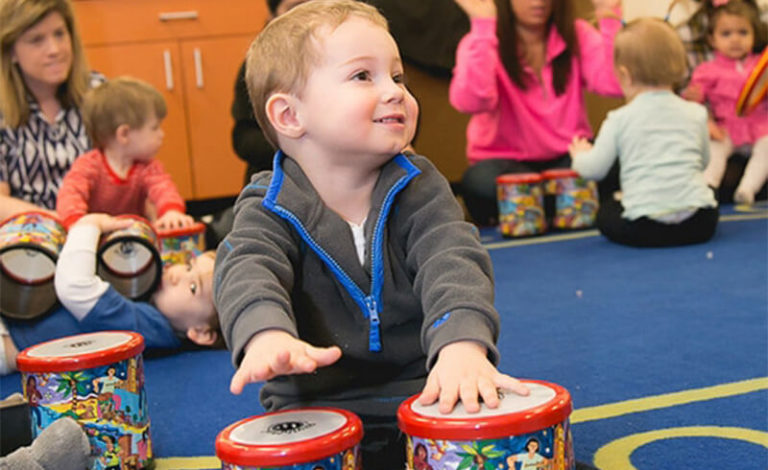
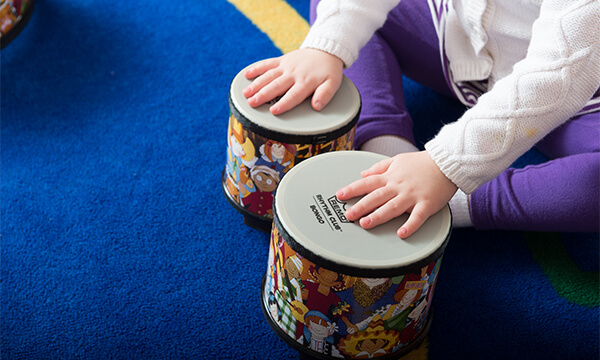
Close-up of a toddler's hands tapping a colorful drum in a Kidville music class
ALWAYS LIVE MUSIC • 5 MONTHS TO 5 YEARS • TODDLER-SIZED INSTRUMENTS • FIRST CLASS FREE

By the Kidville Upper West Side Team · Updated October 2026

SHORT ANSWER

Music and movement activities for toddlers are songs and games that pair singing with moving: dance parties, action songs, marching, freeze dance and rhythm play. The AAP suggests parents of 1 to 3 year olds sing songs, play rhythms and encourage moving to the beat. On the Upper West Side, Kidville’s Rockin’ Railroad class does it all with live music.

Put on a song and most toddlers start to bounce before you have asked them to. That instinct is worth using. Music and movement activities need no equipment, fit in a small apartment and work on language, coordination and mood at the same time. This guide explains what counts as music and movement play, what the American Academy of Pediatrics says toddlers get from it, ten easy activities for home, and how Kidville Upper West Side’s music classes turn the same ideas into a weekly live show. Every Kidville detail was checked on Kidville’s own pages on October 27, 2026.

What are music and movement activities?

Music and movement activities are any play that pairs sound with motion: singing while doing the actions, dancing to a song, marching to a beat or tapping along on a drum. The sound can be your own voice, a playlist or a real instrument, and the movement can be as small as clapping or as big as a living-room dance party. The AAP’s guide The Power of Play puts it simply for 1 to 3 year olds: “Sing songs and play rhythms so that your child can learn and join in the fun,” and “Encourage moving to the beat.”

Type of activity What it looks like Example
Action songs Singing with hand or body motions that match the words The Wheels on the Bus, Itsy Bitsy Spider
Dance play Free movement to music, copying each other A family dance party, freeze dance
Rhythm play Keeping a beat with hands, feet or a simple instrument Clapping, marching, tapping a pot with a spoon
Lap songs and bounces A grown-up bounces or rocks the child in time with a song Bouncing on a knee to a nursery rhyme
Sung stories Singing a picture book instead of reading it Singing through a favorite bedtime book

Built on HealthyChildren.org, “The Power of Play: How Fun and Games Help Children Thrive” (American Academy of Pediatrics), verified October 27, 2026

This guide is general information, not medical advice. If you have questions about your child’s hearing, speech or movement, your pediatrician is the right person to ask.

What do toddlers learn from music and movement?

Language, rhythm, coordination and a lift in mood, all from the same song. The AAP’s Power of Play guide lists singing songs and moving to the beat among its play ideas for 1 to 3 year olds, and says research shows play can improve children’s abilities to plan, organize, get along with others and regulate emotions. Its article on language development in 2 year olds notes that toddlers learn from books and activities that invite them to repeat certain phrases and play with language by repeating funny sounds, which is exactly what a song does. And the AAP’s Music and Mood article notes that babies love lullabies, that a parent’s singing is soothing regardless of musical talent, and that pairing music with rhythm and pitch enhances learning and recall.
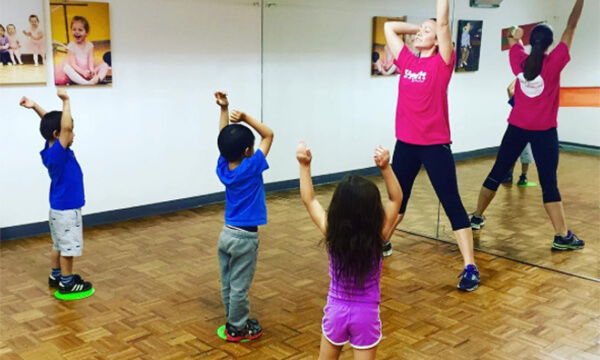
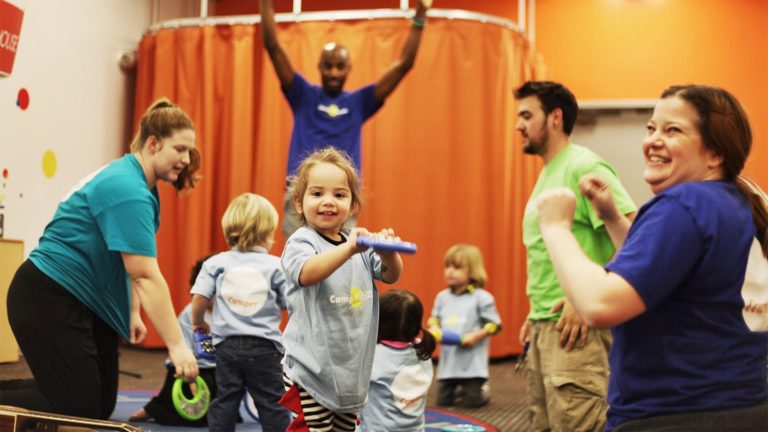
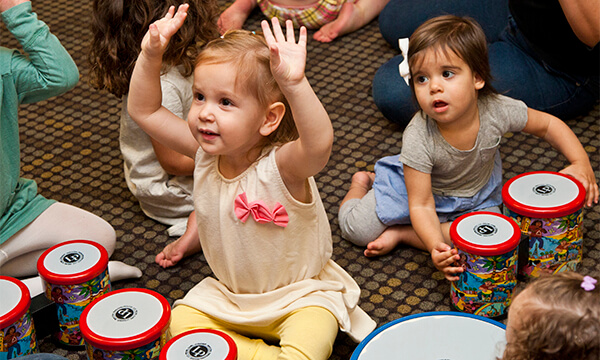
Young children dancing with their arms up beside their teachers in a Kidville class

Skill How a song builds it AAP source
Language and vocabulary Repeated phrases and funny sounds that toddlers love to echo Language Development: 2 Year Olds
Memory and recall Rhythm and pitch make words easier to remember Music and Mood
Coordination and balance Moving to the beat, dancing, marching and copying movements The Power of Play; How Active Is Your Toddler?
Self-regulation Play helps children plan, take turns and manage big feelings The Power of Play
Mood and connection Music lifts mood; a parent’s singing is soothing Music and Mood

Source: HealthyChildren.org, “The Power of Play”, “Language Development: 2 Year Olds”, “Music and Mood” and “How Active Is Your Toddler?” (American Academy of Pediatrics), verified October 27, 2026

The Kidville music classes page lists similar benefits for its own classes: language development through letter of the day and clean-up chants, literacy and numeracy through singing books and weekly lap songs and rhymes, a mood boost from family dance parties and bubble time, and sensory enhancement from live instruments that make the noisy world “less scary and more enjoyable.”

What are some good music and movement activities for toddlers at home?

Start with your voice and your living room floor; a playlist and a pot with a wooden spoon are all the equipment you need. The AAP’s How Active Is Your Toddler? suggests finding toddler-friendly music and dancing together, copying each other’s movements and getting the wiggles out, and notes that just 15 minutes a day of quality one-on-one time helps physical development. Here are ten ideas by age.

Activity How to play Good from
Lap bounce Bounce your child gently on your knee in time with a nursery rhyme, with a big “whee” at the end Babies who sit with support
Lullaby wind-down Sing the same quiet song every night before sleep Any age
Clap along Clap the beat of a favorite song; let your child copy you 9 to 12 months
Family dance party Put on toddler-friendly music and dance together, copying each other’s moves Walking toddlers
Pot-and-spoon drum Hand over a pot and a wooden spoon and tap a slow beat, then a fast one 1 year
Action songs The Wheels on the Bus, Itsy Bitsy Spider, Head, Shoulders, Knees and Toes with the motions 1 year
Marching band March around the room to a steady beat, knees high, then tiptoe for a quiet verse 18 months
Sing the book Sing a short picture book instead of reading it, and let your child fill in the last word 18 months
Freeze dance Dance while the music plays and freeze when it stops 2 years
Scarf dance Wave a scarf or dish towel high for high notes and low for low notes 2 years

Ideas built on HealthyChildren.org, “How Active Is Your Toddler?”, “The Power of Play” and “Music and Mood” (American Academy of Pediatrics), verified October 27, 2026; ages are starting points, and your own child sets the pace

Keep sessions short and stop while it is still fun. For more big-body ideas, our gross motor activities for toddlers guide covers climbing, jumping and running games, and our sensory play for toddlers guide has ideas for hands-on play with textures and sounds.

Where can toddlers do music and movement on the Upper West Side?

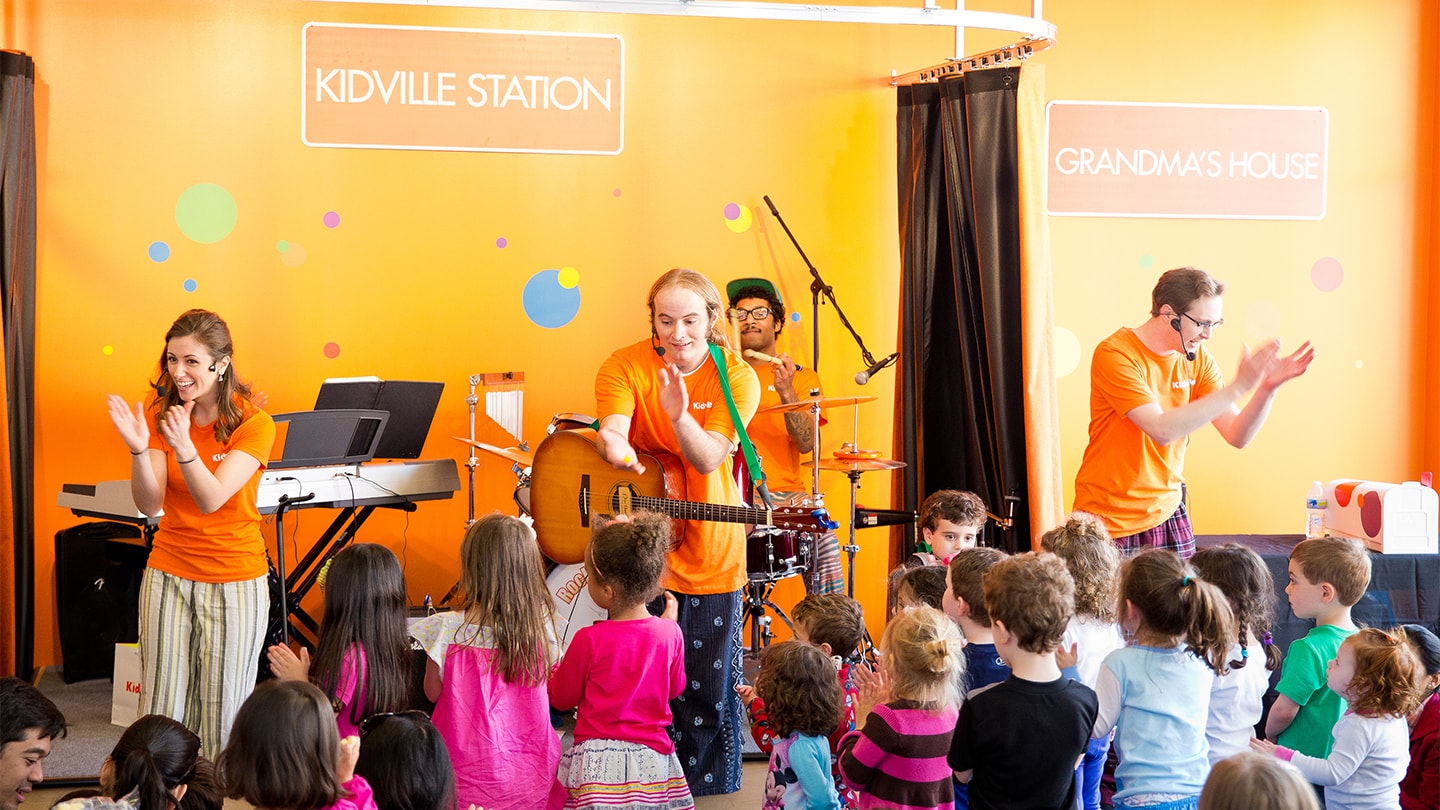
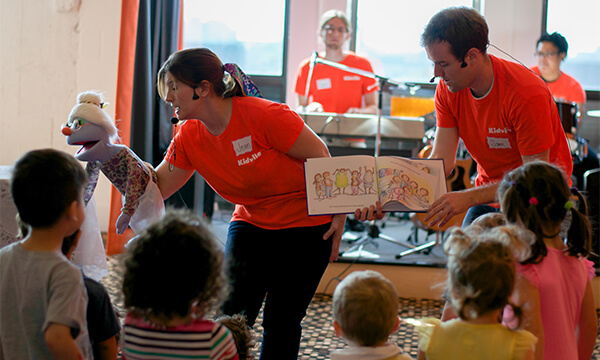
At Kidville’s Rockin’ Railroad: Unplugged class, a live music class for ages 5 months to 5 years at 205 West 88th Street. The Kidville music classes page describes the class as a journey where you and your child become passengers on the Rockin’ Railroad, with movement songs, lap activities, shared musical story time, group drumming exploration and “bubbles galore.” The class explores a different instrument and musical genre each week, meets puppet friends along the way, and makes stops at destinations like Instrumentville and Grandma’s House before heading back to Kidville Station.

Two smiling children playing in bubbles at Kidville Upper West Side

What Kidville says What it means for your toddler
Always live: no prerecorded track or lip-syncing Real voice, guitar, drums and keys every week
Hands-on, with toddler-sized instruments Your child taps, shakes and strums, not just listens
Original songs written by a team of musical experts New melodies plus kids’ classics
Movement songs, lap activities, group drumming, bubbles The same activities as this guide, with a live band and a room of friends
Ages 5 months to 5 years One class covers babies through preschoolers
Membership $219 a month for 4 classes or $399 for 8; first class free Try one before you commit

Source: Kidville Upper West Side music classes, membership and trial class pages, verified October 27, 2026

For what to expect at your first class, see our baby music classes guide, and for how to compare toddler music classes around the city, our best toddler music classes guide. Big-muscle movers may also like the Kidville gym classes, where coaches add obstacle courses, swings and the Tumbl Trak.

Possible downside: a live class is loud and busy, and some toddlers take a few weeks to join in rather than watch from a lap. Class spots are limited and your child is enrolled in the same class each week, so check the current schedule and call 212-362-7792 for a waitlist if a class shows a grayed-out enrollment button.

How do I keep music and movement time safe and fun?

Keep the volume comfortable, clear the floor and follow your toddler’s lead. The AAP’s active toddler guide recommends putting your phone away and setting a timer, letting your child lead, and staying close so you can step in if they head for something they should not. Keep music at a level where you can talk over it without raising your voice, move anything with sharp corners before a dance party, and treat small instruments like any small object: nothing that fits in the mouth for children who still put things there.

Do Why
Let your toddler pick the song or the move Child-led play keeps them interested longer
Repeat the same songs often Repetition is how toddlers learn the words and the actions
Keep the volume at talking level Protects small ears and keeps the mood calm
Clear the floor and dance in socks or bare feet Fewer bumps when the wiggles get big
Stop while it is still fun Short, happy sessions make them ask for more

Built on HealthyChildren.org, “How Active Is Your Toddler?” and “The Power of Play” (American Academy of Pediatrics), verified October 27, 2026

Music and movement activities for toddlers: FAQ

What are music and movement activities?

They are songs and games that pair sound with motion: action songs with hand movements, dance parties, marching to a beat, lap bounces and tapping a drum or a pot. The AAP’s Power of Play guide suggests that parents of 1 to 3 year olds sing songs, play rhythms and encourage moving to the beat. At Kidville, the Rockin’ Railroad class mixes movement songs, lap activities, group drumming and bubbles with live music.

What do toddlers learn from music and movement?

Language, memory, coordination and mood, according to the AAP. Songs give toddlers phrases and funny sounds to repeat, which the AAP says helps language at age 2; pairing words with rhythm and pitch enhances learning and recall; moving to the beat builds coordination; and play in general helps children plan, take turns and regulate emotions. A parent’s singing is also soothing, whatever your voice sounds like.

What are some good movement activities for a 2-year-old?

Freeze dance, a family dance party, a marching band around the living room, a scarf dance and action songs like Head, Shoulders, Knees and Toes all work well at 2. The AAP suggests dancing together and copying each other’s movements to get the wiggles out. Keep it to short bursts, let your child pick the song, and clear the floor first. Kidville’s Rockin’ Railroad class adds a live band and a room of friends.

What are some good music and movement songs for toddlers?

Songs with built-in actions work best: The Wheels on the Bus, Itsy Bitsy Spider, Head, Shoulders, Knees and Toes, If You’re Happy and You Know It, and Ring Around the Rosie. Add a slow lullaby for wind-down time, and any upbeat song for a dance party. Kidville’s music classes mix kids’ classics with original songs written by its own team, and explore a new instrument and genre each week.

How much music and movement does a toddler need each day?

There is no set number, but the AAP notes that just 15 minutes a day of quality one-on-one active play helps physical development, and a few songs spread through the day add up fast. A lap song after breakfast, a dance party before dinner and a lullaby at bedtime cover it. A weekly class like Kidville’s Rockin’ Railroad adds live instruments and group play on top.

What age can a toddler start a music class?

Kidville’s Rockin’ Railroad: Unplugged class takes children from 5 months to 5 years, so one class covers babies through preschoolers. Younger babies take part through lap songs and bounces, while toddlers march, drum and dance. Your first class is free, and classes run on a monthly membership of $219 for 4 classes or $399 for 8.

The bottom line

Music and movement activities for toddlers are the easiest kind of play: a song, a beat and room to wiggle. The AAP’s advice for 1 to 3 year olds is to sing songs, play rhythms and encourage moving to the beat, and a dance party, a pot-and-spoon drum and an action song cover all three. On the Upper West Side, Kidville’s Rockin’ Railroad class brings the same ideas to life with a live band, toddler-sized instruments and bubbles galore, and the first class is free.

Ready to make some noise? See the Kidville music classes at Kidville Upper West Side, 205 West 88th Street, New York, NY 10024, or claim a free trial class. Call 212-362-7792 with questions.

ABOUT THE AUTHOR

The Kidville Upper West Side Team runs the Kidville location at 205 West 88th Street, New York, NY 10024, home to music, gym, art, dance and STEM classes, Kidville University, Camp Kidville, an indoor playspace, birthday parties and a kids salon for children from birth to age 6. Every age, price and schedule detail in our guides is checked against Kidville’s own published pages.

Sources

Every Kidville class, age and price detail in this guide comes from Kidville Upper West Side’s own pages, checked on October 27, 2026. Play, language and music guidance comes from HealthyChildren.org, the American Academy of Pediatrics’ parenting site.

Kidville Upper West Side: Music Classes

Kidville Upper West Side: Free Trial Class

Kidville Upper West Side: Enrollment Options and Membership

Kidville Upper West Side: Contact

HealthyChildren.org (American Academy of Pediatrics): The Power of Play: How Fun and Games Help Children Thrive

HealthyChildren.org (American Academy of Pediatrics): How Active Is Your Toddler?

HealthyChildren.org (American Academy of Pediatrics): Language Development: 2 Year Olds

HealthyChildren.org (American Academy of Pediatrics): Music and Mood
Baby Music Class with Live Music in NYC: Why Live Matters

KIDVILLE UPPER WEST SIDE

Baby Music Class with Live Music in NYC

Why a real band in the room matters for babies, how to spot a truly live class, and where to find one at 205 West 88th Street.

Claim a Free Trial Class

205 W 88th St · 212-362-7792

Young child playing two hand drums next to a grown-up during a Kidville music class
ALWAYS LIVE • VOICE • GUITAR • DRUMS • KEYS • FIRST VISIT FREE

By the Kidville Upper West Side Team · Updated October 2026

SHORT ANSWER

A baby music class with live music puts real musicians in the room instead of a speaker, so babies can watch faces, hands and instruments while they listen. In NYC, Kidville Upper West Side keeps every music class live with voice, guitar, drums and keys, and your first visit is free.

Plenty of NYC baby classes play songs from a speaker. A class with a live band feels different, for you and for your baby. This guide explains what “live” really means, why it may matter for babies, and how to check that a class is truly live before you sign up. For class times, see the Kidville Upper West Side music classes page. Every Kidville detail here was checked on October 2, 2026.

What does “live music” mean in a baby music class?

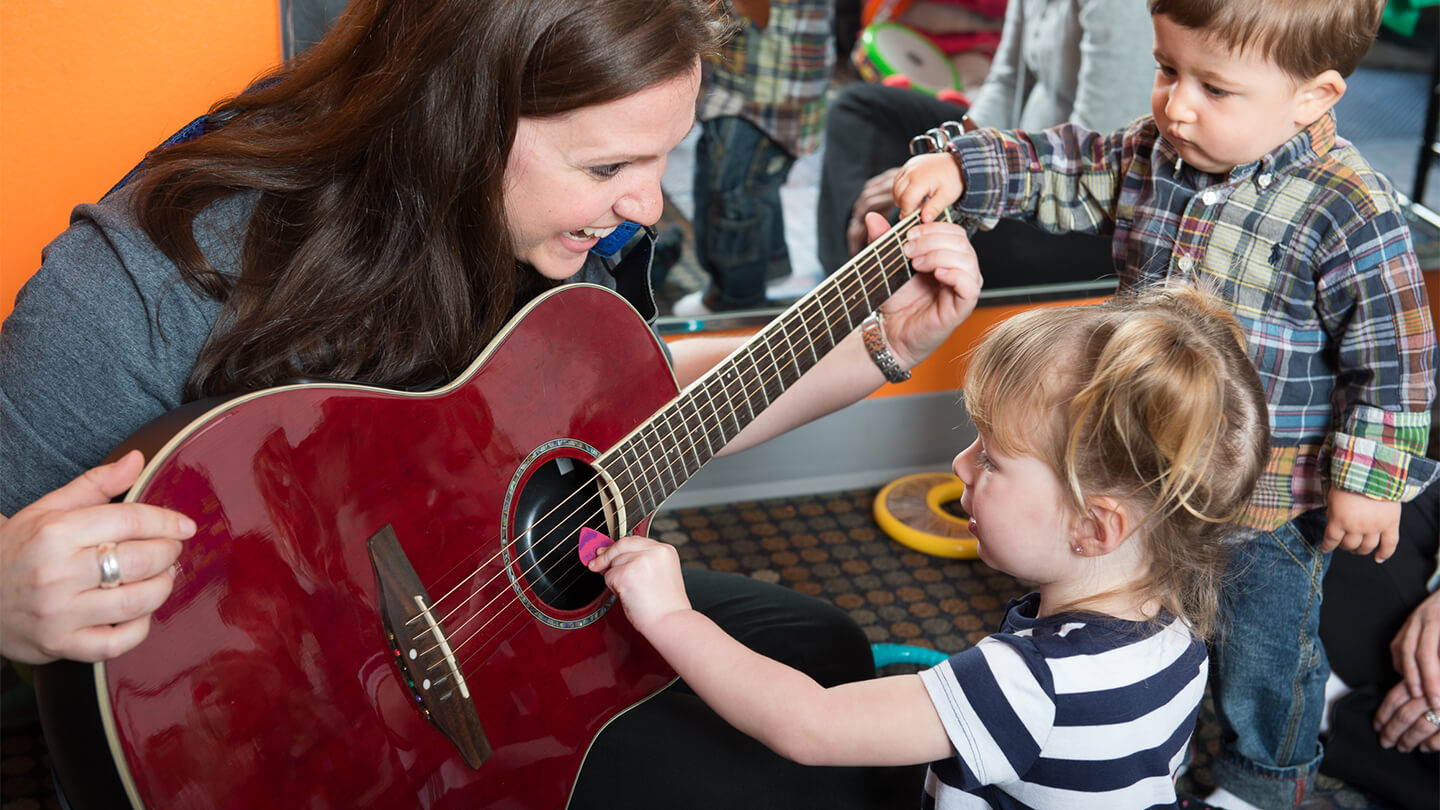
Live music means the songs are sung and played by real people in the room, not from a recording. In a live class, your baby hears a real voice, sees a guitar being strummed and watches a drum being hit. At Kidville Upper West Side, the music page promises no prerecorded tracks and no lip-syncing, with instruments that range from voice and guitar to drums and keys.

What your baby gets Class with a speaker Live class at Kidville UWS
Where the sound comes from A recording played through a speaker Voice, guitar, drums and keys played in the room
What your baby can watch The teacher, with music coming from somewhere else Musicians’ faces, hands and instruments up close
Instruments to touch Depends on the class Toddler-sized instruments to shake, tap and explore
The songs Depends on the class Kids’ classics plus original songs written by Kidville’s musical team

Source: Kidville Upper West Side music classes page, verified October 2, 2026. The speaker column describes a typical recorded class.

Why does live music matter for babies?

Live music may help babies because they learn from watching people, not just from hearing sound. The American Academy of Pediatrics explains that from birth, babies take in language by hearing people make sounds and watching how they communicate. A live singer gives your baby a face to watch, a mouth forming words and hands making the sound happen.

Your own voice counts, too. The AAP notes that babies love lullabies and that a mother’s singing is soothing, whatever her musical training. In a live class, you sing along with the band, so your baby hears the music from the musicians and from you at the same time.

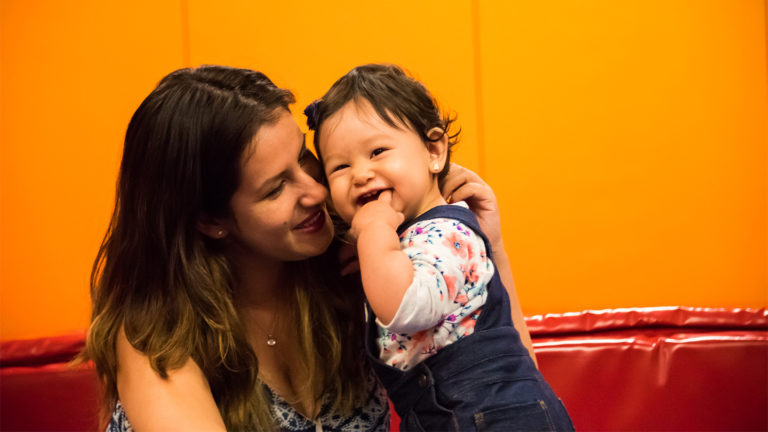
Smiling mom holding her laughing baby against an orange wall

Babies watch familiar faces as closely as they listen

This guide is general information, not medical advice. If you have questions about your baby’s hearing or development, talk with your pediatrician.

How can you tell if a baby music class is really live?

Ask a few simple questions before you book, then use a trial class to see and hear it for yourself. Many classes say “music,” but not every class has musicians playing in the room. These questions help you compare.

Question to ask Kidville Upper West Side answer
Are the songs played live in the room? Yes, always live, with no prerecorded tracks
Which instruments will my baby hear? Voice, guitar, drums and keys
Can babies touch instruments? Yes, toddler-sized instruments are part of class
Are classes grouped by age? The music schedule lists newborn to 12 months and 12 to 18 months
How long is each class? 45 minutes
Can we try it first? Yes, your first visit is free

Source: Kidville Upper West Side music classes, membership and trial class pages, verified October 7, 2026

✓ Watch the room. In a live class you should see the instruments being played, not a phone or speaker doing the work.

✓ Watch your baby. Turning toward the guitar, kicking to the beat or reaching for a drum are good signs the class is a fit.

Possible downside: Classes can fill up. At Kidville, full classes show a grayed-out enrollment button, and you can call 212-362-7792 to join the waitlist.

What does a live baby music class look like at Kidville UWS?

Kidville’s live music class is Rockin’ Railroad: Unplugged™, a musical train ride led by a live crew and a “conductor.” The class is listed for ages 5 months to 5 years, and you ride along with your baby as a “passenger.” Each week explores a different instrument and musical genre, with movement songs, lap activities, group drumming, puppet friends and bubbles. For a full walk-through of the class, see our guide to music classes for babies on the Upper West Side.

Teachers and young children playing tambourines and dancing together in a Kidville classroom

Instruments in little hands make the music feel real

Class detail Kidville Upper West Side
Class name Rockin’ Railroad: Unplugged™
Listed ages 5 months to 5 years
Baby age groups on the music schedule Newborn to 12 months, 12 to 18 months
Who plays A live crew, with voice, guitar, drums and keys
Class length 45 minutes

Source: Kidville Upper West Side music classes page and class schedule, verified October 2, 2026

How much does a live baby music class cost in NYC?

At Kidville Upper West Side, live music classes are part of a monthly membership: $219 a month for 4 classes or $399 a month for 8 classes. The Single Class plan adds 3 free playspace passes a month and 10% off a birthday party deposit, and the Double Class plan adds unlimited playspace and 15% off. Your baby is enrolled in the same class each week, and members get one make-up class per month. Our guide to the best toddler music classes in NYC breaks down the cost per class, and the membership page has full details.

How do I try a live baby music class on the Upper West Side?

Book your free first visit, bring your baby to a live class, and see how they respond. Start on the free trial class page, or browse the current class list on the Kidville music classes page first.

Visit detail Kidville Upper West Side
Address 205 West 88th Street, New York, NY 10024
Phone 212-362-7792
Front desk Monday to Friday, 9:00am to 6:00pm
Nearest subway 86th Street station (1 train)
Ages served Newborn to 6 years

Source: Kidville Upper West Side contact and class pages (nearest subway from the MTA station map), verified October 2, 2026

Baby music classes with live music: FAQ

What are the benefits of live music?

For babies, live music adds things a speaker cannot: real faces, voices and instruments to watch, and musicians right there in the room. The American Academy of Pediatrics notes that babies learn language by hearing sounds and watching how people communicate, and a live class puts both in front of them. Every baby is different, so watch how yours responds.

Is it okay to play music for babies?

Yes. Playing and singing music at home is a simple, everyday way to share time with your baby. The AAP notes that babies love lullabies and that a mother’s singing is soothing, whatever her musical training. Keep the volume gentle, and add your own voice whenever you can, since singing lets your baby watch your face.

What type of music is best for babies?

Simple songs with clear melodies and lots of repetition work well: lullabies, nursery rhymes, lap songs and bouncing songs. Babies also enjoy hearing different instruments and styles. In Kidville’s live classes, the band mixes kids’ classics with original songs and explores a different instrument and musical genre each week.

Are music classes good for babies?

For many families, a music class is an easy first class. It gives babies new sounds to hear, faces to watch and a weekly routine with their grown-up. Kidville’s music series focuses on language, early literacy, mood and comfort with sound. This guide is general information, not medical advice, so ask your pediatrician about specific concerns.

What are the benefits of playing music with babies?

Playing music together turns listening into a shared activity. You sing, bounce and clap while your baby watches and responds, and that back-and-forth may support early language and bonding. In a live class you join every song with your baby, and you leave with new songs and rhymes to use at home.

How can I tell if a baby music class is really live?

Ask whether the instruments are played in the room, whether the teacher sings without a backing track, and whether babies can touch instruments. A free trial is the best test. At Kidville Upper West Side, music is always live, with no prerecorded tracks or lip-syncing, and voice, guitar, drums and keys in class.

The bottom line

If you want your baby to hear real music, look for a class where musicians play and sing in the room. Kidville Upper West Side keeps every music class live, groups babies by age on the music schedule, and offers your first visit free, so the easiest next step is to book a trial.

Ready to hear the band? Claim your free trial class at Kidville Upper West Side, 205 West 88th Street, New York, NY 10024. Call 212-362-7792 to book.

ABOUT THE AUTHOR

The Kidville Upper West Side Team runs the Kidville location at 205 West 88th Street, New York, NY 10024, home to music, gym, art, dance and STEM classes, Kidville University, Camp Kidville, an indoor playspace, birthday parties and a kids salon for children from birth to age 6. Every age, price and schedule detail in our guides is checked against Kidville’s own published pages.

Sources

Every Kidville fact in this guide comes from Kidville Upper West Side’s own pages, checked on October 2, 2026. Child development points come from the American Academy of Pediatrics.

Kidville Upper West Side: Music Classes

Kidville Upper West Side: Membership

Kidville Upper West Side: Free Trial Class

Kidville Upper West Side: Contact

American Academy of Pediatrics, HealthyChildren.org: Language Development, 4 to 7 Months

American Academy of Pediatrics, HealthyChildren.org: Music and Mood

Best Toddler Music Classes in NYC: A Parent’s Checklist

KIDVILLE UPPER WEST SIDE

Best Toddler Music Classes in NYC

A parent’s checklist for live music, hands-on instruments and real value, plus what toddlers do in class at 205 West 88th Street.

Claim a Free Trial Class

205 W 88th St · 212-362-7792

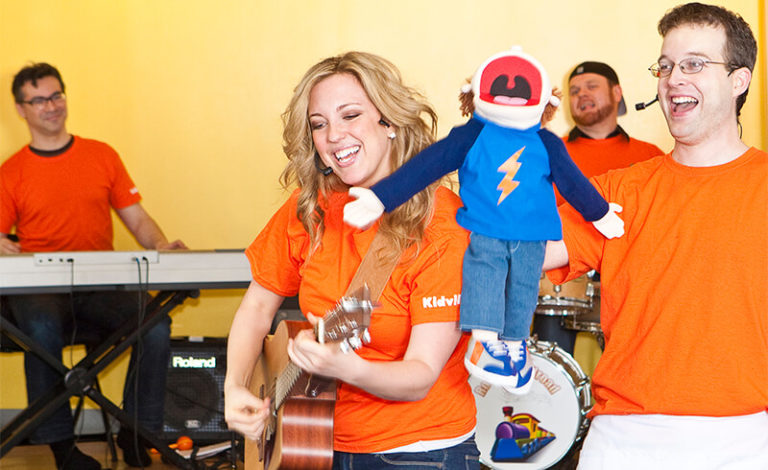
Kidville musicians playing guitar and drums with a puppet during a live toddler music class
LIVE BAND • DRUMMING • DANCE PARTIES • STORY TIME • PUPPETS • FREE TRIAL

By the Kidville Upper West Side Team · Updated October 2026

SHORT ANSWER

The best toddler music classes in NYC share a few traits: live instruments instead of recordings, real hands-on time, a grown-up in the room, and a price that makes sense per class. At Kidville Upper West Side, every music class is played live by a band, runs 45 minutes, and new families can try one free.

NYC has a toddler music class on almost every block, so the hard part is choosing. This guide gives you a simple checklist, shows how Kidville Upper West Side measures up, and explains what toddlers actually do in a live music class. Every Kidville detail below was checked on the Kidville Upper West Side site on October 2, 2026.

What makes a toddler music class one of the best in NYC?

The best toddler music classes are live, hands-on, made for your child’s age, and easy to fit into a weekly routine. A toddler between 1 and 3 is walking, dancing and grabbing everything, so a class should give them instruments to hold and room to move, not just songs to listen to. Use the checklist below when you compare classes, including ours.

What to look for Why it matters for toddlers How Kidville UWS does it
Live music Real instruments in the room hold a toddler’s attention Voice, guitar, drums and keys, with no prerecorded tracks
Hands-on instruments Toddlers learn by touching, shaking and banging Toddler-sized instruments for every child
Age range Songs and activities should match what your child can do Rockin’ Railroad: Unplugged™ is listed for 5 months to 5 years
Grown-up in class Toddlers feel safe exploring next to a familiar adult You ride along as a “passenger” with your child
Class length Long enough to settle in, short enough for toddler attention 45 minutes
A way to try first Every toddler reacts differently to a new room Your first visit is free

Source: Kidville Upper West Side music class, membership and trial class pages, verified October 2, 2026

What do toddlers do in a music class at Kidville UWS?

Toddlers at Kidville sing, dance, drum and play along with a live band in a weekly class called Rockin’ Railroad: Unplugged™. A “conductor” and a live crew lead each class as a musical train ride. For a toddler, that means plenty to do: movement songs to dance to, group drumming, shared musical story time, bubbles, and a new instrument and musical genre to explore each week. Puppet friends join the ride, with stops at Instrumentville and Grandma’s House on the way back to Kidville Station.

The set list mixes kids’ classics with original songs. Kidville says a team of musical experts wrote the music and lyrics, so toddlers hear songs they will not find on every playlist. If your little one is still under a year, our guide to music classes for babies on the Upper West Side covers the baby side of the same class.

Kidville teachers holding a puppet and a picture book during musical story time with toddlers

Musical story time turns a picture book into a song

How can music help toddlers?

Music may help toddlers with early language, movement and handling big feelings, because it gets them listening, moving and playing with others. ZERO TO THREE, a national early childhood nonprofit, notes that music gives children an easy window into practicing language, that music is a physical activity that builds motor skills, and that music time offers chances to practice self-regulation. Kidville’s music series is built around similar areas.

Toddler skill What it looks like in a Kidville music class
Words and language A letter of the day and chanting together at clean-up time
Early literacy and counting Singing a book page by page, nursery rhymes and weekly lap songs
Movement Family dance parties where toddlers twirl, bounce and step to the beat
Comfort with sound Live guitar and drums that make a noisy world feel less scary

Source: Kidville Upper West Side music classes page, verified October 2, 2026

Close-up of a toddler's hands playing two hand drums on a classroom rug

Group drumming is a weekly part of class

This guide is general information, not medical advice. If you have questions about your toddler’s speech or development, talk with your pediatrician.

Which other toddler classes pair well with music?

Many families pair one music class with one movement or art class, so their toddler gets both songs and active play each week. Kidville’s current fall and winter 2026 schedule lists these classes for young children. Check the classes and programs page for times, since age groups and openings change.

Class Type Listed ages
Rockin’ Railroad: Unplugged™ Music 5 months to 5 years
Big Muscle Builders Gym 12 to 24 months and 18 to 36 months
My Big Messy Art Class® Art 18 to 36 months and 2 to 4 years

Source: Kidville Upper West Side class schedule, fall and winter 2026, verified October 2, 2026

How much do toddler music classes cost?

At Kidville Upper West Side, toddler music classes are part of a monthly membership that works out to about $50 to $55 per class. The Single Class plan also adds 3 free playspace passes a month and 10% off a birthday party deposit, and the Double Class plan adds unlimited playspace and 15% off, so the monthly price covers more than the class itself.

Membership Price per month Classes per month Cost per class
Single Class $219 4 About $54.75
Double Class $399 8 About $49.88

Source: Kidville Upper West Side membership page, verified October 7, 2026. Cost per class is the monthly price divided by classes per month.

Your toddler is enrolled in the same class each week, and members get one make-up class per month, used within a month of the missed class. That helps when a cold or a nap change gets in the way. Full details are on the membership page.

How do you know if a toddler music class is right for your child?

The free trial is the real test: watch whether your toddler reaches for the instruments, moves to the music and wants to come back. Here is what to look for in a trial class, and one honest catch.

✓ They join in. Shaking an instrument, bouncing or clapping in the first few songs is a great sign, even if they watch quietly at first.

✓ The music is live. At Kidville, every song is played by real musicians, so your toddler sees and hears the instruments up close.

✓ You enjoy it too. You are in the room for every song, so pick a class you will look forward to each week. Compare more options in our kids classes by age guide.

Possible downside: Popular classes fill up. Full classes show a grayed-out enrollment button, and you can call 212-362-7792 to join the waitlist.

Planning the season? Our guide to fall toddler classes in NYC shows how to build a weekly routine as the weather cools.

How do I book a free toddler music class?

Book your free first visit online, then choose a membership if your toddler loves it. Start on the free trial class page or call the Upper West Side location. You can also browse the current class list on the Kidville music classes page before you come in.

Visit detail Kidville Upper West Side
Address 205 West 88th Street, New York, NY 10024
Phone 212-362-7792
Front desk Monday to Friday, 9:00am to 6:00pm
Nearest subway 86th Street station (1 train)
Ages served Newborn to 6 years

Source: Kidville Upper West Side contact and class pages (nearest subway from the MTA station map), verified October 2, 2026

Best toddler music classes in NYC: FAQ

Can a 2-year-old take music lessons?

Yes, though at 2 a group music class usually works better than one-on-one lessons on a single instrument. Toddlers learn music by singing, moving and playing simple instruments with a grown-up nearby. Kidville’s Rockin’ Railroad: Unplugged™ class is listed for ages 5 months to 5 years, and it is played live with toddler-sized instruments for every child.

When to start music classes for toddlers?

You can start whenever your toddler is ready for a weekly outing, and there is no need to wait for a milestone. Kidville Upper West Side welcomes children to music class from birth, and its music class is listed for ages 5 months to 5 years. Check the current schedule for a session that fits your toddler’s age, then use the free first visit to see how they respond.

Where to take a 2-year-old in NYC?

Look for places built for little kids, where a 2-year-old can move, make noise and meet other children. On the Upper West Side, Kidville at 205 West 88th Street has gym and art classes listed for 2-year-olds, a live music class listed for ages 5 months to 5 years, and an indoor playspace with drop-in visits at $31. The nearest subway is the 86th Street station on the 1 train.

Are music classes good for toddlers?

For many toddlers, yes. A good class gives them live music to hear, instruments to hold and room to move, all with a familiar grown-up nearby. Early childhood groups like ZERO TO THREE point to music as a natural way to practice language, movement and self-regulation. This guide is general information, not medical advice, so ask your pediatrician about specific concerns.

What are the benefits of music sessions for toddlers?

Music sessions may help toddlers with words, rhythm, movement and comfort in a busy room. At Kidville, classes build in a letter of the day, singing books and nursery rhymes, family dance parties and live guitar and drums. Just as important, a weekly session gives you and your toddler a shared routine to look forward to.

How much do toddler music classes cost in NYC?

Prices vary by studio and neighborhood, so compare the cost per class, not just the monthly price. At Kidville Upper West Side, the Single Class membership is $219 a month for 4 classes, about $54.75 each, and the Double Class membership is $399 a month for 8 classes, about $49.88 each. Single Class adds 3 free playspace passes a month; Double Class adds unlimited playspace.

The bottom line

The best toddler music class is live, hands-on, made for your child’s age, and one your toddler is excited to return to every week. At Kidville Upper West Side, a live band leads every 45-minute class and the first visit is free, so the simplest next step is to book a trial and watch how your toddler responds.

Ready to hear your toddler sing along? Claim your free trial class at Kidville Upper West Side, 205 West 88th Street, New York, NY 10024. Call 212-362-7792 to book.

ABOUT THE AUTHOR

The Kidville Upper West Side Team runs the Kidville location at 205 West 88th Street, New York, NY 10024, home to music, gym, art, dance and STEM classes, Kidville University, Camp Kidville, an indoor playspace, birthday parties and a kids salon for children from birth to age 6. Every age, price and schedule detail in our guides is checked against Kidville’s own published pages.

Sources

Every Kidville fact in this guide comes from Kidville Upper West Side’s own pages, checked on October 2, 2026. Child development points come from ZERO TO THREE.

Kidville Upper West Side: Music Classes

Kidville Upper West Side: Classes and Programs

Kidville Upper West Side: Membership

Kidville Upper West Side: Free Trial Class

Kidville Upper West Side: Contact

ZERO TO THREE: Beyond Twinkle, Twinkle: Using Music with Infants and Toddlers

Music Classes for Babies on the Upper West Side: A Parent’s Guide

KIDVILLE UPPER WEST SIDE

Music Classes for Babies on the UWS

Live band songs, lap rhymes, and drumming for babies from birth, all at 205 West 88th Street.

Claim a Free Trial Class

205 W 88th St · 212-362-7792

Toddler playing drums in a baby music class at Kidville Upper West Side
LIVE BAND • LAP SONGS • DRUMMING • STORY TIME • BUBBLES • PUPPET FRIENDS

By the Kidville Upper West Side Team · Updated October 2026

SHORT ANSWER

Music classes for babies on the Upper West Side give infants and young toddlers live music, lap songs, and hands-on instruments in a weekly 45-minute class. At Kidville Upper West Side, 205 West 88th Street, music classes welcome babies from birth, every song is performed live, and new families can try a class free.

If you are looking for a first class to share with your baby, music is the classic place to start. Below, we walk through when babies can begin, what actually happens in a class, what music may help with, and what it costs. Every detail comes from the Kidville music classes page, checked on October 1, 2026.

What are music classes for babies?

Music classes for babies are short, shared sessions built around live songs, movement, and simple instruments that little hands can explore. At Kidville Upper West Side, each class runs 45 minutes and is performed live, with no prerecorded tracks and no lip-syncing. Our guide to baby music classes with live music in NYC explains why that matters. Voice, guitar, drums, and keys fill the room, and babies get toddler-sized instruments to shake, tap, and explore. The set list mixes kids’ classics with original songs written by Kidville’s own team of music experts.

Part of class What it looks like at Kidville UWS
Live band Voice, guitar, drums, and keys played in the room, never a recording
Hands-on instruments Toddler-sized instruments to shake, tap, and explore
Original songs Music and lyrics written by Kidville’s music experts, mixed with kids’ classics
Class length 45 minutes

Source: Kidville Upper West Side music classes page, verified October 1, 2026

When should babies start music classes?

Babies can start music classes from birth at Kidville Upper West Side, so there is no need to wait for a milestone. Kidville’s music schedule groups classes by age, including newborn to 12 months and 12 to 18 months, so your baby shares the room with little ones at a similar stage. Starting in the first months also gives the grown-up a weekly reason to get out of the apartment and meet other Upper West Side families.

Music is also the first step in a path your baby can grow into. Here is when each class type opens up across Kidville’s classes and programs:

Class Starting age
Music (live band) Newborn
Gym 6 months
Art and dance 18 months
STEM 2 years

Source: Kidville Upper West Side class pages, verified September 30, 2026

What happens in a baby music class at Kidville UWS?

Kidville’s baby music class is a weekly musical train ride called Rockin’ Railroad: Unplugged™, led by a live crew and a “conductor.” The class description calls it “the baby express,” and you and your little one ride along as passengers. Each week brings movement songs, lap activities, shared musical story time, group drumming, and plenty of bubbles. The class also explores a different instrument and musical genre each week, meets puppet friends, and makes stops at Instrumentville and Grandma’s House before heading back to Kidville Station. The schedule lists it for ages 5 months to 5 years.

The class has caught the attention of local press, too. Kidville’s class page shares a quote from Eric Messenger, editor of New York Family: “This is one ride every child should take.”

Babies and toddlers drumming together during the Rockin' Railroad music class at Kidville Upper West Side

Group drumming is a weekly stop on the Rockin’ Railroad

What are the benefits of music for babies?

Music may help babies with early language, mood, and comfort with new sounds, and Kidville’s music series is built around exactly those areas. The American Academy of Pediatrics explains that babies take in language from birth by hearing the sounds around them, and that by about four months they begin noticing individual sounds and syllables. Lap songs, nursery rhymes, and singing a book out loud pack a lot of that sound play into one class. To keep the songs going between classes, our music and movement activities for toddlers guide has ten ideas for home.

Focus area How the class works on it
Language development From a letter of the day to clean-up chants
Literacy and numeracy Singing books, nursery rhymes, and weekly lap songs that build pattern recognition
Mood booster Family dance parties and bubble time
Sensory enhancement Live guitar strums and drum beats that make a noisy world less scary

Source: Kidville Upper West Side music classes page, verified October 1, 2026

Baby meeting a puppet friend with a teacher during a baby music class at Kidville Upper West Side

Puppet friends are part of every Rockin’ Railroad journey

This guide is general information, not medical advice. If you have questions about your baby’s hearing or speech, talk with your pediatrician.

How much do baby music classes cost on the Upper West Side?

Most families join through a monthly membership; the Single Class plan includes 3 free playspace passes a month and the Double Class plan includes unlimited playspace. One music class a week fits the Single Class plan, and families who want a second weekly class, like gym or art, can choose the Double Class plan.

Membership Price per month What’s included
Single Class $219 4 classes, 3 free playspace passes a month, 10% off a birthday party deposit
Double Class $399 8 classes, unlimited playspace, 15% off a birthday party deposit

Source: Kidville Upper West Side membership page, verified October 7, 2026

Prefer to play first? Playspace drop-in is $31 (20% off for siblings), with packs of 5 for $150 and 10 for $290. Full details are on the membership page.

Is a baby music class worth it?

For most new parents, yes: it is 45 minutes of focused time with your baby each week, set to live music. Here is the honest picture.

✓ Always live. Every song is played by real musicians, so your baby hears real instruments, not a speaker.

✓ Together, not drop-off. You ride the Rockin’ Railroad as a passenger with your baby, joining every song and lap activity.

✓ Room to grow. Gym opens at 6 months (see our guide to baby gym classes on the Upper West Side) and art and dance at 18 months, all under the same roof. Compare every option in our kids classes by age guide.

Possible downside: Classes can fill up. Full classes show a grayed-out enrollment button, and you need to call 212-362-7792 to join the waitlist.

Starting this season? Our guide to fall toddler classes in NYC covers how to build a weekly routine as the weather cools.

How do I book a free trial music class?

New families can try a music class for free, then choose a membership. Book your free trial class online, or call 212-362-7792. You can also browse the current class list on the Kidville music classes page before you come in.

Visit detail Kidville Upper West Side
Address 205 West 88th Street, New York, NY 10024
Phone 212-362-7792
Front desk Monday to Friday, 9:00am to 6:00pm
Nearest subway 86th Street station (1 train)
Ages served Newborn to 6 years

Source: Kidville Upper West Side contact and class pages (nearest subway from the MTA station map), verified September 30, 2026

Music classes for babies on the Upper West Side: FAQ

When to start music classes for babies?

You can start music classes as early as the newborn stage. Kidville Upper West Side welcomes babies to music class from birth, and its schedule groups classes by age, including newborn to 12 months and 12 to 18 months. Starting early lets your baby soak up live music, rhythm, and your voice in a setting built for the youngest listeners.

What are the benefits of music for babies?

Music may help babies with early language, mood, and comfort with new sounds. Kidville builds its music classes around language development, literacy and numeracy through lap songs and nursery rhymes, mood-boosting dance parties, and live sound that makes a noisy world less scary. This guide is general information, not medical advice, so ask your pediatrician about specific concerns.

What music is best for a 1-year-old?

For a 1-year-old, simple and repetitive songs with movement are a great fit: nursery rhymes, lap songs, bouncing songs, and tunes you can sing again at home. Live music adds real instruments to watch and hear. In Kidville’s classes, a band plays kids’ classics alongside original songs, and a new instrument and musical genre appear each week.

Is there a music class for a 2-year-old child?

Yes. Kidville’s Rockin’ Railroad: Unplugged™ music class is listed for ages 5 months to 5 years, so a 2-year-old is in the age range; check the current schedule for a session that fits. At 2, you can also add STEM, art or dance. For toddler tips, see our guide to the best toddler music classes in NYC.

What is the best age for kids to learn music?

There is no single best age, and music can be part of your child’s life from birth. Babies take in sounds long before they talk, which is why classes like Kidville’s welcome newborns. Lessons on one instrument are something many families explore later, but a weekly class with live music, singing, and drumming lets babies enjoy music right now.

Do parents join baby music classes?

Yes. Baby music classes at Kidville are a shared experience. In Rockin’ Railroad: Unplugged™, you and your little one ride along as passengers, joining movement songs, lap activities, musical story time, and drumming together. It adds up to a weekly 45-minute block of one-on-one time with your baby, plus a chance to meet other Upper West Side families.

The bottom line

If you want one class to start with your baby, a live music class is the easiest yes on the Upper West Side. Kidville’s music classes welcome babies from birth, run 45 minutes, and keep every song live. Try a free trial class, then grow into gym, art, and dance as your baby does. For the rest of the week around that class, see our guide to what to do with a baby all day on the Upper West Side.

Ready to board the baby express? Claim your free trial class at Kidville Upper West Side, 205 West 88th Street, New York, NY 10024. Call 212-362-7792 to book.

ABOUT THE AUTHOR

The Kidville Upper West Side Team runs the Kidville location at 205 West 88th Street, New York, NY 10024, home to music, gym, art, dance and STEM classes, Kidville University, Camp Kidville, an indoor playspace, birthday parties and a kids salon for children from birth to age 6. Every age, price and schedule detail in our guides is checked against Kidville’s own published pages.

Sources

Every fact in this guide comes from Kidville Upper West Side’s own pages and the American Academy of Pediatrics, checked on October 1, 2026.

Kidville Upper West Side: Music Classes

Kidville Upper West Side: Classes and Programs

Kidville Upper West Side: Membership

Kidville Upper West Side: Free Trial Class

American Academy of Pediatrics, HealthyChildren.org: Language Development, 4 to 7 Months