
Baby Music Class with Live Music in NYC: Why Live Matters

By the Kidville Upper West Side Team · Updated November 2026
SHORT ANSWER
A baby music class with live music puts real musicians in the room instead of a speaker, so babies can watch faces, hands and instruments while they listen. In NYC, Kidville Upper West Side keeps every music class live with voice, guitar, drums and keys, and your first visit is free.
Plenty of NYC baby classes play songs from a speaker. A class with a live band feels different, for you and for your baby. This guide explains what “live” really means, why it may matter for babies, and how to check that a class is truly live before you sign up. For class times, see the Kidville Upper West Side music classes page. Every Kidville detail here was checked on October 2, 2026.
What does “live music” mean in a baby music class?
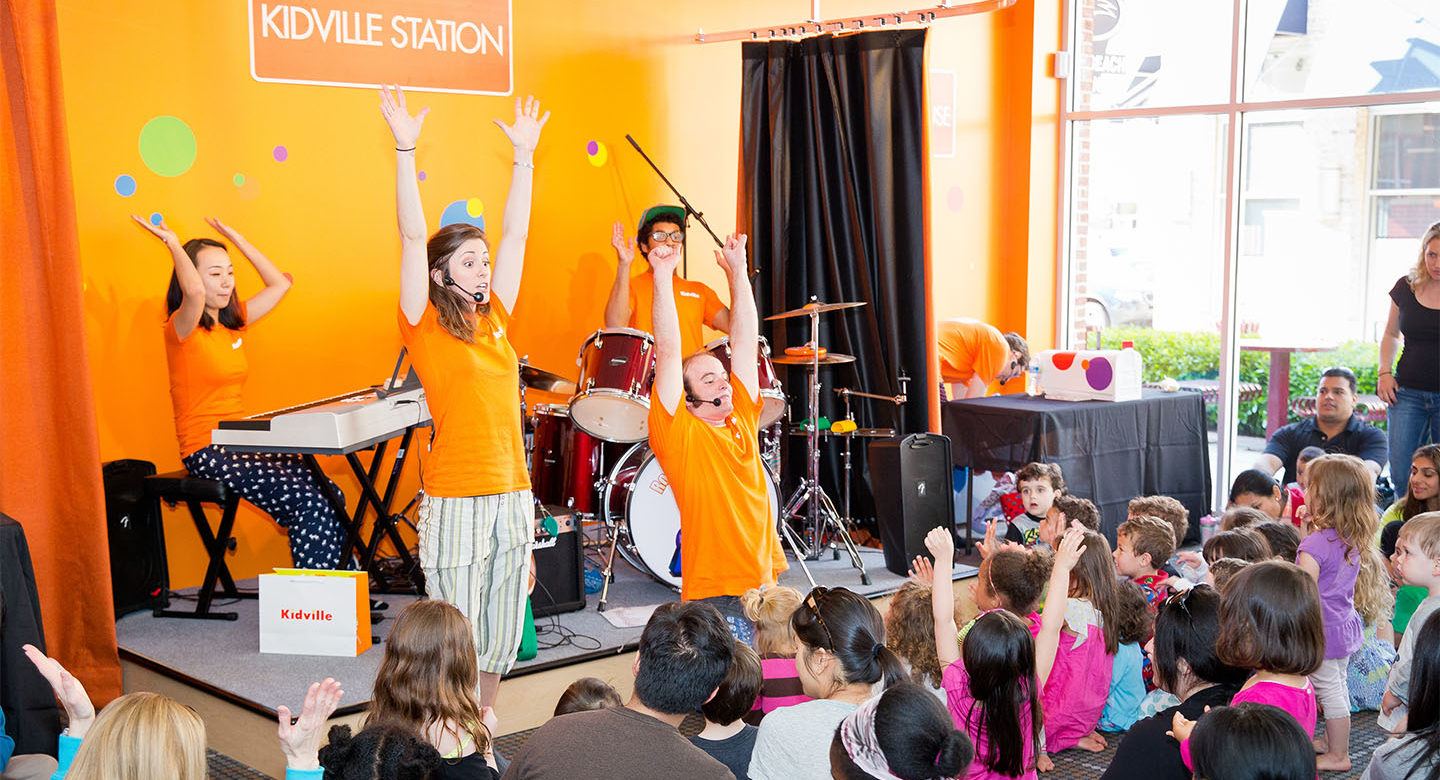
Live music means the songs are sung and played by real people in the room, not from a recording. In a live class, your baby hears a real voice, sees a guitar being strummed and watches a drum being hit. At Kidville Upper West Side, the music page promises no prerecorded tracks and no lip-syncing, with instruments that range from voice and guitar to drums and keys.
| What your baby gets | Class with a speaker | Live class at Kidville UWS |
|---|---|---|
| Where the sound comes from | A recording played through a speaker | Voice, guitar, drums and keys played in the room |
| What your baby can watch | The teacher, with music coming from somewhere else | Musicians’ faces, hands and instruments up close |
| Instruments to touch | Depends on the class | Toddler-sized instruments to shake, tap and explore |
| The songs | Depends on the class | Kids’ classics plus original songs written by Kidville’s musical team |
Source: Kidville Upper West Side music classes page, verified November 17, 2026. The speaker column describes a typical recorded class.
Why does live music matter for babies?
Live music may help babies because they learn from watching people, not just from hearing sound. The American Academy of Pediatrics explains that from birth, babies take in language by hearing people make sounds and watching how they communicate. A live singer gives your baby a face to watch, a mouth forming words and hands making the sound happen.
Your own voice counts, too. The AAP notes that babies love lullabies and that a mother’s singing is soothing, whatever her musical training. In a live class, you sing along with the band, so your baby hears the music from the musicians and from you at the same time.
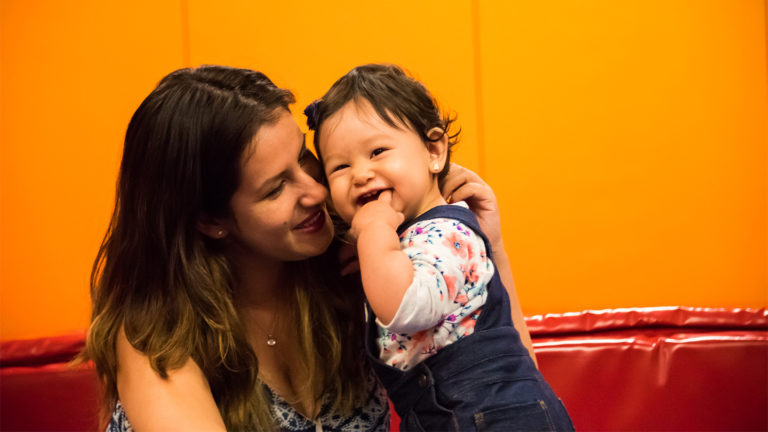
Babies watch familiar faces as closely as they listen
Every baby develops on their own schedule. If you have a question about your baby’s hearing or how they react to sound, bring it to your pediatrician.
How can you tell if a baby music class is really live?
Ask a few simple questions before you book, then use a trial class to see and hear it for yourself. Many classes say “music,” but not every class has musicians playing in the room. These questions help you compare.
| Question to ask | Kidville Upper West Side answer |
|---|---|
| Are the songs played live in the room? | Yes, always live, with no prerecorded tracks |
| Which instruments will my baby hear? | Voice, guitar, drums and keys |
| Can babies touch instruments? | Yes, toddler-sized instruments are part of class |
| Are classes grouped by age? | The music schedule lists newborn to 12 months and 12 to 18 months |
| How long is each class? | 45 minutes |
| Can we try it first? | Yes, your first visit is free |
Source: Kidville Upper West Side music classes, membership and trial class pages, verified October 7, 2026
✓ Watch the room. In a live class you should see the instruments being played, not a phone or speaker doing the work.
✓ Watch your baby. Turning toward the guitar, kicking to the beat or reaching for a drum are good signs the class is a fit.
Possible downside: Popular baby times can sell out. When the enroll button on the schedule is grayed out, that time is full or past its enrollment window, so ask the front desk at 212-362-7792 to put you on the waitlist.
What does a live baby music class look like at Kidville UWS?
Kidville’s live music class is Rockin’ Railroad: Unplugged™, a musical train ride led by a live crew and a “conductor.” The class is listed for ages 5 months to 5 years, and you ride along with your baby as a “passenger.” Each week explores a different instrument and musical genre, with movement songs, lap activities, group drumming, puppet friends and bubbles. For a full walk-through of the class, see our guide to music classes for babies on the Upper West Side.
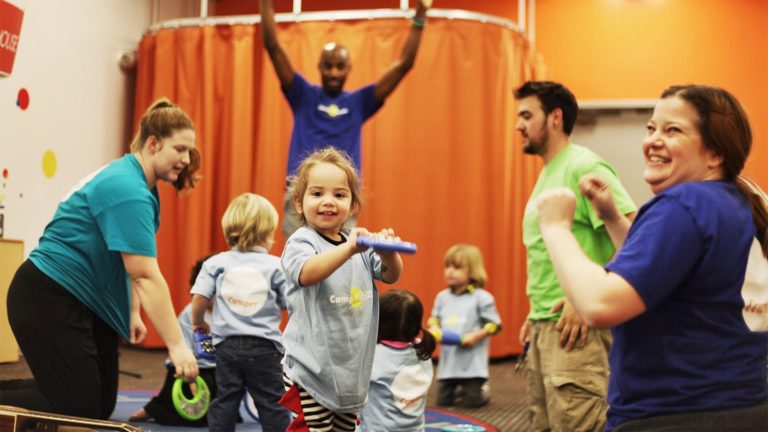
Instruments in little hands make the music feel real
| Class detail | Kidville Upper West Side |
|---|---|
| Class name | Rockin’ Railroad: Unplugged™ |
| Listed ages | 5 months to 5 years |
| Baby age groups on the music schedule | Newborn to 12 months, 12 to 18 months |
| Who plays | A live crew, with voice, guitar, drums and keys |
| Class length | 45 minutes |
Source: Kidville Upper West Side music classes page and class schedule, verified November 17, 2026
What does live music add at each age?
The band stays the same from week to week, but what your child takes from it changes as they grow. Rockin’ Railroad: Unplugged is listed for 5 months to 5 years, and the music class listing groups babies as newborn to 12 months and 12 to 18 months. The American Academy of Pediatrics (AAP) gives age-by-age play tips in its guide to the power of play, and a live class lines up with each stage:
| Age | AAP play tip | What a live class adds at Kidville |
|---|---|---|
| Birth to 6 months | “Imitate your baby’s coos and babbles” and trade sounds back and forth, which the AAP calls “vocal turn-taking” | A singer’s face a few feet away, and your own voice joining every song |
| 7 to 12 months | “Expose your baby to a variety of sensory experiences.” | Guitar, drums and keys played in the room, plus bubble time and lap songs |
| 1 to 3 years | “Sing songs and play rhythms so that your child can learn and join in the fun. Encourage moving to the beat.” | Toddler-sized instruments to shake and tap, and family dance parties |
| 4 and 5 years | “Provide opportunities for your child to sing, dance and draw.” (the AAP tip for ages 4 to 6) | One-of-a-kind songs written by Kidville’s team of musical experts, to learn and sing back |
AAP tips quoted from HealthyChildren.org, The Power of Play. Kidville details from the Kidville Upper West Side music classes page, checked November 17, 2026.
Because the class runs to age 5, a baby and an older sibling can ride the same train. Kidville’s sibling membership page describes Rockin’ Railroad as a way to “rock out as a family and bond together,” with a sibling added for $99 a month.
How much does a live baby music class cost in NYC?
Live music comes with Kidville’s regular class memberships, so it costs the same as a gym or art class: $219 a month for 4 classes or $399 a month for 8. Both plans include playspace time (3 passes a month on the Single plan, unlimited on the Double) and a discount on a birthday party deposit. For the cost per class and how make-ups work, see our toddler music class guide or the membership page.
How do I try a live baby music class on the Upper West Side?
Take one class as a guest first; your first visit is free. Sit near the musicians for the opening song so your baby can see the guitar and drums up close, then follow their lead. Claim the visit on the free trial class page and pick a time from the music classes page. The studio is at 205 West 88th Street, a short walk from the 86 St stop on the 1 train.
Baby music classes with live music: FAQ
What are the benefits of live music?
For babies, live music adds things a speaker cannot: real faces, voices and instruments to watch, and musicians right there in the room. The American Academy of Pediatrics notes that babies learn language by hearing sounds and watching how people communicate, and a live class puts both in front of them. Every baby is different, so watch how yours responds.
Is it okay to play music for babies?
Yes. Playing and singing music at home is a simple, everyday way to share time with your baby. The AAP notes that babies love lullabies and that a mother’s singing is soothing, whatever her musical training. Keep the volume gentle, and add your own voice whenever you can, since singing lets your baby watch your face.
What type of music is best for babies?
Simple songs with clear melodies and lots of repetition work well: lullabies, nursery rhymes, lap songs and bouncing songs. Babies also enjoy hearing different instruments and styles. In Kidville’s live classes, the band mixes kids’ classics with original songs and explores a different instrument and musical genre each week.
Are music classes good for babies?
For many families, a music class is an easy first class. It gives babies new sounds to hear, faces to watch and a weekly routine with their grown-up. Kidville’s music page lists sensory, language, literacy and mood benefits as the goals of the series. For questions about your own baby’s development, check in with your pediatrician.
What are the benefits of playing music with babies?
Playing music together turns listening into a shared activity. You sing, bounce and clap while your baby watches and responds, and that back-and-forth may support early language and bonding. In a live class you join every song with your baby, and you leave with new songs and rhymes to use at home.
How can I tell if a baby music class is really live?
Ask whether the instruments are played in the room, whether the teacher sings without a backing track, and whether babies can touch instruments. A free trial is the best test. At Kidville Upper West Side, music is always live, with no prerecorded tracks or lip-syncing, and voice, guitar, drums and keys in class.
The bottom line
If you want your baby to hear real music, look for a class where musicians play and sing in the room. Kidville Upper West Side keeps every music class live, groups babies by age on the music schedule, and offers your first visit free, so the easiest next step is to book a trial.
Want to hear the band in person? Book a free first visit to Rockin’ Railroad: Unplugged at 205 West 88th Street, or call 212-362-7792 to find a time for your baby’s age group.
ABOUT THE AUTHOR
The Kidville Upper West Side Team schedules the Rockin’ Railroad music classes on West 88th Street, where every song is played live by Kidville’s musicians. Before each update we recheck class names, ages and prices against Kidville’s own pages.
Sources
Kidville details in this guide come from Kidville Upper West Side’s own pages, rechecked on November 17, 2026. Child development points come from HealthyChildren.org, the parenting website of the American Academy of Pediatrics.
Kidville Upper West Side: Music Classes
Kidville Upper West Side: Membership
Kidville Upper West Side: Free Trial Class
Kidville Upper West Side: Contact
American Academy of Pediatrics, HealthyChildren.org: Language Development, 4 to 7 Months
American Academy of Pediatrics, HealthyChildren.org: Music and Mood
Kidville Upper West Side: Sibling Memberships
American Academy of Pediatrics, HealthyChildren.org: The Power of Play