
By the Kidville Upper West Side Team · Updated October 2026
SHORT ANSWER
Music and movement activities for toddlers are songs and games that pair singing with moving: dance parties, action songs, marching, freeze dance and rhythm play. The AAP suggests parents of 1 to 3 year olds sing songs, play rhythms and encourage moving to the beat. On the Upper West Side, Kidville’s Rockin’ Railroad class does it all with live music.
Put on a song and most toddlers start to bounce before you have asked them to. That instinct is worth using. Music and movement activities need no equipment, fit in a small apartment and work on language, coordination and mood at the same time. This guide explains what counts as music and movement play, what the American Academy of Pediatrics says toddlers get from it, ten easy activities for home, and how Kidville Upper West Side’s music classes turn the same ideas into a weekly live show. Every Kidville detail was checked on Kidville’s own pages on October 27, 2026.
What are music and movement activities?
Music and movement activities are any play that pairs sound with motion: singing while doing the actions, dancing to a song, marching to a beat or tapping along on a drum. The sound can be your own voice, a playlist or a real instrument, and the movement can be as small as clapping or as big as a living-room dance party. The AAP’s guide The Power of Play puts it simply for 1 to 3 year olds: “Sing songs and play rhythms so that your child can learn and join in the fun,” and “Encourage moving to the beat.”
| Type of activity | What it looks like | Example |
|---|---|---|
| Action songs | Singing with hand or body motions that match the words | The Wheels on the Bus, Itsy Bitsy Spider |
| Dance play | Free movement to music, copying each other | A family dance party, freeze dance |
| Rhythm play | Keeping a beat with hands, feet or a simple instrument | Clapping, marching, tapping a pot with a spoon |
| Lap songs and bounces | A grown-up bounces or rocks the child in time with a song | Bouncing on a knee to a nursery rhyme |
| Sung stories | Singing a picture book instead of reading it | Singing through a favorite bedtime book |
Built on HealthyChildren.org, “The Power of Play: How Fun and Games Help Children Thrive” (American Academy of Pediatrics), verified October 27, 2026
This guide is general information, not medical advice. If you have questions about your child’s hearing, speech or movement, your pediatrician is the right person to ask.
What do toddlers learn from music and movement?
Language, rhythm, coordination and a lift in mood, all from the same song. The AAP’s Power of Play guide lists singing songs and moving to the beat among its play ideas for 1 to 3 year olds, and says research shows play can improve children’s abilities to plan, organize, get along with others and regulate emotions. Its article on language development in 2 year olds notes that toddlers learn from books and activities that invite them to repeat certain phrases and play with language by repeating funny sounds, which is exactly what a song does. And the AAP’s Music and Mood article notes that babies love lullabies, that a parent’s singing is soothing regardless of musical talent, and that pairing music with rhythm and pitch enhances learning and recall.
| Skill | How a song builds it | AAP source |
|---|---|---|
| Language and vocabulary | Repeated phrases and funny sounds that toddlers love to echo | Language Development: 2 Year Olds |
| Memory and recall | Rhythm and pitch make words easier to remember | Music and Mood |
| Coordination and balance | Moving to the beat, dancing, marching and copying movements | The Power of Play; How Active Is Your Toddler? |
| Self-regulation | Play helps children plan, take turns and manage big feelings | The Power of Play |
| Mood and connection | Music lifts mood; a parent’s singing is soothing | Music and Mood |
Source: HealthyChildren.org, “The Power of Play”, “Language Development: 2 Year Olds”, “Music and Mood” and “How Active Is Your Toddler?” (American Academy of Pediatrics), verified October 27, 2026
The Kidville music classes page lists similar benefits for its own classes: language development through letter of the day and clean-up chants, literacy and numeracy through singing books and weekly lap songs and rhymes, a mood boost from family dance parties and bubble time, and sensory enhancement from live instruments that make the noisy world “less scary and more enjoyable.”
What are some good music and movement activities for toddlers at home?
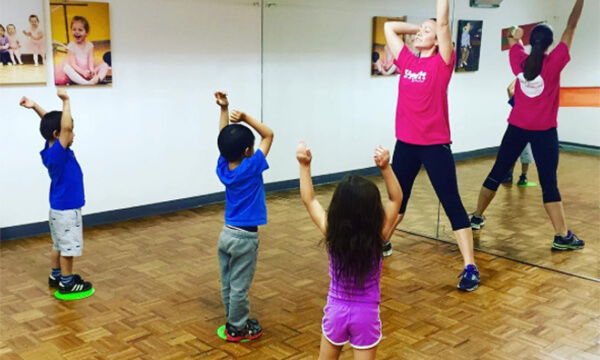
Start with your voice and your living room floor; a playlist and a pot with a wooden spoon are all the equipment you need. The AAP’s How Active Is Your Toddler? suggests finding toddler-friendly music and dancing together, copying each other’s movements and getting the wiggles out, and notes that just 15 minutes a day of quality one-on-one time helps physical development. Here are ten ideas by age.
| Activity | How to play | Good from |
|---|---|---|
| Lap bounce | Bounce your child gently on your knee in time with a nursery rhyme, with a big “whee” at the end | Babies who sit with support |
| Lullaby wind-down | Sing the same quiet song every night before sleep | Any age |
| Clap along | Clap the beat of a favorite song; let your child copy you | 9 to 12 months |
| Family dance party | Put on toddler-friendly music and dance together, copying each other’s moves | Walking toddlers |
| Pot-and-spoon drum | Hand over a pot and a wooden spoon and tap a slow beat, then a fast one | 1 year |
| Action songs | The Wheels on the Bus, Itsy Bitsy Spider, Head, Shoulders, Knees and Toes with the motions | 1 year |
| Marching band | March around the room to a steady beat, knees high, then tiptoe for a quiet verse | 18 months |
| Sing the book | Sing a short picture book instead of reading it, and let your child fill in the last word | 18 months |
| Freeze dance | Dance while the music plays and freeze when it stops | 2 years |
| Scarf dance | Wave a scarf or dish towel high for high notes and low for low notes | 2 years |
Ideas built on HealthyChildren.org, “How Active Is Your Toddler?”, “The Power of Play” and “Music and Mood” (American Academy of Pediatrics), verified October 27, 2026; ages are starting points, and your own child sets the pace
Keep sessions short and stop while it is still fun. For more big-body ideas, our gross motor activities for toddlers guide covers climbing, jumping and running games, and our sensory play for toddlers guide has ideas for hands-on play with textures and sounds.
Where can toddlers do music and movement on the Upper West Side?
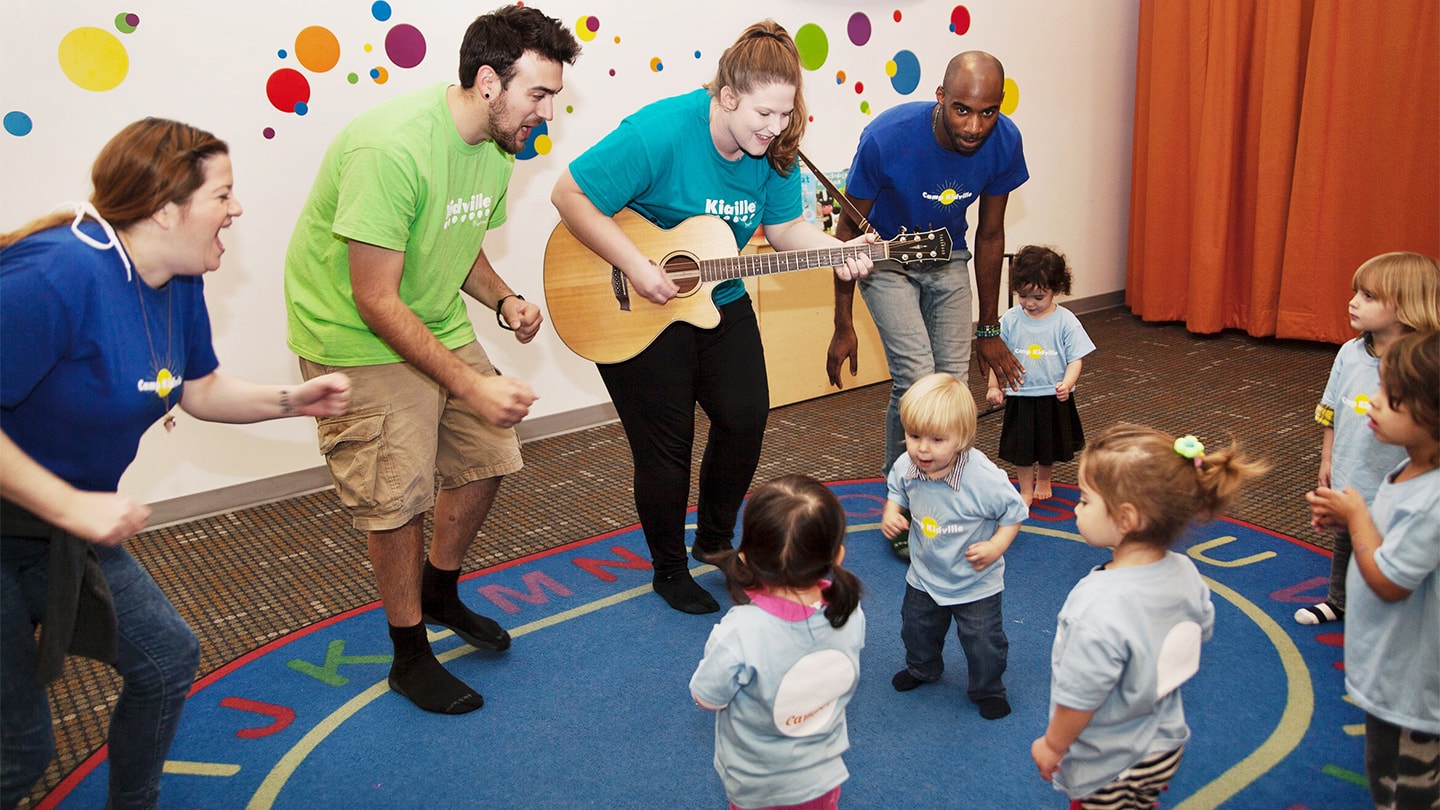
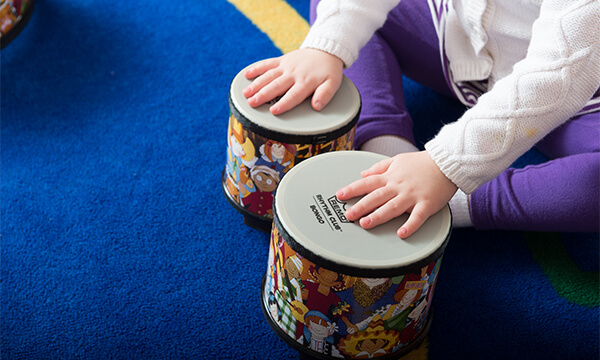
At Kidville’s Rockin’ Railroad: Unplugged class, a live music class for ages 5 months to 5 years at 205 West 88th Street. The Kidville music classes page describes the class as a journey where you and your child become passengers on the Rockin’ Railroad, with movement songs, lap activities, shared musical story time, group drumming exploration and “bubbles galore.” The class explores a different instrument and musical genre each week, meets puppet friends along the way, and makes stops at destinations like Instrumentville and Grandma’s House before heading back to Kidville Station.

| What Kidville says | What it means for your toddler |
|---|---|
| Always live: no prerecorded track or lip-syncing | Real voice, guitar, drums and keys every week |
| Hands-on, with toddler-sized instruments | Your child taps, shakes and strums, not just listens |
| Original songs written by a team of musical experts | New melodies plus kids’ classics |
| Movement songs, lap activities, group drumming, bubbles | The same activities as this guide, with a live band and a room of friends |
| Ages 5 months to 5 years | One class covers babies through preschoolers |
| Membership $219 a month for 4 classes or $399 for 8; first class free | Try one before you commit |
Source: Kidville Upper West Side music classes, membership and trial class pages, verified October 27, 2026
For what to expect at your first class, see our baby music classes guide, and for how to compare toddler music classes around the city, our best toddler music classes guide. Big-muscle movers may also like the Kidville gym classes, where coaches add obstacle courses, swings and the Tumbl Trak.
Possible downside: a live class is loud and busy, and some toddlers take a few weeks to join in rather than watch from a lap. Class spots are limited and your child is enrolled in the same class each week, so check the current schedule and call 212-362-7792 for a waitlist if a class shows a grayed-out enrollment button.
How do I keep music and movement time safe and fun?
Keep the volume comfortable, clear the floor and follow your toddler’s lead. The AAP’s active toddler guide recommends putting your phone away and setting a timer, letting your child lead, and staying close so you can step in if they head for something they should not. Keep music at a level where you can talk over it without raising your voice, move anything with sharp corners before a dance party, and treat small instruments like any small object: nothing that fits in the mouth for children who still put things there.
| Do | Why |
|---|---|
| Let your toddler pick the song or the move | Child-led play keeps them interested longer |
| Repeat the same songs often | Repetition is how toddlers learn the words and the actions |
| Keep the volume at talking level | Protects small ears and keeps the mood calm |
| Clear the floor and dance in socks or bare feet | Fewer bumps when the wiggles get big |
| Stop while it is still fun | Short, happy sessions make them ask for more |
Built on HealthyChildren.org, “How Active Is Your Toddler?” and “The Power of Play” (American Academy of Pediatrics), verified October 27, 2026
Music and movement activities for toddlers: FAQ
What are music and movement activities?
They are songs and games that pair sound with motion: action songs with hand movements, dance parties, marching to a beat, lap bounces and tapping a drum or a pot. The AAP’s Power of Play guide suggests that parents of 1 to 3 year olds sing songs, play rhythms and encourage moving to the beat. At Kidville, the Rockin’ Railroad class mixes movement songs, lap activities, group drumming and bubbles with live music.
What do toddlers learn from music and movement?
Language, memory, coordination and mood, according to the AAP. Songs give toddlers phrases and funny sounds to repeat, which the AAP says helps language at age 2; pairing words with rhythm and pitch enhances learning and recall; moving to the beat builds coordination; and play in general helps children plan, take turns and regulate emotions. A parent’s singing is also soothing, whatever your voice sounds like.
What are some good movement activities for a 2-year-old?
Freeze dance, a family dance party, a marching band around the living room, a scarf dance and action songs like Head, Shoulders, Knees and Toes all work well at 2. The AAP suggests dancing together and copying each other’s movements to get the wiggles out. Keep it to short bursts, let your child pick the song, and clear the floor first. Kidville’s Rockin’ Railroad class adds a live band and a room of friends.
What are some good music and movement songs for toddlers?
Songs with built-in actions work best: The Wheels on the Bus, Itsy Bitsy Spider, Head, Shoulders, Knees and Toes, If You’re Happy and You Know It, and Ring Around the Rosie. Add a slow lullaby for wind-down time, and any upbeat song for a dance party. Kidville’s music classes mix kids’ classics with original songs written by its own team, and explore a new instrument and genre each week.
How much music and movement does a toddler need each day?
There is no set number, but the AAP notes that just 15 minutes a day of quality one-on-one active play helps physical development, and a few songs spread through the day add up fast. A lap song after breakfast, a dance party before dinner and a lullaby at bedtime cover it. A weekly class like Kidville’s Rockin’ Railroad adds live instruments and group play on top.
What age can a toddler start a music class?
Kidville’s Rockin’ Railroad: Unplugged class takes children from 5 months to 5 years, so one class covers babies through preschoolers. Younger babies take part through lap songs and bounces, while toddlers march, drum and dance. Your first class is free, and classes run on a monthly membership of $219 for 4 classes or $399 for 8.
The bottom line
Music and movement activities for toddlers are the easiest kind of play: a song, a beat and room to wiggle. The AAP’s advice for 1 to 3 year olds is to sing songs, play rhythms and encourage moving to the beat, and a dance party, a pot-and-spoon drum and an action song cover all three. On the Upper West Side, Kidville’s Rockin’ Railroad class brings the same ideas to life with a live band, toddler-sized instruments and bubbles galore, and the first class is free.
Ready to make some noise? See the Kidville music classes at Kidville Upper West Side, 205 West 88th Street, New York, NY 10024, or claim a free trial class. Call 212-362-7792 with questions.
ABOUT THE AUTHOR
The Kidville Upper West Side Team runs the Kidville location at 205 West 88th Street, New York, NY 10024, home to music, gym, art, dance and STEM classes, Kidville University, Camp Kidville, an indoor playspace, birthday parties and a kids salon for children from birth to age 6. Every age, price and schedule detail in our guides is checked against Kidville’s own published pages.
Sources
Every Kidville class, age and price detail in this guide comes from Kidville Upper West Side’s own pages, checked on October 27, 2026. Play, language and music guidance comes from HealthyChildren.org, the American Academy of Pediatrics’ parenting site.
Kidville Upper West Side: Music Classes
Kidville Upper West Side: Free Trial Class
Kidville Upper West Side: Enrollment Options and Membership
Kidville Upper West Side: Contact
HealthyChildren.org (American Academy of Pediatrics): How Active Is Your Toddler?
HealthyChildren.org (American Academy of Pediatrics): Language Development: 2 Year Olds
HealthyChildren.org (American Academy of Pediatrics): Music and Mood