
Sensory Play for Toddlers: Ideas by Age and Where to Get Messy on the Upper West Side
By the Kidville Upper West Side Team · Updated October 2026
SHORT ANSWER
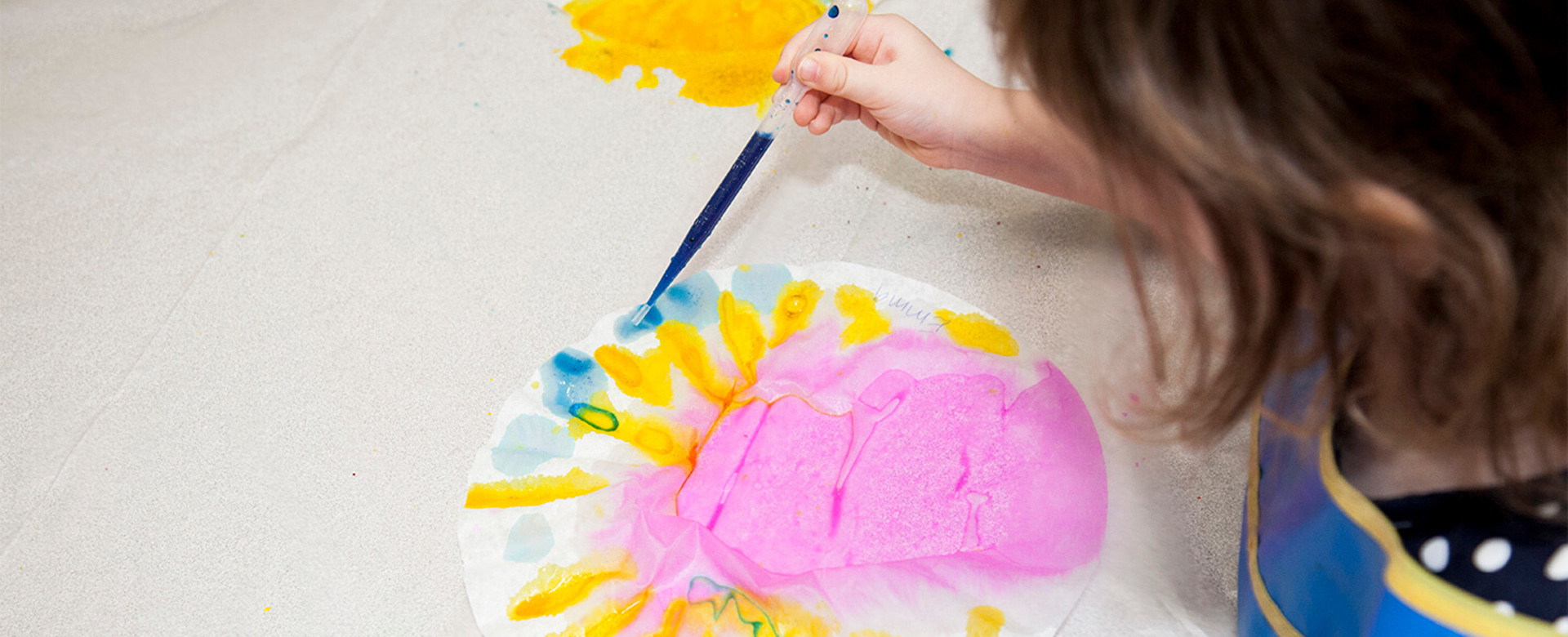
Sensory play for toddlers is any play that lets a child explore through touch, sight, sound, smell and movement: water, dough, paint, textures and climbing. The American Academy of Pediatrics says hands-on play is how toddlers learn. On the Upper West Side, Kidville’s My Big Messy Art Class offers sensory play bins and a painting wall from 18 months.
Every toddler is already a sensory scientist. They squeeze the banana, pour the bath water on the floor, and rub the dog. Sensory play just gives that instinct a safe place to run. This guide explains what sensory play is and why pediatricians recommend it, gives simple ideas that fit a 1 year old, a 2 year old and a 3 year old, covers the one safety rule that matters most, and shows how the Kidville Upper West Side art class does the messy version that is too big for an apartment. Every Kidville detail was checked on Kidville’s own pages on October 21, 2026.
What is sensory play, and why does it matter for toddlers?
Sensory play is learning through touch, sight, sound, smell and movement, and the AAP says it is how toddlers learn. HealthyChildren.org, the parenting site of the American Academy of Pediatrics, puts it plainly: play is how your toddler explores and learns about the world. Its advice to parents is to give a child lots of time to explore with things like water, sand, boxes, or any other safe item the child finds interesting, and to provide simple, safe items like plastic cups, pots and pans, blocks and crayons so the child can copy your actions and work.
The AAP’s clinical report on the power of play adds that play can improve children’s abilities to plan, organize, get along with others and regulate emotions, and that it helps with language, math and social skills. For babies, it recommends letting them bring safe objects to their mouth to explore new textures and exposing them to a variety of sensory experiences. For 1 to 3 year olds, it recommends blocks, empty containers, wooden spoons, shape sorters and puzzles, and for the preschool years it notes that activities involving music and art support cognitive, social-emotional and multisensory skills.
| Sense | What a toddler is practicing | Everyday example |
|---|---|---|
| Touch | Texture words, hand strength, tolerance for mess | Squeezing dough, patting sand, finger painting |
| Sight | Color and shape names, tracking, cause and effect | Pouring colored water, watching a block tower fall |
| Hearing | Rhythm, volume, listening | A pots-and-spoons kitchen band, a rain shaker |
| Smell and taste | Naming, comparing, trying new foods | Smelling a lemon, a cinnamon stick, a bowl of snow |
| Movement and balance | Body awareness, coordination | Climbing a cushion pile, swinging, crawling through a tunnel |
Built on HealthyChildren.org play guidance (American Academy of Pediatrics), verified October 21, 2026
This guide is general information, not medical advice. If you have questions about your child’s senses, reactions to textures or development, your pediatrician is the right person to ask.
What are some fun sensory play activities for toddlers at home?
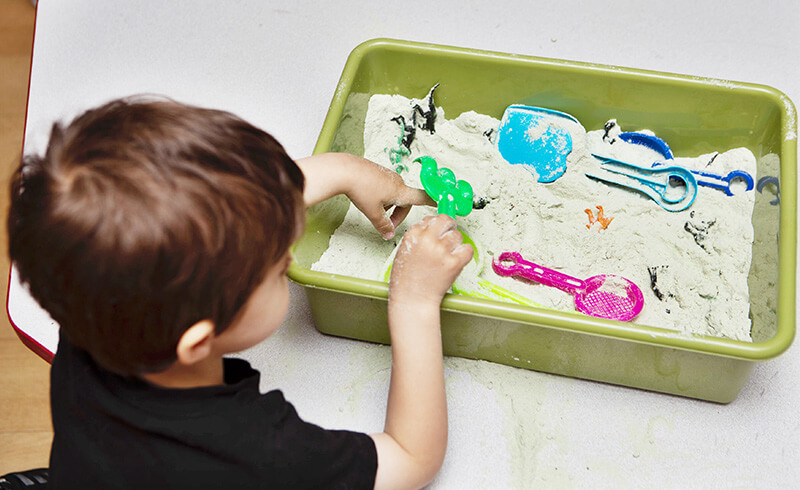
The best ones use what is already in the kitchen and take five minutes to set up. A bin, a tray or the bathtub is the whole setup. The AAP’s point is that simple and inexpensive objects are some of the best ways to support a child’s creativity, and that it is the parent’s presence and attention that enriches children, not fancy gadgets. Sit on the floor, describe what your toddler is doing, and let them lead.
| Sensory activity | What you need | What it works on | Good from age |
|---|---|---|---|
| Water play | A bin of warm water, cups, a spoon, a sponge | Pouring, squeezing, cause and effect | 1 year, seated and supervised |
| Dry pour bin | A tray of dry oats or rice, scoops and cups | Scooping, filling, dumping | 2 years, once mouthing has stopped |
| Homemade dough | Flour, salt, water, a drop of food coloring | Hand strength, pinching, rolling | 18 months, with supervision |
| Finger painting in a bag | Paint sealed inside a zip bag taped to the table | Color mixing with no mess | 1 year |
| Texture walk | A towel, bubble wrap, a doormat, a cushion laid in a row | Balance, body awareness, new textures underfoot | 1 year, holding a hand |
| Kitchen band | Pots, lids, wooden spoons | Rhythm, volume, listening | 1 year |
| Smell jars | A lemon, a cinnamon stick, a sprig of mint | Naming and comparing smells | 2 years |
Ideas built around HealthyChildren.org play guidance (American Academy of Pediatrics), verified October 21, 2026; ages are starting points; your own child and your supervision set the pace
What sensory play fits a 1 year old, a 2 year old and a 3 year old?
At 1, everything goes in the mouth, so play is big, wet and edible-safe. At 2, pouring and dumping take over. At 3, pretend play joins in. The AAP notes that 1 to 3 year olds learn through blocks, containers and simple objects, and that make-believe play grows across these years. Match the activity to what your child does naturally and the setup lasts longer than five minutes.
| Age | What they do with materials | Sensory play that fits | What to skip for now |
|---|---|---|---|
| 1 year old | Mouths, bangs, drops and watches | Warm water in a bin, paint sealed in a bag, soft blocks, a kitchen band, a texture walk | Anything small enough to swallow: dry rice, beads, buttons |
| 2 year old | Pours, dumps, fills, carries | A dry pour bin with scoops, homemade dough, a bowl of clean snow, sticker peeling | Long setups; keep it to one bin and one tool |
| 3 year old | Pretends, sorts, tells you about it | A pretend bakery with dough, a car wash in the tub, sorting big blocks by color with you, painting a big sheet taped to the wall | Expecting a finished product; the process is the point |
Age guidance adapted from HealthyChildren.org, “The Power of Play” and “Playing is How Toddlers Learn” (American Academy of Pediatrics), verified October 21, 2026
For a week of ideas that mix sensory play with classes and outings, see our toddler weekday routine guide, and for the baby stage, what to do with a baby all day.
Once your toddler starts asking “what happens if?”, sensory bins turn into simple experiments; our guide to STEM activities for toddlers has 12 easy ones, from sink or float to color mixing.
Is sensory play safe for a toddler who still puts things in their mouth?
Yes, if you choose materials by age and stay within arm’s reach. The AAP’s choking prevention guidance lists marbles, small balls, toys with small parts and anything that can be squeezed to fit entirely into a child’s mouth among the household items to keep away from infants and young children, and reminds parents to follow the age recommendations on toy packages, because those guidelines reflect choking risk. For sensory play, that means a 1 year old gets water, dough and big soft objects, and the dry rice bin waits until mouthing has stopped.
| Safety rule | How to apply it to sensory play |
|---|---|
| No small, hard objects for mouthers | Skip beads, buttons, dry beans and rice until your child has stopped putting things in their mouth |
| Stay within arm’s reach | Sensory play is floor time together, not independent play, for 1 and 2 year olds |
| Water needs a grown-up | Stay with your child for any water play, including a shallow bin |
| Check the floor after | The AAP advises checking under furniture and between cushions for small items that could be swallowed |
| Taste-safe is the easy default | Dough made from flour and salt, oats, cooked pasta and water are all fine if a bit ends up in a mouth |
Source: HealthyChildren.org, “Choking Prevention for Babies and Children” (American Academy of Pediatrics), verified October 21, 2026
Where can toddlers do sensory play on the Upper West Side?
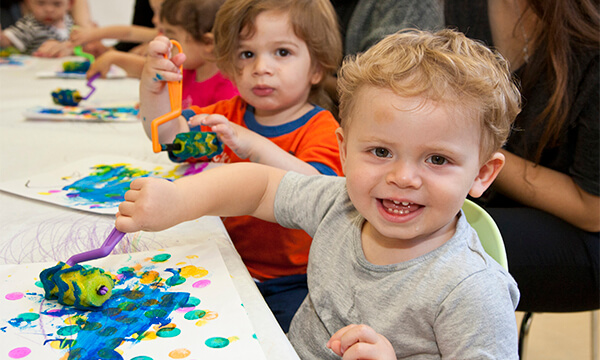
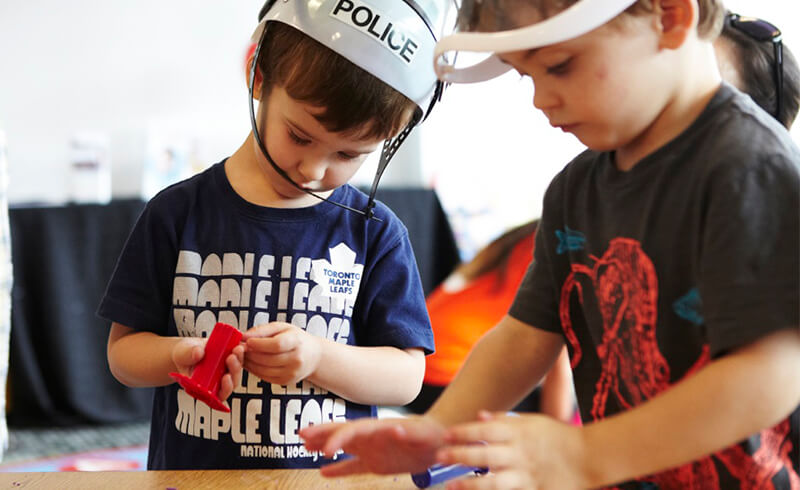
At home for the small stuff, and at a class built for the big, wet, loud stuff. Kidville’s My Big Messy Art Class at 205 West 88th Street is described on Kidville’s own class page as a place where young children are free to smear, squeeze, splatter and explore in sensory play bins, writing tables and giant paper painting, for fun that is too big to try at home. The art studio has toddler-sized tools, smocks and a wall outfitted for painting, the class is focused on the process of creation rather than the finished product, and Kidville handles the cleanup.
| Sensory option at Kidville | Ages | How long | What to know |
|---|---|---|---|
| My Big Messy Art Class | 18 to 36 months and 2 to 4 years | 45 minutes, weekly | Sensory play bins, writing tables, giant paper painting; paints, doughs, crayons, chalk and collage; storybook sharing |
| Indoor playspace | Toddlers with a grown-up | 1 hour, $31 drop-in | Movement and balance: climbing, crawling, running on padded floors; register in advance |
| Free trial class | Any class on the schedule | 45 minutes | Your first class is free, so a messy art trial costs nothing |
| Membership | All ages | Monthly | $219 for 4 classes plus 3 playspace passes; $399 for 8 classes plus unlimited playspace |
Source: Kidville Upper West Side art classes, playspace, trial class and membership pages, verified October 21, 2026
Our toddler art class guide walks through what happens in a session, what to wear and what it costs. The art class is a parent-and-child class, so a grown-up is in the room with your toddler; our mommy and me guide explains how that format works.
Possible downside: sensory play is messy by design, and a toddler who hates wet hands or loud rooms may need a slow start. Begin with dry textures and a short session, let them watch first, and skip the activity on a day they are tired. At the class, smocks are provided, but dress for mess anyway, and remember that the art class starts at 18 months, so the 1 year old sensory ideas above are for home and the playspace until then.
Sensory play for toddlers: FAQ
What are some fun sensory play activities for toddlers?
Water play in a bin, homemade dough, finger paint sealed in a zip bag, a dry pour bin of oats with scoops, a kitchen band with pots and spoons, and a texture walk across a towel, bubble wrap and a cushion. The AAP recommends exactly this kind of play with simple household items. For the big messy version, Kidville’s art class has sensory bins and a painting wall.
What are good sensory items for toddlers?
Cups, scoops and spoons, a shallow bin, flour-and-salt dough, warm water, a sponge, soft blocks and a few textures to touch. The AAP says simple and inexpensive objects like blocks, empty containers and wooden spoons are some of the best ways to support a toddler’s creativity. Choose items by age: nothing small enough to swallow for a child who still mouths things.
What are some examples of sensory play?
Squeezing dough, pouring water between cups, scooping rice, finger painting, walking barefoot on different textures, banging a pot, smelling a lemon, and crawling through a tunnel. Anything that gets a toddler using touch, sight, hearing, smell or movement counts. At Kidville Upper West Side, the sensory play bins and giant paper painting in the art class are the same idea at full size.
What is the objective of sensory play?
To let a toddler learn about the world through their senses while building hand strength, language and attention. The AAP says play helps children plan, organize, regulate emotions and build language, math and social skills, and that art and music activities support multisensory skills. The objective is the exploring itself, not a finished product, which is why Kidville’s art class focuses on process over product.
What are the benefits of playing with sensory toys?
Toddlers practice fine motor skills, learn new words for colors, shapes and textures, make small decisions, and build confidence that there are no mistakes in play. Kidville’s art class page lists those same benefits for its art series: fine motor skills, language development, problem solving and confidence. You do not need special toys for this; a bin, cups and water do most of the work.
When should you do sensory play?
Short and often beats long and rare. A few minutes of water or dough at the kitchen table after a nap, when a toddler is fed and rested, works better than a long session when they are tired. The AAP’s advice is to give toddlers lots of time to explore safe materials, so build it into the day rather than saving it for weekends. A weekly class adds the big messy session.
The bottom line
Sensory play for toddlers is simple: safe materials, a grown-up within arm’s reach, and permission to make a mess. The AAP is clear that this kind of hands-on play is how toddlers learn, and that household items beat gadgets. Keep the small version at home and let a class handle the big one. On the Upper West Side, Kidville’s My Big Messy Art Class gives children from 18 months the sensory bins, giant paper and painting wall that an apartment cannot, and the first class is free.
Ready to get messy? See My Big Messy Art Class at Kidville Upper West Side, 205 West 88th Street, New York, NY 10024, or claim a free trial class. Call 212-362-7792 with questions.
ABOUT THE AUTHOR
The Kidville Upper West Side Team runs the Kidville location at 205 West 88th Street, New York, NY 10024, home to music, gym, art, dance and STEM classes, Kidville University, Camp Kidville, an indoor playspace, birthday parties and a kids salon for children from birth to age 6. Every age, price and schedule detail in our guides is checked against Kidville’s own published pages.
Sources
Every Kidville class, age and price detail in this guide comes from Kidville Upper West Side’s own pages, checked on October 21, 2026. Play, development and safety guidance comes from HealthyChildren.org, the American Academy of Pediatrics’ parenting site.
Kidville Upper West Side: Art Classes (My Big Messy Art Class)
Kidville Upper West Side: Playspace and Holiday Schedule
Kidville Upper West Side: Free Trial Class
Kidville Upper West Side: Enrollment Options and Membership
Kidville Upper West Side: Contact
HealthyChildren.org (American Academy of Pediatrics): Playing is How Toddlers Learn
HealthyChildren.org (American Academy of Pediatrics): Choking Prevention for Babies and Children