
By the Kidville Upper West Side Team · Updated October 2026
SHORT ANSWER
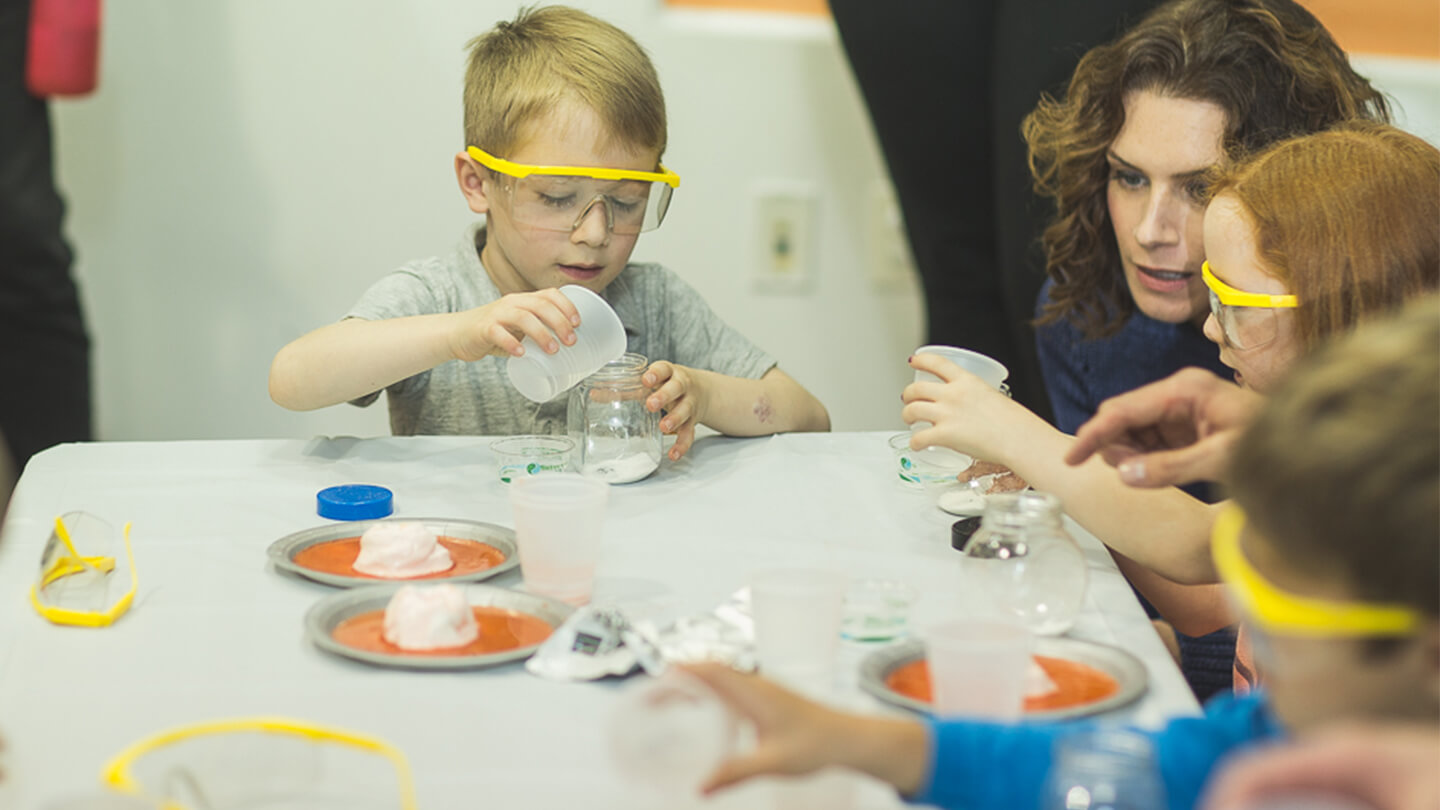
STEM activities for toddlers are simple hands-on experiments: sink or float, color mixing, ramps and rolling balls, block towers, magnifying-glass hunts and ice melting. They build the cause and effect thinking the AAP says grows at age 2. Skip water beads and loose magnets. Kidville University puts art and STEM in every 2s morning.
A toddler who flips the light switch twenty times, pours water from cup to cup, or drops a spoon off the high chair just to watch it fall is already doing science. STEM, short for science, technology, engineering and math, sounds like a school subject, but for a 2 or 3-year-old it is simply curiosity with a plan: try something, see what happens, try it again. This guide explains what STEM looks like at this age, gives 12 easy experiments for an Upper West Side kitchen, walks through one activity step by step, covers the materials the American Academy of Pediatrics (AAP) warns parents to keep out of the house, and shows how Kidville University builds science into its 2s and 3s mornings. Every Kidville detail was checked on Kidville’s own pages on October 30, 2026.
What is STEM for toddlers?
STEM for toddlers is hands-on play that asks “what happens if?” and lets your child find out. There are no worksheets and no screens required. The AAP’s Cognitive Development: Two-Year-Old page describes exactly the thinking STEM play builds: a 2-year-old can “solve some problems in his head,” will “match similar shapes” in shape sorters and simple puzzles, begins to “recognize the purpose of numbers in counting objects, especially the number two,” and, “as his understanding of cause and effect develops,” becomes “much more interested in winding up toys and turning lights and appliances on and off.”
| Letter | What it means for a toddler | Everyday example |
|---|---|---|
| S: Science | Noticing, predicting and testing what happens | Does the toy boat sink or float? Does ice melt faster in the sun? |
| T: Technology | Simple tools that help us do or see more | A magnifying glass, a funnel, a turkey baster, a flashlight |
| E: Engineering | Building, testing and rebuilding | A block tower that falls, then a wider base that holds |
| M: Math | Comparing, sorting, counting, patterns | Big and small, two of everything, sorting by color or shape |
Built on HealthyChildren.org, “Cognitive Development: Two-Year-Old” and “Developmental Milestones: 2 Year Olds” (American Academy of Pediatrics), verified October 30, 2026
The AAP’s The Power of Play backs the same simple approach for 1 to 3-year-olds: blocks, empty containers, wooden spoons, shape sorters and puzzles are “some of the best ways to support a child’s creativity and grasp of how the world works,” and “it is parents and caregivers’ presence and attention that enriches children, not fancy electronic gadgets.” This guide is general information, not medical advice.
What are some STEM activities for toddlers?
Twelve experiments that use what is already in the kitchen or toy bin, most of them 10 minutes or less. Every one of them works on the same loop: make a guess, try it, talk about what happened. Keep the water ones in a shallow tray, stay within arm’s reach, and empty the water when you are done.
| Activity | Best age | STEM skill | How to set it up |
|---|---|---|---|
| Sink or float | 2 years+ | Science: predicting and testing | A shallow tray of water, a spoon, a cork, a leaf, a plastic block; guess first, then drop |
| Color mixing | 2 years+ | Science: cause and effect | Two colors of washable paint in a zip bag, taped to the table; squish and watch a new color appear |
| Ice melt rescue | 2 years+ | Science: change of state | Freeze a large toy in a cup of water; give warm water and a spoon to free it |
| Ramps and rolling | 18 months+ | Engineering: slope and speed | A board or a sofa cushion leaned on a step; roll balls and cars, then make it steeper |
| Tower test | 18 months+ | Engineering: balance | Blocks; build tall and thin, then wide at the bottom; which one falls first? |
| Shadow play | 2 years+ | Science: light | A flashlight in a dim room; make big and small shadows by moving a toy closer and farther |
| Magnifying hunt | 2 years+ | Technology: tools | A child-safe magnifying glass on a walk in Riverside Park or on the windowsill plants |
| Sort and match | 2 years+ | Math: sorting | Laundry by color, blocks by size, spoons and forks in two piles |
| Funnel and pour | 2 years+ | Technology and math: volume | Two cups and a funnel with dry rice at the table, or water in the bath; which cup holds more? |
| Sound shakers | 18 months+ | Science: sound | Taped, sealed containers with rice, pasta or bells inside; which is loudest? |
| Seed in a cup | 3 years+ | Science: living things | A bean on a damp paper towel in a clear cup; check the roots every day |
| Same or different | 3 years+ | Math: comparing | Two piles of objects; the AAP lists understanding “same” and “different” between 3 and 4 |
Activities built on the cognitive milestones at HealthyChildren.org (American Academy of Pediatrics), verified October 30, 2026; ages are starting points, not deadlines
Many of these double as sensory play and hand practice. Our sensory play for toddlers guide has bin ideas by age, and our fine motor activities guide covers the pouring, scooping and squeezing that make the experiments work. On a wet afternoon, our rainy day activities guide pairs nicely with the kitchen-table experiments above.
What is an example of a STEM activity?
Sink or float is the classic first experiment, because it covers all four letters in about ten minutes. Your toddler predicts (science), uses a scoop or a spoon (technology), builds a “boat” that holds a toy (engineering), and sorts the results into two piles (math). The steps below work at a kitchen table or in the bath, with you sitting right there the whole time.

| Step | What you do | What you say |
|---|---|---|
| 1. Gather | Six objects: a cork, a spoon, a crayon, a leaf, a large plastic block, a plastic lid | “Which ones will sink? Which ones will float?” |
| 2. Guess | Let your toddler hold each one and point to a “sink” bowl or a “float” bowl | “You think the spoon will sink. Let’s see!” |
| 3. Test | Drop each object into a shallow tray of water, one at a time | “Splash! It went down. It sank.” |
| 4. Sort | Move each object to a “sank” or “floated” pile | “Three sank, three floated. Same number!” |
| 5. Build | Can the plastic lid hold a small toy and still float? | “Your boat is carrying the bear!” |
| 6. Clean up | Empty the tray right away and put the small objects back on a high shelf | “Scientists clean up their lab.” |
Activity built on the cognitive milestones (cause and effect, sorting, counting two) and water safety guidance at HealthyChildren.org (American Academy of Pediatrics), verified October 30, 2026
What activities can 2-3 year olds do?
At 2, cause and effect, sorting and simple building; by 3, comparing, counting and longer experiments with a few steps. The AAP’s Developmental Milestones: 2 Year Olds lists finding objects hidden under two or three covers, beginning to sort by shapes and colors, and beginning make-believe play. Its Developmental Milestones: 3 to 4 Year Olds adds understanding “same” and “different,” correctly naming some colors, understanding the concept of counting, beginning to have a clearer sense of time, and following three-part commands.
| Age | What the AAP lists | STEM play that fits |
|---|---|---|
| 2 years | Sorts by shapes and colors, finds hidden objects, cause and effect with wind-up toys and switches, matches shapes in simple puzzles, counting objects (especially two) | Color mixing bags, sink or float, ramps, tower tests, hide the toy under cups |
| 3 years | Understands same and different, names some colors, understands counting, clearer sense of time, follows three-part commands | Seed in a cup (watching change over days), same-or-different sorting, three-step experiments |
Source: HealthyChildren.org, “Developmental Milestones: 2 Year Olds”, “Cognitive Development: Two-Year-Old” and “Developmental Milestones: 3 to 4 Year Olds” (American Academy of Pediatrics), verified October 30, 2026
If you want the bigger picture of what a 2-year-old should be working on beyond STEM, from words to movement, our guide on what a 2-year-old should be learning lays out every AAP milestone for the year.
Which STEM materials are safe for toddlers?
Big pieces, shallow water and an adult within reach, plus a few popular “science” materials the AAP warns about. STEM kits and sensory videos often feature water beads, magnet sets and water play. The AAP’s guidance on each is clear.
| Material | What the AAP says | Safer swap |
|---|---|---|
| Water beads (gel beads, sensory beads) | They “look like candy,” can grow inside the body and cause blockages, are a choking hazard “especially in children younger than 3 years,” and “it is safest to not have water beads in your home” | Cooked pasta, oats or dry rice in a supervised bin |
| High-powered magnet sets | Swallowing “more than one of these high-powered magnets can be life-threatening,” because they can pull together inside the digestive system | Large magnetic building tiles in good condition; keep loose magnets and small magnet sets out of reach |
| Water play | Young children “can drown in as little as an inch or two of water,” quickly and silently; empty water containers immediately after use | A shallow tray, an adult within reach the whole time, empty it right away |
| Small parts | Toys with small parts and small balls are choking hazards for young children (see our fine motor guide) | Objects too big to fit in the mouth |
Source: HealthyChildren.org, “Water Beads: Harmful if Swallowed, Put in Ears”, “How High-Powered Magnetic Toys Can Harm Children” and “Drowning Prevention for Curious Toddlers” (American Academy of Pediatrics), verified October 30, 2026
If you think your child may have swallowed water beads or put them in an ear, the AAP says to seek treatment right away; you can also call Poison Help at 1-800-222-1222. A swallowed high-powered magnet is just as urgent, since the AAP notes that more than one can be life-threatening.
How does Kidville teach STEM on the Upper West Side?
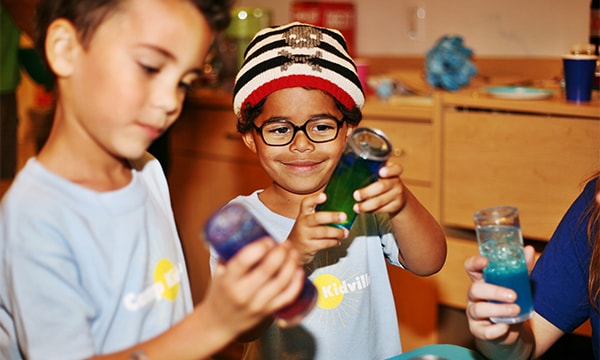
Inside the Kidville University school mornings, where science and art are part of the daily schedule. The KVU 2s morning (120 minutes, 2 or 3 days a week) includes an Art and STEM block where “creativity abounds during open-ended art and exploration as kids investigate and manipulate a myriad of tactile materials.” The KVU Grad program for 3s (180 minutes, 2 or 3 days a week, drop-off) has a daily Science and language time: “Eureka! Discovery is made through hands-on science experiments,” with Spanish words and phrases once a week.
| Kidville’s STEM approach | From the Kidville page | What your child practices |
|---|---|---|
| Cause and effect | “From color mixing to water crystals!” Weekly experiments with live results | Learning that actions lead to a response |
| Engineering skills | “From magnatiles to custom creations!” Explore, craft and design | Building, testing and rebuilding |
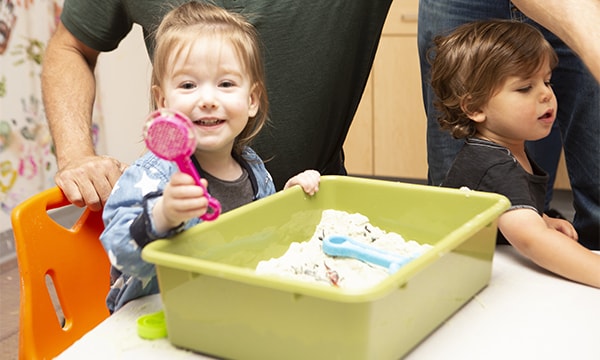
| Sensory explorations | “From digging bins to tactile play!” All five senses and imagination | Observing and describing |
| Problem solving | “From theories to conclusions!” Questions, experiments, results | Guessing, testing and drawing a conclusion |
| Lab partners | Class-led group discussions to practice “listening, deductive reasoning, and team work” | Working alongside other children |
Source: Kidville Upper West Side STEM Classes, KVU 2s and KVU Grad pages, verified October 30, 2026
For families not ready for a school program, My Big Messy Art Class (18 to 36 months and 2 to 4 years) sits in the Art and Science category on the current class schedule, with sensory play bins, paints, doughs and giant paper painting, and a free trial class to start. Our preschool alternative guide has the KVU schedules, prices and enrollment details.
Possible downside: the Upper West Side STEM Classes page describes Kidville’s STEM series, but the current class schedule (fall and winter 2026) does not list a standalone STEM class, so the science time for 2s and 3s happens inside Kidville University rather than as a separate weekly class. If you are looking only for a drop-in STEM class, contact Kidville to ask whether one is planned.
STEM activities for toddlers: FAQ
What are some STEM activities for toddlers?
Easy toddler STEM activities include sink or float, color mixing in a sealed bag, freeing a toy from ice, rolling balls down a ramp, building and knocking over block towers, shadow play with a flashlight, a magnifying-glass hunt, sorting laundry by color, pouring with a funnel and making sound shakers. Each one follows the same loop: guess, try it, talk about what happened.
What is an example of a STEM activity?
Sink or float is a good first example. Your toddler guesses whether a cork, a spoon or a leaf will sink, drops each one into a shallow tray of water, sorts them into “sank” and “floated” piles and counts each pile, then tries to build a lid “boat” that carries a small toy. That covers science, a simple tool, engineering and math in about ten minutes, with you within reach.
What is STEM for toddlers?
STEM for toddlers is hands-on play built around “what happens if?” It means noticing and testing (science), using simple tools like a magnifying glass or funnel (technology), building and rebuilding (engineering), and sorting, comparing and counting (math). The AAP describes the same thinking at age 2: solving simple problems, matching shapes, counting objects, and a growing interest in cause and effect.
What activities can 2-3 year olds do?
At 2, the AAP lists sorting by shapes and colors, finding hidden objects, matching shapes in simple puzzles and cause and effect play, so color mixing, ramps, tower tests and sink or float fit well. Between 3 and 4, the AAP adds understanding same and different, naming colors, the concept of counting and following three-part commands, so longer experiments like growing a bean in a cup work well.
Are water beads safe for toddlers?
No. The AAP says water beads look like candy, can keep growing inside the body after being swallowed, may not show on X-rays, and are a choking hazard especially for children under 3. It supports a ban on water beads marketed for children and says it is safest not to have them in a home with young children. Use cooked pasta, oats or dry rice in a supervised bin instead.
Does Kidville Upper West Side have STEM classes?
Science is built into Kidville University: the KVU 2s morning includes an Art and STEM block, and KVU Grad for 3s has daily hands-on science experiments. Kidville’s STEM Classes page describes its approach (color mixing, water crystals, magnatiles, digging bins), but the current fall and winter class schedule does not list a standalone STEM class, so contact Kidville to ask about one.
The bottom line
STEM activities for toddlers are simple, hands-on experiments that turn everyday curiosity into “guess, try, see what happens.” Sink or float, color mixing, ramps and block towers cover all four letters, the AAP’s milestones tell you what fits at 2 and at 3, and the safety rules are short: no water beads, no loose high-powered magnets, shallow water with an adult in reach. On the Upper West Side, Kidville University builds art and STEM into every 2s morning and hands-on science into every KVU Grad day.
Ready to see little scientists at work? See Kidville University at Kidville Upper West Side, 205 West 88th Street, New York, NY 10024, and request a tour. Call 212-362-7792 with questions.
ABOUT THE AUTHOR
The Kidville Upper West Side Team runs the Kidville location at 205 West 88th Street, New York, NY 10024, home to music, gym, art, dance and STEM classes, Kidville University, Camp Kidville, an indoor playspace, birthday parties and a kids salon for children from birth to age 6. Every age, price and schedule detail in our guides is checked against Kidville’s own published pages.
Sources
Every Kidville program detail in this guide comes from Kidville Upper West Side’s own pages, checked on October 30, 2026. Developmental milestones and safety guidance come from HealthyChildren.org, the American Academy of Pediatrics’ parenting site.
Kidville Upper West Side: Kidville University (Preschool Alternative)
Kidville Upper West Side: KVU 2s Program
Kidville Upper West Side: KVU Grad (3s Program)
Kidville Upper West Side: STEM Classes
Kidville Upper West Side: Current Class Schedule
Kidville Upper West Side: Art Classes (My Big Messy Art Class)
HealthyChildren.org (American Academy of Pediatrics): Cognitive Development: Two-Year-Old
HealthyChildren.org (American Academy of Pediatrics): Developmental Milestones: 2 Year Olds
HealthyChildren.org (American Academy of Pediatrics): Developmental Milestones: 3 to 4 Year Olds
HealthyChildren.org (American Academy of Pediatrics): Water Beads: Harmful if Swallowed, Put in Ears
HealthyChildren.org (American Academy of Pediatrics): Drowning Prevention for Curious Toddlers