Skip to Main Content

STEM Activities for Toddlers: Easy Science at Home, Safe Materials and Hands-On Discovery on the Upper West Side

KIDVILLE UPPER WEST SIDE

STEM Activities for Toddlers: Easy Science at Home, Safe Materials and Hands-On Discovery on the Upper West Side

What STEM means for a 2 or 3-year-old, 12 kitchen-table experiments, what the AAP says to keep out of the house, and how Kidville University builds science into every school morning.

See Kidville University

205 W 88th St · 212-362-7792

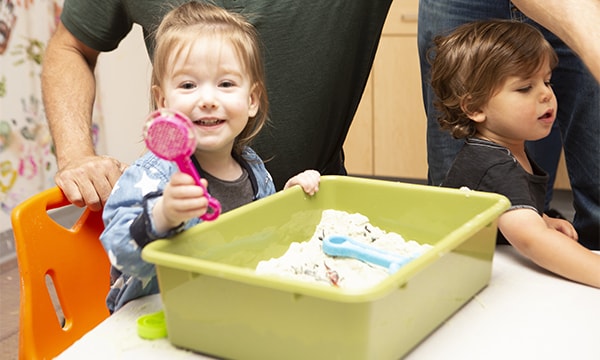
Smiling toddler holding a magnifying tool over a sensory digging bin in class at Kidville Upper West Side
KVU 2s ART AND STEM • KVU GRAD SCIENCE EXPERIMENTS • CAUSE AND EFFECT • REQUEST A TOUR

By the Kidville Upper West Side Team · Updated October 2026

SHORT ANSWER

STEM activities for toddlers are simple hands-on experiments: sink or float, color mixing, ramps and rolling balls, block towers, magnifying-glass hunts and ice melting. They build the cause and effect thinking the AAP says grows at age 2. Skip water beads and loose magnets. Kidville University puts art and STEM in every 2s morning.

A toddler who flips the light switch twenty times, pours water from cup to cup, or drops a spoon off the high chair just to watch it fall is already doing science. STEM, short for science, technology, engineering and math, sounds like a school subject, but for a 2 or 3-year-old it is simply curiosity with a plan: try something, see what happens, try it again. This guide explains what STEM looks like at this age, gives 12 easy experiments for an Upper West Side kitchen, walks through one activity step by step, covers the materials the American Academy of Pediatrics (AAP) warns parents to keep out of the house, and shows how Kidville University builds science into its 2s and 3s mornings. Every Kidville detail was checked on Kidville’s own pages on October 30, 2026.

What is STEM for toddlers?

STEM for toddlers is hands-on play that asks “what happens if?” and lets your child find out. There are no worksheets and no screens required. The AAP’s Cognitive Development: Two-Year-Old page describes exactly the thinking STEM play builds: a 2-year-old can “solve some problems in his head,” will “match similar shapes” in shape sorters and simple puzzles, begins to “recognize the purpose of numbers in counting objects, especially the number two,” and, “as his understanding of cause and effect develops,” becomes “much more interested in winding up toys and turning lights and appliances on and off.”

Letter What it means for a toddler Everyday example
S: Science Noticing, predicting and testing what happens Does the toy boat sink or float? Does ice melt faster in the sun?
T: Technology Simple tools that help us do or see more A magnifying glass, a funnel, a turkey baster, a flashlight
E: Engineering Building, testing and rebuilding A block tower that falls, then a wider base that holds
M: Math Comparing, sorting, counting, patterns Big and small, two of everything, sorting by color or shape

Built on HealthyChildren.org, “Cognitive Development: Two-Year-Old” and “Developmental Milestones: 2 Year Olds” (American Academy of Pediatrics), verified October 30, 2026

The AAP’s The Power of Play backs the same simple approach for 1 to 3-year-olds: blocks, empty containers, wooden spoons, shape sorters and puzzles are “some of the best ways to support a child’s creativity and grasp of how the world works,” and “it is parents and caregivers’ presence and attention that enriches children, not fancy electronic gadgets.” This guide is general information, not medical advice.

What are some STEM activities for toddlers?

Twelve experiments that use what is already in the kitchen or toy bin, most of them 10 minutes or less. Every one of them works on the same loop: make a guess, try it, talk about what happened. Keep the water ones in a shallow tray, stay within arm’s reach, and empty the water when you are done.

Activity Best age STEM skill How to set it up
Sink or float 2 years+ Science: predicting and testing A shallow tray of water, a spoon, a cork, a leaf, a plastic block; guess first, then drop
Color mixing 2 years+ Science: cause and effect Two colors of washable paint in a zip bag, taped to the table; squish and watch a new color appear
Ice melt rescue 2 years+ Science: change of state Freeze a large toy in a cup of water; give warm water and a spoon to free it
Ramps and rolling 18 months+ Engineering: slope and speed A board or a sofa cushion leaned on a step; roll balls and cars, then make it steeper
Tower test 18 months+ Engineering: balance Blocks; build tall and thin, then wide at the bottom; which one falls first?
Shadow play 2 years+ Science: light A flashlight in a dim room; make big and small shadows by moving a toy closer and farther
Magnifying hunt 2 years+ Technology: tools A child-safe magnifying glass on a walk in Riverside Park or on the windowsill plants
Sort and match 2 years+ Math: sorting Laundry by color, blocks by size, spoons and forks in two piles
Funnel and pour 2 years+ Technology and math: volume Two cups and a funnel with dry rice at the table, or water in the bath; which cup holds more?
Sound shakers 18 months+ Science: sound Taped, sealed containers with rice, pasta or bells inside; which is loudest?
Seed in a cup 3 years+ Science: living things A bean on a damp paper towel in a clear cup; check the roots every day
Same or different 3 years+ Math: comparing Two piles of objects; the AAP lists understanding “same” and “different” between 3 and 4

Activities built on the cognitive milestones at HealthyChildren.org (American Academy of Pediatrics), verified October 30, 2026; ages are starting points, not deadlines

Many of these double as sensory play and hand practice. Our sensory play for toddlers guide has bin ideas by age, and our fine motor activities guide covers the pouring, scooping and squeezing that make the experiments work. On a wet afternoon, our rainy day activities guide pairs nicely with the kitchen-table experiments above.

What is an example of a STEM activity?

Sink or float is the classic first experiment, because it covers all four letters in about ten minutes. Your toddler predicts (science), uses a scoop or a spoon (technology), builds a “boat” that holds a toy (engineering), and sorts the results into two piles (math). The steps below work at a kitchen table or in the bath, with you sitting right there the whole time.

Child holding a wooden Science Viewer color paddle up to her face in a Kidville classroom on the Upper West Side

Step What you do What you say
1. Gather Six objects: a cork, a spoon, a crayon, a leaf, a large plastic block, a plastic lid “Which ones will sink? Which ones will float?”
2. Guess Let your toddler hold each one and point to a “sink” bowl or a “float” bowl “You think the spoon will sink. Let’s see!”
3. Test Drop each object into a shallow tray of water, one at a time “Splash! It went down. It sank.”
4. Sort Move each object to a “sank” or “floated” pile “Three sank, three floated. Same number!”
5. Build Can the plastic lid hold a small toy and still float? “Your boat is carrying the bear!”
6. Clean up Empty the tray right away and put the small objects back on a high shelf “Scientists clean up their lab.”

Activity built on the cognitive milestones (cause and effect, sorting, counting two) and water safety guidance at HealthyChildren.org (American Academy of Pediatrics), verified October 30, 2026

What activities can 2-3 year olds do?

At 2, cause and effect, sorting and simple building; by 3, comparing, counting and longer experiments with a few steps. The AAP’s Developmental Milestones: 2 Year Olds lists finding objects hidden under two or three covers, beginning to sort by shapes and colors, and beginning make-believe play. Its Developmental Milestones: 3 to 4 Year Olds adds understanding “same” and “different,” correctly naming some colors, understanding the concept of counting, beginning to have a clearer sense of time, and following three-part commands.

Age What the AAP lists STEM play that fits
2 years Sorts by shapes and colors, finds hidden objects, cause and effect with wind-up toys and switches, matches shapes in simple puzzles, counting objects (especially two) Color mixing bags, sink or float, ramps, tower tests, hide the toy under cups
3 years Understands same and different, names some colors, understands counting, clearer sense of time, follows three-part commands Seed in a cup (watching change over days), same-or-different sorting, three-step experiments

Source: HealthyChildren.org, “Developmental Milestones: 2 Year Olds”, “Cognitive Development: Two-Year-Old” and “Developmental Milestones: 3 to 4 Year Olds” (American Academy of Pediatrics), verified October 30, 2026

If you want the bigger picture of what a 2-year-old should be working on beyond STEM, from words to movement, our guide on what a 2-year-old should be learning lays out every AAP milestone for the year.

Which STEM materials are safe for toddlers?

Big pieces, shallow water and an adult within reach, plus a few popular “science” materials the AAP warns about. STEM kits and sensory videos often feature water beads, magnet sets and water play. The AAP’s guidance on each is clear.

Material What the AAP says Safer swap
Water beads (gel beads, sensory beads) They “look like candy,” can grow inside the body and cause blockages, are a choking hazard “especially in children younger than 3 years,” and “it is safest to not have water beads in your home” Cooked pasta, oats or dry rice in a supervised bin
High-powered magnet sets Swallowing “more than one of these high-powered magnets can be life-threatening,” because they can pull together inside the digestive system Large magnetic building tiles in good condition; keep loose magnets and small magnet sets out of reach
Water play Young children “can drown in as little as an inch or two of water,” quickly and silently; empty water containers immediately after use A shallow tray, an adult within reach the whole time, empty it right away
Small parts Toys with small parts and small balls are choking hazards for young children (see our fine motor guide) Objects too big to fit in the mouth

Source: HealthyChildren.org, “Water Beads: Harmful if Swallowed, Put in Ears”, “How High-Powered Magnetic Toys Can Harm Children” and “Drowning Prevention for Curious Toddlers” (American Academy of Pediatrics), verified October 30, 2026

If you think your child may have swallowed water beads or put them in an ear, the AAP says to seek treatment right away; you can also call Poison Help at 1-800-222-1222. A swallowed high-powered magnet is just as urgent, since the AAP notes that more than one can be life-threatening.

How does Kidville teach STEM on the Upper West Side?

Inside the Kidville University school mornings, where science and art are part of the daily schedule. The KVU 2s morning (120 minutes, 2 or 3 days a week) includes an Art and STEM block where “creativity abounds during open-ended art and exploration as kids investigate and manipulate a myriad of tactile materials.” The KVU Grad program for 3s (180 minutes, 2 or 3 days a week, drop-off) has a daily Science and language time: “Eureka! Discovery is made through hands-on science experiments,” with Spanish words and phrases once a week.
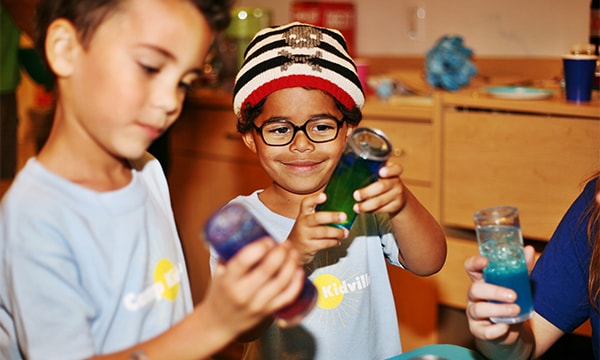
Children holding up colorful discovery tubes during a science exploration at Kidville Upper West Side

Kidville’s STEM approach From the Kidville page What your child practices
Cause and effect “From color mixing to water crystals!” Weekly experiments with live results Learning that actions lead to a response
Engineering skills “From magnatiles to custom creations!” Explore, craft and design Building, testing and rebuilding
Sensory explorations “From digging bins to tactile play!” All five senses and imagination Observing and describing
Problem solving “From theories to conclusions!” Questions, experiments, results Guessing, testing and drawing a conclusion
Lab partners Class-led group discussions to practice “listening, deductive reasoning, and team work” Working alongside other children

Source: Kidville Upper West Side STEM Classes, KVU 2s and KVU Grad pages, verified October 30, 2026

For families not ready for a school program, My Big Messy Art Class (18 to 36 months and 2 to 4 years) sits in the Art and Science category on the current class schedule, with sensory play bins, paints, doughs and giant paper painting, and a free trial class to start. Our preschool alternative guide has the KVU schedules, prices and enrollment details.

Possible downside: the Upper West Side STEM Classes page describes Kidville’s STEM series, but the current class schedule (fall and winter 2026) does not list a standalone STEM class, so the science time for 2s and 3s happens inside Kidville University rather than as a separate weekly class. If you are looking only for a drop-in STEM class, contact Kidville to ask whether one is planned.

STEM activities for toddlers: FAQ

What are some STEM activities for toddlers?

Easy toddler STEM activities include sink or float, color mixing in a sealed bag, freeing a toy from ice, rolling balls down a ramp, building and knocking over block towers, shadow play with a flashlight, a magnifying-glass hunt, sorting laundry by color, pouring with a funnel and making sound shakers. Each one follows the same loop: guess, try it, talk about what happened.

What is an example of a STEM activity?

Sink or float is a good first example. Your toddler guesses whether a cork, a spoon or a leaf will sink, drops each one into a shallow tray of water, sorts them into “sank” and “floated” piles and counts each pile, then tries to build a lid “boat” that carries a small toy. That covers science, a simple tool, engineering and math in about ten minutes, with you within reach.

What is STEM for toddlers?

STEM for toddlers is hands-on play built around “what happens if?” It means noticing and testing (science), using simple tools like a magnifying glass or funnel (technology), building and rebuilding (engineering), and sorting, comparing and counting (math). The AAP describes the same thinking at age 2: solving simple problems, matching shapes, counting objects, and a growing interest in cause and effect.

What activities can 2-3 year olds do?

At 2, the AAP lists sorting by shapes and colors, finding hidden objects, matching shapes in simple puzzles and cause and effect play, so color mixing, ramps, tower tests and sink or float fit well. Between 3 and 4, the AAP adds understanding same and different, naming colors, the concept of counting and following three-part commands, so longer experiments like growing a bean in a cup work well.

Are water beads safe for toddlers?

No. The AAP says water beads look like candy, can keep growing inside the body after being swallowed, may not show on X-rays, and are a choking hazard especially for children under 3. It supports a ban on water beads marketed for children and says it is safest not to have them in a home with young children. Use cooked pasta, oats or dry rice in a supervised bin instead.

Does Kidville Upper West Side have STEM classes?

Science is built into Kidville University: the KVU 2s morning includes an Art and STEM block, and KVU Grad for 3s has daily hands-on science experiments. Kidville’s STEM Classes page describes its approach (color mixing, water crystals, magnatiles, digging bins), but the current fall and winter class schedule does not list a standalone STEM class, so contact Kidville to ask about one.

The bottom line

STEM activities for toddlers are simple, hands-on experiments that turn everyday curiosity into “guess, try, see what happens.” Sink or float, color mixing, ramps and block towers cover all four letters, the AAP’s milestones tell you what fits at 2 and at 3, and the safety rules are short: no water beads, no loose high-powered magnets, shallow water with an adult in reach. On the Upper West Side, Kidville University builds art and STEM into every 2s morning and hands-on science into every KVU Grad day.

Ready to see little scientists at work? See Kidville University at Kidville Upper West Side, 205 West 88th Street, New York, NY 10024, and request a tour. Call 212-362-7792 with questions.

ABOUT THE AUTHOR

The Kidville Upper West Side Team runs the Kidville location at 205 West 88th Street, New York, NY 10024, home to music, gym, art, dance and STEM classes, Kidville University, Camp Kidville, an indoor playspace, birthday parties and a kids salon for children from birth to age 6. Every age, price and schedule detail in our guides is checked against Kidville’s own published pages.

Sources

Every Kidville program detail in this guide comes from Kidville Upper West Side’s own pages, checked on October 30, 2026. Developmental milestones and safety guidance come from HealthyChildren.org, the American Academy of Pediatrics’ parenting site.

Kidville Upper West Side: Kidville University (Preschool Alternative)

Kidville Upper West Side: KVU 2s Program

Kidville Upper West Side: KVU Grad (3s Program)

Kidville Upper West Side: STEM Classes

Kidville Upper West Side: Current Class Schedule

Kidville Upper West Side: Art Classes (My Big Messy Art Class)

HealthyChildren.org (American Academy of Pediatrics): Cognitive Development: Two-Year-Old

HealthyChildren.org (American Academy of Pediatrics): Developmental Milestones: 2 Year Olds

HealthyChildren.org (American Academy of Pediatrics): Developmental Milestones: 3 to 4 Year Olds

HealthyChildren.org (American Academy of Pediatrics): The Power of Play: How Fun and Games Help Children Thrive

HealthyChildren.org (American Academy of Pediatrics): Water Beads: Harmful if Swallowed, Put in Ears

HealthyChildren.org (American Academy of Pediatrics): How High-Powered Magnetic Toys Can Harm Children

HealthyChildren.org (American Academy of Pediatrics): Drowning Prevention for Curious Toddlers

Toddler Separation Anxiety at Daycare: Why It Happens, How Long It Lasts and What Helps on the Upper West Side

KIDVILLE UPPER WEST SIDE

Toddler Separation Anxiety at Daycare: Why It Happens, How Long It Lasts and What Helps on the Upper West Side

Why toddlers cry at drop-off, the ages the AAP says it peaks and fades, a drop-off routine that works, and how a gradual separation program eases the first goodbyes.

See Kidville University

205 W 88th St · 212-362-7792

Smiling mother hugging her toddler close at Kidville Upper West Side
GRADUAL SEPARATION • 1:4 TEACHER RATIO • CONSISTENT ROUTINE • REQUEST A TOUR

By the Kidville Upper West Side Team · Updated October 2026

SHORT ANSWER

Toddler separation anxiety at daycare is normal: the AAP says it peaks between 12 and 24 months and rarely persists daily after the preschool years. What helps is a quick, consistent goodbye ritual, keeping your promise to return, and practicing short separations. On the Upper West Side, Kidville University eases the first goodbyes with a gradual, tailored separation process.

The crying at drop-off is hard to walk away from, and most parents wonder whether they are doing something wrong. You are not. Separation anxiety is one of the most predictable stages of early childhood, and it has a beginning, a peak and an end. This guide explains why it happens, when the American Academy of Pediatrics (AAP) says it peaks and fades, a drop-off routine built on AAP advice, how to tell normal tears from something worth a call to your pediatrician, and how the Kidville University gradual separation program on the Upper West Side is designed around this exact stage. Every Kidville detail was checked on Kidville’s own pages on October 27, 2026.

Why does my toddler have separation anxiety at daycare?

Because your toddler is attached to you and does not yet fully trust that you will come back. The AAP’s guide How to Ease Your Child’s Separation Anxiety calls it “an entirely normal behavior and a beautiful sign of a meaningful attachment,” and notes that many toddlers begin showing challenges at 15 or 18 months, after an earlier wave around 9 months. The AAP’s child care drop-off guide adds that between 12 and 24 months a child “may not believe that you will return” and may weep and cling as you try to leave.

What your toddler is feeling What it looks like at drop-off What the AAP says
“I do not know if you are coming back” Clinging, crying, reaching for you Reassure your child that you will return
“This place and these people are new” Freezing, hiding behind your legs, refusing to join in Practice being apart before child care starts
“If I cry harder, maybe you will stay” Louder tears when you pause or come back If you linger, the transition time does too, and so does the anxiety
“I am tired or hungry” Meltdowns on early mornings or after short nights Be consistent: the same ritual at the same time each day

Built on HealthyChildren.org, “How to Ease Your Child’s Separation Anxiety” and “Making Baby Drop Off at Child Care Easier” (American Academy of Pediatrics), verified October 27, 2026

This guide is general information, not medical advice. If your child’s anxiety does not ease or gets worse, your pediatrician is the right person to ask.

How long does daycare separation anxiety last?

Usually weeks, not months, once drop-off is consistent, and the stage itself fades over the toddler years. The AAP’s child care guide says separation anxiety peaks between 12 and 24 months, its sleep guide says it “usually fades away somewhere around the second birthday,” and its toddler guide says it is “rare that separation anxiety persists on a daily basis after the preschool years.” Every child is different, and a new classroom, a new caregiver or a change at home can bring a wave back for a while.

Mother holding her smiling toddler in a hallway at Kidville Upper West Side

Age What the AAP says about separation anxiety What that means for daycare
Around 9 months Most babies develop more robust separation anxiety at around 9 months An early wave; ease into care slowly if you can
12 to 24 months This is when separation anxiety peaks and your child has the most difficulty with your leaving Expect the hardest drop-offs here; stay firm, warm and consistent
Around 2 Usually fades away somewhere around the second birthday (sleep guide) Drop-offs often get easier, with occasional setbacks
3 and up Rare that it persists on a daily basis after the preschool years A child who still struggles daily is worth a conversation with your pediatrician

Source: HealthyChildren.org, “How to Ease Your Child’s Separation Anxiety”, “Making Baby Drop Off at Child Care Easier” and “Separation Anxiety and Sleeping Trouble in Young Children” (American Academy of Pediatrics), verified October 27, 2026

If you are deciding whether your toddler is ready for a classroom in the first place, our guide on how to prepare a toddler for preschool covers readiness signs and the skills to practice at home.

How do I deal with toddler separation anxiety at daycare drop-off?

Make the goodbye quick, warm and the same every day, then leave and do not come back until pickup. The AAP’s toddler guide lists six habits: create quick goodbye rituals, be consistent, give your full attention and then say goodbye quickly despite the tears, keep your promise to return, describe your return in child-sized terms like “after nap time,” and practice being apart. Its child care guide adds the hardest one: once you have left, do not reappear unless you are prepared to stay.

Step What to do Why it works (AAP)
Before you start Let a relative or friend watch your child for an hour on a weekend, and rehearse the drop-off and goodbye ritual Practice being apart builds trust that you come back
The night before Pack a comfort item, and talk about tomorrow in simple words: “We go to school, you play, I come back after snack” Be specific, child style
At the door Same hug, same words, same handoff to the same teacher, then go Quick rituals and consistency; if you linger, so does the anxiety
When the tears start Stay calm, repeat the goodbye line once, and leave Say goodbye quickly despite the antics or cries
After you leave Do not pop back in to check; ask the teacher for an update instead Reappearing can prolong the anxiety
At pickup Arrive when you said you would, and name it: “I came back after snack, just like I said” Keep your promise

Built on HealthyChildren.org, “How to Ease Your Child’s Separation Anxiety” and “Making Baby Drop Off at Child Care Easier” (American Academy of Pediatrics), verified October 27, 2026

Short, playful separations at home help too. The same small-steps approach works for other big feelings; our guide for a child who hates haircuts uses it for the salon chair, and our guide on where toddlers can socialize covers low-pressure ways to get comfortable around new faces before daycare begins.

How does Kidville University help with separation anxiety?

By making separation gradual, individualized and built on trusting relationships with teachers. The Kidville University page describes KVU as “our gradual separation program that gives you and your little one a positive first school experience,” with a separation process “thoughtfully tailored to the unique needs of each and every family.” It promises “ongoing communication, hand holding, and lots of hugs for you and your little one along the way,” a 1:4 teacher-to-child ratio for individualized attention during the separation process, a predictable routine so children know what to expect, and trusting relationships “carefully built during their first transitions to an independent classroom.”

Smiling young boy in a plaid shirt in the Kidville classroom

KVU program How separation works Good for
KVU Prep (pre-2s) A pre-separation program: parents or caregivers stay in the classroom and independence is gained gradually A toddler who is not ready to be apart yet
KVU 2s Teachers serve as guides for parents and children during a gradual and individualized separation process A 2-year-old taking the first real goodbyes
KVU Grad (3s) A developmental progression for children ready for a full independent classroom A 3-year-old building on a first school year

Source: Kidville Upper West Side Kidville University page, verified October 27, 2026

Every KVU family also gets ongoing communication through newsletters, progress reports and a private photo-sharing app, which takes the edge off the “what is happening in there?” worry. For schedules, prices and how to enroll, see our preschool alternative guide, or request a tour and watch a separation in progress.

Possible downside: a gradual separation takes time and a parent or caregiver in the room for the early weeks, which is harder for families without flexible mornings. KVU is also a preschool alternative with set program days, not a drop-in daycare, so it will not suit every schedule.

When should I worry about my toddler’s separation anxiety?

When it does not ease over several weeks of consistent drop-offs, gets worse, or is still a daily struggle past the preschool years. The AAP’s guide on helping a child manage anxiety says to get back in touch with the doctor if a child’s anxiety does not go away or gets worse, and its toddler guide notes that daily separation anxiety after the preschool years is rare. Also talk with your pediatrician if the tears come with changes in sleep, eating or play at home, or if a sudden new wave follows a big change such as a move or a new sibling.

Usually normal Worth a call to your pediatrician
Tears that stop within minutes of your leaving Crying that continues most of the morning, week after week
A wave that returns after a holiday or illness Anxiety that gets worse instead of easing over several weeks
Clinging at 12 to 24 months Daily, intense separation anxiety after the preschool years
A happy pickup after a hard drop-off New trouble with sleep, eating or play at home

Built on HealthyChildren.org, “Help Your Child Manage Anxiety” and “How to Ease Your Child’s Separation Anxiety” (American Academy of Pediatrics), verified October 27, 2026

Toddler separation anxiety at daycare: FAQ

How to deal with toddler separation anxiety at daycare?

Keep the goodbye quick, warm and identical every day, then leave and do not come back until pickup. The AAP advises quick goodbye rituals, consistency, keeping your promise to return, child-sized time words like “after nap time,” and practicing short separations before care starts. If you linger, the AAP says, the transition and the anxiety last longer. A gradual separation program like Kidville University adds a tailored pace and a 1:4 teacher ratio.

Can daycare cause separation anxiety?

Daycare does not cause it, but it is often where parents first see it, because drop-off is the first regular goodbye. The AAP calls separation anxiety an entirely normal behavior and a sign of meaningful attachment, with a common wave around 9 months and challenges often starting at 15 or 18 months. Starting care during the 12 to 24 month peak can make the first weeks harder, which is why the AAP suggests easing in and practicing separations first.

How long does daycare separation anxiety last?

With a consistent routine, the hardest drop-offs usually ease within weeks, though every child is different. The stage itself peaks between 12 and 24 months, according to the AAP, usually fades around the second birthday, and rarely persists on a daily basis after the preschool years. Expect waves to come back after a holiday, an illness, a new classroom or a change at home, and then settle again.

Is it normal for a 5-year-old to experience sudden separation anxiety?

A short wave after a big change, such as a new school, a move or a new sibling, can happen at any age. The AAP notes that daily separation anxiety is rare after the preschool years, so sudden, intense or lasting anxiety in a 5-year-old is worth a conversation with your pediatrician, especially with sleep or appetite changes. The AAP says to get back in touch with the doctor if anxiety does not go away or gets worse.

Should I sneak out of daycare to avoid tears?

No. The AAP’s advice is the opposite: give your full attention, say a quick goodbye despite the tears, and keep your promise to return. The AAP also says not to reappear after leaving unless you are prepared to stay, since that can prolong the anxiety. A short, predictable ritual, the same words and the same handoff every day, builds the trust that lets your child relax after you leave.

What is a gradual separation program?

A program that lets a child get used to a classroom and teachers before separating fully, at a pace set for each family. At Kidville University on the Upper West Side, KVU Prep keeps parents or caregivers in the classroom while independence grows gradually, and the KVU 2s program has teachers guide parents and children through an individualized separation process, with a 1:4 teacher ratio and a consistent daily routine.

The bottom line

Toddler separation anxiety at daycare is normal, it peaks between 12 and 24 months, and it eases with a quick, consistent goodbye and a promise you keep. The AAP’s playbook is simple: practice short separations, keep the ritual the same, leave without lingering and come back when you said you would. On the Upper West Side, Kidville University is built for this stage, with a gradual, tailored separation process, a 1:4 teacher ratio and lots of hugs along the way.

Ready for a gentler first goodbye? See Kidville University at Kidville Upper West Side, 205 West 88th Street, New York, NY 10024, and request a tour. Call 212-362-7792 with questions.

ABOUT THE AUTHOR

The Kidville Upper West Side Team runs the Kidville location at 205 West 88th Street, New York, NY 10024, home to music, gym, art, dance and STEM classes, Kidville University, Camp Kidville, an indoor playspace, birthday parties and a kids salon for children from birth to age 6. Every age, price and schedule detail in our guides is checked against Kidville’s own published pages.

Sources

Every Kidville program detail in this guide comes from Kidville Upper West Side’s own pages, checked on October 27, 2026. Separation anxiety guidance comes from HealthyChildren.org, the American Academy of Pediatrics’ parenting site.

Kidville Upper West Side: Kidville University (Preschool Alternative)

Kidville Upper West Side: Contact

HealthyChildren.org (American Academy of Pediatrics): How to Ease Your Child’s Separation Anxiety

HealthyChildren.org (American Academy of Pediatrics): Making Baby Drop Off at Child Care Easier

HealthyChildren.org (American Academy of Pediatrics): Separation Anxiety and Sleeping Trouble in Young Children

HealthyChildren.org (American Academy of Pediatrics): Help Your Child Manage Anxiety: Tips for Home & School

How to Prepare a Toddler for Preschool on the Upper West Side

KIDVILLE UPPER WEST SIDE

How to Prepare a Toddler for Preschool on the Upper West Side

The readiness signs to look for, the goodbye skills to practice at home, and how a gradual separation program bridges the gap, with every Kidville detail checked.

Request a Tour

205 W 88th St · 212-362-7792

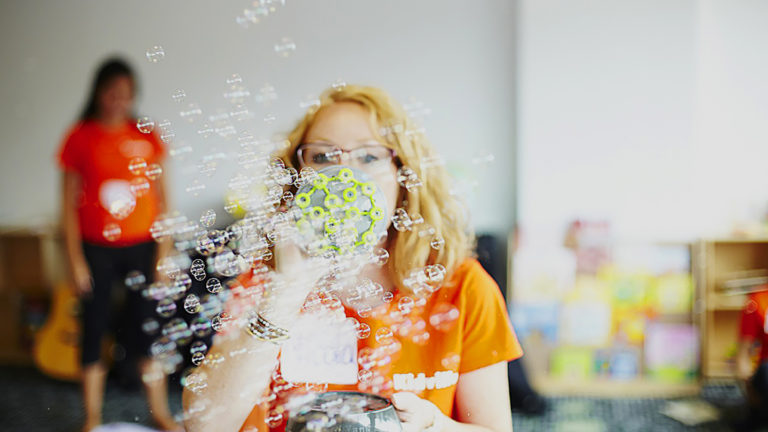
Kidville teacher in an orange shirt blowing bubbles in the classroom
GRADUAL SEPARATION • 1:4 TEACHER RATIO • PREP STARTS BEFORE AGE 2 • NO POTTY TRAINING NEEDED

By the Kidville Upper West Side Team · Updated October 2026

SHORT ANSWER

How to prepare a toddler for preschool comes down to three things you can practice months ahead: short and consistent goodbyes, a predictable daily routine, and time around other children where you are not running the play. On the Upper West Side, Kidville University is built as that bridge, starting with a parent-in-the-room Prep class before any separation happens.

A preschool classroom asks a child to separate, follow a simple routine and play near other kids. None of that is taught by a worksheet. It comes from practice, and the year before preschool is when the practice happens. This guide lays out the readiness signs pediatricians look for, the goodbye skills that make the first drop-off go better, how long adjustment usually takes, and how Kidville University at 205 West 88th Street turns all of it into a step-by-step program. Every Kidville detail was checked on Kidville’s own pages on October 14, 2026.

Is my toddler ready for preschool?

Readiness is about separation, routine and social interest, not letters or numbers. HealthyChildren.org, the parenting site of the American Academy of Pediatrics, lists what a typical 2-year-old is working on, and the social and emotional items read like a preschool readiness checklist: increasingly enthusiastic about the company of other children, demonstrating increasing independence, and imitating adults and older children. The same page notes that separation anxiety episodes tend to increase around the middle of the 2-year-old year and then fade, which is why a program that separates gradually fits this age so well.

Readiness sign What it looks like at 2 Why it matters for preschool
Interested in other children Watches, copies or plays alongside kids at the playground or in a class Preschool is a group; parallel play is the first step
Follows simple instructions Puts the cup on the table, comes to the rug when asked Circle time and transitions depend on it
Uses two to four word sentences “More water please”, “Mama come back” Can tell a teacher what they need
Begins make-believe play Feeds a doll, drives a block like a car Classroom centers are built on pretend play
Handles short separations Stays with a grandparent or sitter for an hour without ongoing distress The skill the first weeks lean on most

Source: HealthyChildren.org, “Developmental Milestones: 2 Year Olds” (American Academy of Pediatrics), verified October 14, 2026

This guide is general information, not medical advice. If you have questions about your own child’s development, your pediatrician is the right person to ask.

What should a toddler know before preschool?

Less than most parents assume. A toddler does not need to know letters, count, write their name or sit still for long stretches. The skills that actually help are practical: being able to say what they need in a short sentence, following a one-step instruction, playing near another child without constant adult help, and tolerating a goodbye. Potty training is not required at Kidville University; its own FAQ says every teacher is trained and prepared to change diapers, and the KVU Prep class has parents or caregivers in the room, so there is nothing a child has to manage alone on day one.

Smiling young boy in a plaid shirt in the Kidville classroom

What you can practice at home in the months before: a short morning routine in the same order every day, snack at a table with a cup and a napkin, putting shoes and toys back where they go, and a few playdates where you sit back instead of directing. Our guide to what to do with a toddler during the week has a sample routine that doubles as preschool practice.

How do I prepare a 2-year-old for the first goodbye?

Keep it short, keep it the same, and keep your promise. HealthyChildren.org’s pediatrician-written guide to separation anxiety gives six practical tips, and all six can be practiced before a program starts, not just on the first day.

AAP tip How to practice it before preschool
Create a quick goodbye ritual Pick one: a high five, three kisses, a wave at the door. Use it every time you leave, even for the sitter
Be consistent Same drop-off, same ritual, same time. Toddlers trust a pattern more than a speech
Give your full attention, then go A real hug and eye contact, then leave without lingering. Lingering stretches the anxiety
Keep your promise Come back when you said you would. Do not pop back in to check
Be specific, child style “I will be back after snack and gym time”, not “in two hours”
Practice being apart Short stays with grandparents, playdates, an hour with a sitter, and a dry run of the school goodbye

Source: HealthyChildren.org, “How to Ease Your Child’s Separation Anxiety” (American Academy of Pediatrics), verified October 14, 2026

Kidville teacher holding a laughing little girl in the gym

A parent-and-child class is the easiest place to rehearse the first four tips, because you are still in the room but a teacher is running the activity. Our mommy and me classes guide covers how that format works at Kidville.

How long does it take a toddler to adjust to preschool?

It depends on age and on how consistent the adults are, and it is rarely instant. The AAP guide describes separation anxiety as normal and as a sign of healthy attachment. It notes that many toddlers start showing separation challenges at 15 or 18 months, that separations are harder when a child is hungry, tired or sick, and that by age 3 most children understand the effect their pleas have on a parent, which is exactly when consistency matters most. The advice for that stage is direct: do not return to the room based on a plea, and do not cancel plans because of separation anxiety.

For a closer look at the ages it peaks, how long it lasts and a drop-off routine that works, see our guide to toddler separation anxiety at daycare.

This is the reason Kidville University does not separate on day one. Its separation process is described on the program page as tailored to the needs of each family and the class as a whole, with ongoing communication and hand holding for the parent along the way, and a 1:4 teacher ratio so each child gets individual attention while trust is built. If you are weighing a drop-off summer program first, our summer camp for toddlers guide covers readiness for that setting.

What does a preschool prep program look like on the Upper West Side?

At Kidville Upper West Side it is a three-step ladder, and you can enter at whichever step fits your child. Kidville University is Kidville’s gradual separation program, and the three levels move from a parent-in-the-room class to a full drop-off morning.

Program For Format Separation
KVU Prep (pre-2s) Children not yet 2 90 minutes, 1 day a week, Mondays 9:00am to 10:30am None. Parent or caregiver stays in the classroom and independence builds gradually
KVU (2s) 2-year-olds 120 minutes a day, 2 or 3 days a week, Tuesday and Thursday or Monday and Wednesday, 9:00am to 11:00am Gradual and individualized, with teachers guiding parent and child
KVU Grad (3s) 3-year-olds 180 minutes a day, 2 or 3 days a week, Tuesday and Thursday 9:00am to 12:00pm Drop-off program, the step before pre-kindergarten

Source: Kidville Upper West Side Kidville University, KVU Prep, KVU and KVU Grad enrollment pages, verified October 14, 2026

The Prep page says it plainly: enroll in KVU Prep in the fall to prepare little ones for KVU in the spring, with a shorter 90-minute day that gets a child used to the structure before the two-hour program. Here is what a KVU 2s morning looks like, from the enrollment page.

Block What happens
Welcome time Digging bins and an inviting room as kids say “see ya later” to grown-ups, once they have separated
Circle time A hello song, story time, music and movement or dramatic play to introduce the weekly theme
Art and STEM Open-ended art and exploration with tactile materials
Class centers Free movement between dramatic play, reading, puzzles and other manipulatives
Snack time A light snack you pack, with socializing and practicing manners
Gym A chance to run off the excess energy before pick-up

Source: Kidville Upper West Side KVU enrollment page, verified October 14, 2026

Three details from the KVU FAQ matter for planning. There is no application; Kidville recommends a tour but it is optional. Admission is typically at the start of the Fall and Winter sessions only. And you pack a light, healthy snack and water, in an allergy-aware facility. Our preschool alternative guide goes deeper on the curriculum and the parent communication side of the program.

What does preschool prep cost and how do I start?

Prep is the low-commitment entry point, and the 2s program is priced by session or by full year. Prices below are from Kidville’s enrollment pages for the 2026 to 2027 school year.

Program Schedule Tuition
KVU Prep Mondays 9:00am to 10:30am, September 28 to January 12 $1,450 for the session
KVU 2s, fall session Tuesday and Thursday 9:00am to 11:00am, September 14, 2026 to January 22, 2027 $4,350
KVU 2s, full year Tuesday and Thursday or Monday and Wednesday, 9:00am to 11:00am $8,000
KVU Grad 3s, fall session Tuesday and Thursday 9:00am to 12:00pm $5,950

Source: Kidville Upper West Side KVU Prep, KVU and KVU Grad enrollment pages, verified October 14, 2026

Possible downside: there are no make-ups for absences in the program, and new families are typically admitted only at the start of the Fall and Winter sessions. If you miss a session start, the practical bridge is a weekly parent-and-child class and the free trial class, which keep the routine and the room familiar until the next intake.

How to prepare a toddler for preschool: FAQ

How do I prepare my 2 year old for preschool?

Practice the three things preschool actually asks for: a short, repeatable goodbye, a predictable daily routine, and play near other children with you stepping back. The AAP suggests rehearsing the school goodbye before you ever have to part. On the Upper West Side, KVU Prep lets a child under 2 learn the classroom structure with a parent in the room, before any separation.

What should a toddler know before preschool?

Practical skills, not academics. Saying what they need in a short sentence, following a one-step instruction, playing alongside another child, and tolerating a goodbye. Letters, counting and writing are not requirements. Potty training is not required at Kidville University either; its FAQ says every teacher is trained to change diapers, so that should not delay a start.

How long does it take a toddler to adjust to preschool?

There is no fixed number, and it is normal for it to take weeks rather than days. The AAP notes separations are hardest when a child is hungry, tired or sick, and that a consistent drop-off routine diminishes the heartache. Kidville University separates gradually and individually rather than on day one, with a 1:4 teacher ratio, so the pace follows the child.

Is a 3 year old ready for preschool?

Usually, and by 3 the AAP says most children clearly understand the effect their pleas at goodbye have on you, so a consistent drop-off matters more than ever. At Kidville Upper West Side, 3-year-olds enter KVU Grad, a 180-minute drop-off program two or three mornings a week that is designed as the step before pre-kindergarten, with weekly Spanish and hands-on science.

Does my toddler need to be potty trained for a preschool prep program?

Not at Kidville University. The program FAQ answers this directly: no, all of the teachers are trained and prepared to change diapers. That applies across KVU Prep, the 2s program and KVU Grad. If a preschool you are considering does require potty training, a program that does not can be the easier first step.

Can we start Kidville University in the middle of the year?

Typically not. Kidville’s FAQ says that for the benefit of all the children in the class, admission is usually accepted only at the start of the Fall and Winter sessions. Full school year enrollment holds the same day and time all year, and the half-year Fall or Winter session is available pending space. No application is needed, and a tour is recommended but optional.

The bottom line

How to prepare a toddler for preschool is mostly about separation, routine and social interest, and all three can be practiced in the year before. Rehearse a short goodbye, keep the daily rhythm steady, and give your child time around other kids where you are not the one running the play. At Kidville Upper West Side, Kidville University turns that into a three-step program, from a parent-in-the-room Prep class to a full drop-off morning, and a tour is the easiest way to see which step your child is ready for.

Ready to see the classroom? Request a tour of Kidville University at Kidville Upper West Side, 205 West 88th Street, New York, NY 10024, or start with a free trial class. Call 212-362-7792 with questions.

ABOUT THE AUTHOR

The Kidville Upper West Side Team runs the Kidville location at 205 West 88th Street, New York, NY 10024, home to music, gym, art, dance and STEM classes, Kidville University, Camp Kidville, an indoor playspace, birthday parties and a kids salon for children from birth to age 6. Every age, price and schedule detail in our guides is checked against Kidville’s own published pages.

Sources

Every Kidville program, schedule, price and rule in this guide comes from Kidville Upper West Side’s own pages, checked on October 14, 2026. Readiness and separation guidance comes from HealthyChildren.org, the American Academy of Pediatrics’ parenting site.

Kidville Upper West Side: Kidville University (Preschool Alternative)

Kidville Upper West Side: KVU Prep Enrollment

Kidville Upper West Side: KVU Enrollment

Kidville Upper West Side: KVU Grad Enrollment

Kidville Upper West Side: Free Trial Class

Kidville Upper West Side: Contact

HealthyChildren.org (American Academy of Pediatrics): How to Ease Your Child’s Separation Anxiety

HealthyChildren.org (American Academy of Pediatrics): Developmental Milestones: 2 Year Olds

Preschool Alternative on the Upper West Side: Kidville University Guide

KIDVILLE UPPER WEST SIDE

Preschool Alternative on the Upper West Side

How Kidville University eases 2-year-olds into a first school experience, what a day looks like, what it costs, and how to book a tour at 205 West 88th Street.

Request a Tour

205 W 88th St · 212-362-7792

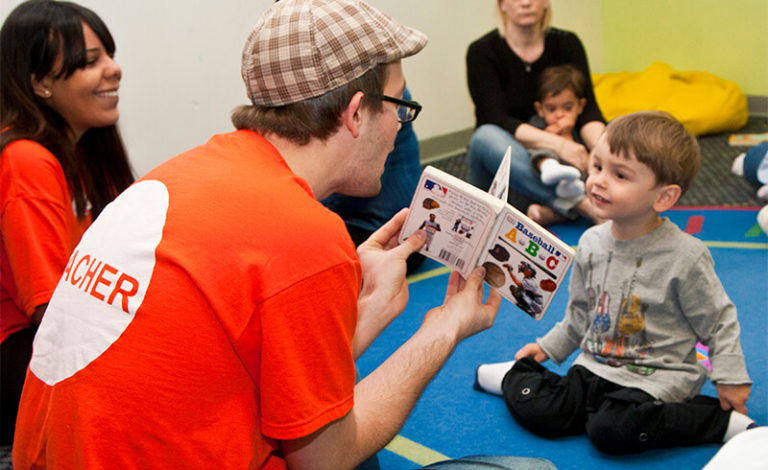
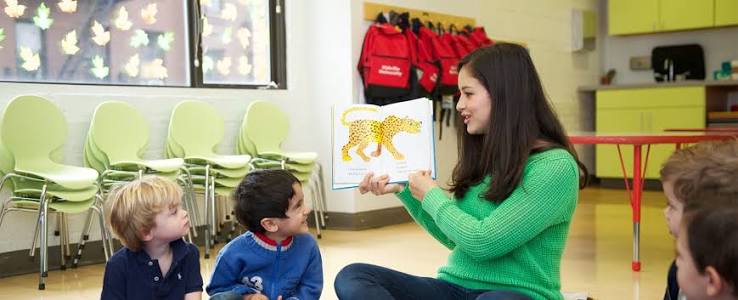
Kidville teacher reading a picture book to a young boy during story time in the classroom
GENTLE SEPARATION • 1:4 TEACHER RATIO • PRE-2s TO 3s • 2 OR 3 DAYS A WEEK • REQUEST A TOUR

By the Kidville Upper West Side Team · Updated October 2026

SHORT ANSWER

A preschool alternative on the Upper West Side gives a 2-year-old a first school experience without a full preschool commitment. Kidville University (KVU) at 205 West 88th Street is a gradual separation program with a 1:4 teacher-to-child ratio: KVU Prep for pre-2s with a grown-up in the room, KVU for 2s in 2-hour mornings two or three days a week, and KVU Grad for 3s as a 3-hour drop-off. No application is needed, and the first step is a tour.

Somewhere between the second birthday and the preschool applications, most Upper West Side parents hit the same question: is my child ready to be dropped off, and is there a gentler way to find out? A preschool alternative is built for exactly that gap. This guide covers how Kidville University works, what a morning looks like, which program fits your child’s age, what it costs, and how to see the classroom. Every Kidville detail comes from the Kidville University page and the three enrollment pages, checked on October 7, 2026.

What is a preschool alternative, and how does Kidville University work?

Kidville University is a gradual separation program that gives a child a positive first school experience, with the separation process tailored to each family rather than fixed to a schedule. Teachers meet each child where they are, parents are part of the process until the child is ready, and the handoff is gradual rather than fixed to day one. Four things define the program: gentle separation with ongoing communication and, as Kidville puts it, lots of hugs; a 1:4 teacher-to-child ratio; an emergent curriculum built around what the children in the room are curious about; and a consistent daily routine so children know what comes next. Parents get newsletters, progress reports and a private photo-sharing app.

What sets KVU apart What it means for your family
Gentle separation Paced to your child and your family, with teachers guiding both of you through the handoff
1:4 teacher ratio One teacher for every four children during separation and beyond
Emergent curriculum Teachers build centers and activities around the children’s current interests
Consistent routine The same daily structure so children know what to expect
Parent updates Newsletters, progress reports, parent information sessions and a private photo app

Source: Kidville Upper West Side, Kidville University page, verified October 7, 2026

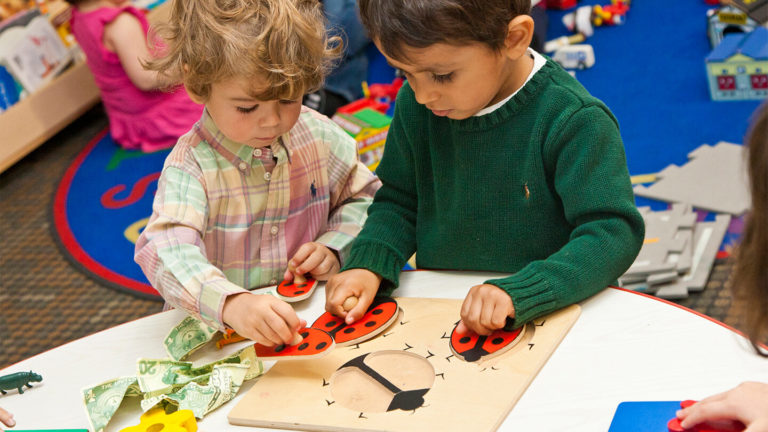
Two young children working on a wooden puzzle together at a low classroom table at Kidville

Class centers let children move between puzzles, reading, dramatic play and manipulatives

Which Kidville University program fits my child’s age?

KVU comes in three steps: KVU Prep for pre-2s with a grown-up present, KVU for 2s with gradual separation, and KVU Grad for 3s as a full drop-off program. Each step is longer and more independent than the last, so a child can move through all three before pre-kindergarten. Enrollment pages for all three were open on October 7, 2026, and KVU and KVU Grad were enrolling the class of 2027.

Program Who it is for Format Days and times listed
KVU Prep™ Pre-2s 90 minutes, 1 day a week, parent or caregiver participates Mondays, 9:00am to 10:30am
KVU® 2s 120 minutes a day, 2 or 3 days a week, gradual separation Tuesdays and Thursdays or Mondays and Wednesdays, 9:00am to 11:00am
KVU Grad™ 3s 180 minutes a day, 2 or 3 days a week, drop-off Tuesdays and Thursdays, 9:00am to 12:00pm

Source: Kidville Upper West Side KVU Prep, KVU and KVU Grad enrollment pages, verified October 7, 2026

If your child is not yet 2 and you want a parent-and-child class first, our kids classes by age guide covers music, gym and art from birth, and our guide to art classes for toddlers on the Upper West Side shows what the 18-month classes look like.

What does a KVU morning look like?

Every KVU morning follows the same arc: welcome time, circle time, art and exploration, class centers, snack, and gym. The routine is the point: Kidville says a predictable structure lays the foundation for children to feel secure and know what to expect. In KVU for 2s, circle time opens with a hello song, story time, music and movement or dramatic play that introduces the weekly theme; art and STEM time is open-ended; and the morning ends in the gym. KVU Grad adds calendar and weather at circle time, hands-on science, Spanish words and phrases once a week, and music and yoga.

Part of the morning KVU (2s) KVU Grad (3s)
Welcome time Digging bins and an inviting room as children say goodbye Writing table and building centers
Circle time Hello song, story, music and movement, weekly theme Greetings, calendar, weather and the day’s structure
Learning blocks Open-ended art and STEM exploration Hands-on science, weekly Spanish, sensory art
Class centers Dramatic play, reading, puzzles, manipulatives Children help serve and clean up at snack
Gym Shake out the sillies and burn energy Physical and turn-taking skills, then music and yoga

Source: Kidville Upper West Side KVU and KVU Grad enrollment pages, verified October 7, 2026

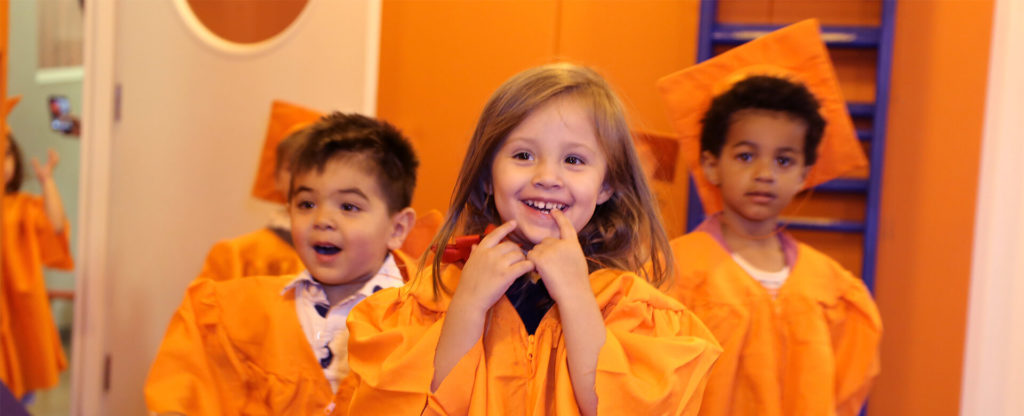
Three young children in orange graduation gowns and caps smiling at Kidville University graduation

KVU runs from day one to graduation day

Is my 2-year-old ready for a separation program?

You do not need a child who already separates easily; KVU is designed for children who have never been away from a parent. The American Academy of Pediatrics notes that separation anxiety is normal and common through the toddler and preschool years, and recommends keeping goodbyes short, using the same drop-off ritual each time, and returning when you promised. KVU’s gradual approach builds in exactly that: the same routine every day, a parent in the room at first, and teachers who guide both child and parent through the handoff. Kidville’s own FAQs answer the practical worries too.

✓ No potty training required. Kidville says all KVU teachers are trained and prepared to change diapers.

✓ No application. No application is needed to enroll; Kidville recommends a tour to see the space and ask questions.

✓ Pack a light snack and water. Kidville is an allergy-aware facility, and birthdays can be celebrated in class after a check with the program director.

Possible downside: Admission is typically only at the start of the fall and winter sessions, and there are no make-ups for absences, so plan the start date around your family calendar.

This guide is general information, not medical advice. If you have questions about your child’s development or readiness, talk with your pediatrician.

How much does Kidville University cost on the Upper West Side?

KVU for 2s is listed at $8,000 for the full 2026 to 2027 school year or $4,350 for the fall session, KVU Grad at $11,000 for the full year or $5,950 for the fall, and KVU Prep at $1,450 for its fall session. Holiday closures are factored into tuition. Kidville recommends full-year enrollment to hold the same day and time all year, but half-year fall or winter sessions are available pending space.

Program Full school year Fall session Dates listed
KVU Prep™ (pre-2s) Not listed $1,450 September 28 to January 12, Mondays 9:00am to 10:30am
KVU® (2s) $8,000, 2 days a week $4,350, 2 days a week Full year September 14, 2026 to June 4, 2027; fall September 14, 2026 to January 22, 2027
KVU Grad™ (3s) $11,000, 2 days a week $5,950, 2 days a week Full year September 14, 2026 to June 4, 2027; fall September 14, 2026 to January 22, 2027

Source: Kidville Upper West Side KVU Prep, KVU and KVU Grad enrollment pages, verified October 7, 2026. Prices and dates change by session; confirm on a tour.

KVU tuition is listed separately from the class membership. If you also want a weekly parent-and-child class, the membership page lists the Single Class and Double Class plans, and our guide to fall toddler classes in NYC shows how families combine them.

How do I see the KVU classroom?

Request a tour. There is no application, so the tour is the first step: Kidville recommends it as the way to see the space, ask questions and review the program details for your child. Use the tour request form on the Kidville University page or call the front desk.

Visit detail Kidville Upper West Side
Address 205 West 88th Street, New York, NY 10024
Phone 212-362-7792
Front desk Monday to Friday, 9:00am to 6:00pm
Nearest subway 86th Street station (1 train)
Strollers Stroller check on the main level
How to start Request a tour; no application needed

Source: Kidville Upper West Side contact and Kidville University pages (nearest subway from the MTA station map), verified October 7, 2026

Preschool alternative on the Upper West Side: FAQ

Is 2 years old too early to start preschool?

Not for a program built for 2s. Kidville University for 2s is a gradual separation program, not a full preschool: 2-hour mornings, two or three days a week, with a parent in the room until the child is ready and a 1:4 teacher ratio. Children who are not yet 2 can start in KVU Prep with a grown-up participating.

How can I prepare my 2-year-old for preschool?

Start with a predictable routine and short, consistent goodbyes. The American Academy of Pediatrics recommends keeping goodbyes short, using the same drop-off ritual each time and returning when you promised. A separation program such as KVU adds a middle step: the same classroom routine every day, a parent nearby at first, and teachers who coach the handoff.

How long does it take a toddler to adjust to preschool?

It varies by child, which is why Kidville does not set a fixed separation date. KVU tailors the process to each family and to the class as a whole, with ongoing communication while the child settles. Kidville says the predictable routine of welcome, circle, centers, snack and gym lays the foundation for children to feel secure and know what to expect.

Is it better to start preschool at 2.5 or 3.5 years old?

There is no single right age, and KVU is built so you do not have to choose. KVU for 2s runs 2-hour mornings with gradual separation, and KVU Grad for 3s runs 3-hour drop-off mornings with science, weekly Spanish and yoga. A child can move from one to the next as they are ready.

Does my child need to be potty trained for Kidville University?

No. Kidville states that all KVU teachers are trained and prepared to change diapers, so potty training is not a requirement for KVU Prep, KVU or KVU Grad. Families pack a light, healthy snack and water, and Kidville is an allergy-aware facility.

Can we join Kidville University in the middle of the year?

Usually not. Kidville typically accepts admission only at the start of the fall and winter sessions so the class settles together. Full-year enrollment holds the same day and time all year, and half-year fall or winter sessions are available pending availability. Request a tour early to line up the start date.

The bottom line

If you want your 2-year-old to have a first school experience without a full preschool leap, a preschool alternative on the Upper West Side is the middle step. Kidville University separates gradually, keeps one teacher for every four children, follows the same routine every morning, and asks for no application, so the simplest next step is to request a tour and watch how your child takes to the classroom. Not sure your child is there yet? Our guide to how to prepare a toddler for preschool covers the readiness signs and the goodbye skills to practice first.

Ready to see the classroom? Request a KVU tour at Kidville Upper West Side, 205 West 88th Street, New York, NY 10024. Call 212-362-7792 with questions.

ABOUT THE AUTHOR

The Kidville Upper West Side Team runs the Kidville location at 205 West 88th Street, New York, NY 10024, home to music, gym, art, dance and STEM classes, Kidville University, Camp Kidville, an indoor playspace, birthday parties and a kids salon for children from birth to age 6. Every age, price and schedule detail in our guides is checked against Kidville’s own published pages.

Sources

Every Kidville fact in this guide comes from Kidville Upper West Side’s own pages, checked on October 7, 2026. Separation guidance comes from the American Academy of Pediatrics.

Kidville Upper West Side: Kidville University (Preschool Alternative)

Kidville Upper West Side: KVU Prep Enrollment

Kidville Upper West Side: KVU Enrollment

Kidville Upper West Side: KVU Grad Enrollment

Kidville Upper West Side: Membership

Kidville Upper West Side: Contact

American Academy of Pediatrics, HealthyChildren.org: How to Ease Your Child’s Separation Anxiety

What Classes Should I Enroll My Toddler in This Fall in NYC?

KIDVILLE UPPER WEST SIDE

Fall Toddler Classes in NYC

Music, gym, art and preschool prep for the new school year, all under one roof at 205 West 88th Street.

Claim a Free Trial Class

205 W 88th St · 212-362-7792

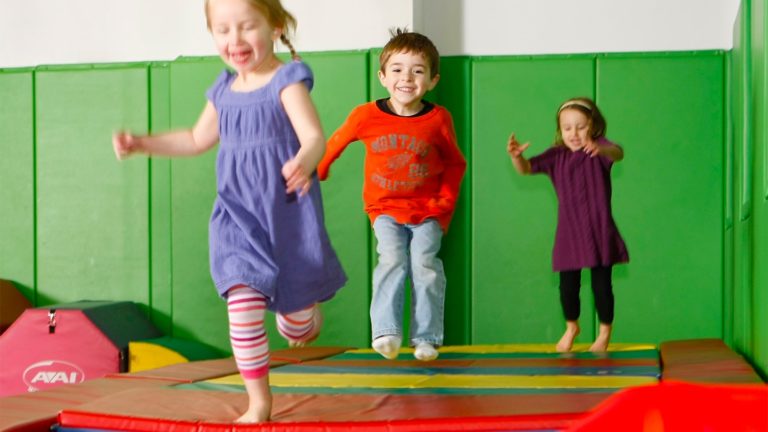
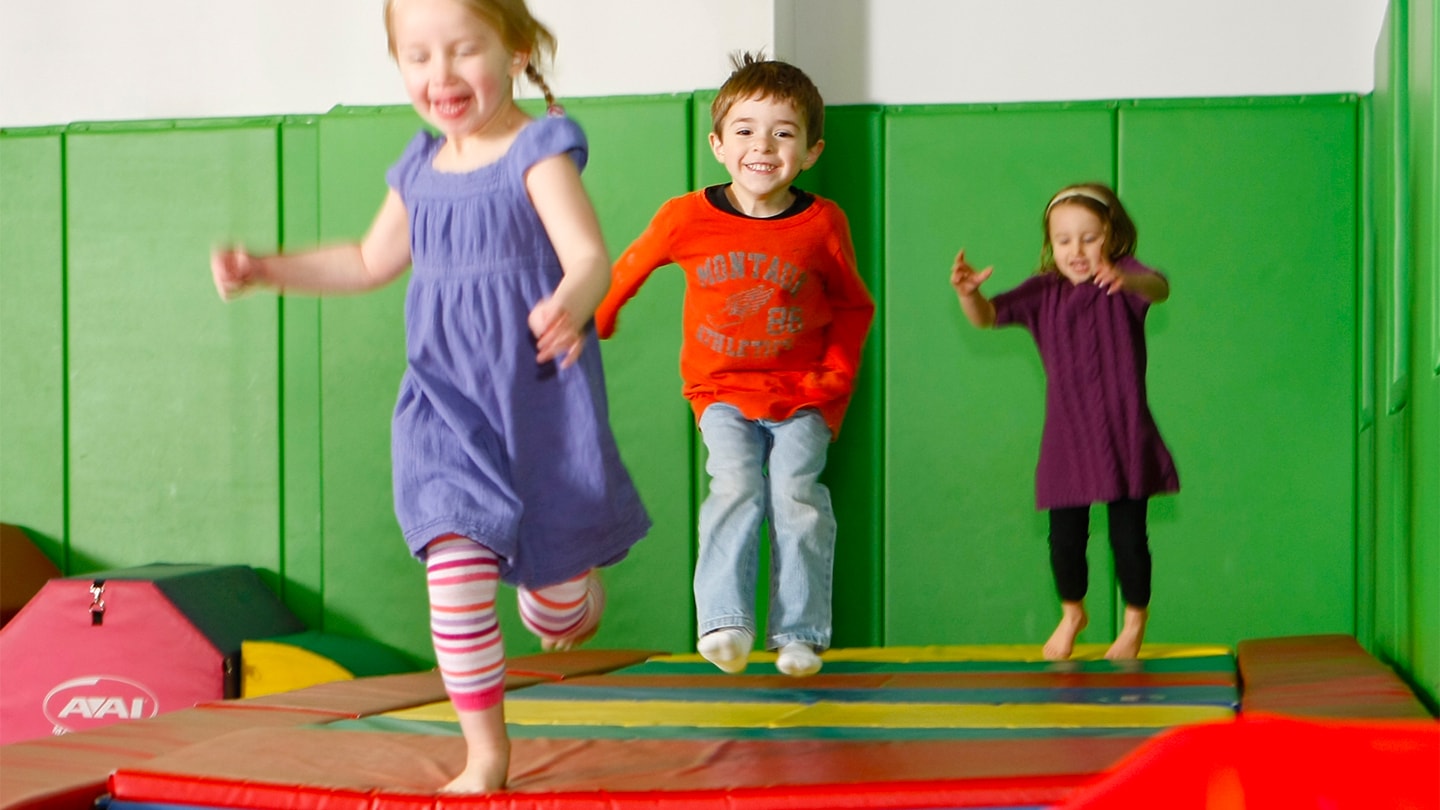
Kids running and jumping on the Tumbl Trak during a gym class at Kidville Upper West Side
MUSIC • GYM • ART • DANCE • STEM • PLAYSPACE • PARTIES • CAMP • SALON

By the Kidville Upper West Side Team · Updated October 2026

Wondering what classes to enroll your toddler in this fall in NYC? For most Upper West Side families, the strongest picks are fall toddler classes in music, gym, and art, plus a preschool prep program for 2-year-olds. Kidville Upper West Side offers all of these kids classes under one roof at 205 West 88th Street, with a free trial class for new families.

What are the best fall toddler classes in NYC?

The best fall toddler classes combine movement, music, and creative play, the three things toddlers need most as the weather cools. At Kidville UWS, that means live band music classes, gym classes with a Tumbl Trak and indoor swings, and giant paper painting in art class. Every class runs 45 minutes, and the whole classes and programs lineup is a short walk from the 86th Street subway station (1 train), so the routine survives even rainy October mornings.

Your toddler’s age Best fall starting point
12 to 18 months Gym (from 6 months) plus live band music
18 to 24 months Add art or dance (both start at 18 months)
2 to 3 years Kidville University 2s program plus STEM (from 2 years)

Source: Kidville Upper West Side class pages, verified September 30, 2026

Why is fall the best time to start toddler classes?

Fall gives toddlers what they thrive on: a predictable weekly routine as the school-year rhythm begins. The American Academy of Pediatrics notes that children do best when routines are regular, predictable and consistent, and a standing weekly music or gym class becomes exactly that anchor.

It’s practical in NYC, too. As playground weather fades, an indoor class plus playspace time becomes the reliable plan, and if you arrive with a stroller, Kidville has a stroller check on the main level.

Which class should my toddler start with first?

Start with one movement class, then add a second class once the routine sticks. For most toddlers, gym classes are the easiest first “yes”: obstacle courses, giant blocks, and indoor swings burn energy fast. Music-loving kids can start with live band music classes instead, where real musicians lead every 45-minute session. For a closer look at a Kidville music class, read our guide to music classes for babies on the Upper West Side.

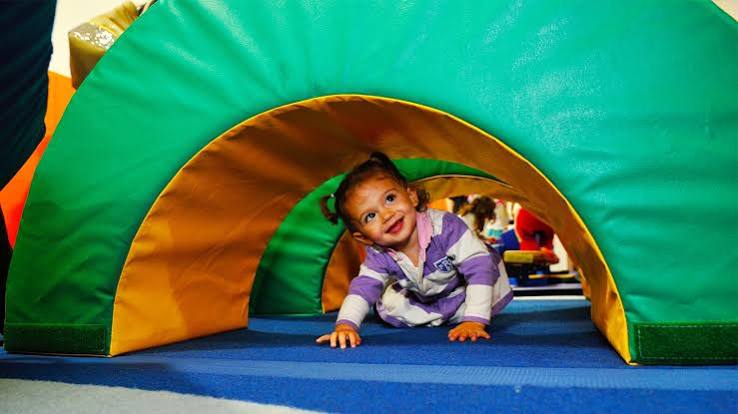
Toddler crawling through a tunnel during a gym class at Kidville Upper West Side

Gym classes at Kidville UWS run all fall, rain or shine

Should my 2-year-old do preschool prep this fall?

If your child turns 2 this year, fall is the classic moment to start a 2s program with gradual separation. Kidville University, the preschool alternative at Kidville UWS, uses gradual separation and a 1:4 teacher-to-child ratio. Younger children can begin with KVU Prep, the pre-separation program, so there is a gentle on-ramp at every stage before real preschool next September.

Kidville University 2s program classroom during fall preschool prep

Story time in the Kidville University classroom, where 2s practice gentle separation

How much do fall toddler classes cost?

Most families choose a monthly membership; the Single Class tier includes 3 free playspace passes a month and the Double Class tier includes unlimited playspace. Here is the current pricing:

Membership Price per month What’s included
Single Class $219 4 classes, 3 free playspace passes a month, 10% off a birthday party deposit
Double Class $399 8 classes, unlimited playspace, 15% off a birthday party deposit

Source: Kidville UWS membership page, verified October 7, 2026

Prefer to play first? Playspace drop-in is $31 (20% off for siblings), with packs of 5 for $150 and 10 for $290. Full details are on the membership page.

How do I enroll, and can we try a class first?

Yes: every new family gets a free trial class, and a membership begins on your child’s first day of class, so you can start when you are ready. Try a music, gym, or art class, meet the teachers, then pick the membership that fits. Book your free trial class online, or call the Upper West Side location at 212-362-7792 (front desk hours: Monday to Friday, 9:00am to 6:00pm).

Visit detail Kidville Upper West Side
Address 205 West 88th Street, New York, NY 10024
Phone 212-362-7792
Front desk Monday to Friday, 9:00am to 6:00pm
Nearest subway 86th Street station (1 train)
Ages served Newborn to 6 years

Source: Kidville Upper West Side contact and class pages (nearest subway from the MTA station map), verified September 30, 2026

FAQ: Fall Toddler Classes in NYC

What ages can start classes this fall?

Kidville Upper West Side serves children from birth to age 6. Music is open from birth, gym starts at 6 months, art and dance at 18 months, and STEM at 2 years, so any toddler has a fitting fall class. Every class is 45 minutes long.

Can we join if the season already started?

Yes. A Kidville UWS membership begins on your child’s first day of class, so you do not need to wait for a new season to start. New families can try a free trial class first, then choose the Single Class or Double Class membership. Your toddler is enrolled in the same classes each week.

How many classes per week should a toddler take?

Most toddlers do well starting with one class per week, then adding a second once the routine feels natural. Kidville’s memberships match that path: Single Class covers 4 classes per month with 3 free playspace passes, and Double Class covers 8 with unlimited playspace.

Where is Kidville Upper West Side located?

Kidville Upper West Side is at 205 West 88th Street, New York, NY 10024, near the 86th Street station on the 1 train. If you arrive with a stroller, there is a stroller check on the main level. Call 212-362-7792 for current fall schedules.

Is there a free trial for toddler classes?

Yes. Kidville Upper West Side offers a free trial class for new families, so your toddler can try music, gym, or art and meet the teachers before you choose a membership. Book online on the free trial class page or call 212-362-7792. After the trial, the Single Class plan covers 4 classes per month and the Double Class plan covers 8.

The bottom line

For most toddlers, the best fall plan is one movement class plus music or art, with Kidville University for 2-year-olds getting ready for preschool. Start with a free trial class at Kidville Upper West Side, then choose the Single Class or Double Class membership once you know which classes your toddler loves most.

Ready for your toddler’s best fall yet? Claim your free trial class at Kidville Upper West Side, 205 West 88th Street, New York, NY 10024. Call 212-362-7792 to book.

ABOUT THE AUTHOR

The Kidville Upper West Side Team runs the Kidville location at 205 West 88th Street, New York, NY 10024, home to music, gym, art, dance and STEM classes, Kidville University, Camp Kidville, an indoor playspace, birthday parties and a kids salon for children from birth to age 6. Every age, price and schedule detail in our guides is checked against Kidville’s own published pages.

Sources

Every fact in this guide comes from Kidville Upper West Side’s own pages and the American Academy of Pediatrics, checked on September 30, 2026.

Kids Classes by Age on the Upper West Side: A Parent’s Guide

KIDS CLASSES · UPPER WEST SIDE · UPDATED OCTOBER 2026

Kids Classes by Age on the Upper West Side

A parent’s guide to music, gym, art, dance, STEM and preschool prep for ages newborn to 6 at Kidville Upper West Side.

Claim a Free Trial Class

205 W 88th St · 212-362-7792

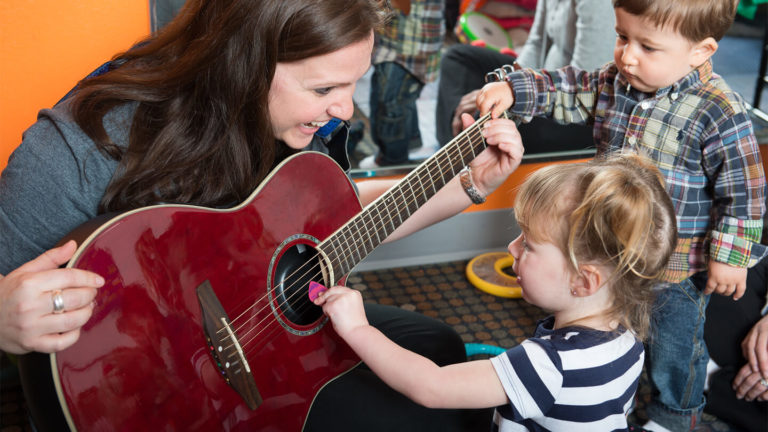
Kidville teacher playing guitar with young children during a music class at Kidville Upper West Side
NEWBORN+ MUSIC • 6 MONTHS+ GYM • 18 MONTHS+ ART AND DANCE • 2 YEARS+ STEM AND KVU

By the Kidville Upper West Side Team · Published September 30, 2026 · Updated October 13, 2026 · Facts verified September 30, 2026

Short answer

Kids classes by age on the Upper West Side follow a simple path: music from birth, gym from 6 months, art and dance from 18 months, and STEM plus a gentle separation program from age 2. Kidville Upper West Side offers every stage at 205 West 88th Street, and new families start with a free trial class.

Picking a class on the Upper West Side can feel like a second job, with a studio on nearly every block. This guide sorts the options by age and explains what each class type does for your child. For the full class menu and schedule, see our kids classes on the Upper West Side.

Which kids classes fit each age?

The right class depends on your child’s stage, and each Kidville class is built for a specific age window. Every class runs 45 minutes. Follow the path from birth to age 6:

Gym + music
Art + dance
STEM + KVU
Camp + more
Birth18 mo3 yrs6 yrs
Source: Kidville Upper West Side class and program pages, verified September 30, 2026.
Age Best class types Where to start at Kidville UWS
Newborn to 6 months Music Music classes, open from birth
6 to 18 months Gym and music Gym classes, from 6 months
18 months to 2 years Art, dance, gym, music Art and dance, from 18 months
2 to 3 years STEM, separation program STEM and Kidville University
3 to 6 years Dance, STEM, art, summer camp Camp Kidville, 20+ weekly themes

What are the best classes for a baby under 1 on the Upper West Side?

For babies under one, music and gym classes offer the most to see, hear and do. Every class at this age is a parent-and-child class; our guide to mommy and me classes on the Upper West Side explains what the grown-up does. Kidville music classes welcome newborns and are led by a live band. Our guide to music classes for babies on the Upper West Side shows what happens in a class. At 6 months, gym classes add obstacle courses, giant blocks, the Tumbl Trak and indoor swings sized for new movers.

Early play may help development: the American Academy of Pediatrics explains that play builds healthy brains and bodies. A weekly class turns that play into a routine, and during a long New York winter it gets you both out of the apartment. This guide is general information, not medical advice.

See a Kidville music class in action: Rockin’ Railroad, from the official Kidville YouTube channel.

What are the best classes for a 1-year-old on the Upper West Side?

Toddlers love classes that let them move, make noise and get messy. Gym burns energy safely on rainy days, and our guide to toddler gym classes on the Upper West Side shows what a class looks like. Art starts at 18 months with giant paper painting and hands-on projects, so the mess stays at Kidville (see our guide to art classes for toddlers on the Upper West Side). Dance also opens at 18 months with guided warm-ups, solos and music exploration.

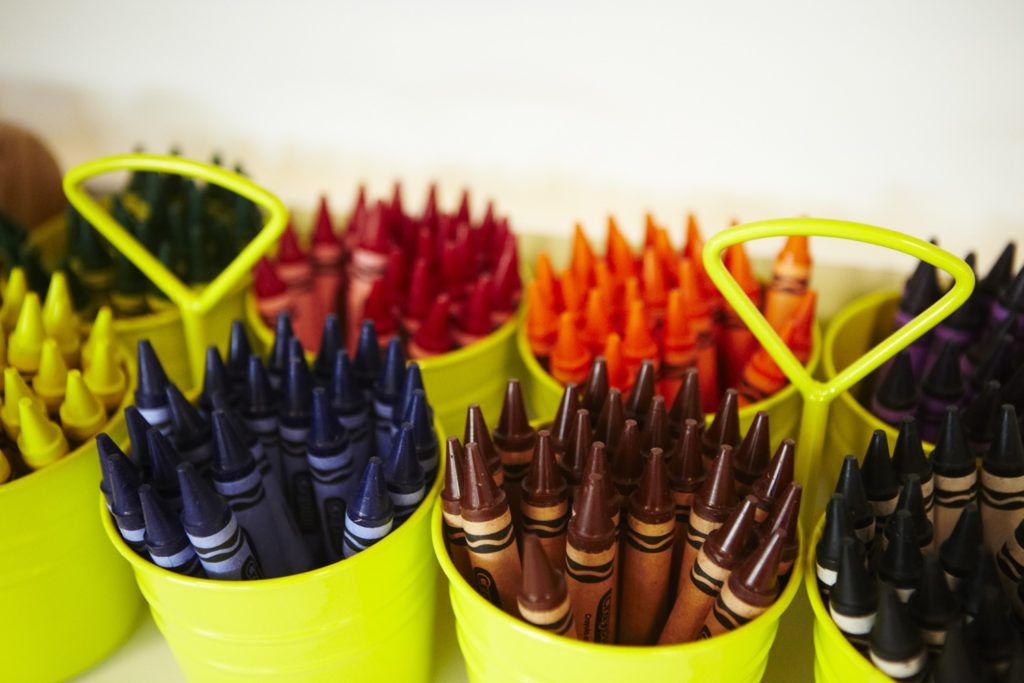
Buckets of crayons ready for an art class at Kidville Upper West Side
Art classes start at 18 months

Not sure which class fits your toddler?

Try one free, meet the teachers, and see how your child responds.

Book a Free Trial Class

What are the best classes for a 2-year-old on the Upper West Side?

At 2, children can add STEM classes and a gradual separation program to music, gym, art and dance. STEM classes open at age 2 with experiments and sensory exploration. Kidville University (KVU) is the separation program for 2s: teachers guide each family through a separation process tailored to the child, with a 1:4 teacher-to-child ratio. For younger children, KVU Prep is a pre-separation program that builds independence through play.

Not sure what a 2-year-old should be working on in the first place? Our guide on what a 2-year-old should be learning lays out the AAP milestones for this age and how the 2s program covers them.

If you are weighing a 2s program against going straight to preschool, this middle step lets your child practice being comfortable in a classroom without a parent in the room.

Kidville teacher reading to a small group of young children at Kidville Upper West Side
Kidville University keeps a 1:4 teacher-to-child ratio

Planning for summer? Camp Kidville has options for this age too, from days with a caregiver to drop-off:

Source: Camp Kidville page, verified September 30, 2026.
Camp Kidville option Ages Format
With parent or caregiver 18 to 30 months 2-day option
Gentle separation 2 to 3 years 2-day option
Drop-off 2.5 to 5 years Themed camp days, 20+ rotating weekly themes

How do you choose the right class for your child?

Choose the class that matches what your child already loves doing. Tap a card to see the class, then test your pick with a free trial.

Music

Starts at birth

Live band songs, rhythm and movement.

See Music

Gym

Starts at 6 months

Obstacle courses, Tumbl Trak and indoor swings.

See Gym

Art

Starts at 18 months

Giant paper painting and hands-on projects.

See Art

Dance

Starts at 18 months

Warm-ups, solos and music exploration.

See Dance

STEM

Starts at 2 years

Experiments, digging bins and sensory play.

See STEM

Kidville University

Starts at 2 years

Gradual separation with a 1:4 ratio.

See Kidville University

Source: Kidville Upper West Side class and program pages, verified September 30, 2026.
Choose this class If your child Starts at
Music Bounces to songs and loves instruments Newborn
Gym Climbs everything and needs to burn energy 6 months
Art Loves paint, crayons and making a mess 18 months
Dance Twirls and copies moves 18 months
STEM Asks why and loves to dig and explore 2 years
Kidville University Is ready to practice time away from you 2 years (2s program)

How does Kidville compare to single-subject studios?

Single-subject studios win when your child wants only one activity; Kidville wins when you want variety at one address. If your child only ever wants gym or only music, a specialist studio lets you pay for just that one thing. For families who want to mix class types without crossing Manhattan, here is where Kidville Upper West Side stands out:

One address for everything

Music, gym, art, dance, STEM and the KVU separation program, plus indoor playspace, birthday parties (see our 2-year-old birthday party ideas), summer camp and a kids salon for first haircuts, all at 205 West 88th Street.

Live band music

Music classes feature original songs and familiar favorites performed live by the Kidville band.

Real preschool prep

Kidville University pairs gradual separation with a 1:4 teacher-to-child ratio, something a gym or music studio does not offer.

Possible downside

Classes are sold as monthly memberships rather than single drop-in classes, so families who want one occasional class may find a pay-per-class studio simpler.

How much do kids classes cost at Kidville Upper West Side?

Kidville UWS classes are sold as monthly memberships starting at $219 USD per month for 4 classes. The Single Class plan adds 3 free playspace passes a month and 10% off a birthday party deposit, and the Double Class plan adds unlimited playspace and 15% off. See current membership options for the latest details.

Single Class

$219 USD per month

  • 4 classes per month
  • 3 free playspace passes per month
  • 10% off a birthday party deposit

Double Class More classes

$399 USD per month

  • 8 classes per month
  • Unlimited playspace
  • 15% off a birthday party deposit
Source: Kidville UWS Enrollment Options page, verified October 7, 2026. Prices may change.
Membership Price Classes Includes
Single Class Membership $219 USD per month 4 per month 3 free playspace passes per month
Double Class Membership $399 USD per month 8 per month Unlimited playspace

Where is Kidville Upper West Side and when is it open?

Kidville Upper West Side is at 205 West 88th Street, New York, NY 10024, a short walk from the 86th Street station on the 1 train. Here are the details to plan a first visit.

Source: Kidville UWS Contact page (nearest subway from the MTA station map), verified September 30, 2026.
Detail Kidville Upper West Side
Address 205 West 88th Street, New York, NY 10024
Phone 212-362-7792
Front desk hours Monday to Friday, 9:00am to 6:00pm
Weekends Based on the weekend birthday party schedule
Nearest subway 86th Street station, 1 train

Kids classes on the Upper West Side: FAQ

Babies can start music classes from birth at Kidville Upper West Side, and gym classes from 6 months. Early classes focus on sound, movement and bonding rather than skills, so there is no need to wait. Many parents start around 3 to 6 months, once a weekly outing feels manageable, and add gym when their baby starts rolling and crawling.

A 2-year-old can take music, gym, art, dance and STEM classes at Kidville Upper West Side, since STEM opens at age 2. Two-year-olds can also join Kidville University, a gradual separation program with a 1:4 teacher-to-child ratio. It is a good way to prepare for preschool while keeping classes playful and short.

Most toddler classes work best from about 18 months, when children can follow simple group routines. At Kidville Upper West Side, art and dance both open at 18 months, while music and gym start even earlier. Choose a class that matches your toddler’s energy, then use a free trial to see how they respond before committing to a membership.

A 2-year-old does not need to start school, but a gradual separation program can make the move to preschool easier. Kidville University lets 2s practice classroom routines with a 1:4 teacher-to-child ratio while parents step away gradually. Families who are not ready for drop-off can keep taking parent-and-child classes until their child is comfortable.

At 3, children can take dance, STEM, art, gym and music classes at Kidville Upper West Side, and many join Camp Kidville in summer. The drop-off camp serves ages 2.5 to 5 with more than 20 rotating weekly themes. Three-year-olds usually enjoy classes with more structure, stories and simple group challenges.

Yes. New families can claim a free trial class at Kidville Upper West Side to see the space, meet the teachers and watch how their child responds. It is the easiest way to pick between music, gym, art, dance and STEM before choosing a Single or Double Class Membership. Book online or call 212-362-7792 to reserve a spot.

The bottom line

Start with the class that matches your child’s age and energy, then let a free trial confirm the choice. Music and gym suit babies, art and dance suit toddlers, and STEM plus Kidville University suit 2s getting ready for preschool. All of it is under one roof on West 88th Street.

Find your child’s favorite class

205 West 88th Street · 212-362-7792

Claim Your Free Trial Class

How we know this: every age range, price, ratio and schedule detail in this guide comes from the published Kidville Upper West Side pages listed below, checked on September 30, 2026. Prices and schedules can change, so confirm with the front desk before you enroll.

ABOUT THE AUTHOR

The Kidville Upper West Side Team runs the Kidville location at 205 West 88th Street, New York, NY 10024, home to music, gym, art, dance and STEM classes, Kidville University, Camp Kidville, an indoor playspace, birthday parties and a kids salon for children from birth to age 6. Every age, price and schedule detail in our guides is checked against Kidville’s own published pages.

Sources

Try a class free

Music, gym, art, dance or STEM. Meet the teachers first.

Book Free Trial

205 West 88th Street, New York, NY 10024

212-362-7792

Front desk Mon to Fri, 9:00am to 6:00pm

86th Street station, 1 train