Skip to Main Content

Winter Break Activities for Toddlers in NYC: An Upper West Side Guide

KIDVILLE UPPER WEST SIDE

Winter Break Activities for Toddlers in NYC: An Upper West Side Guide

When it is too cold for the playground, what to do at home, when Kidville is open over the holidays, and how to keep a toddler moving from Thanksgiving to Presidents Day.

See Holiday Hours

205 W 88th St · 212-362-7792

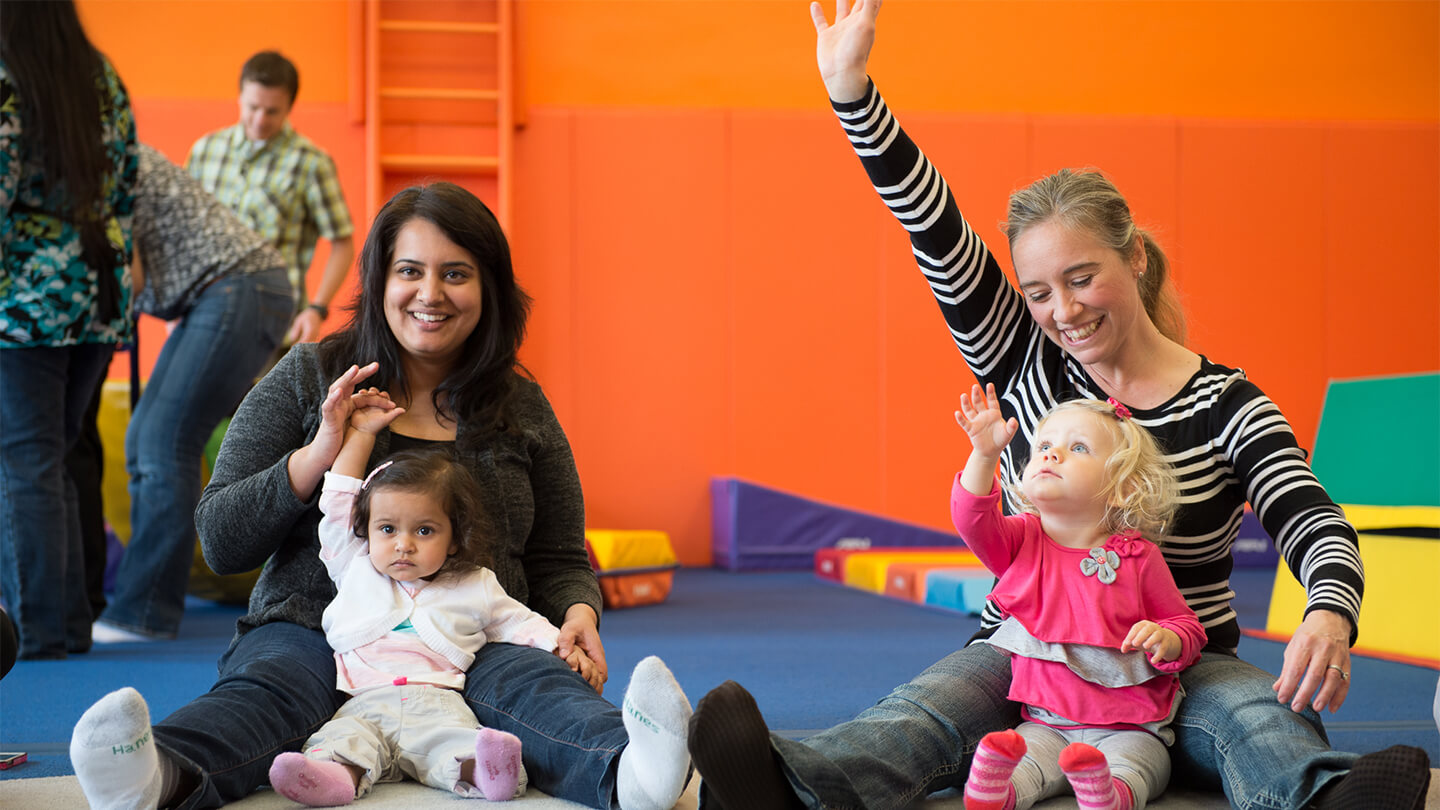
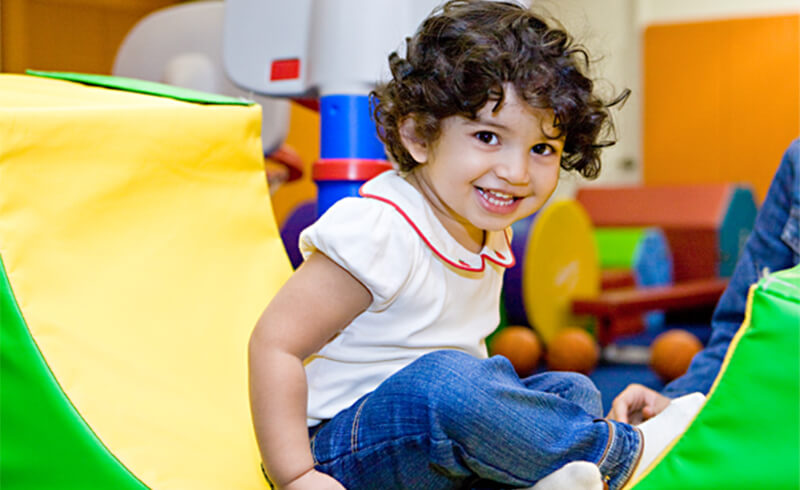
Smiling curly-haired toddler sitting on colorful padded mats in the Kidville gym
INDOOR PLAYSPACE • 45-MINUTE CLASSES • $31 DROP-IN • FIRST CLASS FREE

By the Kidville Upper West Side Team · Updated October 2026

SHORT ANSWER

Winter break activities for toddlers in NYC work best as a mix: short outdoor time when the wind chill allows, simple play at home, and one warm indoor outing a day. On the Upper West Side, Kidville runs classes and an indoor playspace all season, closing fully only on Thanksgiving, Christmas Day and New Year’s Day.

Winter in a Manhattan apartment with a toddler is a long season. School break runs for more than a week, the playground is iced over, and by January the days feel very short. The good news is that toddlers do not need a trip or a big plan. They need somewhere to move, something to make, and a predictable day. This guide covers what pediatricians say about cold weather and activity for young children, winter ideas that need nothing new, and exactly when the Kidville Upper West Side indoor playspace and classes are open over the holidays. Every Kidville date and price was checked on Kidville’s own pages on October 20, 2026.

What to do with toddlers in NYC in winter?

Keep them moving every day, indoors when the cold makes outdoor play unsafe. HealthyChildren.org, the parenting site of the American Academy of Pediatrics, says children aged 3 to 5 need at least 3 hours of physical activity a day, about 15 minutes every waking hour, and that infants need at least 30 minutes of tummy time and interactive play spread through the day. That number does not drop in January. Winter simply moves more of it indoors, which is why a small apartment needs a plan.

Winter day block What it looks like with a toddler Why it helps
Morning (after breakfast) A short outdoor walk or playground visit if the wind chill allows, or a cushion obstacle course at home Burns the biggest chunk of energy early
Late morning One indoor outing: a playspace session, a class, or library story time Warm, big and built for running
After lunch Nap, then a winter craft or blocks at the table Quiet, hands-on play while it gets dark early
Late afternoon Kitchen band, dance party or a bath Movement in short bursts before dinner

Plan built around HealthyChildren.org activity guidance (American Academy of Pediatrics), verified October 20, 2026

This guide is general information, not medical advice. Your pediatrician is the right person to ask about your own child’s health, activity and time outdoors.

How cold is too cold for a toddler to play outside?

Below a wind chill of minus 15 degrees Fahrenheit, stay in; above that, dress in layers and take breaks. The AAP’s guide to playing outside in winter says outdoor play in temperatures or wind chills below minus 15 degrees Fahrenheit should be avoided, because exposed skin begins to freeze within minutes. Children lose heat faster than adults because their bodies are smaller, and when they are having fun they are less likely to come in when they get too cold, so the grown-up has to call it.

For what to wear, the AAP’s cold weather safety page gives a simple rule of thumb: dress older babies and young children in one more layer than an adult would wear in the same conditions, in several thin layers rather than one bulky one, with warm boots, mittens or gloves, and a hat. Change wet clothes right away, and give kids a warm place for regular indoor breaks.

AAP cold weather rule What it means for a toddler walk on the Upper West Side
Avoid wind chills below minus 15 degrees Fahrenheit Check the wind chill, not just the temperature, before heading to the playground
One more layer than an adult, in thin layers Base layer, sweater, coat, plus boots, mittens and a hat
Change out of wet clothes right away Pack spare socks and mittens in the stroller
Regular indoor breaks to warm up Plan the walk to end somewhere warm, like a playspace or a class
Watch for shivering, clumsiness or numb fingers Head inside at the first sign; call your pediatrician if numbness lasts more than a few minutes

Source: HealthyChildren.org, “Playing Outside in Winter: Tips to Keep Kids Warm and Safe” and “Cold Weather Safety for Children” (American Academy of Pediatrics), verified October 20, 2026

What can we do at home over winter break?

Make things, build things and move, using what is already in the apartment. A toddler’s winter break does not need a shopping list. The ideas below rotate through the three things a toddler wants most on a cold day: a job to do with their hands, something to knock down, and a reason to run.

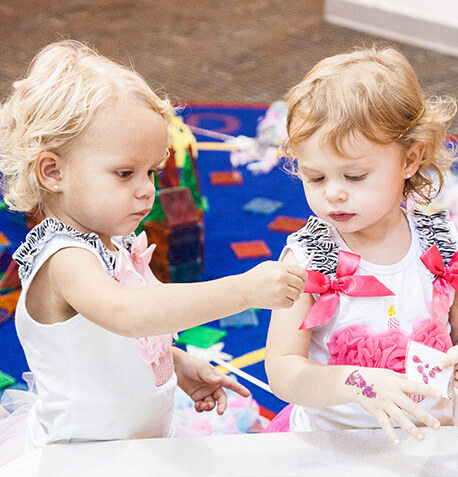
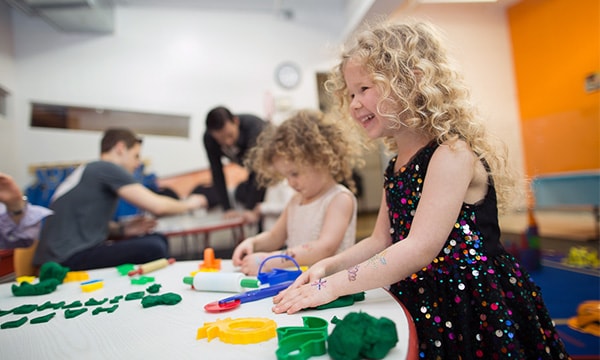
Two young children making a cotton snowman craft together at a Kidville art table

Winter idea at home What you need Good for
Cotton ball snowman Cotton balls, a paper cup or plate, glue stick Fine motor skills and a snow day without the snow
Snow in a bowl A bowl of clean snow from the windowsill or balcony, spoons, cups Sensory play at the kitchen table, mittens optional
Indoor obstacle course Couch cushions, a blanket tunnel over two chairs Climbing and crawling when the playground is iced over
Winter picture books, then act them out Two or three books, stuffed animals Language and pretend play on a dark afternoon
Dance party Any music, the living room rug Fifteen minutes of real movement, no setup
Window watching A window with a view of the street or snow Counting trucks, naming colors, a calm reset

Ideas built around HealthyChildren.org activity and play guidance (American Academy of Pediatrics), verified October 20, 2026

For more at-home ideas that work in any weather, our rainy day activities guide covers simple toys and screen time by age, and our toddler weekday routine guide shows how one outing a day fits into a full week.

Where can I take my toddler for winter break on the Upper West Side?

Somewhere warm, close to home, and built for running. The Kidville Upper West Side playspace at 205 West 88th Street turns one of its gyms into an indoor playspace at set weekday sessions, where toddlers can run, climb and make new friends while the grown-ups thaw out. A 45-minute parent-and-child class covers the same need on a schedule, and the library story time at your local branch is a classic free option.

Winter option at Kidville How long Price What to know
Indoor playspace 1 hour $31 drop-in, 20% off siblings Must register in advance; grown-ups wear socks and stay within hug’s reach
Playspace packs 1 hour each 5 for $150, 10 for $290, 20 for $560 10% off siblings on packages; a pack covers a whole winter break
A weekly class 45 minutes Via membership; first class free Music from newborn, gym from 8 months, art from 18 months on the current schedule
Membership Monthly $219 for 4 classes plus 3 playspace passes; $399 for 8 classes plus unlimited playspace The Double plan covers daily playspace visits over a long break

Source: Kidville Upper West Side playspace, classes and membership pages, verified October 20, 2026

Our indoor gym guide compares the gym classes and the playspace in more detail. For weekday playspace session times, see the playspace page; there are 31 one-hour sessions across the five weekdays, and weekend sessions depend on the birthday party schedule.

When is Kidville Upper West Side open over the holidays?

Every regular weekday except the dates below. Kidville posts its holiday schedule on the playspace page. Thanksgiving Day, Christmas Day and New Year’s Day are full closures. On the other listed dates there are no classes or Kidville University, so call the front desk at 212-362-7792 to confirm playspace hours before you head out. Hours are subject to change for holidays and private events. For the week of November 23, our Thanksgiving activities for toddlers guide lays out each day.

Mom with a noisemaker and her toddler in a sparkly New Year party hat at Kidville

Date Kidville Upper West Side status (per the posted holiday schedule)
Wednesday, November 11 (Veterans Day) No classes or Kidville University
Thursday, November 26 (Thanksgiving Day) Fully closed
Friday, November 27 (Black Friday) No classes or Kidville University
December 24 to 31 (Winter Break) No classes or Kidville University; December 25 fully closed
Friday, January 1, 2027 (New Year’s Day) Fully closed
Monday, January 18, 2027 (Martin Luther King Jr. Day) No classes or Kidville University
Monday, February 15, 2027 (Presidents Day) No classes or Kidville University

Source: Kidville Upper West Side playspace page holiday schedule, verified October 20, 2026; hours are subject to change, call 212-362-7792 to confirm

If your toddler is in Kidville University, the fall session runs to January 22, 2027, and Kidville typically admits new children at the start of the fall and winter sessions. Our preschool alternative guide explains the KVU programs, and how to prepare a toddler for preschool covers the readiness steps to practice over the break.

Possible downside: the busiest playspace days of the year are exactly the ones when school is out, so sessions fill, and December 24 to 31 has no classes at all. Book playspace sessions the night before, and if you rely on a class for your toddler’s routine, plan an at-home replacement for the last week of December. Weekend hours also depend on birthday parties, so call before a Saturday visit.

Winter break activities for toddlers in NYC: FAQ

What to do with toddlers in NYC in winter?

Mix a short outdoor walk, simple play at home and one warm indoor outing a day. The AAP recommends about 15 minutes of activity for every waking hour for children 3 to 5, and winter moves most of it indoors. On the Upper West Side, Kidville’s indoor playspace runs 1-hour weekday sessions for $31, and library story times are free.

Where can I take my kids for winter break?

Somewhere warm with room to run, close enough that the walk home is short. An indoor playspace, a parent-and-child class, or your library’s story time all work for toddlers. Kidville Upper West Side at 205 West 88th Street stays open on regular weekdays through the break, closing fully only on Thanksgiving, Christmas Day and New Year’s Day; call ahead for playspace hours on the no-class days.

What to do in New York with a 2 year old?

In winter, keep outings short and warm. A 2-year-old does well with one planned stop: an hour at an indoor playspace, a 45-minute class, or story time, then home for lunch and a nap. Dress them in one more layer than you wear, as the AAP advises, and skip outdoor play when the wind chill drops below minus 15 degrees Fahrenheit. Kidville’s first class is free, which makes a trial easy over the break.

What can I do with my 2 year old toddler?

When it is too cold to go out, build a cushion obstacle course, make a cotton ball snowman, bring a bowl of snow inside for the kitchen table, or hold a 15-minute dance party. The AAP’s activity guidance is about movement spread through the day, so short bursts count. Save the quiet crafts and picture books for the dark late afternoon, when a toddler’s energy and patience both run low.

How cold is too cold for a toddler to be outside?

The AAP says to avoid outdoor play when the temperature or wind chill is below minus 15 degrees Fahrenheit, because exposed skin can begin to freeze within minutes. Above that, dress a toddler in thin layers with boots, mittens and a hat, change wet clothes right away, and come inside for regular breaks. Shivering, clumsiness or numb fingers mean it is time to go in now.

Is Kidville Upper West Side open during winter break?

Partly. Per the posted holiday schedule, there are no classes or Kidville University from December 24 to 31, Christmas Day is fully closed, and New Year’s Day is fully closed. Regular classes and playspace sessions run on the other weekdays of the season. Playspace hours can change for holidays and private events, so call 212-362-7792 to confirm before a visit during the break.

The bottom line

Winter break activities for toddlers in NYC come down to one warm place to run each day and a few simple things to do at home. Follow the AAP’s cold weather rules outdoors, keep movement going indoors in short bursts, and plan around the handful of days Kidville closes. On the Upper West Side, the Kidville playspace and classes at 205 West 88th Street cover the warm part, so book the sessions you want before the break fills them.

Planning the break? Check the holiday hours and playspace sessions at Kidville Upper West Side, 205 West 88th Street, New York, NY 10024, or claim a free trial class. Call 212-362-7792 with questions.

ABOUT THE AUTHOR

The Kidville Upper West Side Team runs the Kidville location at 205 West 88th Street, New York, NY 10024, home to music, gym, art, dance and STEM classes, Kidville University, Camp Kidville, an indoor playspace, birthday parties and a kids salon for children from birth to age 6. Every age, price and schedule detail in our guides is checked against Kidville’s own published pages.

Sources

Every Kidville date, price and schedule detail in this guide comes from Kidville Upper West Side’s own pages, checked on October 20, 2026. Cold weather, clothing and activity guidance comes from HealthyChildren.org, the American Academy of Pediatrics’ parenting site.

Kidville Upper West Side: Playspace and Holiday Schedule

Kidville Upper West Side: Classes and Programs

Kidville Upper West Side: Enrollment Options and Membership

Kidville Upper West Side: Kidville University

Kidville Upper West Side: Free Trial Class

Kidville Upper West Side: Contact

HealthyChildren.org (American Academy of Pediatrics): Playing Outside in Winter: Tips to Keep Kids Warm and Safe

HealthyChildren.org (American Academy of Pediatrics): Cold Weather Safety for Children: Preventing Frostbite and Hypothermia

HealthyChildren.org (American Academy of Pediatrics): Making Physical Activity a Way of Life
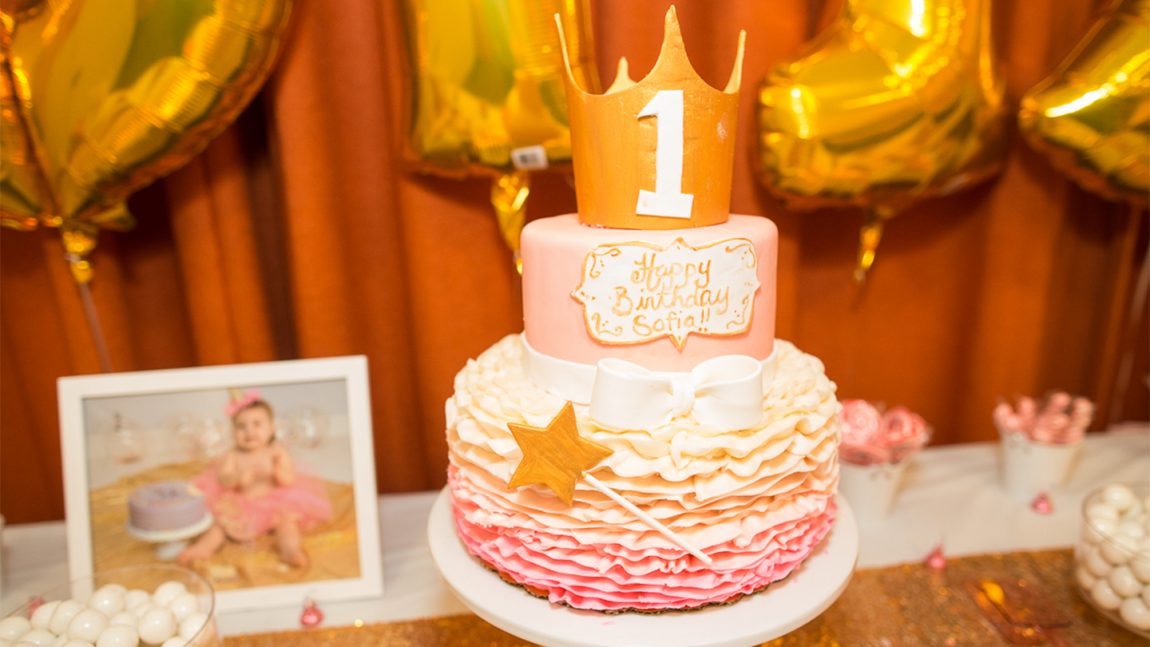
Where to Have a 1st Birthday Party in NYC: An Upper West Side Guide

KIDVILLE UPPER WEST SIDE

Where to Have a 1st Birthday Party in NYC: An Upper West Side Guide

Home, park, restaurant or play space: what works for a crawler or a brand-new walker, how long to keep it, and what a first birthday party costs at Kidville.

Request a Party Date

205 W 88th St · 212-362-7792

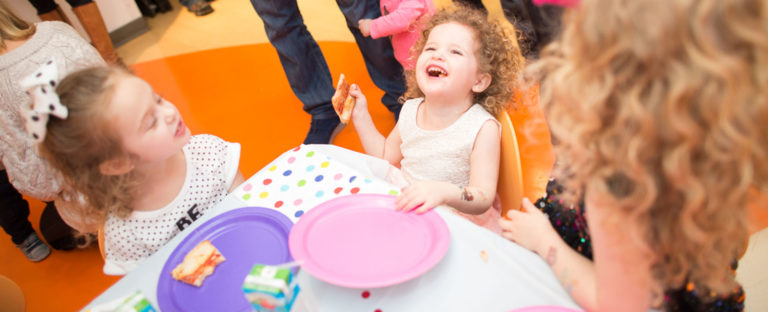
Toddler girl in a pink party hat smiling at her birthday cake as her mom leans in at a Kidville party
FIRST BIRTHDAY THEME FOR AGE 1 • 90-MINUTE PARTIES • FROM $1,095 • PARTY PLANNER INCLUDED

By the Kidville Upper West Side Team · Updated October 2026

SHORT ANSWER

Where to have a 1st birthday party in NYC comes down to three things: a clean floor where babies can crawl, a short schedule built around naps, and someone else handling setup. On the Upper West Side, Kidville offers a First Birthday Party theme recommended for age 1, with 90-minute packages from $1,095 at 205 West 88th Street.

A first birthday is mostly a party for the grown-ups, and that is fine. The birthday baby will not remember the theme, but they will feel it if the room is too loud, the party runs through nap time, or there is nowhere safe to crawl. In a Manhattan apartment, that usually rules out hosting twenty people in the living room. This guide compares the usual places to host, what a 1-year-old can actually enjoy, what pediatricians say about guest count, timing and safety, and how a Kidville Upper West Side birthday party works for a first birthday. Every Kidville detail was checked on Kidville’s own pages on October 15, 2026.

Where is the best place to have a first birthday party in NYC?

The best place is one with a safe floor, a short walk from home, and room for the adults. For a small family lunch, home works. For a bigger guest list with babies and toddlers, a play space or kids center saves the setup and cleanup, and gives crawlers somewhere padded to explore. Restaurants suit the adults but rarely the baby, and a park depends entirely on the weather.

Where to host Works well for Watch out for
Your apartment Immediate family, a cake and an hour of floor play Space, cleanup, and baby-proofing for every guest’s toddler
A park or playground A warm, dry day and a casual crowd Weather, no backup plan, and nowhere to nap
A restaurant private room Adults who want a sit-down meal Little floor space for crawlers and a long, seated schedule
A play space or kids center Mixed ages, a set start and end, and staff to run it Booking ahead, especially for weekend dates

Comparison built on HealthyChildren.org party guidance (American Academy of Pediatrics) and Kidville Upper West Side birthday pages, verified October 15, 2026

This guide is general information, not medical advice. Your pediatrician is the right person to ask about your own child’s development, food and safety.

What can a 1-year-old actually enjoy at their party?

Things they can do on the floor: crawl, pull up, cruise, bang, shake and watch bubbles. HealthyChildren.org, the parenting site of the American Academy of Pediatrics, explains that crawling is usually mastered between seven and ten months, and that babies then pull themselves up to stand, cruise along furniture, and take shaky first steps. Most go from those first steps to confident walking within days. A good first birthday party simply gives that new mobility somewhere safe to happen.

Smiling baby girl in a flower headband holding a colorful toy as grown-ups play with her

What your baby is doing Party idea that fits Why it works
Crawling and scooting Soft mats and padded shapes to climb over Lets babies explore without being carried all party
Pulling up and cruising Low, sturdy surfaces to hold on to The AAP notes cruisers need support with no sharp edges
Grabbing and shaking Soft blocks, shakers and puppets Simple toys they can hold beat decorations they cannot
Watching and reaching Bubbles and a sing-along Short, happy moments that need no skill at all

Source: HealthyChildren.org, “Movement Milestones in Babies 8 to 12 Months Old” (American Academy of Pediatrics), verified October 15, 2026

If your baby is still in the crawling stage, our guide to what to do with a baby all day has more ideas for floor play by age.

What happens at a Kidville First Birthday Party?

Ninety minutes of exploring, making, moving and cake, run by Kidville party leaders. Kidville’s party themes page lists the First Birthday Party theme with a recommended age of 1 year, and the Jumpin’ Gym Party as recommended for all ages, which helps when the guest list mixes babies, toddlers and older cousins. Every Kidville Upper West Side party follows the same four-part timeline.

Part of the party What happens (per Kidville’s party timeline)
Exploration time Guests are welcomed with exploration stations, from personalized playdough to building blocks and coloring pages, then a hands-on theme activity
Creation time Each child makes a take-home art project that matches the party theme
Gym time Themed games, freeze dance and bubbles in the indoor playspace; a Kidville Jumpy Castle can be added
Celebration time Pizza and cake among balloon bouquets, the Happy Birthday song, and party favor bags

Source: Kidville Upper West Side party timeline page, verified October 15, 2026

Twin toddler girls in matching party outfits playing together at a party welcome table

For the first birthday theme itself, Kidville’s theme page describes baby-friendly stations such as a baby toy station with soft blocks, shakers, puppets and balls, a baby handprint keepsake, a circle time sing-along, bubbles and parachute, and a baby ball pit with mats for crawling. Kidville notes that certain party offerings can differ from the theme descriptions at each location, so ask the party planner which stations the Upper West Side runs for your date. The full party timeline is on Kidville’s site.

How many guests and how long should a 1st birthday party be?

Fewer babies and a shorter party than you think. The AAP’s party tips give a rule of thumb for babies and toddlers: your child’s age, plus one, in kid guests, because big crowds can overwhelm young children. They also recommend keeping a toddler party under 90 minutes, being mindful of nap time, and planning about 10 to 15 minutes per activity, while letting kids keep playing if they are enjoying something. For a first birthday, that means two baby friends is plenty, and older siblings and cousins round out the room.

Plan the start time around the baby’s nap, not the adults’ lunch. A party that begins soon after a morning or midday nap gives you the happiest hour of the day. Kidville parties run 90 minutes, right at the edge of the AAP’s guideline, so pick a time slot that starts soon after your baby wakes up.

How do I keep a first birthday party safe?

Watch the balloons, the food and the older kids. The AAP’s choking prevention guidance says balloons, balls, marbles, pieces of toys and foods, the small round objects children can fit in their mouths, cause the most choking deaths, that balloons are a choking risk for children up to 8 years old, and that high-risk foods should wait until about age 4. Its movement guide adds that balloon fragments are especially dangerous for crawlers who put everything in their mouths.

Party risk What the AAP advises What to do at the party
Balloons A choking risk for children up to 8 years of age Keep bouquets out of reach and pick up popped pieces right away
Party food Keep hot dogs, whole grapes, popcorn, nuts and hard or sticky candy from children until about age 4 Serve the baby soft food cut into pieces no larger than one-half inch
Eating on the move Children should sit down to eat, never run or play with food in their mouths Keep cake and snacks at the table
Older guests Many choking incidents happen when older children give small foods or toys to a younger child Ask one adult to keep an eye on the youngest guests

Source: HealthyChildren.org, “Choking Prevention for Babies and Children” and “Movement Milestones in Babies 8 to 12 Months Old” (American Academy of Pediatrics), verified October 15, 2026

What does a first birthday party at Kidville cost?

Kidville Upper West Side packages start at $1,095 for 10 children, and the birthday child is free. Both packages include a Kidville party planner, a private party space, 90 minutes, a party theme, a theme-based craft table, interactive gym time, balloons and paper goods, pizza and beverages for children, and a personalized birthday cake with candles. For a full cost breakdown and budget tips, see our guide to kids birthday party cost in NYC.

Option Price What you get
Classic Party $1,095 10 children, 2 Kidville party leaders, 90 minutes, theme, craft table, gym time, pizza and cake
Deluxe Party $1,695 20 children, 3 party leaders and the Kidville Jumpy Castle, plus everything in the Classic
Private playspace $350 first hour, $125 each additional hour Up to 10 children, up to 3 hours, seven days a week from 10:30am to 6:00pm; book by email
Member discount 10% or 15% off Single Class members get 10% off the party deposit and Double Class members 15% (pre-tax)

Source: Kidville Upper West Side birthday parties, playspace and membership pages, verified October 15, 2026

Possible downside: the packages are built for 10 or 20 children, which is far more than the AAP’s age-plus-one guideline for a 1-year-old, so a small family celebration may want to ask about the private playspace instead. Kidville also says party offerings can differ from its theme descriptions by location, so confirm the first birthday stations and the food for the youngest guests with the party planner before you book.

To book, call 212-362-7792 or email birthdays.uws@mykidville.com to start planning with the Kidville Upper West Side party team. Weekend hours at the center are set around the birthday party schedule, so ask for available dates early. Planning the next one already? Our 2-year-old birthday party ideas guide covers the themes recommended from age 2.

Where to have a 1st birthday party in NYC: FAQ

Where is the best place to have a first birthday party?

Somewhere with a clean, safe floor for crawling, enough room for the adults, and an easy trip home for nap time. Home works for a small family party. For a bigger group, a kids center handles setup and cleanup. On the Upper West Side, Kidville offers a First Birthday Party theme recommended for age 1, in 90-minute packages from $1,095.

What can we do for a 1 year old’s birthday?

Keep it simple and on the floor. One-year-olds enjoy soft blocks, shakers, puppets, bubbles, a sing-along and somewhere safe to crawl or cruise. The AAP notes that most babies crawl by seven to ten months and then pull up and cruise along furniture, so a padded play area matters more than decorations. Add a cake, a few photos and an early end time.

Where should I take my baby for his first birthday?

Somewhere built for babies, close to home, and quiet enough for a short visit. A favorite park on a dry day, a baby-friendly play space, or a parent-and-child class all work. Kidville Upper West Side at 205 West 88th Street offers party packages and a private playspace from $350 for the first hour, so the day can be as small or as big as you like.

How to host a 1 year old birthday party?

Plan around the nap, keep it under 90 minutes, and invite few babies. The AAP’s rule of thumb is the child’s age plus one in kid guests. Set up a safe floor area, keep balloons out of reach, and serve the baby soft food cut into small pieces. If you would rather not host, Kidville’s party leaders run the welcome stations, gym time, cake and favors for you.

How many guests should I invite to a 1st birthday party?

For kid guests, the AAP’s rule of thumb for babies and toddlers is the child’s age plus one, which means two baby friends for a first birthday. Big crowds can overwhelm young children. Adults, older siblings and cousins usually fill out the rest of the room, so choose a space with enough seating for grown-ups and a separate, safe floor area for the babies.

Can older siblings and cousins join a Kidville first birthday party?

Yes. Kidville’s Jumpin’ Gym Party is recommended for all ages, and its first birthday theme page describes extra activities for older guests. Packages count children as guests: the Classic covers 10 children and the Deluxe covers 20, and the birthday child is free. Ask the Upper West Side party planner how to mix ages for your date by calling 212-362-7792.

The bottom line

Where to have a 1st birthday party in NYC depends on the size of the guest list and how much you want to host yourself. Keep it short, plan around the nap, invite few babies, and keep balloons and small foods out of reach, as the AAP advises. For a bigger celebration on the Upper West Side, Kidville birthday parties include a First Birthday Party theme for age 1, a party planner, and 90 minutes of play, cake and favors at 205 West 88th Street.

Planning a first birthday? Request a party date at Kidville Upper West Side, 205 West 88th Street, New York, NY 10024, or browse the party themes. Call 212-362-7792 with questions.

ABOUT THE AUTHOR

The Kidville Upper West Side Team runs the Kidville location at 205 West 88th Street, New York, NY 10024, home to music, gym, art, dance and STEM classes, Kidville University, Camp Kidville, an indoor playspace, birthday parties and a kids salon for children from birth to age 6. Every age, price and schedule detail in our guides is checked against Kidville’s own published pages.

Sources

Every Kidville price, package detail and booking step in this guide comes from Kidville Upper West Side’s own pages, checked on October 15, 2026. Guest count, timing, development and safety guidance comes from HealthyChildren.org, the American Academy of Pediatrics’ parenting site.

Kidville Upper West Side: Birthday Parties

Kidville Upper West Side: Party Themes

Kidville Upper West Side: Party Timeline

Kidville Upper West Side: Playspace and Holiday Schedule

Kidville Upper West Side: Enrollment Options and Membership

Kidville Upper West Side: Contact

HealthyChildren.org (American Academy of Pediatrics): Playful Birthday Party Ideas and Tips for Young Children

HealthyChildren.org (American Academy of Pediatrics): Movement Milestones in Babies 8 to 12 Months Old

HealthyChildren.org (American Academy of Pediatrics): Choking Prevention for Babies and Children

Rainy Day Activities for Toddlers in NYC: An Upper West Side Plan

KIDVILLE UPPER WEST SIDE

Rainy Day Activities for Toddlers in NYC: An Upper West Side Plan

What to do at home with simple toys, where to go when the apartment gets small, and the indoor playspace hours that save a wet weekday.

See Playspace Hours

205 W 88th St · 212-362-7792

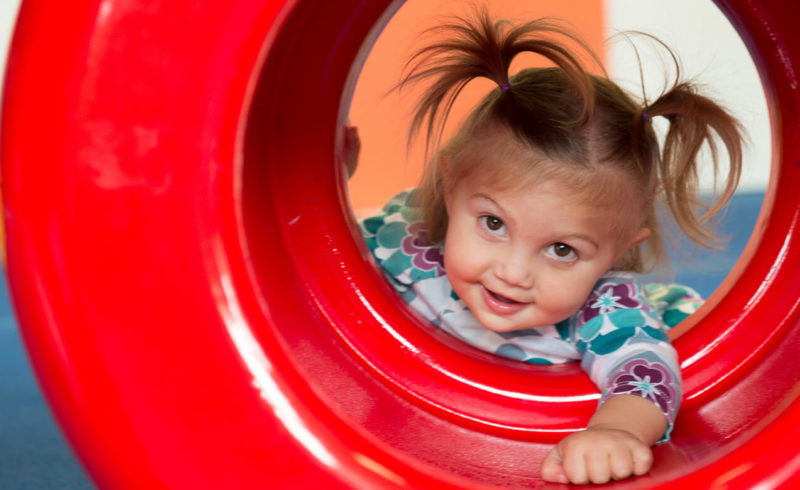
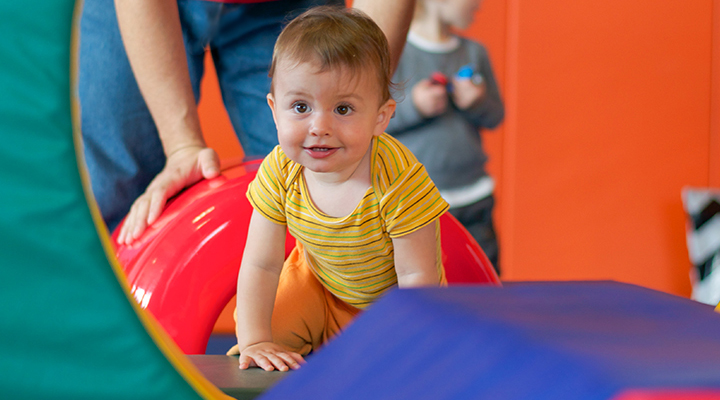
Smiling toddler girl peeking through a red play tunnel in the Kidville gym
1-HOUR PLAYSPACE • 31 WEEKDAY SESSIONS • $31 DROP-IN • FIRST CLASS FREE

By the Kidville Upper West Side Team · Updated October 2026

SHORT ANSWER

Rainy day activities for toddlers in NYC work best as a two-part plan: an hour of simple hands-on play at home, then one indoor outing to burn off energy. On the Upper West Side, Kidville runs 1-hour indoor playspace sessions every weekday at 205 West 88th Street, $31 drop-in or included in a membership.

A rainy morning in a Manhattan apartment can feel very long by 10am. The playground is out, the stroller cover is a battle, and the tablet starts looking tempting. The good news is that a toddler does not need much to get through a wet day: a few simple toys at home, a chance to run, and one change of scene. This guide covers what pediatricians say about indoor play and screens, a set of at-home ideas that need nothing you do not already own, and the Kidville Upper West Side indoor playspace and class options when you need to get out of the apartment. Every Kidville detail was checked on Kidville’s own pages on October 15, 2026.

How do I entertain a 2 year old on a rainy day?

With simple toys and your attention, not with more stuff. HealthyChildren.org, the parenting site of the American Academy of Pediatrics, reports the AAP’s finding that the best toys for development are the ones that foster play between a caregiver and child, and that they need not be flashy, expensive or come with an app. The AAP’s list for parents: choose toys that are not overstimulating and encourage imagination, and use children’s books to give you ideas for pretending together. A rainy day is a good excuse to do exactly that.

At-home activity What you need Why it works on a wet day
Block tower and knock-down Blocks, cups or empty boxes Building, problem-solving and a big satisfying crash
Story then act it out One picture book, a few stuffed animals The AAP suggests using books to spark pretend play
Puzzle time A chunky puzzle Quiet focus after a busy stretch
Kitchen band Pots, wooden spoons, a plastic bowl Loud, physical and free
Pretend play A doll, a toy phone, a blanket for a picnic Copying grown-ups is how toddlers rehearse real life
Living room obstacle course Couch cushions on the floor, a tunnel made of chairs Climbing and crawling when the playground is wet

Ideas built around HealthyChildren.org toy and play guidance (American Academy of Pediatrics), verified October 15, 2026

This guide is general information, not medical advice. Your pediatrician is the right person to ask about your own child’s development and activity.

How much should a toddler move on a stuck-inside day?

More than a rainy day usually allows, which is why the outing matters. The AAP recommends that children aged 3 to 5 get at least 3 hours of physical activity a day, or about 15 minutes for every hour they are awake, and that infants get at least 30 minutes of tummy time and interactive play spread through the day. A small apartment rarely covers that on its own. One hour of running and climbing somewhere bigger takes a large bite out of it, and the rest can come in short bursts at home.

On screens, the same AAP toy guidance is specific: total screen time should be less than 1 hour a day for children 2 and older, and avoided for children younger than 18 to 24 months. It also says children under 5 should use computer or video games only if they are developmentally appropriate and with a parent or caregiver alongside. A rainy day is when that hour disappears fastest, so it helps to plan the outing before the screen comes out.

Age AAP activity guidance AAP screen guidance
Under 18 to 24 months Infants: at least 30 minutes of tummy time and interactive play spread through the day Avoid screens
2 years Plenty of active play through the day Less than 1 hour a day in total, with a grown-up
3 to 5 years At least 3 hours a day, about 15 minutes every waking hour Less than 1 hour a day in total

Source: HealthyChildren.org, “Making Physical Activity a Way of Life” and “Ignore the Flashing Screens: The Best Toys go Back to the Basics” (American Academy of Pediatrics), verified October 15, 2026

Where can I go with my toddler on a rainy day on the Upper West Side?

Somewhere big, dry and built for climbing, within a short walk or one subway stop. The library story time at your local branch is a classic, and worth checking your branch’s schedule for. For running and climbing, the Kidville Upper West Side playspace at 205 West 88th Street is built for exactly this: on set weekday sessions Kidville turns one of its gyms into an indoor playspace where kids can run, climb and make new friends.

Toddler in a striped shirt jumping on padded mats in the Kidville playspace

Indoor option at Kidville How long Price What to know
Indoor playspace 1 hour $31 drop-in, 20% off siblings Must register in advance; grown-ups wear socks and stay within hug’s reach
Playspace packs 1 hour each 5 for $150, 10 for $290 10% off siblings on packages; good for a rainy season
A weekly class 45 minutes Via membership; first class free Music from newborn, gym from 8 months, art from 18 months
Private playspace First hour, up to 3 hours $350 first hour for up to 10 children, $125 each additional hour Seven days a week, 10:30am to 6:00pm; book by email with the front desk

Source: Kidville Upper West Side playspace and classes pages, verified October 15, 2026

If your toddler already has a class, a rainy day is a good day to use a playspace pass on a non-class day. Our indoor gym guide compares the gym classes and the playspace in more detail, and our guide to where toddlers can socialize covers why the same small group every week helps. When the cold sets in, our winter break activities guide has the holiday schedule and the AAP cold weather rules.

When can we drop into the playspace on a rainy weekday?

There are 31 one-hour sessions across the five weekdays. Mornings start at 9:00am on Monday, Tuesday and Wednesday, and later on Thursday and Friday. These are the current times on Kidville’s playspace page; book in advance, because rainy days are exactly when sessions fill.

Day Session start times
Monday 9:00, 10:40, 11:50am, 1:00, 2:10, 3:15, 4:20pm
Tuesday 9:00am, 12:15, 1:20, 2:25, 3:30, 4:30pm
Wednesday 9:00, 10:00, 11:00am, 1:15, 2:15, 4:30pm
Thursday 11:15am, 12:20, 1:25, 2:30, 3:30, 4:30pm
Friday 11:10am, 12:15, 1:20, 2:25, 3:30, 4:30pm
Saturday and Sunday Based on birthday parties; call 212-362-7792 for the schedule

Source: Kidville Upper West Side playspace page, verified October 15, 2026; hours are subject to change for holidays and private events

Laughing toddler girl in the Kidville gym under the orange #kidville sign

A rainy-day rhythm that works for most families: an hour of play at home in the morning, the playspace or a class before lunch, a nap, and a quiet afternoon of books and puzzles. Our toddler weekday routine guide shows how that fits into a full week.

What does a rainy-day outing cost?

One rainy day costs $31 at the playspace; a wet month is cheaper on a pack or a membership. Kidville’s two membership plans include playspace access along with weekly classes.

Option Price Playspace included
Single drop-in $31 per 1-hour session One session
5 pack $150 Five sessions
10 pack $290 Ten sessions
Single Class Membership $219 per month 4 classes a month plus 3 free playspace passes a month
Double Class Membership $399 per month 8 classes a month plus unlimited playspace

Source: Kidville Upper West Side playspace and membership pages, verified October 15, 2026

Possible downside: sessions must be booked in advance, and on a very rainy day the times you want may already be full, so book the night before when the forecast looks wet. Weekend hours depend on birthday parties, and the Single plan’s 3 playspace passes expire at the end of each billing cycle, so a dry month means unused passes.

Rainy day activities for toddlers in NYC: FAQ

How do you entertain a 2 year old on a rainy day?

Mix simple hands-on play at home with one active outing. The AAP says the best toys are simple ones that get you playing together, like blocks, puzzles and pretend play, and suggests using books to spark ideas. For energy, an hour somewhere big helps; on the Upper West Side, Kidville’s playspace runs 1-hour sessions on weekdays for $31.

Where can I go with my toddler on a rainy day?

Somewhere dry with room to run. Library story times are a good free option, and an indoor playspace covers climbing and running. Kidville Upper West Side at 205 West 88th Street turns a gym into an indoor playspace on set weekday sessions; book ahead, grown-ups wear socks and stay within hug’s reach. Weekend hours depend on birthday parties, so call first.

What do you do with a toddler on a rainy day indoors?

Build a block tower, read a story and act it out with stuffed animals, set up a cushion obstacle course, or play a kitchen band with pots and spoons. The AAP recommends toys that are not overstimulating and that encourage imagination. Plan short bursts of movement through the day, since children 3 to 5 need about 15 minutes of activity every waking hour.

How do you entertain a 3 year old indoors at home?

Give them a role to play. Three-year-olds love pretend play, so a picnic on a blanket, a pretend shop or acting out a favorite book keeps them busy and talking. Add movement every hour, because the AAP recommends at least 3 hours of physical activity a day at this age. Keep total screen time under an hour, as the AAP advises for children 2 and older.

What to do in NYC with a 2 year old when it rains?

Pick one indoor outing and keep the rest of the day simple. On the Upper West Side, a 1-hour Kidville playspace session, a 45-minute parent-and-child class, or your local library’s story time all work. Kidville has 31 weekday playspace sessions, a $31 drop-in, and a free first class, so it is an easy option to try without a commitment.

Is it okay to use screens on a rainy day?

In moderation, and it depends on age. The AAP advises avoiding screens for children younger than 18 to 24 months, and keeping total screen time under 1 hour a day for children 2 and older, ideally with a grown-up watching along. On a rainy day, planning the outing and the at-home activities first makes that hour easier to keep.

The bottom line

Rainy day activities for toddlers in NYC come down to two things: simple play at home and one place to run. Blocks, books, pretend play and a cushion course cover the morning, and the AAP is clear that simple, shared play beats screens. For the energy, Kidville Upper West Side runs 1-hour playspace sessions every weekday at 205 West 88th Street, so book one the night before the forecast turns.

Rain in the forecast? Check the playspace hours at Kidville Upper West Side, 205 West 88th Street, New York, NY 10024, or claim a free trial class. Call 212-362-7792 with questions.

ABOUT THE AUTHOR

The Kidville Upper West Side Team runs the Kidville location at 205 West 88th Street, New York, NY 10024, home to music, gym, art, dance and STEM classes, Kidville University, Camp Kidville, an indoor playspace, birthday parties and a kids salon for children from birth to age 6. Every age, price and schedule detail in our guides is checked against Kidville’s own published pages.

Sources

Every Kidville price, schedule and rule in this guide comes from Kidville Upper West Side’s own pages, checked on October 15, 2026. Play, activity and screen time guidance comes from HealthyChildren.org, the American Academy of Pediatrics’ parenting site.

Kidville Upper West Side: Playspace and Holiday Schedule

Kidville Upper West Side: Classes and Programs

Kidville Upper West Side: Enrollment Options and Membership

Kidville Upper West Side: Free Trial Class

Kidville Upper West Side: Contact

HealthyChildren.org (American Academy of Pediatrics): Ignore the Flashing Screens: The Best Toys go Back to the Basics

HealthyChildren.org (American Academy of Pediatrics): Making Physical Activity a Way of Life
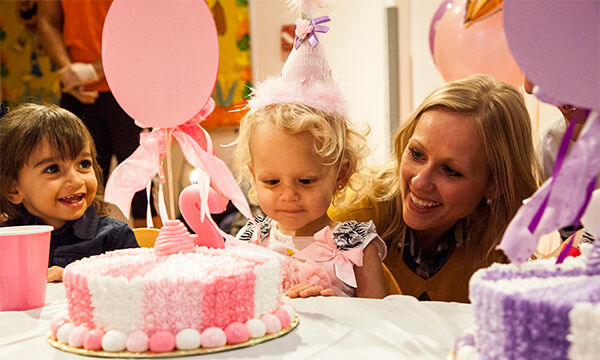
Where Can My Toddler Socialize With Other Kids on the Upper West Side?

KIDVILLE UPPER WEST SIDE

Where Can My Toddler Socialize With Other Kids on the Upper West Side?

What toddler socializing really looks like at 1, 2 and 3, how to help it along, and the places on the Upper West Side where it happens every week.

Claim a Free Trial

205 W 88th St · 212-362-7792

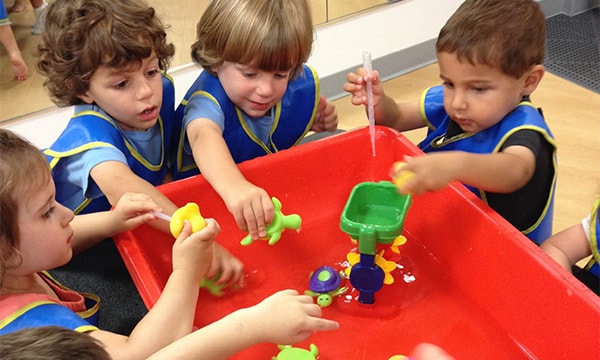
Three toddlers in blue smocks playing together at a red water table at Kidville
PARENT AND CHILD CLASSES • 1-HOUR PLAYSPACE • MONTHLY MEMBER EVENTS • FIRST VISIT FREE

By the Kidville Upper West Side Team · Updated October 2026

SHORT ANSWER

Where can my toddler socialize with other kids on the Upper West Side? In small, repeated settings: a weekly parent-and-child class, an hour in an indoor playspace, a two or three child playdate, and a gradual separation program once they are 2. At Kidville Upper West Side, all four happen under one roof at 205 West 88th Street.

“Socialize” means something different at 14 months than at 3 years. A young toddler plays next to other children and competes for toys; a 2-year-old copies, refuses to share and starts to feel for others; a 3-year-old begins to actually play with a friend. The place matters less than the pattern: small groups, the same faces, and a grown-up nearby but not in charge. This guide walks through what to expect at each age, what pediatricians say helps, and the Kidville Upper West Side settings where it happens every week. Every Kidville detail was checked on Kidville’s own pages on October 14, 2026.

At what age do toddlers start socializing with other kids?

From about 1, but not in the way adults mean by the word. HealthyChildren.org, the parenting site of the American Academy of Pediatrics, describes the 1-year-old as playing alongside other children and competing for toys rather than playing cooperative games, while enjoying watching and being around other kids, especially slightly older ones. At 2, the same site says children do not interact well even when playing side by side, may refuse to share, and are at the same time developing real empathy, with pretend play serving as rehearsal for future social encounters. That is normal, and it is the raw material a class or playgroup works with.

Age What socializing looks like What the AAP suggests
Around 1 Plays next to other children, watches older kids, offers a toy then snatches it back, competes for attention Plenty of toys for everyone, a grown-up ready to referee, reassurance that the toy is still theirs
Around 2 Side by side play, little sharing, copying adults and older children, pretend play, early empathy Talk about how the other child feels, give plenty of trial runs, keep groups to two or three children at first
Around 3 Starts to play with a friend rather than beside one, gets angry with friends and has to learn that the moment passes Be present and available, coach sharing and conflict without hitting, help a shy child warm up or a very social child make room

Source: HealthyChildren.org, “Social Development: 1 Year Olds”, “Social Development: 2 Year Olds” and “What Parents Can Do to Support Friendships” (American Academy of Pediatrics), verified October 14, 2026

This guide is general information, not medical advice. If you have questions about your own child’s development, your pediatrician is the right person to ask.

How do I get my toddler to socialize?

Give them repeated, low-stakes practice and then step back. The AAP’s advice for 2-year-olds is direct: do not let their relatively antisocial behavior put you off getting playgroups together, keep the group to two or three children at first, monitor so nobody gets hurt, and otherwise let the children guide themselves as much as possible, because they need to learn how to play with one another, not with one another’s parents. For 1-year-olds, the practical tip is simpler: plenty of toys for everyone and be prepared to referee.

Two toddlers building side by side with colorful magnetic tiles at Kidville

What helps What to skip
Small groups, two or three children Big birthday-party crowds as the main social outlet
The same children every week A different playground, class or playdate every time
Enough toys and materials for everyone One coveted toy in the middle of the rug
Naming feelings out loud: “Emma is sad because you took her car” Expecting a 2-year-old to share on request
A grown-up within reach who lets the kids lead Stepping in to run every interaction

Framework based on HealthyChildren.org social development guidance (American Academy of Pediatrics), verified October 14, 2026

Where can my toddler socialize on the Upper West Side?

Anywhere the same small group of children shows up on a schedule. The playground and the library story hour both count, with the caveat that the faces change every time. Kidville Upper West Side at 205 West 88th Street is built around the repeat-visit version, and each of its settings fits a different age and comfort level.

Setting Ages How the socializing works What to know
Parent-and-child classes (music, gym, art) Newborn to 6, by class A teacher runs a 45-minute class while you stay with your child; your child is enrolled in the same class each week, so the same families are in the room Music takes babies from newborn, gym from 8 months, art from 18 months; first class is free
Indoor playspace Open play A booked 1-hour open-play session in the gym with other families $31 per session, must register in advance, grown-ups in socks and within hug’s reach
Kidville University Pre-2s to 3s A gradual separation classroom with a 1:4 teacher ratio, play centers and a consistent routine No application, admission at the start of Fall and Winter sessions, potty training not required
Monthly member events Members Events built into the membership, alongside classes and playspace Kidville describes membership as an instant connection to local parents and families, with future playdates in mind

Source: Kidville Upper West Side classes, playspace, Kidville University and membership pages, verified October 14, 2026

Children gathered around a yellow digging bin with magnifying glasses at Kidville

For most families the order is class first, then playspace, then Kidville University. A class gives a 1-year-old the side-by-side version with a teacher directing traffic. The playspace gives a confident walker an hour of free play with other kids while you stay within reach, and our indoor gym guide covers how the playspace hours run. Kidville University is the step where a 2-year-old starts to play with the group without you in the room; our preschool readiness guide explains how that separation is handled.

Why does a weekly class work better than a one-off playdate?

Because toddlers learn social skills through repetition with familiar people, and a class delivers exactly that. The AAP’s “plenty of trial runs” means the same two or three children, often, with an adult nearby. Kidville enrolls your child in the same class each week, which puts the same families in the same room at the same time, with a teacher handling the structure so you can watch how your child reacts to other kids instead of managing every moment. Our mommy and me classes guide covers the format, and our toddler weekday routine shows where one or two classes fit in a week.

Option Price What is included
Single Class Membership $219 per month 4 classes a month, 3 free playspace passes a month, 10% off a birthday party deposit before tax
Double Class Membership $399 per month 8 classes a month, unlimited playspace, 15% off a birthday party deposit before tax
Playspace drop-in $31 per 1-hour session 20% off siblings, must register in advance
Playspace packs 5 for $150, 10 for $290 10% off siblings on packages
Free trial class Free Your first visit, create an account to claim it

Source: Kidville Upper West Side membership and playspace pages, verified October 14, 2026

Possible downside: the socializing you are hoping for will not look like friendship for a while. A 1-year-old will grab, a 2-year-old will refuse to share, and the AAP says that is exactly what their age-mates are doing too. Expect friction, keep the group small, and judge progress over months, not sessions. Weekend playspace hours also depend on birthday parties, so call before planning a Saturday visit.

Where can my toddler socialize with other kids: FAQ

At what age should kids start socializing with other kids?

Around 1, in the side-by-side sense. The AAP describes 1-year-olds as enjoying being around other children and watching slightly older ones, even though they play alongside rather than together and compete for toys. True back-and-forth play comes later, around 3. A parent-and-child class is a comfortable first setting because you stay with your child and a teacher runs the room.

How do I get my toddler to socialize?

Set up small, repeated chances and let the children lead. The AAP suggests playgroups of two or three children at first, plenty of toys so there is less to fight over, a grown-up ready to referee, and talking about the other child’s feelings out loud. At Kidville Upper West Side, a weekly class or a booked playspace hour gives you that repetition with familiar faces.

Is it normal for a 3 year old not to socialize?

Often, yes. The AAP notes that quiet, shy children who rarely act out their thoughts are just as normal as highly active ones who push and shove, and that a shy child mainly needs help warming up initial interactions. A small, familiar group is easier than a crowd. If you are concerned about your own child’s social development, your pediatrician is the right person to ask.

How can I teach my child to make friends?

Be present and available while they play with others, coach sharing and resolving conflict without hitting, and help a shy child warm up or a very social one make room for a quieter friend. Those are the AAP’s suggestions for the early years. A class where you stay in the room is a natural place to do that coaching without hovering.

How do children develop friendships?

Gradually, through play, with adult modeling along the way. The AAP points out that children rarely learn the art of friendship without some support, that early play times show you your child’s social strengths and challenges, and that children get angry with friends from the very start and need to learn the moment passes. Repeated time with the same small group is where that practice happens.

Does my toddler need a class to socialize?

No. A playground, a library story hour or a two-child playdate at home all work, and the AAP’s advice is the same in every setting: small group, let the kids lead, be ready to referee. A class adds the one thing that is hard to arrange yourself, the same children at the same time every week. Kidville’s first class is free, so it is an easy way to see whether the format suits your child.

The bottom line

Where can my toddler socialize with other kids on the Upper West Side? In small groups that repeat: a weekly parent-and-child class, a booked playspace hour, a two or three child playdate, and a gradual separation classroom once they are 2. Expect side-by-side play at 1, refusals to share at 2 and real friendship starting at 3, and judge progress over months. At Kidville Upper West Side, a free trial class is the simplest place to start.

Ready to meet some new little friends? Claim a free trial class at Kidville Upper West Side, 205 West 88th Street, New York, NY 10024, or see the membership plans. Call 212-362-7792 with questions.

ABOUT THE AUTHOR

The Kidville Upper West Side Team runs the Kidville location at 205 West 88th Street, New York, NY 10024, home to music, gym, art, dance and STEM classes, Kidville University, Camp Kidville, an indoor playspace, birthday parties and a kids salon for children from birth to age 6. Every age, price and schedule detail in our guides is checked against Kidville’s own published pages.

Sources

Every Kidville age, price and rule in this guide comes from Kidville Upper West Side’s own pages, checked on October 14, 2026. Social development guidance comes from HealthyChildren.org, the American Academy of Pediatrics’ parenting site.

Kidville Upper West Side: Classes and Programs

Kidville Upper West Side: Playspace and Holiday Schedule

Kidville Upper West Side: Kidville University

Kidville Upper West Side: Enrollment Options and Membership

Kidville Upper West Side: Free Trial Class

Kidville Upper West Side: Contact

HealthyChildren.org (American Academy of Pediatrics): Social Development: 1 Year Olds

HealthyChildren.org (American Academy of Pediatrics): Social Development: 2 Year Olds

HealthyChildren.org (American Academy of Pediatrics): What Parents Can Do to Support Friendships

How to Prepare a Toddler for Preschool on the Upper West Side

KIDVILLE UPPER WEST SIDE

How to Prepare a Toddler for Preschool on the Upper West Side

The readiness signs to look for, the goodbye skills to practice at home, and how a gradual separation program bridges the gap, with every Kidville detail checked.

Request a Tour

205 W 88th St · 212-362-7792

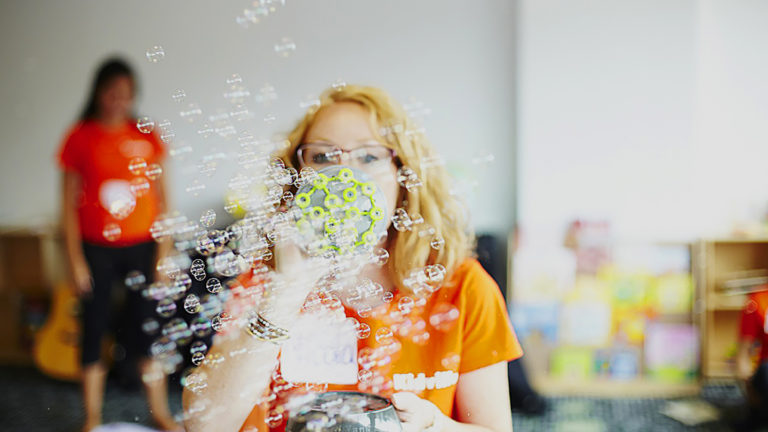
Kidville teacher in an orange shirt blowing bubbles in the classroom
GRADUAL SEPARATION • 1:4 TEACHER RATIO • PREP STARTS BEFORE AGE 2 • NO POTTY TRAINING NEEDED

By the Kidville Upper West Side Team · Updated October 2026

SHORT ANSWER

How to prepare a toddler for preschool comes down to three things you can practice months ahead: short and consistent goodbyes, a predictable daily routine, and time around other children where you are not running the play. On the Upper West Side, Kidville University is built as that bridge, starting with a parent-in-the-room Prep class before any separation happens.

A preschool classroom asks a child to separate, follow a simple routine and play near other kids. None of that is taught by a worksheet. It comes from practice, and the year before preschool is when the practice happens. This guide lays out the readiness signs pediatricians look for, the goodbye skills that make the first drop-off go better, how long adjustment usually takes, and how Kidville University at 205 West 88th Street turns all of it into a step-by-step program. Every Kidville detail was checked on Kidville’s own pages on October 14, 2026.

Is my toddler ready for preschool?

Readiness is about separation, routine and social interest, not letters or numbers. HealthyChildren.org, the parenting site of the American Academy of Pediatrics, lists what a typical 2-year-old is working on, and the social and emotional items read like a preschool readiness checklist: increasingly enthusiastic about the company of other children, demonstrating increasing independence, and imitating adults and older children. The same page notes that separation anxiety episodes tend to increase around the middle of the 2-year-old year and then fade, which is why a program that separates gradually fits this age so well.

Readiness sign What it looks like at 2 Why it matters for preschool
Interested in other children Watches, copies or plays alongside kids at the playground or in a class Preschool is a group; parallel play is the first step
Follows simple instructions Puts the cup on the table, comes to the rug when asked Circle time and transitions depend on it
Uses two to four word sentences “More water please”, “Mama come back” Can tell a teacher what they need
Begins make-believe play Feeds a doll, drives a block like a car Classroom centers are built on pretend play
Handles short separations Stays with a grandparent or sitter for an hour without ongoing distress The skill the first weeks lean on most

Source: HealthyChildren.org, “Developmental Milestones: 2 Year Olds” (American Academy of Pediatrics), verified October 14, 2026

This guide is general information, not medical advice. If you have questions about your own child’s development, your pediatrician is the right person to ask.

What should a toddler know before preschool?

Less than most parents assume. A toddler does not need to know letters, count, write their name or sit still for long stretches. The skills that actually help are practical: being able to say what they need in a short sentence, following a one-step instruction, playing near another child without constant adult help, and tolerating a goodbye. Potty training is not required at Kidville University; its own FAQ says every teacher is trained and prepared to change diapers, and the KVU Prep class has parents or caregivers in the room, so there is nothing a child has to manage alone on day one.

Smiling young boy in a plaid shirt in the Kidville classroom

What you can practice at home in the months before: a short morning routine in the same order every day, snack at a table with a cup and a napkin, putting shoes and toys back where they go, and a few playdates where you sit back instead of directing. Our guide to what to do with a toddler during the week has a sample routine that doubles as preschool practice.

How do I prepare a 2-year-old for the first goodbye?

Keep it short, keep it the same, and keep your promise. HealthyChildren.org’s pediatrician-written guide to separation anxiety gives six practical tips, and all six can be practiced before a program starts, not just on the first day.

AAP tip How to practice it before preschool
Create a quick goodbye ritual Pick one: a high five, three kisses, a wave at the door. Use it every time you leave, even for the sitter
Be consistent Same drop-off, same ritual, same time. Toddlers trust a pattern more than a speech
Give your full attention, then go A real hug and eye contact, then leave without lingering. Lingering stretches the anxiety
Keep your promise Come back when you said you would. Do not pop back in to check
Be specific, child style “I will be back after snack and gym time”, not “in two hours”
Practice being apart Short stays with grandparents, playdates, an hour with a sitter, and a dry run of the school goodbye

Source: HealthyChildren.org, “How to Ease Your Child’s Separation Anxiety” (American Academy of Pediatrics), verified October 14, 2026

Kidville teacher holding a laughing little girl in the gym

A parent-and-child class is the easiest place to rehearse the first four tips, because you are still in the room but a teacher is running the activity. Our mommy and me classes guide covers how that format works at Kidville.

How long does it take a toddler to adjust to preschool?

It depends on age and on how consistent the adults are, and it is rarely instant. The AAP guide describes separation anxiety as normal and as a sign of healthy attachment. It notes that many toddlers start showing separation challenges at 15 or 18 months, that separations are harder when a child is hungry, tired or sick, and that by age 3 most children understand the effect their pleas have on a parent, which is exactly when consistency matters most. The advice for that stage is direct: do not return to the room based on a plea, and do not cancel plans because of separation anxiety.

For a closer look at the ages it peaks, how long it lasts and a drop-off routine that works, see our guide to toddler separation anxiety at daycare.

This is the reason Kidville University does not separate on day one. Its separation process is described on the program page as tailored to the needs of each family and the class as a whole, with ongoing communication and hand holding for the parent along the way, and a 1:4 teacher ratio so each child gets individual attention while trust is built. If you are weighing a drop-off summer program first, our summer camp for toddlers guide covers readiness for that setting.

What does a preschool prep program look like on the Upper West Side?

At Kidville Upper West Side it is a three-step ladder, and you can enter at whichever step fits your child. Kidville University is Kidville’s gradual separation program, and the three levels move from a parent-in-the-room class to a full drop-off morning.

Program For Format Separation
KVU Prep (pre-2s) Children not yet 2 90 minutes, 1 day a week, Mondays 9:00am to 10:30am None. Parent or caregiver stays in the classroom and independence builds gradually
KVU (2s) 2-year-olds 120 minutes a day, 2 or 3 days a week, Tuesday and Thursday or Monday and Wednesday, 9:00am to 11:00am Gradual and individualized, with teachers guiding parent and child
KVU Grad (3s) 3-year-olds 180 minutes a day, 2 or 3 days a week, Tuesday and Thursday 9:00am to 12:00pm Drop-off program, the step before pre-kindergarten

Source: Kidville Upper West Side Kidville University, KVU Prep, KVU and KVU Grad enrollment pages, verified October 14, 2026

The Prep page says it plainly: enroll in KVU Prep in the fall to prepare little ones for KVU in the spring, with a shorter 90-minute day that gets a child used to the structure before the two-hour program. Here is what a KVU 2s morning looks like, from the enrollment page.

Block What happens
Welcome time Digging bins and an inviting room as kids say “see ya later” to grown-ups, once they have separated
Circle time A hello song, story time, music and movement or dramatic play to introduce the weekly theme
Art and STEM Open-ended art and exploration with tactile materials
Class centers Free movement between dramatic play, reading, puzzles and other manipulatives
Snack time A light snack you pack, with socializing and practicing manners
Gym A chance to run off the excess energy before pick-up

Source: Kidville Upper West Side KVU enrollment page, verified October 14, 2026

Three details from the KVU FAQ matter for planning. There is no application; Kidville recommends a tour but it is optional. Admission is typically at the start of the Fall and Winter sessions only. And you pack a light, healthy snack and water, in an allergy-aware facility. Our preschool alternative guide goes deeper on the curriculum and the parent communication side of the program.

What does preschool prep cost and how do I start?

Prep is the low-commitment entry point, and the 2s program is priced by session or by full year. Prices below are from Kidville’s enrollment pages for the 2026 to 2027 school year.

Program Schedule Tuition
KVU Prep Mondays 9:00am to 10:30am, September 28 to January 12 $1,450 for the session
KVU 2s, fall session Tuesday and Thursday 9:00am to 11:00am, September 14, 2026 to January 22, 2027 $4,350
KVU 2s, full year Tuesday and Thursday or Monday and Wednesday, 9:00am to 11:00am $8,000
KVU Grad 3s, fall session Tuesday and Thursday 9:00am to 12:00pm $5,950

Source: Kidville Upper West Side KVU Prep, KVU and KVU Grad enrollment pages, verified October 14, 2026

Possible downside: there are no make-ups for absences in the program, and new families are typically admitted only at the start of the Fall and Winter sessions. If you miss a session start, the practical bridge is a weekly parent-and-child class and the free trial class, which keep the routine and the room familiar until the next intake.

How to prepare a toddler for preschool: FAQ

How do I prepare my 2 year old for preschool?

Practice the three things preschool actually asks for: a short, repeatable goodbye, a predictable daily routine, and play near other children with you stepping back. The AAP suggests rehearsing the school goodbye before you ever have to part. On the Upper West Side, KVU Prep lets a child under 2 learn the classroom structure with a parent in the room, before any separation.

What should a toddler know before preschool?

Practical skills, not academics. Saying what they need in a short sentence, following a one-step instruction, playing alongside another child, and tolerating a goodbye. Letters, counting and writing are not requirements. Potty training is not required at Kidville University either; its FAQ says every teacher is trained to change diapers, so that should not delay a start.

How long does it take a toddler to adjust to preschool?

There is no fixed number, and it is normal for it to take weeks rather than days. The AAP notes separations are hardest when a child is hungry, tired or sick, and that a consistent drop-off routine diminishes the heartache. Kidville University separates gradually and individually rather than on day one, with a 1:4 teacher ratio, so the pace follows the child.

Is a 3 year old ready for preschool?

Usually, and by 3 the AAP says most children clearly understand the effect their pleas at goodbye have on you, so a consistent drop-off matters more than ever. At Kidville Upper West Side, 3-year-olds enter KVU Grad, a 180-minute drop-off program two or three mornings a week that is designed as the step before pre-kindergarten, with weekly Spanish and hands-on science.

Does my toddler need to be potty trained for a preschool prep program?

Not at Kidville University. The program FAQ answers this directly: no, all of the teachers are trained and prepared to change diapers. That applies across KVU Prep, the 2s program and KVU Grad. If a preschool you are considering does require potty training, a program that does not can be the easier first step.

Can we start Kidville University in the middle of the year?

Typically not. Kidville’s FAQ says that for the benefit of all the children in the class, admission is usually accepted only at the start of the Fall and Winter sessions. Full school year enrollment holds the same day and time all year, and the half-year Fall or Winter session is available pending space. No application is needed, and a tour is recommended but optional.

The bottom line

How to prepare a toddler for preschool is mostly about separation, routine and social interest, and all three can be practiced in the year before. Rehearse a short goodbye, keep the daily rhythm steady, and give your child time around other kids where you are not the one running the play. At Kidville Upper West Side, Kidville University turns that into a three-step program, from a parent-in-the-room Prep class to a full drop-off morning, and a tour is the easiest way to see which step your child is ready for.

Ready to see the classroom? Request a tour of Kidville University at Kidville Upper West Side, 205 West 88th Street, New York, NY 10024, or start with a free trial class. Call 212-362-7792 with questions.

ABOUT THE AUTHOR

The Kidville Upper West Side Team runs the Kidville location at 205 West 88th Street, New York, NY 10024, home to music, gym, art, dance and STEM classes, Kidville University, Camp Kidville, an indoor playspace, birthday parties and a kids salon for children from birth to age 6. Every age, price and schedule detail in our guides is checked against Kidville’s own published pages.

Sources

Every Kidville program, schedule, price and rule in this guide comes from Kidville Upper West Side’s own pages, checked on October 14, 2026. Readiness and separation guidance comes from HealthyChildren.org, the American Academy of Pediatrics’ parenting site.

Kidville Upper West Side: Kidville University (Preschool Alternative)

Kidville Upper West Side: KVU Prep Enrollment

Kidville Upper West Side: KVU Enrollment

Kidville Upper West Side: KVU Grad Enrollment

Kidville Upper West Side: Free Trial Class

Kidville Upper West Side: Contact

HealthyChildren.org (American Academy of Pediatrics): How to Ease Your Child’s Separation Anxiety

HealthyChildren.org (American Academy of Pediatrics): Developmental Milestones: 2 Year Olds

What to Do With a Baby All Day on the Upper West Side

KIDVILLE UPPER WEST SIDE

What to Do With a Baby All Day on the Upper West Side

A simple day for babies from newborn to 12 months: floor play and tummy time at home, one small outing, and the classes that take babies this young.

Claim a Free Trial

205 W 88th St · 212-362-7792

Baby climbing over soft foam gym equipment at Kidville Upper West Side
MUSIC FROM NEWBORN • GYM FROM 8 MONTHS • 45-MINUTE CLASSES • FIRST VISIT FREE

By the Kidville Upper West Side Team · Updated October 2026

SHORT ANSWER

What to do with a baby all day comes down to three repeating blocks: feeding and naps, floor play and tummy time while they are awake, and one small outing. At Kidville Upper West Side, music classes take babies from newborn and the gym series starts at 8 months, so one class can anchor the week.

A newborn sleeps most of the day and a crawling 10-month-old barely sits still, so “what do I do all day” has a different answer every few weeks. The part that does not change is the shape of the day: short bursts of awake-time play, a nap, a feed, and one outing that gets you both out of the apartment. This guide lays out that shape by age, then shows which Kidville Upper West Side classes actually take babies, what a visit costs, and how parents here build a week around a single class. Every Kidville detail was checked on Kidville’s own pages on October 13, 2026.

What should a baby be doing all day?

In the first year the day is built from awake-time play in short stretches, not from a schedule of activities. HealthyChildren.org, the parenting site of the American Academy of Pediatrics, lays out what helps in each stage of the first year, and the theme is the same throughout: movement, your voice and your face do most of the work. It also notes that infant brains thrive on routines, so a regular schedule that works for your family beats a varied one. Screens and media are not recommended for babies at this age.

Age What your baby is working on What to do in the awake stretches
0 to 3 months Lifting the head, kicking, seeing short distances Gentle rocking, slow dancing, talking and singing, supervised tummy time, holding them close to your face
3 to 6 months Rolling over, pushing feet down, reaching and grabbing More tummy time, fabric or board books, mirrors, naming the sounds you both make
6 to 9 months Sitting, then crawling, banging toys together Toys on the floor they can reach or crawl to, clapping and cheering a new skill, reading and pointing at pictures
9 to 12 months Constant motion, pulling up to walk along furniture Safe floor space to cruise, push-and-pull play, songs with actions, naming everything

Source: HealthyChildren.org, “How Active is Your Baby?” (American Academy of Pediatrics), verified October 13, 2026

This guide is general information, not medical advice. Your pediatrician is the right person to ask about your own baby’s development, feeding and sleep.

How do I entertain a baby at home between outings?

Most of a baby’s day is floor time, and tummy time is the piece worth being deliberate about. HealthyChildren.org recommends playing with your baby on their tummy 2 to 3 times a day for 3 to 5 minutes at a time, working up to 15 to 30 minutes a day by about 7 weeks. It suggests after a diaper change or just after a nap as the easy slots, and if your baby dislikes the position, lying down face to face or putting a toy in reach usually helps. Tummy time is for babies who are awake and closely supervised.

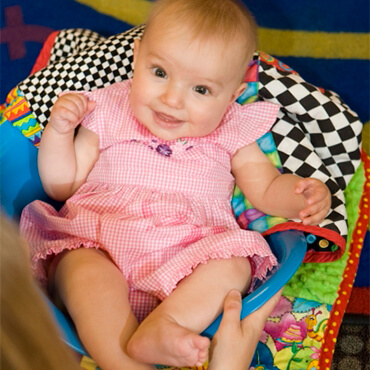
Smiling baby sitting in a blue scoop seat on a colorful play mat

Everything else can be low effort on purpose. A laundry basket of board books, a mirror propped against the couch, a wooden spoon and a metal bowl, and the same three songs every day will carry a long morning. You are not meant to be a full-time entertainer. The AAP guidance for the first year keeps coming back to the same plain ingredients: your face, your voice, safe objects within reach, and time on the floor.

Where can I go with a baby on the Upper West Side?

One outing a day is plenty, and it does not have to be far. A walk to Riverside Park or the stretch of Broadway near 88th Street counts. On a cold or rainy day, the useful options are indoor ones, and that is where a class or an indoor playspace earns its place. Kidville Upper West Side is at 205 West 88th Street, a few minutes from the 1 train at 86th Street, and takes children from newborn to 6 years.

Not every class at Kidville starts in the first year, so here is what is actually open to a baby right now.

Class type Ages on the Kidville page Open to a baby under 1?
Music, Rockin’ Railroad: Unplugged Newborn and up, class listed 5 months to 5 years with newborn to 12 months and 12 to 18 months groupings Yes, from newborn
Gym, Big Muscles for Little Babies 8 to 15 months Yes, from 8 months
Gym, Big Muscle Builders 12 to 24 months and 18 to 36 months No, this is the next step up
Art 18 months and up No, later
Dance 18 months and up No, later
STEM 2 years and up No, later
Indoor playspace Open play, 1-hour sessions Yes, with a grown-up within hug’s reach

Source: Kidville Upper West Side classes, music, gym and playspace pages, verified October 13, 2026

In practice that means a baby’s first Kidville class is music, and the gym series opens up around the time they start to crawl and pull up. Our guides to baby music classes on the Upper West Side and baby gym classes go through each one in detail. If a class button on the Kidville site is grayed out, the class is full or outside the enrollment window, and the front desk can add you to the waitlist on 212-362-7792.

Baby smiling in an indoor swing in the Kidville Upper West Side gym

What does a baby class actually look like?

Classes run 45 minutes, you stay with your baby the whole time, and nothing depends on your baby performing. The music class is built around a live band playing original songs and familiar favorites, so a newborn who sleeps through half of it still gets the part that matters, which is sound, movement and being held. The gym class uses the padded space, swings, mats and the Tumbl Trak, scaled to babies who are crawling, pulling up and taking their first steps.

Two grown-up rules apply across the building and are worth knowing before the first visit: all grown-ups wear socks in the gym, and a grown-up stays within hug’s reach of their child at all times. Both come straight from the playspace page. If you are weighing a parent-and-child class in general, our mommy and me classes guide covers the format across ages.

What does a week with a baby look like?

One fixed anchor and four flexible days is the pattern that holds up. Your baby takes the same class on the same weekday, which makes the week predictable for both of you, and the other days get an outing you can cancel without guilt. Here is a sample week for a baby of about 6 to 9 months, built around one class and one playspace hour.

Day Anchor The rest of the day
Monday Music class, 45 minutes Nap on the way home, floor play and books in the afternoon
Tuesday Playspace, 1-hour session Quiet afternoon at home, tummy time after the nap
Wednesday Nothing scheduled Walk to the park, errands in the carrier, long floor stretch at home
Thursday A caregiver outing or a friend over Same nap window, same songs, low effort
Friday Playspace or a second class Early dinner, bath, wind down

Example week built from Kidville Upper West Side class and playspace schedules, verified October 13, 2026

Playspace sessions are an hour and must be booked in advance. Weekday start times on the Kidville playspace page currently run from 9:00am on Monday, Tuesday and Wednesday, with later first sessions on Thursday and Friday, and weekend hours depend on birthday parties, so call for those. Hours also shift around holidays: the holiday schedule on that page currently lists no classes on November 11, a full closure on November 26, and winter break from December 24 to 31. When your baby becomes a toddler, our toddler weekday routine guide picks up where this one leaves off.

How much does a baby class or playspace visit cost?

Classes come through a monthly membership and the playspace can be paid per visit. The membership page lists two plans, and both auto-bill monthly with no long commitment, which matters in a year when nap times change every few weeks.

Option Price What is included
Single Class Membership $219 per month 4 classes a month, 3 free playspace passes a month, 10% off a birthday party deposit before tax
Double Class Membership $399 per month 8 classes a month, unlimited playspace, 15% off a birthday party deposit before tax
Playspace drop-in $31 per 1-hour session One child, 20% off siblings, must register in advance
Playspace 5 pack $150 Five 1-hour sessions, 10% off siblings on packages
Playspace 10 pack $290 Ten 1-hour sessions
Free trial class Free Your first visit, you create an account to claim it

Source: Kidville Upper West Side membership and playspace pages, verified October 13, 2026

A Single Class Membership works out to about one class a week plus three playspace hours, which is a realistic amount of structure for a baby. Memberships also get first dibs on new schedule releases and let you adjust your schedule online as your baby’s nap times change.

Possible downside: with the Single plan the 3 playspace passes expire at the end of each billing cycle, so a month with a sick baby or a trip is a month where passes go unused. If your week genuinely includes two classes and frequent open play, the Double is the better value; if it does not, paying $31 a visit as you go is the cheaper way to start.

What to do with a baby all day: FAQ

How do I entertain my 6 month old?

At 6 months most babies are learning to sit and reaching for everything, so put toys on the floor just out of reach and let them work for them. Add board books, a mirror, and songs with actions. HealthyChildren.org suggests clapping and cheering when they manage something new. One outing a day, a class or a playspace hour, covers the rest.

Where can I go with a 6 month old baby?

Anywhere you can sit on the floor with them. On the Upper West Side that means Riverside Park on a mild day, the library, or an indoor option when the weather turns. Kidville Upper West Side at 205 West 88th Street takes babies in its music class from newborn and in Big Muscles for Little Babies from 8 months, and its indoor playspace runs 1-hour booked sessions.

What do you do with a 6 month old during the day?

Repeat a short loop: feed, awake-time play on the floor, nap, then do it again. Tummy time, books and your voice fill the awake stretches, and one outing breaks up the day. Infant brains do well with routine, so keeping the same nap windows and the same class on the same weekday helps more than adding new activities.

What should my 6 month old be doing all day?

Sleeping a good share of it, feeding on their own rhythm, and spending their awake time moving. Around 6 months that is sitting with and then without support, rolling, reaching, banging toys together, and starting to crawl. Mirrors and imitating sounds become a favorite near this age. Screens are not recommended for babies. Your pediatrician is the right person to ask about your own baby.

What should a newborn be doing all day?

Mostly sleeping. Newborns snooze much of the day, and the awake moments are for feeding, being held close, and hearing your voice. HealthyChildren.org points to gentle rocking, slow dancing, talking and singing, plus supervised tummy time starting as early as the day you come home, 2 to 3 times a day for 3 to 5 minutes. Nothing else is required.

When can my baby start classes at Kidville Upper West Side?

Music starts at newborn. The Rockin’ Railroad: Unplugged class is listed for 5 months to 5 years, with groupings for newborn to 12 months and 12 to 18 months, so there is a section for the youngest babies. The gym series, Big Muscles for Little Babies, starts at 8 months. Art, dance and STEM begin at 18 months or later. Your first class is free.

The bottom line

What to do with a baby all day is a loop, not a plan: feed, awake-time play on the floor, nap, and one outing to break up the day. Tummy time 2 to 3 times a day and the same songs and books will carry most of it, and one weekly class gives the week a shape. At Kidville Upper West Side, music takes babies from newborn and the gym series from 8 months, and a free trial class is the easiest way to see which one your baby is ready for.

Ready to try one class? Claim a free trial class at Kidville Upper West Side, 205 West 88th Street, New York, NY 10024, or compare the membership plans. Call 212-362-7792 with questions.

ABOUT THE AUTHOR

The Kidville Upper West Side Team runs the Kidville location at 205 West 88th Street, New York, NY 10024, home to music, gym, art, dance and STEM classes, Kidville University, Camp Kidville, an indoor playspace, birthday parties and a kids salon for children from birth to age 6. Every age, price and schedule detail in our guides is checked against Kidville’s own published pages.

Sources

Every Kidville age, price and rule in this guide comes from Kidville Upper West Side’s own pages, checked on October 13, 2026. Baby development and play guidance comes from HealthyChildren.org, the American Academy of Pediatrics’ parenting site.

Kidville Upper West Side: Classes and Programs

Kidville Upper West Side: Music Classes

Kidville Upper West Side: Gym Classes

Kidville Upper West Side: Playspace and Holiday Schedule

Kidville Upper West Side: Enrollment Options and Membership

Kidville Upper West Side: Free Trial Class

Kidville Upper West Side: Contact

HealthyChildren.org (American Academy of Pediatrics): How Active is Your Baby?

HealthyChildren.org (American Academy of Pediatrics): Back to Sleep, Tummy to Play

What to Do With a Toddler During the Week on the Upper West Side: A Simple Routine

KIDVILLE UPPER WEST SIDE

What to Do With a Toddler During the Week on the Upper West Side

A simple weekday routine built around one or two classes, open playspace, park time and a quiet day at home, with every Kidville detail checked.

Claim a Free Trial

205 W 88th St · 212-362-7792

Two parents talking at the Kidville Upper West Side front desk under the orange Kidville sign
45-MINUTE CLASSES • 1-HOUR PLAYSPACE • 4 OR 8 CLASSES A MONTH • FIRST VISIT FREE

By the Kidville Upper West Side Team · Updated October 2026

SHORT ANSWER

What to do with a toddler during the week is a rhythm, not a packed calendar: one or two 45-minute classes, a playspace or park outing on the other days, and plenty of open play at home. At Kidville Upper West Side, a Single Class Membership covers about one class a week and a Double covers two, plus playspace passes.

Five weekdays with a toddler can feel long, especially in a Manhattan apartment in October. The fix is not more activities, it is a repeatable week your child can predict: the same class on the same day, an open-play day, a park or errand day, and a slow day at home. This guide lays out a sample week built around Kidville Upper West Side classes, the indoor playspace and the Kidville University mornings, with the cost and the grown-up rules that make it work. Every Kidville detail was checked on Kidville’s own pages on October 13, 2026.

What should I be doing with my toddler every day?

Every weekday needs three things: a stretch of active play, a stretch of child-led play, and one small outing or change of scene. HealthyChildren.org, the parenting site of the American Academy of Pediatrics, says children aged 3 to 5 need at least 3 hours of physical activity a day, or about 15 minutes every hour they are awake, and that infants need at least 30 minutes of tummy time and interactive play spread through the day. Its guidance on play adds that young children do best when they take the lead and follow their own curiosity, with playful learning at the center rather than on the side. A class gives you the active stretch with a teacher running it; the rest of the day belongs to your child.

Daily building block What it looks like with a toddler Where it fits in the week
Active play Running, climbing, music and movement, a gym or a playground A 45-minute class, a playspace hour, or the park
Child-led play Blocks, books, dress-up, a pot and a spoon, with you nearby but not directing Every day at home, in the gaps
One outing A class, the playspace, the library, a walk to the store Once a day, timed around the nap
Routine The same anchor on the same weekday Class day is always class day

Framework based on HealthyChildren.org physical activity and play guidance (American Academy of Pediatrics), verified October 13, 2026

This guide is general information, not medical advice. Your pediatrician is the right person to ask about your own child’s activity and sleep.

How many classes a week is right for a toddler?

One class a week is enough for most toddlers, and two works well once your child is walking confidently and napping on a schedule. Kidville’s membership page is built around exactly that choice: the Single Class Membership is $219 a month for 4 classes, which is about one a week, and the Double Class Membership is $399 a month for 8 classes, about two a week. Your child is enrolled in the same classes each week, which is what makes the routine stick, and every class is 45 minutes. The Single plan adds 3 free playspace passes a month; the Double plan includes unlimited playspace. Members get one make-up class a month, to be used within a month of the missed class.

Plan Classes Weekly rhythm Playspace perk Price
Single Class Membership 4 per month One class day a week 3 free passes a month (unused passes expire at the end of the billing cycle) $219 a month
Double Class Membership 8 per month Two class days a week Unlimited playspace $399 a month

Source: Kidville Upper West Side membership page, verified October 13, 2026. Both plans also include a discount on a birthday party deposit.

Not sure which class to start with? Our guide to kids classes by age on the Upper West Side matches each class to each age, and your first visit is free.

What does a sample toddler week look like?

Here is a week that uses a Single Class Membership, one playspace pass, two outdoor or errand days and one slow day at home. Swap the days to fit your class time and your child’s nap. If you are on the Double plan, turn the park day into a second class day. Families with a 2-year-old in Kidville University can slot its mornings in the same way: the KVU 2s program meets two or three days a week, Tuesday and Thursday or Monday and Wednesday, from 9:00am to 11:00am.

Day Morning Afternoon What it costs
Monday 45-minute class at Kidville (gym, music or art) Nap, then blocks and books at home Covered by the membership
Tuesday Playground or a walk to the store Nap, then a bath and an early dinner Free
Wednesday 1-hour open playspace at Kidville Nap, then child-led play at home One free pass on the Single plan; $31 drop-in otherwise
Thursday Library or a playdate with a classmate Nap, then kitchen helper time Free
Friday Slow morning at home, music on, no plan Nap, then a short outing or the salon Free; a kids haircut is $41 if needed

Sample week built from the Kidville Upper West Side membership, playspace and salon pages, verified October 13, 2026. Class days depend on the current schedule.

The point of the table is the shape, not the exact days. One anchor, one open-play visit, two free outings and one quiet day gives a toddler enough movement and enough rest. For rainy or cold weeks, our guide to indoor gym classes for kids in Manhattan covers the indoor options by age.

How does a class day run?

A Kidville class is 45 minutes, your grown-up stays with your child the whole time, and the same class repeats each week. The current Upper West Side schedule is all parent-and-child classes, so class day is something you do together. Kidville’s contact page sets the classroom rules: the grown-up stays within hug’s reach at all times, one adult per child in class, phones off or on vibrate, no food or drink in the classroom, socks for grown-ups in the gym, and strollers go to the stroller check on the main level. Step outside if your child is upset and come back when they are ready.

Class day step What to expect at Kidville Upper West Side
Arrive Stroller check on the main level, then the front desk
The class 45 minutes, parent-and-child, same class every week
Your role Within hug’s reach, one adult per child, socks on in the gym
If it goes sideways Step out of the room, settle, come back
After A playspace hour if you have a pass, or straight home for the nap

Source: Kidville Upper West Side membership and contact pages (classroom etiquette), verified October 13, 2026

Dad kneeling beside his young child on the mat in the Kidville Upper West Side gym during a parent-and-child class

Class day is parent-and-child time: your grown-up stays within hug’s reach for all 45 minutes

Our guide to mommy and me classes on the Upper West Side explains how the parent-and-child format works across the music, gym and art classes.

What do we do on the days without a class?

Use the playspace for one of them and keep the rest free: a playground, a library, a walk, or nothing at all. The Kidville indoor playspace runs 1-hour sessions on weekdays, you register in advance, and a single visit is $31 with 20 percent off for siblings. Packs are 5 for $150 and 10 for $290. Members get playspace passes with their plan, so on the Single plan a playspace visit is already paid for three times a month. Weekend playspace hours depend on the birthday party schedule, so weekdays are the easier bet.

No-class day option Cost Why it works for a toddler
Kidville playspace, 1 hour $31 drop-in, or a member pass Climbing and running in a safe gym, no teacher needed
Playground Free Open-ended movement and other children
Library story time or a walk to the store Free A change of scene with no setup
Slow day at home Free Child-led play; some boredom is good for creativity

Source: Kidville Upper West Side playspace page, verified October 13, 2026; play guidance from HealthyChildren.org (American Academy of Pediatrics)

Can a nanny or grandparent take my toddler to Kidville?

Yes. Kidville’s contact page says the primary member can add authorized grown-ups, such as a nanny or grandparent, to the account. That matters for a weekday routine, because the class day often lands on a workday. The same classroom rules apply to whoever brings your child: one adult per child, within hug’s reach, socks in the gym. Many families split the week, with a parent on the class day and a caregiver on the playspace day, or the other way around.

Smiling baby held by a grandmother in a striped top at Kidville Upper West Side

Authorized grown-ups, including grandparents and nannies, can be added to a Kidville account

If your toddler is heading toward a drop-off program, our guide to preschool alternatives on the Upper West Side covers Kidville University, the gradual separation program for 2s.

How do I keep a toddler’s week from costing too much?

Pick the plan that matches how many classes you will actually use, and use the passes before they expire. The Single Class Membership works out to about $55 a class for four classes a month, and the Double to about $50 a class for eight, before counting the playspace perks. Three playspace passes on the Single plan replace three $31 visits, and unlimited playspace on the Double plan replaces every visit. Free outings fill the other days, and your first visit is free.

Cost lever How it changes the week
Plan size 4 classes a month for $219, or 8 for $399
Per-class math About $55 a class on Single, about $50 on Double, before playspace perks
Playspace passes 3 free a month on Single; unlimited on Double; $31 drop-in otherwise
Make-ups One make-up class a month, used within a month of the missed class
Free days Playground, library and home days cost nothing

Source: Kidville Upper West Side membership and playspace pages, verified October 13, 2026. Per-class figures are the monthly price divided by the classes included.

Possible downside: Membership enrolls your child in the same class each week, and unused playspace passes on the Single plan expire at the end of the billing cycle, so a week that gets derailed by travel or a cold can mean a missed class and a lost pass. One make-up class a month softens that, but not every miss.

If your toddler needs a trim, a first haircut at the Kidville salon can be tacked onto a class day, since the salon is open seven days a week and no membership is needed.

What to do with a toddler during the week: FAQ

How do you entertain your toddler all day?

You do not have to. Plan one anchor a day, such as a 45-minute class, a playspace hour or a playground visit, and let the rest be child-led play at home. HealthyChildren.org encourages letting young children take the lead and follow their own curiosity, and notes that some boredom supports creativity. A predictable weekly rhythm does more than a packed one.

What should I be doing with my 2 year old every day?

Give them a stretch of active play, a stretch of play they lead, and one outing. For a 2-year-old on the Upper West Side, that can be a weekly parent-and-child class at Kidville, a playspace or playground visit on another day, and blocks and books at home. Families in Kidville University add two or three 9:00am to 11:00am mornings.

Am I supposed to entertain my toddler all day?

No. Pediatric guidance points toward child-led play with a grown-up nearby rather than constant entertainment. Set up the space, keep the day predictable, and step in for the anchor activity. A class once or twice a week gives you a stretch where a teacher runs the room and you get to play alongside your child.

What are some good daily activities for a toddler?

Running and climbing, music and movement, messy art, reading, and simple helper jobs in the kitchen. HealthyChildren.org says 3-to-5-year-olds need about 3 hours of physical activity a day, spread out. At Kidville Upper West Side, the gym, music and art classes cover the active stretch, and the 1-hour playspace covers the climbing on a no-class day.

What do people do with their toddlers all day in NYC?

Most families build the week around one or two fixed activities and keep the rest flexible. On the Upper West Side, that often means a weekly Kidville class, a playspace or playground day, the library, errands on foot, and a quiet day at home. A membership with 4 or 8 classes a month sets the anchors; the free days fill themselves.

How many classes a week should a toddler take?

One is enough for most toddlers, and two suits a confident walker with a steady nap. Kidville’s Single Class Membership gives 4 classes a month, about one a week, and the Double gives 8, about two a week. Your child takes the same class each week, which builds the routine, and there is one make-up class a month if you miss.

The bottom line

What to do with a toddler during the week is a rhythm question: one or two 45-minute classes as anchors, a playspace or park outing on the other days, and plenty of child-led play at home. At Kidville Upper West Side, a Single Class Membership covers about one class a week with 3 playspace passes, and a Double covers two with unlimited playspace, so the week plans itself. Start with a free trial, pick the class day, and build the rest around the nap.

Ready to set the week? Claim a free trial class at Kidville Upper West Side, 205 West 88th Street, New York, NY 10024, or see the membership plans. Call 212-362-7792 with questions.

ABOUT THE AUTHOR

The Kidville Upper West Side Team runs the Kidville location at 205 West 88th Street, New York, NY 10024, home to music, gym, art, dance and STEM classes, Kidville University, Camp Kidville, an indoor playspace, birthday parties and a kids salon for children from birth to age 6. Every age, price and schedule detail in our guides is checked against Kidville’s own published pages.

Sources

Every Kidville price, class and rule in this guide comes from Kidville Upper West Side’s own pages, checked on October 13, 2026. Physical activity and play guidance comes from HealthyChildren.org, the American Academy of Pediatrics’ parenting site.

Kidville Upper West Side: Membership

Kidville Upper West Side: Classes and Programs

Kidville Upper West Side: Playspace and Holiday Schedule

Kidville Upper West Side: Kidville University

Kidville Upper West Side: KVU Enrollment

Kidville Upper West Side: Salon

Kidville Upper West Side: Contact

Kidville Upper West Side: Free Trial Class

HealthyChildren.org (American Academy of Pediatrics): Making Physical Activity a Way of Life

HealthyChildren.org (American Academy of Pediatrics): The Power of Play

Summer Camp for Toddlers in NYC: Is Your Child Ready for Camp Kidville?

KIDVILLE UPPER WEST SIDE

Summer Camp for Toddlers in NYC: Is Your Child Ready?

What age toddler camp starts, how to tell if your child is ready, and how a Camp Kidville day runs at 205 West 88th Street.

See Camp Kidville

205 W 88th St · 212-362-7792

A row of young Camp Kidville campers in matching light blue shirts looking through paper telescopes on space theme week
FROM 18 MONTHS • 2, 3 OR 5 DAYS • 1:5 DROP-OFF RATIO • 20+ WEEKLY THEMES

By the Kidville Upper West Side Team · Updated October 2026

SHORT ANSWER

Summer camp for toddlers is a short, play-based day camp, not sleepaway camp. At Kidville Upper West Side, Camp Kidville takes children from 18 months, with a parent or caregiver for the youngest group, a gentle separation option for 2 to 3 year olds, and drop-off camp from 2.5 to 5 years, with daily gym, music, art, STEM and dance.

Toddler camp is a different thing from the camp you may remember. It is indoors, a few hours a day, in a small group with a counselor, and for the youngest children a grown-up stays. This guide explains what age toddler camp starts, how to tell if your child is ready for a drop-off group, what a day at Camp Kidville looks like, and the questions the American Academy of Pediatrics suggests asking any camp. Every Kidville detail was checked on Kidville’s own pages on October 12, 2026. Kidville’s Summer 2027 enrollment details are listed as coming soon, so the pricing and dates for next summer are not covered here.

Can a 2-year-old go to summer camp?

Yes, as long as it is a day camp built for toddlers, and at Camp Kidville the youngest group starts at 18 months with a parent or caregiver in the room. HealthyChildren.org, the parenting site of the American Academy of Pediatrics, notes that most children are ready for overnight camp between ages 7 and 8, which is why camp for a 2-year-old means a short daytime program close to home. Kidville’s camp page lists three options by age, and the two youngest are the ones a 2-year-old fits.

Camp Kidville option Age Separation Days
18 to 30 months From 18 months With parent or caregiver 2-day option
2 to 3 years Age 2 to 3 Gentle separation program 2-day option
2.5 to 5 years Age 2.5 to 5 Drop-off Every day; you choose how many and which days

Source: Kidville Upper West Side camp page, verified October 12, 2026

If your child is 2 and not yet ready to be apart from you, the 18 to 30 month group keeps you in the room. If they are close to 3 and already comfortable at a class or with a sitter, the gentle separation group is the next step. The camp page has the enrollment details for each option.

What is a good age to start summer camp?

The right age is the one where your child can handle the separation that the camp group asks for, not a number on a calendar. HealthyChildren.org explains that many toddlers start showing separation anxiety at 15 or 18 months, and by age 3 most children understand the effect their protests have on us, so a drop-off group gets easier with time and consistency. Kidville puts the same idea plainly in its camp FAQ: your child’s group should be decided by age and readiness to be separated.

Sign your child is ready for What it looks like
A with-caregiver group (from 18 months) Happy to play beside other children when you are nearby; enjoys music, a gym or a messy table
A gentle separation group (2 to 3 years) Settles within a few minutes when left with a sitter, grandparent or nanny, and has a familiar routine with them
A drop-off group (2.5 to 5 years) Says goodbye with a short ritual and recovers quickly; follows a simple routine with another adult in charge

Readiness signs based on HealthyChildren.org separation anxiety guidance (American Academy of Pediatrics) and Kidville’s camp FAQ, verified October 12, 2026

This guide is general information, not medical advice. If separations are consistently hard for your child, your pediatrician is the right person to ask.

What does a day at Camp Kidville look like?

Campers move as a group through daily gym, music, art, STEM and dance activities, with a different theme every week. Kidville’s camp page describes an indoor, play-based program where the space is transformed for the week’s theme, campers move together through it, and the day follows a structured routine with predictable transitions. There are more than 20 rotating weekly themes, so no two weeks are the same. Small groups are led by counselors, with music and gym specialists.

Part of the camp day What Kidville’s camp page says
Gym Daily, with gym specialists in the Kidville gym
Music Daily, with music specialists
Art, STEM and dance Daily activities that can spark new interests
Weekly theme 20+ rotating themes; the space is decorated for each one
Routine A consistent routine with age-appropriate activities and predictable transitions
Group size Small camp groups for camper and counselor interaction

Source: Kidville Upper West Side camp page, verified October 12, 2026

Children jumping together on the Tumbl Trak in the Kidville Upper West Side gym

Gym time is part of every camp day, in the same gym the weekly classes use

If you want a sense of the gym before camp, our guide to indoor gym classes for kids in Manhattan shows what the space is like during the year.

How do Camp Kidville groups and schedules work?

Kidville runs two camp groups, Blue Whales for children who are not separated and Elephants for children who are, and offers 2, 3 and 5 day weeks. According to the camp FAQ, the 2-day session is for the non-drop-off Blue Whales group, and the 3-day and 5-day sessions are for the Elephants group. The 5-day camp meets Monday to Friday and the 3-day camp meets Monday, Wednesday and Friday. Drop-off groups have a 1:5 teacher-to-child ratio. Camp is sold in bundles of 2, 4, 6, 8 or 10 weeks, and Kidville’s Camp Concierge then works with your schedule to register your child for the weeks that fit, which is how travel plans and sibling activities get worked around.

Detail Camp Kidville
Groups Blue Whales (not separated) and Elephants (separated)
2-day week Blue Whales group
3-day week Elephants group, Monday, Wednesday and Friday
5-day week Elephants group, Monday to Friday
Ratio 1:5 teacher to child for drop-off groups
How weeks are sold Bundles of 2, 4, 6, 8 or 10 weeks, dates chosen with the Camp Concierge
Summer 2027 Enrollment details listed as coming soon

Source: Kidville Upper West Side camp page and camp FAQ, verified October 12, 2026

What should I ask before choosing a toddler camp?

Ask about the ratio, the staff, snacks and allergies, and start looking early. HealthyChildren.org’s camp checklist tells parents to start looking early because some camps book from January, consider the child’s personality and interests, and ask what the child-to-staff ratio is and who the staff are. It also suggests telling the camp about food allergies and talking openly about homesickness. Here is how those questions line up with what Kidville publishes.

AAP question Kidville’s published answer
What is the child-to-staff ratio? 1:5 for drop-off camp groups
Who runs the day? Counselors plus music and gym specialists
Does my child need to be potty trained? No
What about snacks and lunch? Blue Whales get a light, allergy-friendly snack; Elephants bring their own light, allergy-friendly snack; lunch is not provided for either group
Can I pick my weeks? Yes, from your bundle, with the Camp Concierge
When should I book? Summer 2027 enrollment is listed as coming soon; ask the front desk to be notified

Source: HealthyChildren.org camp checklist (American Academy of Pediatrics) and Kidville Upper West Side camp FAQ, verified October 12, 2026

Possible downside: Camp Kidville is sold in multi-week bundles rather than one week at a time, and lunch is not provided, so a family that wants a single trial week with lunch included will need to plan around that.

How do I help my toddler get ready for drop-off camp?

Practice short separations before camp starts and keep every goodbye quick and the same. HealthyChildren.org’s first tip for separation anxiety is to create a quick goodbye ritual, whether that is triple kisses at the cubby or a special toy, and its second is to be consistent, because lingering makes the transition and the anxiety last longer. Short stretches with a sitter or grandparent, or a gentle separation program, are the natural warm-up. Our guide to preschool alternatives on the Upper West Side covers Kidville University, the gradual separation program for 2s.

Young Camp Kidville camper in a safari hat looking through toy binoculars in front of an inflatable giraffe on safari theme week

Theme props such as a safari hat and binoculars give a toddler something to do the moment they walk in

Pack the comfort item, keep the goodbye short, and expect the first few days to be the hardest. Kidville’s camp page notes that the structured routine helps children establish or keep a consistent rhythm in the months before preschool or between school years.

How do I enroll at Camp Kidville Upper West Side?

Watch the camp page for Summer 2027 enrollment, then choose your age group and week bundle. Kidville members receive discounts on camp enrollment, so if you already take a weekly class, ask the front desk to apply it. Call 212-362-7792 or visit the camp page for the enrollment details for each age group.

Detail Kidville Upper West Side
Address 205 West 88th Street, New York, NY 10024
Phone 212-362-7792
Front desk Monday to Friday, 9:00am to 6:00pm
Nearest subway 86th Street station (1 train)
Strollers Stroller check on the main level
Member perk Discounts on camp enrollment for Kidville members

Source: Kidville Upper West Side camp and contact pages (nearest subway from the MTA station map), verified October 12, 2026

Summer camp for toddlers in NYC: FAQ

Can a 2 year old go to summer camp?

Yes, at a day camp designed for toddlers. At Camp Kidville on the Upper West Side, the 18 to 30 month group runs with a parent or caregiver in the room, and the 2 to 3 year group is a gentle separation program, both on a 2-day option. The American Academy of Pediatrics puts overnight camp readiness at about 7 to 8, so toddler camp is always daytime.

What is a good age to start summer camp?

Whenever your child can handle the separation the group asks for. Many toddlers show separation anxiety from 15 to 18 months, so a with-caregiver group suits that stage, and a drop-off group suits a child who settles quickly after a short goodbye. Kidville’s camp FAQ says to pick the group by age and readiness to be separated.

Where can I find a kids summer camp in New York City?

Start with your own neighborhood, because a short commute matters for a toddler. On the Upper West Side, Camp Kidville at 205 West 88th Street runs an indoor, play-based camp from 18 months to 5 years, near the 86th Street 1 train. HealthyChildren.org suggests looking early, since some camps book from January.

What are some fun activities for summer camp for 3-year-olds?

Gym time, music, art, STEM and dance, built around a weekly theme. Camp Kidville runs all five every day and rotates more than 20 themes over the summer, with the space decorated to match. For a 3-year-old, the mix of running in the gym and a hands-on art project is usually the sweet spot.

Does my child need to be potty trained for Camp Kidville?

No. Kidville’s camp FAQ states that children do not need to be potty trained. That applies across the age groups, so a 2.5-year-old who is not trained yet can still join the drop-off Elephants group if they are ready to be separated. Tell the team where your child is in the process when you enroll.

Do Kidville members get a discount on camp?

Yes. Kidville’s camp page says members receive discounts on camp enrollment. If your child already takes a weekly class on a Single or Double Class Membership, ask the front desk at 205 West 88th Street to apply the member discount when Summer 2027 enrollment opens.

The bottom line

Summer camp for toddlers works when it is short, indoors, close to home and matched to how ready your child is to be apart from you. Camp Kidville Upper West Side covers that range: 18 to 30 months with a caregiver, 2 to 3 years with gentle separation, and 2.5 to 5 years drop-off, with a 1:5 ratio and daily gym, music, art, STEM and dance. Pick the group by readiness, practice short goodbyes now, and watch the camp page for Summer 2027 enrollment.

Planning next summer? See Camp Kidville at Kidville Upper West Side, 205 West 88th Street, New York, NY 10024. Call 212-362-7792 with questions.

ABOUT THE AUTHOR

The Kidville Upper West Side Team runs the Kidville location at 205 West 88th Street, New York, NY 10024, home to music, gym, art, dance and STEM classes, Kidville University, Camp Kidville, an indoor playspace, birthday parties and a kids salon for children from birth to age 6. Every age, price and schedule detail in our guides is checked against Kidville’s own published pages.

Sources

Every Kidville age, group and schedule detail in this guide comes from Kidville Upper West Side’s own pages, checked on October 12, 2026. Camp readiness and separation guidance comes from HealthyChildren.org, the American Academy of Pediatrics’ parenting site.

Kidville Upper West Side: Camp Kidville

Kidville Upper West Side: Membership

Kidville Upper West Side: Contact

HealthyChildren.org (American Academy of Pediatrics): Choosing a Summer Camp and Preparing Your Child

HealthyChildren.org (American Academy of Pediatrics): How to Ease Your Child’s Separation Anxiety

2-Year-Old Birthday Party Ideas in NYC: Themes and Tips

KIDVILLE UPPER WEST SIDE

2-Year-Old Birthday Party Ideas in NYC

Themes, activities, guest counts and timing that actually work for a 2-year-old, plus how a hosted party at Kidville Upper West Side runs.

Request a Party Date

205 W 88th St · 212-362-7792

Kidville Upper West Side party room set for a birthday with a long white table, colorful plates, balloon bouquets and green and orange chairs
5 THEMES FOR AGE 2 • 90 MINUTES • SMALL GUEST LIST • CRAFT, GYM, PIZZA AND CAKE

By the Kidville Upper West Side Team · Updated October 2026

SHORT ANSWER

2-year-old birthday party ideas work best when they are short, small and built around play. Keep the party under 90 minutes, invite about three friends, and plan simple stations such as playdough, blocks, bubbles and a run around a gym. At Kidville Upper West Side, five party themes are recommended for age 2, each with a craft and gym games.

A 2-year-old does not need a big production. They need a few things to touch, a safe place to run, people they know, and cake before nap time. This guide gives you the party ideas that fit a 2-year-old, the five Kidville party themes recommended for this age, what happens in each part of a hosted 90-minute party at Kidville Upper West Side, and the guest count and timing rules that keep the day calm. Every Kidville detail was checked on Kidville’s own pages on October 12, 2026. If you want the prices first, see our guide to kids birthday party cost in NYC.

What kind of party does a 2-year-old actually enjoy?

Plan a short party built around the things a 2-year-old can already do: run, kick a ball, climb, copy other children and play beside them. HealthyChildren.org, the parenting site of the American Academy of Pediatrics, lists these as typical milestones for 2-year-olds, including beginning to run, kicking a ball and being increasingly enthusiastic about the company of other children. That is your party plan in one line. A gym to run in, a ball to kick, a few friends to copy, and a grown-up within reach. Games with rules, long waits and sit-still shows are for older children.

What a 2-year-old can do (AAP milestones) Party idea that uses it
Begins to run Open gym time, a soft obstacle course, a short race to a cone
Kicks a ball Playground balls and a big soft target
Climbs onto and down from furniture Low mats, a tunnel, a small slide
Imitates others, especially older children Freeze dance, animal moves, a bubble chase
Enthusiastic about the company of other children A few familiar friends, side by side at a playdough table

Source: HealthyChildren.org, Developmental Milestones: 2 Year Olds (American Academy of Pediatrics), verified October 12, 2026

This guide is general information, not medical advice. Every 2-year-old is different, so build the party around what your child enjoys right now.

Which Kidville party themes are recommended for a 2-year-old?

Five of the themes on the Kidville Upper West Side party themes page are recommended for age 2: Rainbows and Unicorns, Toot Toot Beep Beep Transportation, Ready, Set, Build! Construction, Little Explorers Safari Adventure, and the Jumpin’ Gym Party, which is recommended for all ages. Each theme comes with its own welcome activity, take-home craft and gym games, and the party themes page lists a recommended age for every theme so you do not end up with a slime party for a toddler. Kidville also plans custom themes and custom decor on request.

Theme Recommended age The idea in one line
Rainbows & Unicorns™ 2 years and up A colorful make-believe party with a unicorn horn to decorate
Toot Toot Beep Beep Transportation Party™ 2 years and up Cars, planes and a city rug for little drivers
Ready, Set, Build! A Construction Party™ 2 years and up Blocks to stack and knock down for little builders
Little Explorers Safari Adventure™ 2 years and up An animal hunt with masks and safari music
Jumpin’ Gym Party™ All ages The signature gym party: climb, bounce and play

Source: Kidville Upper West Side party themes page, verified October 12, 2026. Themes recommended for 3 and up, such as Superhero, Dino-Mite and Space, are listed on the same page.

Kidville’s theme descriptions show how each one plays out. The Transportation party opens with blocks, Magna-Tiles, playdough and a transportation city rug, then each child decorates a wooden airplane, and gym time runs a Red Light, Green Light race track. The Construction party has a giant wall of soft blocks to bulldoze and a hard hat to decorate. The Safari party hides inflatable animals around an obstacle course and ends with an animal freeze dance. Kidville notes that offerings can differ by location, so confirm the details for 205 West 88th Street when you book.

What happens during a 2-year-old’s party at Kidville?

Every Kidville party runs on the same four-part timeline, and the first part is the one that matters most for a 2-year-old: open stations instead of a sit-down start. Exploration time means playdough, blocks and a theme activity that children can wander between as they arrive, which suits toddlers who need a few minutes to warm up. Creation time is one simple take-home craft. Gym time is where 2-year-olds spend their energy. Celebration time is pizza, cake and Happy Birthday. The whole party is 90 minutes, with 2 Party Leaders on the Classic Party and 3 on the Deluxe Party, so a grown-up is always running the room.

Party segment What a 2-year-old does Why it suits this age
Exploration time Playdough station, blocks and Magna-Tiles, a theme welcome activity Children arrive at different times and warm up at their own pace
Creation time One take-home craft with markers, jewels and stickers Short, hands-on and done beside a grown-up
Gym time Themed games, an obstacle course, freeze dance and bubbles in the Kidville gym Running, climbing and copying friends, straight from the milestone list
Celebration time Pizza and beverages for the children, then the personalized cake and candles A clear ending, timed before naps if you book earlier in the day

Source: Kidville Upper West Side party timeline and themes pages, verified October 12, 2026

Two young girls at a Kidville party table pressing green and yellow playdough shapes during exploration time

Exploration time starts with open stations such as playdough, so toddlers can join in as they arrive

What are some simple birthday party ideas for a 2-year-old?

The simplest ideas are the ones a 2-year-old can do with no instructions: bubbles, playdough, blocks, a ball, music to move to and a soft place to climb. HealthyChildren.org suggests building a young child’s party around activity stations and giving each one about 10 to 15 minutes, while letting children stay longer with anything they love. These ideas work at home, in a park, or in a hosted party. Kidville builds its toddler-friendly themes from the same list.

Simple idea How to run it Where it shows up at Kidville
Bubble zone One grown-up on bubbles, children chase and pop Gym time ends with a bubble send-off in several themes
Playdough table Playdough, cutters and a few toy vehicles or animals Exploration time playdough station
Build and knock down Soft blocks or Magna-Tiles, stack high, crash, repeat Blocks and Magna-Tiles station; the Construction party’s bulldoze wall
Freeze dance Play a song, pause it, everyone freezes Animal freeze dance in the Safari party, dance party in Rainbows and Unicorns
Red light, green light Children run on green, stop on red, no one is out The Transportation party’s race track
Decorate one thing A hat, a mask or a visor with stickers Creation time craft in every theme
Soft obstacle course Mats to crawl over, a tunnel, a low beam Gym time obstacle course

Source: HealthyChildren.org party tips (American Academy of Pediatrics) and Kidville Upper West Side theme descriptions, verified October 12, 2026

Skip anything that needs turn-taking in a line, a winner, or sitting still for more than a few minutes. At 2, the point is to move and touch, not to compete.

How many guests and how long should a 2-year-old’s party be?

Invite about three children and keep the party under 90 minutes. HealthyChildren.org gives a rule of thumb for babies and toddlers: your child’s age plus one guest, and a party under 90 minutes, because big crowds overwhelm young children and the parents hosting them. It also suggests planning around nap time. Kidville’s party is 90 minutes by design, and the Classic Party covers up to 10 children, so a 2-year-old’s party at Kidville usually has room to spare for siblings and cousins.

Planning rule Guidance How it maps to Kidville
Guest count Age plus one, so about 3 child guests for a 2-year-old Classic Party covers up to 10 children; the birthday child is free
Party length Under 90 minutes for toddlers Every Kidville party is 90 minutes
Activity pacing About 10 to 15 minutes per station, longer if they love it Four segments: exploration, creation, gym, celebration
Nap time Plan the party around it Ask the party planner for a morning or early afternoon date
Grown-ups Young children need a familiar adult close by Kidville’s party page says you can be a guest at your own party while Party Leaders run the room

Source: HealthyChildren.org party tips (American Academy of Pediatrics) and Kidville Upper West Side birthday parties page, verified October 12, 2026

Should I book a full package or something smaller for a 2-year-old?

If you want a hosted party with staff, a theme, food and cake, book the Classic Party; if you want a few friends and an hour in the gym, ask about private playspace. The Classic Party is $1,095 for 10 children with 2 Party Leaders and includes the party planner, the private party space, 90 minutes, the theme, the craft table, gym time, balloons and paper goods, pizza and beverages for the children, and a personalized cake with candles. Private playspace is $350 for the first hour for up to 10 children, booked by email through the playspace page, and the listing covers the space and the time rather than staff, food or cake. Our kids birthday party cost guide compares the two per child.

Option Price listed Best for a 2-year-old when
Classic Party $1,095 for 10 children You want someone else to run the party, with pizza and cake included
Deluxe Party $1,695 for 20 children, with the Jumpy Castle Both sides of the family are coming and the guest list passes 10
Private playspace, 1 hour $350 for up to 10 children Three friends, a run around the gym, and cake at home
Jumpy Castle add-on $250 with private playspace You want the bounce without the full package

Source: Kidville Upper West Side birthday parties and playspace pages, verified October 12, 2026

Possible downside: Some gym activities in Kidville’s theme descriptions, such as the zip line, are listed for ages 3 and up, so a 2-year-old will not do everything on the theme page. Ask the party team which gym activities are planned for your group’s age.

Young girls laughing around a Kidville party table with pizza, pink plates and a polka dot tablecloth during celebration time

Celebration time: pizza and beverages for the children, then the personalized cake

Members of the class program get a discount on the party deposit: 10 percent (pre-tax) with the Single Class Membership and 15 percent with the Double Class Membership, per the membership page.

How do I book a 2-year-old’s party at Kidville Upper West Side?

Request a date with the party planning team, and have two or three dates, a rough guest count and a theme in mind. Call 212-362-7792, email birthdays.uws@mykidville.com, or use the request form on the birthday parties page. For a 2-year-old, ask for a slot that lands before nap time and say which of the age 2 themes you are choosing between.

Booking detail Kidville Upper West Side
Address 205 West 88th Street, New York, NY 10024
Phone 212-362-7792
Party email birthdays.uws@mykidville.com
Front desk Monday to Friday, 9:00am to 6:00pm
Weekends Hours are based on the weekend birthday party schedule
Nearest subway 86th Street station (1 train)
Strollers Stroller check on the main level

Source: Kidville Upper West Side birthday parties and contact pages (nearest subway from the MTA station map), verified October 12, 2026

2-year-old birthday party ideas in NYC: FAQ

What should I do for my 2 year old’s birthday?

Keep it short, small and active. Invite about three friends, plan a party under 90 minutes, and set up a few stations such as playdough, blocks, bubbles and a place to run. At Kidville Upper West Side, a hosted 90-minute party follows that same pattern, with exploration stations, one craft, gym time and cake, and five themes are recommended for age 2.

What are some simple birthday party ideas for a 2-year-old?

Bubbles, a playdough table, soft blocks to stack and knock down, freeze dance, Red Light, Green Light, a soft obstacle course, and one thing to decorate with stickers, such as a hat or a mask. Each station needs about 10 to 15 minutes. These are the same ideas Kidville builds into its Transportation, Construction, Safari and Rainbows and Unicorns parties.

How to celebrate the birthday of a 2 year old?

Celebrate at your child’s pace. HealthyChildren.org suggests your child’s age plus one as the guest count, a party under 90 minutes, and planning around nap time. Pick a theme your child already loves, such as vehicles or animals, keep the activities hands-on, and end with cake. A hosted party means you get to play with your child instead of running the room.

Should a 2 year old have a birthday party?

It is a family choice, and a small one works well. A 2-year-old is starting to enjoy the company of other children and loves to copy them, so a few friends at a playdough table or in a gym is a real treat. Keep the guest list to about three children and the party under 90 minutes, and skip games with rules or waiting.

Where is a good place for a 2 year old birthday party?

A place with soft things to climb, room to run and a grown-up in charge. Kidville Upper West Side, at 205 West 88th Street, hosts 90-minute parties in a private party space with gym time, and recommends five of its themes for age 2. For a very small group, Kidville also rents its playspace privately for $350 for the first hour.

Any ideas for a toddlers birthday party that are affordable?

Shrink the guest list first, because the number of children drives the cost. For a few friends, Kidville’s private playspace starts at $350 for an hour for up to 10 children, with cake at home. If you want everything hosted, the Classic Party is $1,095 for 10 children with pizza and cake included. Our kids birthday party cost guide compares both per child.

The bottom line

2-year-old birthday party ideas come down to three rules: keep it under 90 minutes, invite about three friends, and build it around running, climbing, playdough and bubbles. At Kidville Upper West Side, the Transportation, Construction, Safari, Rainbows and Unicorns and Jumpin’ Gym themes are all recommended for age 2, and every party runs the same exploration, craft, gym and cake timeline. Pick a theme your child already loves, then request a date before nap time. Planning for next year? Our 3-year-old birthday party ideas cover the themes that start at age 3.

Ready to plan the party? Request your party date at Kidville Upper West Side, 205 West 88th Street, New York, NY 10024. Call 212-362-7792 with questions.

ABOUT THE AUTHOR

The Kidville Upper West Side Team runs the Kidville location at 205 West 88th Street, New York, NY 10024, home to music, gym, art, dance and STEM classes, Kidville University, Camp Kidville, an indoor playspace, birthday parties and a kids salon for children from birth to age 6. Every age, price and schedule detail in our guides is checked against Kidville’s own published pages.

Sources

Every Kidville price, theme and detail in this guide comes from Kidville Upper West Side’s own pages, checked on October 12, 2026. Milestone, guest count and party length guidance comes from HealthyChildren.org, the American Academy of Pediatrics’ parenting site.

Kidville Upper West Side: Birthday Parties

Kidville Upper West Side: Party Themes

Kidville Upper West Side: Party Timeline

Kidville Upper West Side: Playspace and Private Playspace

Kidville Upper West Side: Membership

Kidville Upper West Side: Contact

HealthyChildren.org (American Academy of Pediatrics): Developmental Milestones: 2 Year Olds

HealthyChildren.org (American Academy of Pediatrics): Playful Birthday Party Ideas and Tips for Young Children

Baby’s First Haircut on the Upper West Side: A Parent’s Guide

KIDVILLE UPPER WEST SIDE

Baby’s First Haircut on the Upper West Side

When to book it, what happens in the chair, what it costs, and the keepsakes you take home from the Kidville salon at 205 West 88th Street.

Book a Haircut

205 W 88th St · 212-362-7792

Kids salon chairs shaped like a red airplane and a race car at the Kidville Upper West Side salon
CHILD’S HAIRCUT $41 • BANG TRIM $16.50 • OPEN 7 DAYS • NO MEMBERSHIP NEEDED • FIRST HAIRCUT CERTIFICATE

By the Kidville Upper West Side Team · Updated October 2026

SHORT ANSWER

Baby’s first haircut can happen whenever the hair starts getting in the way; there is no medical age for it. At the Kidville Upper West Side salon, 205 West 88th Street, open seven days a week, a Child’s Haircut is $41, and a first haircut goes home with a certificate, hair clippings and a sweet treat.

Some babies need a trim at nine months because their bangs are in their eyes, and some toddlers reach their second birthday with barely enough hair to cut. Every child is different. This guide covers what a pediatrician says about timing, what happens during a first haircut at the Kidville Upper West Side salon, what it costs, how to prepare your child, and how to book. Every Kidville detail comes from the salon page, checked on October 8, 2026.

When should a baby get their first haircut?

There is no set age: book the first haircut when your child’s hair gets in their eyes, looks uneven, or when you want to mark the milestone. Pediatrician Cindy Gellner, MD, of University of Utah Health, explains that cutting or shaving a baby’s hair does not make it grow back thicker; hair texture and growth rate are set by genetics, not by when the first cut happens. That takes the pressure off. The right time is simply when a cut would make day-to-day life easier.

Common belief What the pediatrician explains
Shaving a baby’s head makes the hair grow back thicker Not true; all you get is a bald baby for a while
Cutting hair before the first birthday changes how it grows Texture and growth rate come from genetics, not the timing of the first cut
A baby with very little hair has a problem A baby with little or no hair is usually fine
Slow hair growth never needs a doctor Talk with your pediatrician if there is no sign of hair growth by about age 1 to 2

Source: University of Utah Health, “Debunking Old Wives’ Tales: The Truth About Your Baby’s Hair” (Cindy Gellner, MD), checked October 8, 2026

This guide is general information, not medical advice. If you have questions about your baby’s hair growth or scalp, talk with your pediatrician.

Reason for the first cut A good fit at Kidville
Bangs falling into the eyes Bang Trim, $16.50
Hair is long, uneven or hard to manage Child’s Haircut, $41
You want to mark the milestone Book it as a first haircut for the certificate, clippings and treat
You expect regular trims 5-pack of haircuts, $200

Source: Kidville Upper West Side salon page, verified October 8, 2026

What happens at a first haircut at the Kidville salon?

Your child picks a themed chair and something to watch or play with, a stylist does the cut, and a first haircut ends with keepsakes to take home. Kidville says its salon specializes in making time in the styling chair fun and easy for kids: they can sit back with an Amazon or Netflix show, games or toys, and choose a fun themed chair. For a first haircut, Kidville sends you home with a special certificate, hair clippings for your scrapbook and a sweet treat for your little one.

Step What happens
Book Choose a date, time and stylist at the front desk, by phone or online
Settle in Your child picks a themed chair and a show, game or toy
The cut A Kidville stylist does the haircut or bang trim
Keepsakes First haircuts go home with a certificate, hair clippings and a sweet treat
Good to know The salon does not wash hair

Source: Kidville Upper West Side salon page, verified October 8, 2026

Toddler in a teal cape sitting in a red fire truck chair at the Kidville Upper West Side salon

A fire truck chair turns the styling chair into something to look forward to

How much does a kids haircut cost on the Upper West Side?

At the Kidville Upper West Side salon, a Child’s Haircut is $41, a Bang Trim is $16.50, and a 5-pack of haircuts is $200. The 5-pack works out to $40 a cut if you expect regular trims. You do not need a class membership to use the salon, and gratuity is appreciated in cash or Venmo. Book through the salon page or the front desk.

Service Price listed Best for
Child’s Haircut $41 A first haircut or a full seasonal cut
Bang Trim $16.50 A quick trim between appointments
5-pack of haircuts $200 (about $40 per cut) Families who plan regular trims
Gratuity Appreciated, cash or Venmo Not included in the listed prices
Class membership Not required Anyone can book the salon

Source: Kidville Upper West Side salon page, verified October 8, 2026. Price per cut for the 5-pack is $200 divided by 5.

How do I prepare my toddler for a first haircut?

Keep it short, familiar and on a good day: book a time when your child is usually rested and fed, and talk about it beforehand in simple words. A first haircut is new sounds, a cape and someone touching their head, so a little preparation goes a long way. Kidville’s setup already helps, with a themed chair and a show or toy to focus on. Here are a few simple ideas for before, during and after the cut. If your child already dreads the chair, our guide for a child who hates haircuts goes deeper.

When Ideas that may help
Before Talk about the haircut in simple words, and book a time of day when your child is usually rested and fed
Arriving Let your child look at the chairs and pick one; bring a favorite comfort item if it helps
In the chair Use the show, game or toy as the focus, and stay close and calm
After Celebrate with the certificate, keep the clippings, and enjoy the treat

Source: Kidville Upper West Side salon page (chairs, entertainment and first haircut keepsakes), verified October 8, 2026; preparation ideas are general suggestions

Certificate of First Haircut from the Kidville salon on an orange background

The first haircut certificate is one of the keepsakes Kidville sends home

Possible downside: The Kidville salon does not wash hair, so if you want a full wash with the cut, plan a bath at home before or after the appointment.

How do I book a first haircut at Kidville Upper West Side?

Book online, call the front desk, or stop by. Online, you choose the date, time and stylist, sign in or create an account, and select who the haircut is for; new clients are asked to sign a waiver and share contact details. Then watch your inbox for the confirmation email. When you book, mention that it is a first haircut, and see the salon page for current availability.

Visit detail Kidville Upper West Side salon
Address 205 West 88th Street, New York, NY 10024
Phone 212-362-7792
Email mayor.uws@mykidville.com
Days Open seven days a week; salon hours are subject to change
Membership Not needed to visit the salon
Nearest subway 86th Street station (1 train)
Strollers Stroller check on the main level

Source: Kidville Upper West Side salon and contact pages (nearest subway from the MTA station map), verified October 8, 2026

While you are there, take a look at the classes. Our guide to mommy and me classes on the Upper West Side covers the music, gym and art classes you take together with your baby or toddler, and our kids classes by age guide shows what fits each stage.

Baby’s first haircut: FAQ

When should I cut my baby’s hair for the first time?

When it starts getting in the way, such as bangs in the eyes or uneven ends, or when you want to mark the milestone. There is no medical age for it. A University of Utah Health pediatrician explains that hair texture and growth rate come from genetics, so the timing of the first cut does not change how the hair grows.

Is 9 months too early for a haircut?

Not by any medical rule. If your baby’s hair is in their eyes or uneven at 9 months, a trim can help. A Bang Trim at the Kidville Upper West Side salon is $16.50 and a Child’s Haircut is $41. Call 212-362-7792 to talk through what your baby needs and to choose a time when they are usually rested.

Can I cut my 3 month old baby’s hair?

You can, but cutting will not make the hair grow back thicker or faster; a University of Utah Health pediatrician explains that hair texture and growth rate come from genetics. If you have questions about your baby’s hair or scalp, ask your pediatrician. For a professional trim later on, the Kidville salon is open seven days a week.

What are some good ideas for a first haircut for a toddler?

Make it an event. Book a time when your toddler is rested, let them pick a fun chair, and bring a comfort item. At the Kidville Upper West Side salon, kids choose a themed chair and a show, game or toy, and a first haircut goes home with a certificate, hair clippings and a sweet treat.

Can I give my 2 year old a haircut?

You can, but a wiggly 2-year-old can make even a quick trim tricky. The Kidville salon is set up for kids that age: at Kidville Upper West Side, a Child’s Haircut is $41 and a Bang Trim is $16.50, with a themed chair and a show to watch while the stylist works.

Do I need a Kidville membership to use the salon?

No. Kidville says a class membership is not needed to visit the salon, so any family can book a haircut. You can book online, call 212-362-7792 or stop by the front desk. Gratuity is appreciated in cash or Venmo, and the salon does not wash hair.

The bottom line

Baby’s first haircut has no right age, so book it when the hair gets in the way or when you want the milestone, and make it easy with a kid-friendly salon. At Kidville Upper West Side, a Child’s Haircut is $41, the salon is open seven days a week, no membership is needed, and a first haircut goes home with a certificate, clippings and a treat. The simplest next step is to book a time when your child is rested and let them pick the chair.

Ready for the big day? Book your child’s first haircut at Kidville Upper West Side, 205 West 88th Street, New York, NY 10024. Call 212-362-7792 with questions.

ABOUT THE AUTHOR

The Kidville Upper West Side Team runs the Kidville location at 205 West 88th Street, New York, NY 10024, home to music, gym, art, dance and STEM classes, Kidville University, Camp Kidville, an indoor playspace, birthday parties and a kids salon for children from birth to age 6. Every age, price and schedule detail in our guides is checked against Kidville’s own published pages.

Sources

Every Kidville price and detail in this guide comes from Kidville Upper West Side’s own pages, checked on October 8, 2026. Hair growth guidance comes from a University of Utah Health pediatrician.

Kidville Upper West Side: Salon

Kidville Upper West Side: Contact

University of Utah Health: Debunking Old Wives’ Tales: The Truth About Your Baby’s Hair