By the Kidville Upper West Side Team · Updated October 2026
SHORT ANSWER
What to do with a toddler during the week is a rhythm, not a packed calendar: one or two 45-minute classes, a playspace or park outing on the other days, and plenty of open play at home. At Kidville Upper West Side, a Single Class Membership covers about one class a week and a Double covers two, plus playspace passes.
Five weekdays with a toddler can feel long, especially in a Manhattan apartment in October. The fix is not more activities, it is a repeatable week your child can predict: the same class on the same day, an open-play day, a park or errand day, and a slow day at home. This guide lays out a sample week built around Kidville Upper West Side classes, the indoor playspace and the Kidville University mornings, with the cost and the grown-up rules that make it work. Every Kidville detail was checked on Kidville’s own pages on October 13, 2026.
What should I be doing with my toddler every day?
Every weekday needs three things: a stretch of active play, a stretch of child-led play, and one small outing or change of scene. HealthyChildren.org, the parenting site of the American Academy of Pediatrics, says children aged 3 to 5 need at least 3 hours of physical activity a day, or about 15 minutes every hour they are awake, and that infants need at least 30 minutes of tummy time and interactive play spread through the day. Its guidance on play adds that young children do best when they take the lead and follow their own curiosity, with playful learning at the center rather than on the side. A class gives you the active stretch with a teacher running it; the rest of the day belongs to your child.
| Daily building block | What it looks like with a toddler | Where it fits in the week |
|---|---|---|
| Active play | Running, climbing, music and movement, a gym or a playground | A 45-minute class, a playspace hour, or the park |
| Child-led play | Blocks, books, dress-up, a pot and a spoon, with you nearby but not directing | Every day at home, in the gaps |
| One outing | A class, the playspace, the library, a walk to the store | Once a day, timed around the nap |
| Routine | The same anchor on the same weekday | Class day is always class day |
Framework based on HealthyChildren.org physical activity and play guidance (American Academy of Pediatrics), verified October 13, 2026
This guide is general information, not medical advice. Your pediatrician is the right person to ask about your own child’s activity and sleep.
How many classes a week is right for a toddler?
One class a week is enough for most toddlers, and two works well once your child is walking confidently and napping on a schedule. Kidville’s membership page is built around exactly that choice: the Single Class Membership is $219 a month for 4 classes, which is about one a week, and the Double Class Membership is $399 a month for 8 classes, about two a week. Your child is enrolled in the same classes each week, which is what makes the routine stick, and every class is 45 minutes. The Single plan adds 3 free playspace passes a month; the Double plan includes unlimited playspace. Members get one make-up class a month, to be used within a month of the missed class.
| Plan | Classes | Weekly rhythm | Playspace perk | Price |
|---|---|---|---|---|
| Single Class Membership | 4 per month | One class day a week | 3 free passes a month (unused passes expire at the end of the billing cycle) | $219 a month |
| Double Class Membership | 8 per month | Two class days a week | Unlimited playspace | $399 a month |
Source: Kidville Upper West Side membership page, verified October 13, 2026. Both plans also include a discount on a birthday party deposit.
Not sure which class to start with? Our guide to kids classes by age on the Upper West Side matches each class to each age, and your first visit is free.
What does a sample toddler week look like?
Here is a week that uses a Single Class Membership, one playspace pass, two outdoor or errand days and one slow day at home. Swap the days to fit your class time and your child’s nap. If you are on the Double plan, turn the park day into a second class day. Families with a 2-year-old in Kidville University can slot its mornings in the same way: the KVU 2s program meets two or three days a week, Tuesday and Thursday or Monday and Wednesday, from 9:00am to 11:00am.
| Day | Morning | Afternoon | What it costs |
|---|---|---|---|
| Monday | 45-minute class at Kidville (gym, music or art) | Nap, then blocks and books at home | Covered by the membership |
| Tuesday | Playground or a walk to the store | Nap, then a bath and an early dinner | Free |
| Wednesday | 1-hour open playspace at Kidville | Nap, then child-led play at home | One free pass on the Single plan; $31 drop-in otherwise |
| Thursday | Library or a playdate with a classmate | Nap, then kitchen helper time | Free |
| Friday | Slow morning at home, music on, no plan | Nap, then a short outing or the salon | Free; a kids haircut is $41 if needed |
Sample week built from the Kidville Upper West Side membership, playspace and salon pages, verified October 13, 2026. Class days depend on the current schedule.
The point of the table is the shape, not the exact days. One anchor, one open-play visit, two free outings and one quiet day gives a toddler enough movement and enough rest. For rainy or cold weeks, our guide to indoor gym classes for kids in Manhattan covers the indoor options by age.
How does a class day run?
A Kidville class is 45 minutes, your grown-up stays with your child the whole time, and the same class repeats each week. The current Upper West Side schedule is all parent-and-child classes, so class day is something you do together. Kidville’s contact page sets the classroom rules: the grown-up stays within hug’s reach at all times, one adult per child in class, phones off or on vibrate, no food or drink in the classroom, socks for grown-ups in the gym, and strollers go to the stroller check on the main level. Step outside if your child is upset and come back when they are ready.
| Class day step | What to expect at Kidville Upper West Side |
|---|---|
| Arrive | Stroller check on the main level, then the front desk |
| The class | 45 minutes, parent-and-child, same class every week |
| Your role | Within hug’s reach, one adult per child, socks on in the gym |
| If it goes sideways | Step out of the room, settle, come back |
| After | A playspace hour if you have a pass, or straight home for the nap |
Source: Kidville Upper West Side membership and contact pages (classroom etiquette), verified October 13, 2026
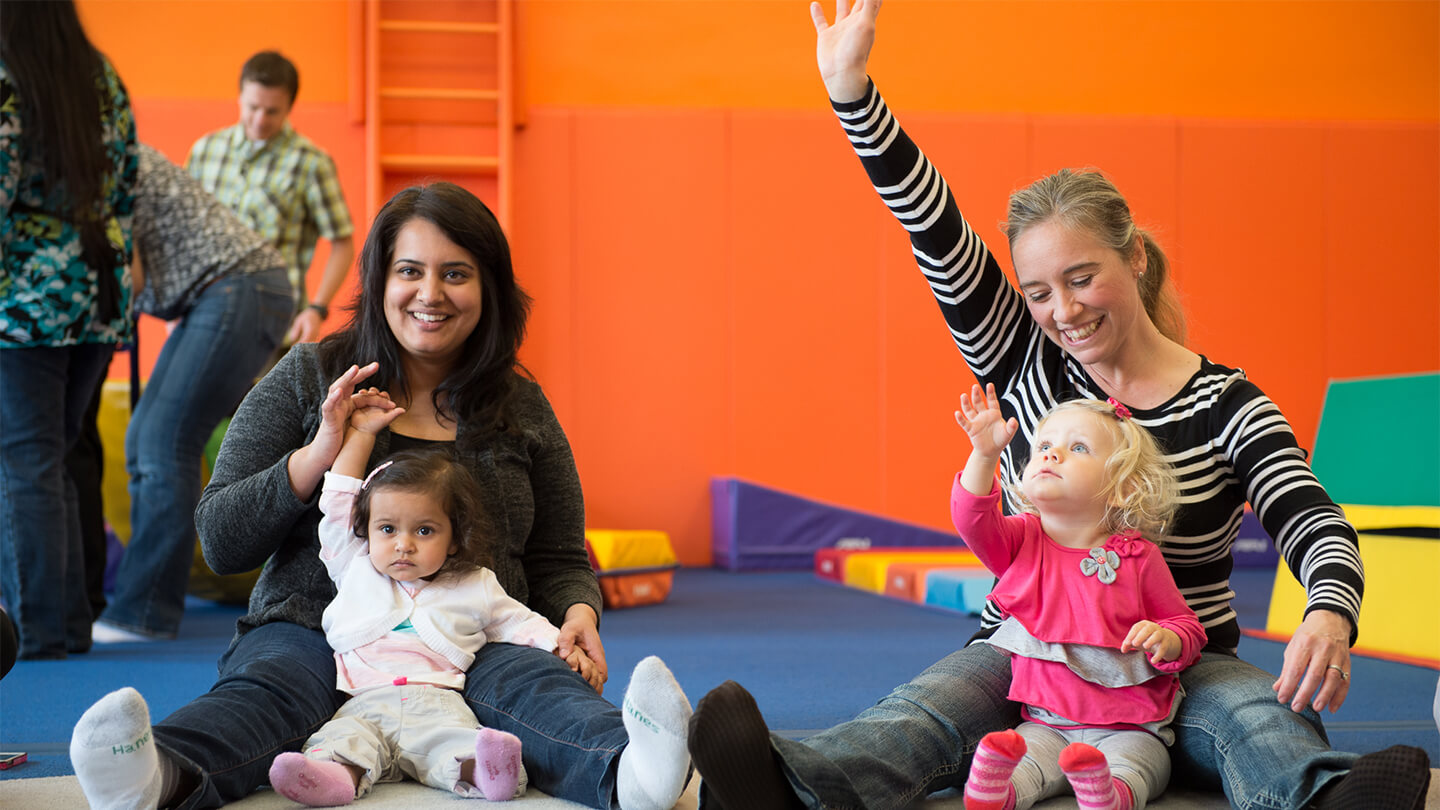
Class day is parent-and-child time: your grown-up stays within hug’s reach for all 45 minutes
Our guide to mommy and me classes on the Upper West Side explains how the parent-and-child format works across the music, gym and art classes.
What do we do on the days without a class?
Use the playspace for one of them and keep the rest free: a playground, a library, a walk, or nothing at all. The Kidville indoor playspace runs 1-hour sessions on weekdays, you register in advance, and a single visit is $31 with 20 percent off for siblings. Packs are 5 for $150 and 10 for $290. Members get playspace passes with their plan, so on the Single plan a playspace visit is already paid for three times a month. Weekend playspace hours depend on the birthday party schedule, so weekdays are the easier bet.
| No-class day option | Cost | Why it works for a toddler |
|---|---|---|
| Kidville playspace, 1 hour | $31 drop-in, or a member pass | Climbing and running in a safe gym, no teacher needed |
| Playground | Free | Open-ended movement and other children |
| Library story time or a walk to the store | Free | A change of scene with no setup |
| Slow day at home | Free | Child-led play; some boredom is good for creativity |
Source: Kidville Upper West Side playspace page, verified October 13, 2026; play guidance from HealthyChildren.org (American Academy of Pediatrics)
Can a nanny or grandparent take my toddler to Kidville?
Yes. Kidville’s contact page says the primary member can add authorized grown-ups, such as a nanny or grandparent, to the account. That matters for a weekday routine, because the class day often lands on a workday. The same classroom rules apply to whoever brings your child: one adult per child, within hug’s reach, socks in the gym. Many families split the week, with a parent on the class day and a caregiver on the playspace day, or the other way around.

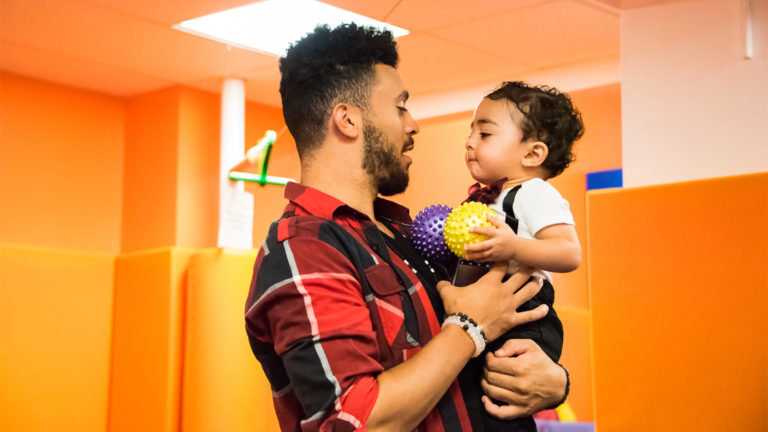
Authorized grown-ups, including grandparents and nannies, can be added to a Kidville account
If your toddler is heading toward a drop-off program, our guide to preschool alternatives on the Upper West Side covers Kidville University, the gradual separation program for 2s.
How do I keep a toddler’s week from costing too much?
Pick the plan that matches how many classes you will actually use, and use the passes before they expire. The Single Class Membership works out to about $55 a class for four classes a month, and the Double to about $50 a class for eight, before counting the playspace perks. Three playspace passes on the Single plan replace three $31 visits, and unlimited playspace on the Double plan replaces every visit. Free outings fill the other days, and your first visit is free.
| Cost lever | How it changes the week |
|---|---|
| Plan size | 4 classes a month for $219, or 8 for $399 |
| Per-class math | About $55 a class on Single, about $50 on Double, before playspace perks |
| Playspace passes | 3 free a month on Single; unlimited on Double; $31 drop-in otherwise |
| Make-ups | One make-up class a month, used within a month of the missed class |
| Free days | Playground, library and home days cost nothing |
Source: Kidville Upper West Side membership and playspace pages, verified October 13, 2026. Per-class figures are the monthly price divided by the classes included.
Possible downside: Membership enrolls your child in the same class each week, and unused playspace passes on the Single plan expire at the end of the billing cycle, so a week that gets derailed by travel or a cold can mean a missed class and a lost pass. One make-up class a month softens that, but not every miss.
If your toddler needs a trim, a first haircut at the Kidville salon can be tacked onto a class day, since the salon is open seven days a week and no membership is needed.
What to do with a toddler during the week: FAQ
How do you entertain your toddler all day?
You do not have to. Plan one anchor a day, such as a 45-minute class, a playspace hour or a playground visit, and let the rest be child-led play at home. HealthyChildren.org encourages letting young children take the lead and follow their own curiosity, and notes that some boredom supports creativity. A predictable weekly rhythm does more than a packed one.
What should I be doing with my 2 year old every day?
Give them a stretch of active play, a stretch of play they lead, and one outing. For a 2-year-old on the Upper West Side, that can be a weekly parent-and-child class at Kidville, a playspace or playground visit on another day, and blocks and books at home. Families in Kidville University add two or three 9:00am to 11:00am mornings.
Am I supposed to entertain my toddler all day?
No. Pediatric guidance points toward child-led play with a grown-up nearby rather than constant entertainment. Set up the space, keep the day predictable, and step in for the anchor activity. A class once or twice a week gives you a stretch where a teacher runs the room and you get to play alongside your child.
What are some good daily activities for a toddler?
Running and climbing, music and movement, messy art, reading, and simple helper jobs in the kitchen. HealthyChildren.org says 3-to-5-year-olds need about 3 hours of physical activity a day, spread out. At Kidville Upper West Side, the gym, music and art classes cover the active stretch, and the 1-hour playspace covers the climbing on a no-class day.
What do people do with their toddlers all day in NYC?
Most families build the week around one or two fixed activities and keep the rest flexible. On the Upper West Side, that often means a weekly Kidville class, a playspace or playground day, the library, errands on foot, and a quiet day at home. A membership with 4 or 8 classes a month sets the anchors; the free days fill themselves.
How many classes a week should a toddler take?
One is enough for most toddlers, and two suits a confident walker with a steady nap. Kidville’s Single Class Membership gives 4 classes a month, about one a week, and the Double gives 8, about two a week. Your child takes the same class each week, which builds the routine, and there is one make-up class a month if you miss.
The bottom line
What to do with a toddler during the week is a rhythm question: one or two 45-minute classes as anchors, a playspace or park outing on the other days, and plenty of child-led play at home. At Kidville Upper West Side, a Single Class Membership covers about one class a week with 3 playspace passes, and a Double covers two with unlimited playspace, so the week plans itself. Start with a free trial, pick the class day, and build the rest around the nap.
Ready to set the week? Claim a free trial class at Kidville Upper West Side, 205 West 88th Street, New York, NY 10024, or see the membership plans. Call 212-362-7792 with questions.
ABOUT THE AUTHOR
The Kidville Upper West Side Team runs the Kidville location at 205 West 88th Street, New York, NY 10024, home to music, gym, art, dance and STEM classes, Kidville University, Camp Kidville, an indoor playspace, birthday parties and a kids salon for children from birth to age 6. Every age, price and schedule detail in our guides is checked against Kidville’s own published pages.
Sources
Every Kidville price, class and rule in this guide comes from Kidville Upper West Side’s own pages, checked on October 13, 2026. Physical activity and play guidance comes from HealthyChildren.org, the American Academy of Pediatrics’ parenting site.
Kidville Upper West Side: Membership
Kidville Upper West Side: Classes and Programs
Kidville Upper West Side: Playspace and Holiday Schedule
Kidville Upper West Side: Kidville University
Kidville Upper West Side: KVU Enrollment
Kidville Upper West Side: Salon
Kidville Upper West Side: Contact
Kidville Upper West Side: Free Trial Class
HealthyChildren.org (American Academy of Pediatrics): Making Physical Activity a Way of Life
HealthyChildren.org (American Academy of Pediatrics): The Power of Play