
By the Kidville Upper West Side Team · Updated October 2026
SHORT ANSWER
Where can my toddler socialize with other kids on the Upper West Side? In small, repeated settings: a weekly parent-and-child class, an hour in an indoor playspace, a two or three child playdate, and a gradual separation program once they are 2. At Kidville Upper West Side, all four happen under one roof at 205 West 88th Street.
“Socialize” means something different at 14 months than at 3 years. A young toddler plays next to other children and competes for toys; a 2-year-old copies, refuses to share and starts to feel for others; a 3-year-old begins to actually play with a friend. The place matters less than the pattern: small groups, the same faces, and a grown-up nearby but not in charge. This guide walks through what to expect at each age, what pediatricians say helps, and the Kidville Upper West Side settings where it happens every week. Every Kidville detail was checked on Kidville’s own pages on October 14, 2026.
At what age do toddlers start socializing with other kids?
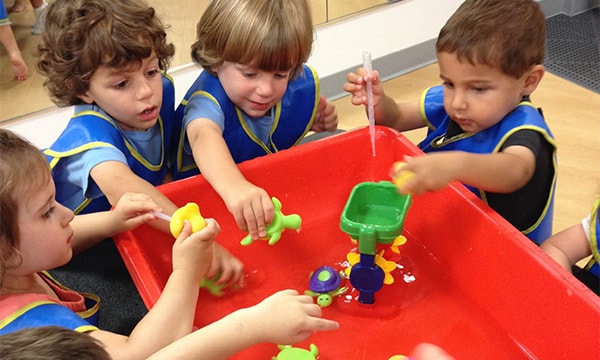
From about 1, but not in the way adults mean by the word. HealthyChildren.org, the parenting site of the American Academy of Pediatrics, describes the 1-year-old as playing alongside other children and competing for toys rather than playing cooperative games, while enjoying watching and being around other kids, especially slightly older ones. At 2, the same site says children do not interact well even when playing side by side, may refuse to share, and are at the same time developing real empathy, with pretend play serving as rehearsal for future social encounters. That is normal, and it is the raw material a class or playgroup works with.
| Age | What socializing looks like | What the AAP suggests |
|---|---|---|
| Around 1 | Plays next to other children, watches older kids, offers a toy then snatches it back, competes for attention | Plenty of toys for everyone, a grown-up ready to referee, reassurance that the toy is still theirs |
| Around 2 | Side by side play, little sharing, copying adults and older children, pretend play, early empathy | Talk about how the other child feels, give plenty of trial runs, keep groups to two or three children at first |
| Around 3 | Starts to play with a friend rather than beside one, gets angry with friends and has to learn that the moment passes | Be present and available, coach sharing and conflict without hitting, help a shy child warm up or a very social child make room |
Source: HealthyChildren.org, “Social Development: 1 Year Olds”, “Social Development: 2 Year Olds” and “What Parents Can Do to Support Friendships” (American Academy of Pediatrics), verified October 14, 2026
This guide is general information, not medical advice. If you have questions about your own child’s development, your pediatrician is the right person to ask.
How do I get my toddler to socialize?
Give them repeated, low-stakes practice and then step back. The AAP’s advice for 2-year-olds is direct: do not let their relatively antisocial behavior put you off getting playgroups together, keep the group to two or three children at first, monitor so nobody gets hurt, and otherwise let the children guide themselves as much as possible, because they need to learn how to play with one another, not with one another’s parents. For 1-year-olds, the practical tip is simpler: plenty of toys for everyone and be prepared to referee.

| What helps | What to skip |
|---|---|
| Small groups, two or three children | Big birthday-party crowds as the main social outlet |
| The same children every week | A different playground, class or playdate every time |
| Enough toys and materials for everyone | One coveted toy in the middle of the rug |
| Naming feelings out loud: “Emma is sad because you took her car” | Expecting a 2-year-old to share on request |
| A grown-up within reach who lets the kids lead | Stepping in to run every interaction |
Framework based on HealthyChildren.org social development guidance (American Academy of Pediatrics), verified October 14, 2026
Where can my toddler socialize on the Upper West Side?
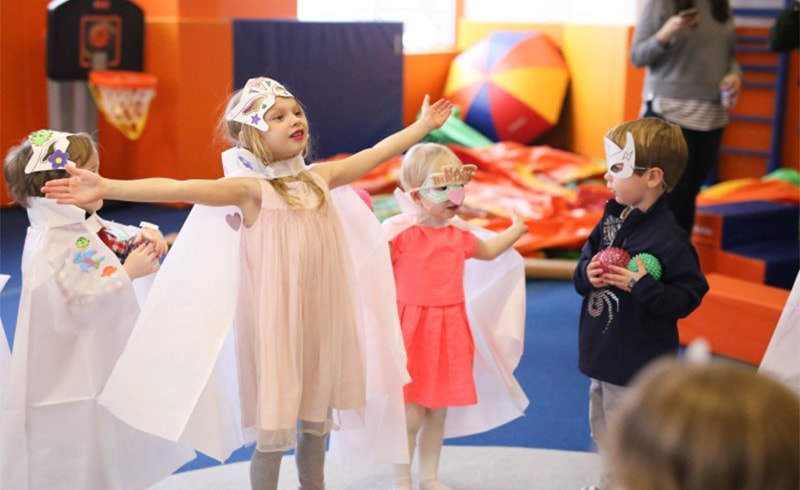
Anywhere the same small group of children shows up on a schedule. The playground and the library story hour both count, with the caveat that the faces change every time. Kidville Upper West Side at 205 West 88th Street is built around the repeat-visit version, and each of its settings fits a different age and comfort level.
| Setting | Ages | How the socializing works | What to know |
|---|---|---|---|
| Parent-and-child classes (music, gym, art) | Newborn to 6, by class | A teacher runs a 45-minute class while you stay with your child; your child is enrolled in the same class each week, so the same families are in the room | Music takes babies from newborn, gym from 8 months, art from 18 months; first class is free |
| Indoor playspace | Open play | A booked 1-hour open-play session in the gym with other families | $31 per session, must register in advance, grown-ups in socks and within hug’s reach |
| Kidville University | Pre-2s to 3s | A gradual separation classroom with a 1:4 teacher ratio, play centers and a consistent routine | No application, admission at the start of Fall and Winter sessions, potty training not required |
| Monthly member events | Members | Events built into the membership, alongside classes and playspace | Kidville describes membership as an instant connection to local parents and families, with future playdates in mind |
Source: Kidville Upper West Side classes, playspace, Kidville University and membership pages, verified October 14, 2026

For most families the order is class first, then playspace, then Kidville University. A class gives a 1-year-old the side-by-side version with a teacher directing traffic. The playspace gives a confident walker an hour of free play with other kids while you stay within reach, and our indoor gym guide covers how the playspace hours run. Kidville University is the step where a 2-year-old starts to play with the group without you in the room; our preschool readiness guide explains how that separation is handled.
Why does a weekly class work better than a one-off playdate?
Because toddlers learn social skills through repetition with familiar people, and a class delivers exactly that. The AAP’s “plenty of trial runs” means the same two or three children, often, with an adult nearby. Kidville enrolls your child in the same class each week, which puts the same families in the same room at the same time, with a teacher handling the structure so you can watch how your child reacts to other kids instead of managing every moment. Our mommy and me classes guide covers the format, and our toddler weekday routine shows where one or two classes fit in a week.
| Option | Price | What is included |
|---|---|---|
| Single Class Membership | $219 per month | 4 classes a month, 3 free playspace passes a month, 10% off a birthday party deposit before tax |
| Double Class Membership | $399 per month | 8 classes a month, unlimited playspace, 15% off a birthday party deposit before tax |
| Playspace drop-in | $31 per 1-hour session | 20% off siblings, must register in advance |
| Playspace packs | 5 for $150, 10 for $290 | 10% off siblings on packages |
| Free trial class | Free | Your first visit, create an account to claim it |
Source: Kidville Upper West Side membership and playspace pages, verified October 14, 2026
Possible downside: the socializing you are hoping for will not look like friendship for a while. A 1-year-old will grab, a 2-year-old will refuse to share, and the AAP says that is exactly what their age-mates are doing too. Expect friction, keep the group small, and judge progress over months, not sessions. Weekend playspace hours also depend on birthday parties, so call before planning a Saturday visit.
Where can my toddler socialize with other kids: FAQ
At what age should kids start socializing with other kids?
Around 1, in the side-by-side sense. The AAP describes 1-year-olds as enjoying being around other children and watching slightly older ones, even though they play alongside rather than together and compete for toys. True back-and-forth play comes later, around 3. A parent-and-child class is a comfortable first setting because you stay with your child and a teacher runs the room.
How do I get my toddler to socialize?
Set up small, repeated chances and let the children lead. The AAP suggests playgroups of two or three children at first, plenty of toys so there is less to fight over, a grown-up ready to referee, and talking about the other child’s feelings out loud. At Kidville Upper West Side, a weekly class or a booked playspace hour gives you that repetition with familiar faces.
Is it normal for a 3 year old not to socialize?
Often, yes. The AAP notes that quiet, shy children who rarely act out their thoughts are just as normal as highly active ones who push and shove, and that a shy child mainly needs help warming up initial interactions. A small, familiar group is easier than a crowd. If you are concerned about your own child’s social development, your pediatrician is the right person to ask.
How can I teach my child to make friends?
Be present and available while they play with others, coach sharing and resolving conflict without hitting, and help a shy child warm up or a very social one make room for a quieter friend. Those are the AAP’s suggestions for the early years. A class where you stay in the room is a natural place to do that coaching without hovering.
How do children develop friendships?
Gradually, through play, with adult modeling along the way. The AAP points out that children rarely learn the art of friendship without some support, that early play times show you your child’s social strengths and challenges, and that children get angry with friends from the very start and need to learn the moment passes. Repeated time with the same small group is where that practice happens.
Does my toddler need a class to socialize?
No. A playground, a library story hour or a two-child playdate at home all work, and the AAP’s advice is the same in every setting: small group, let the kids lead, be ready to referee. A class adds the one thing that is hard to arrange yourself, the same children at the same time every week. Kidville’s first class is free, so it is an easy way to see whether the format suits your child.
The bottom line
Where can my toddler socialize with other kids on the Upper West Side? In small groups that repeat: a weekly parent-and-child class, a booked playspace hour, a two or three child playdate, and a gradual separation classroom once they are 2. Expect side-by-side play at 1, refusals to share at 2 and real friendship starting at 3, and judge progress over months. At Kidville Upper West Side, a free trial class is the simplest place to start.
Ready to meet some new little friends? Claim a free trial class at Kidville Upper West Side, 205 West 88th Street, New York, NY 10024, or see the membership plans. Call 212-362-7792 with questions.
ABOUT THE AUTHOR
The Kidville Upper West Side Team runs the Kidville location at 205 West 88th Street, New York, NY 10024, home to music, gym, art, dance and STEM classes, Kidville University, Camp Kidville, an indoor playspace, birthday parties and a kids salon for children from birth to age 6. Every age, price and schedule detail in our guides is checked against Kidville’s own published pages.
Sources
Every Kidville age, price and rule in this guide comes from Kidville Upper West Side’s own pages, checked on October 14, 2026. Social development guidance comes from HealthyChildren.org, the American Academy of Pediatrics’ parenting site.
Kidville Upper West Side: Classes and Programs
Kidville Upper West Side: Playspace and Holiday Schedule
Kidville Upper West Side: Kidville University
Kidville Upper West Side: Enrollment Options and Membership
Kidville Upper West Side: Free Trial Class
Kidville Upper West Side: Contact
HealthyChildren.org (American Academy of Pediatrics): Social Development: 1 Year Olds
HealthyChildren.org (American Academy of Pediatrics): Social Development: 2 Year Olds
HealthyChildren.org (American Academy of Pediatrics): What Parents Can Do to Support Friendships