

What to Do With a High-Energy Toddler

By the Kidville Upper West Side Team · Updated November 2026
SHORT ANSWER
Give a high-energy toddler plenty of chances to move every day, then a predictable way to wind down. The American Academy of Pediatrics (AAP) says the toddler years are “a key time for active discovery” and suggests simple active play like child-led walks, dance parties, bubble chasing and games such as Red Light, Green Light. Lots of energy is usually typical at this age. If you are worried about your child’s behavior, your pediatrician is the right person to ask. On the Upper West Side, Kidville’s gym classes and indoor playspace give busy toddlers a safe place to climb, jump and swing.
Some toddlers wake up running and do not stop until bedtime. They climb the couch, sprint down the hallway and treat the stroller like a cage. In a New York apartment, with neighbors below and a long, cold season ahead, that energy can feel like a problem to solve. It is better treated as a need to meet. This guide covers whether all that energy is normal, what drives it, 10 active play ideas from the AAP sorted by age, how to help a busy toddler calm down, where a high-energy toddler can move indoors on the Upper West Side, and when energy is worth a conversation with your pediatrician. Every Kidville detail was checked on Kidville’s own pages on November 12, 2026.
Is it normal for toddlers to have a lot of energy?
Yes. For most toddlers, lots of energy is part of typical development. The AAP’s How Active Is Your Toddler? page explains that “these early years are a key time for active discovery,” and that a toddler “is learning how their body works by walking, running, climbing or tossing and kicking balls.” It adds: “Every wiggle, jump and step helps build skills for a lifetime.”
The AAP’s page on early signs of ADHD makes the same point from the other side: nearly all preschool-aged children “often show some core behaviors or symptoms of ADHD,” such as inattention, impulsivity and hyperactivity, “as part of their typical development.” For children ages 3 to 5, the CDC says they “need to be active throughout the day” for growth and development. A toddler who wants to move all day is, in most cases, doing exactly what a toddler should.
What causes high energy in toddlers?
Mostly, new skills that a toddler wants to use over and over. Between 1 and 3, children learn to walk, run, jump, climb and pedal, and practice is how those skills stick. The AAP lists what many toddlers can do at each stage:
| Age | Skills many toddlers are practicing (AAP) | What that energy looks like at home |
|---|---|---|
| 12 to 18 months | Walking by themselves or while holding onto furniture; stacking 3 or 4 blocks | Cruising laps around the coffee table |
| 19 to 24 months | Throwing and kicking a ball, standing on tiptoes, squatting, practicing how to run and jump, walking stairs while holding your hand | Running from one end of the apartment to the other |
| 25 to 30 months | Climbing on furniture “if they weren’t before,” climbing stairs holding the rail, pulling toys along | Scaling the couch, the bookshelf and you |
| 31 to 36 months | Pedaling a tricycle, climbing stairs one foot after the other, tackling small ladders, pretend play | Turning every errand into a race |
Source: HealthyChildren.org, “How Active Is Your Toddler?” (American Academy of Pediatrics), verified November 12, 2026
A few everyday things can make a busy toddler seem even busier. A day stuck indoors leaves energy with nowhere to go, which is why rainy weeks feel so long. Screens can crowd out movement: the AAP recommends no screen time other than video-chatting until 18 to 24 months, and says limiting screens is “one of the best things” you can do to keep a toddler active. Sleep matters too. The AAP’s healthy sleep habits page notes that regular sleep deprivation “often leads to some pretty difficult behaviors,” including irritability and difficulty concentrating, and an overtired toddler can look like a wound-up one.
What to do with a high-energy toddler: 10 ideas
Plan movement into every day, and join in when you can. The AAP says “just 15 minutes per day of quality one-on-one time” playing with your child helps with physical development and social skills, and that play “also helps them learn to regulate their emotions and cope with stress.” These 10 ideas come from the AAP’s toddler activity page and need almost nothing to buy.
| Idea (AAP) | Best for | How to do it in an apartment |
|---|---|---|
| 1. Child-led walks | All toddlers | Let your toddler set the route on the block or in Riverside Park, and stop for every puddle and pigeon |
| 2. Dance parties | All toddlers | Put on music, copy each other’s moves and “get all the wiggles out together” |
| 3. Bubble play | All toddlers | Blow bubbles for babies to point at; older toddlers chase and pop them |
| 4. Flashlight scavenger hunt | 12 to 18 months | Hide a toy with one part sticking out, dim the lights and search together |
| 5. Follow the directions | 12 to 18 months | Record yourself saying “wave your hands” or “dance with mommy,” then play it back and do it together |
| 6. Toy “shopping” | 19 to 24 months | Spread toys on the floor and hand over a small basket so your toddler squats to collect them |
| 7. Up and down the stairs | 19 to 24 months | Put a toy a few steps up, hold hands and sing “up, up, up” and “down, down, down,” then jump off the bottom step with two feet |
| 8. Crabwalk races | 25 to 30 months | Sit with hands behind you, lift your bottom and race across the rug |
| 9. Jump to the balloon | 25 to 30 months | Hang a beach ball or balloon from the ceiling just out of reach and let your toddler jump for it |
| 10. The Floor is Lava, or Red Light, Green Light | 31 to 36 months | Cross a path of steady cushions, or walk on green, move slowly on yellow and freeze on red |
Source: HealthyChildren.org, “How Active Is Your Toddler?” (American Academy of Pediatrics), verified November 12, 2026
Keep safety simple: clear the floor of sharp corners, use only cushions that stay put, and stay close on stairs. For more ideas, see our guides to gross motor activities for toddlers, music and movement activities and rainy day activities for toddlers, and read why play is important for toddlers for what the AAP says play builds.
How do I calm down a high-energy toddler?
Move first, then slow down on a routine your toddler can predict. A busy toddler usually settles more easily after a real chance to run, climb and jump than after a morning of being told to sit still. The AAP’s family routines page puts it plainly: “Children do best when routines are regular, predictable and consistent.”
| Try this | Why it helps |
|---|---|
| Schedule active time early | Energy used in the morning is energy that is not bouncing off the walls at dinner |
| Use the same wind-down steps every day | A predictable order (bath, books, lights out) tells a toddler what comes next |
| Practice stopping during play | Red Light, Green Light lets a toddler practice freezing on cue, a skill toddlers are still learning |
| Slow the music down | Follow a dance party with a slow song and big, slow stretches |
| Watch the screens | The AAP links limiting screen time to keeping toddlers active |
| Protect sleep | The AAP says regular sleep deprivation often leads to difficult behaviors |
Built on HealthyChildren.org pages “How Active Is Your Toddler?”, “The Importance of Family Routines” and “Healthy Sleep Habits” (American Academy of Pediatrics), verified November 12, 2026
A good toddler gym class follows the same pattern. Kidville’s gym classes page describes “a familiar routine designed to build confidence as we transition from warm-ups, to exploration, to skill sharing and cool down.” For a high-energy toddler, that means a burst of movement with a clear beginning and a calm ending, every week.

Where can a high-energy toddler move on the Upper West Side?
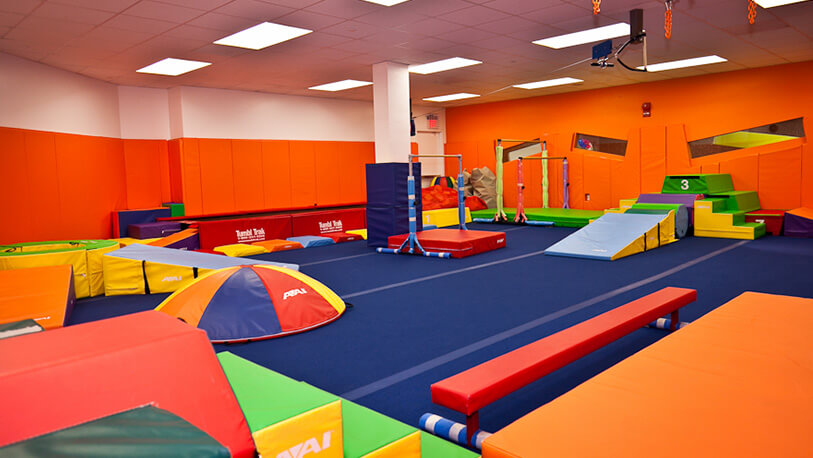
At Kidville Upper West Side, 205 West 88th Street, which runs gym classes from 8 months and an indoor playspace Monday to Friday. Kidville’s gym page invites families to “unplug and get active with your little mover” in a gym “designed to make big muscles for little humans,” with “a weekly rotation of equipment, obstacle courses and props.” The class schedule lists these options for active babies and toddlers:
| Option | Ages | What happens (from Kidville’s pages) |
|---|---|---|
| Big Muscle Builders (gym class) | 12 to 24 and 18 to 36 months | Toddlers “climb courses, jump on the Tumbl Trak, enjoy our indoor swings, and lift, carry, and stack giant blocks” |
| Big Muscles for Little Babies (gym class) | 8 to 15 months | Inclines, balls, tunnels and the Tumbl Trak as babies move “from sitting to standing and crawling to cruising” |
| Rockin’ Railroad: Unplugged (music class) | 5 months to 5 years | Movement songs, group drumming and “bubbles galore” |
| Indoor playspace | See the playspace page | 1-hour sessions, $31; first sessions start at 9:00am Monday to Wednesday, 11:15am Thursday and 11:10am Friday; register in advance |
| Single Class Membership | All class ages | $219 a month: 4 classes a month plus 3 free playspace passes a month |
| Double Class Membership | All class ages | $399 a month: 8 classes a month plus unlimited playspace |
Source: Kidville Upper West Side class schedule, gym classes, playspace and membership pages, verified November 12, 2026
The playspace page describes “a super fun and safe space to run, climb, and make new friends,” and the membership page says classes are “45 minutes of dynamic programming.” For a closer look at each class, see our guides to toddler gym classes on the Upper West Side, baby gym classes and indoor gym classes for kids in Manhattan. New families can claim a free trial class first.
Possible downside: playspace sessions must be booked in advance, and weekend times depend on birthday parties, so check the playspace page or contact the front desk before you go. Popular class times can fill; a grayed-out enroll button on the schedule means the class is full, so call to ask about a waitlist.
Is it high energy or something to ask the pediatrician about?
Only a doctor can tell, and for most toddlers, lots of energy is typical. The AAP’s guide to diagnosing ADHD says the pediatrician determines whether a child has ADHD using AAP guidelines, and that “these diagnosis guidelines are specifically for children 4 to 18 years of age.” The AAP’s early signs page explains why it is hard to tell sooner: nearly all preschoolers show some inattention, impulsivity and hyperactivity, and “as other children gradually begin to grow out of such behaviors, children with ADHD do not.” It adds that in children with ADHD, “those behaviors interfere with how well the child can function.”
So the question is not “does my toddler have a lot of energy?” but “is something worrying me?” If your toddler’s behavior keeps them from playing, sleeping or getting along at home, or if anything about it concerns you, bring it up at the next well-child visit or call your pediatrician. Write down what you see and when, because that is exactly what the doctor will ask about.
High-energy toddler: FAQ
Is it normal for toddlers to have a lot of energy?
Yes, for most toddlers. The AAP calls the toddler years “a key time for active discovery,” when children learn how their bodies work by walking, running and climbing, and says nearly all preschool-aged children show some hyperactivity as part of typical development. The CDC says children 3 to 5 need to be active throughout the day.
What causes high energy in toddlers?
Mostly new motor skills that toddlers want to practice: running, jumping, climbing and, by age 3, pedaling a tricycle. Days stuck indoors, more screen time and short sleep can make a toddler seem even more wound up. The AAP links limiting screens to keeping toddlers active and says regular sleep deprivation often leads to difficult behaviors.
How do I calm down a high-energy toddler?
Give them a real chance to move first, then wind down the same way every day. The AAP says children do best when routines are “regular, predictable and consistent.” Slow songs, big slow stretches, a bath and books work well, and games like Red Light, Green Light let a toddler practice stopping on cue.
What to do with a hyperactive toddler?
Plan active play into each day, such as child-led walks, dance parties, bubble chasing and climbing at an indoor gym, and join in for 15 minutes a day when you can, which the AAP says helps physical development and social skills. “Hyperactive” is a word for a doctor to use, so if your toddler’s activity worries you, talk to your pediatrician rather than guessing.
What to do with kids with too much energy?
Give the energy a place to go. Get outside when the weather allows, turn the hallway into a crabwalk racetrack on cold days, and book active time indoors, like a toddler gym class or a playspace session where children can run, climb and swing safely. Keep a predictable wind-down routine afterward.
Do high-energy kids have ADHD?
Not necessarily, and only a doctor can say. The AAP’s ADHD diagnosis guidelines are for children 4 to 18 years old, and the AAP notes that nearly all preschool-aged children often show some inattention, impulsivity and hyperactivity as part of typical development. If you have concerns, talk to your pediatrician.
The bottom line
A high-energy toddler is usually a toddler doing exactly what toddlers do: practicing new ways to move. Plan movement into every day, join in for even 15 minutes, use simple AAP games like Red Light, Green Light to practice stopping, and keep the wind-down routine the same every night. If anything about your child’s behavior worries you, your pediatrician is the right person to ask. When the apartment gets too small, Kidville’s gym classes and indoor playspace on West 88th Street give busy toddlers room to climb, jump and swing.
Have a little mover at home? See the gym class schedule at Kidville Upper West Side, 205 West 88th Street, New York, NY 10024, book a playspace session, or try a class with a free first visit. Call 212-362-7792 with questions.
ABOUT THE AUTHOR
The Kidville Upper West Side Team runs the Kidville location at 205 West 88th Street, New York, NY 10024, home to music, gym, art, dance and STEM classes, Kidville University, Camp Kidville, an indoor playspace, birthday parties and a kids salon for children from birth to age 6. Every age, price and schedule detail in our guides is checked against Kidville’s own published pages.
Sources
Every Kidville detail in this guide comes from Kidville Upper West Side’s own pages, checked on November 12, 2026. Activity, routine, sleep and ADHD information comes from HealthyChildren.org, the American Academy of Pediatrics’ parenting site, and from the Centers for Disease Control and Prevention.
Kidville Upper West Side: Current Class Schedule
Kidville Upper West Side: Gym Classes
Kidville Upper West Side: Playspace and Holiday Schedule
Kidville Upper West Side: Membership
Kidville Upper West Side: Free Trial Class
Kidville Upper West Side: Contact
HealthyChildren.org (American Academy of Pediatrics): How Active Is Your Toddler?
HealthyChildren.org (American Academy of Pediatrics): The Importance of Family Routines
HealthyChildren.org (American Academy of Pediatrics): Early Signs of ADHD in Children
Centers for Disease Control and Prevention: Child Activity: An Overview